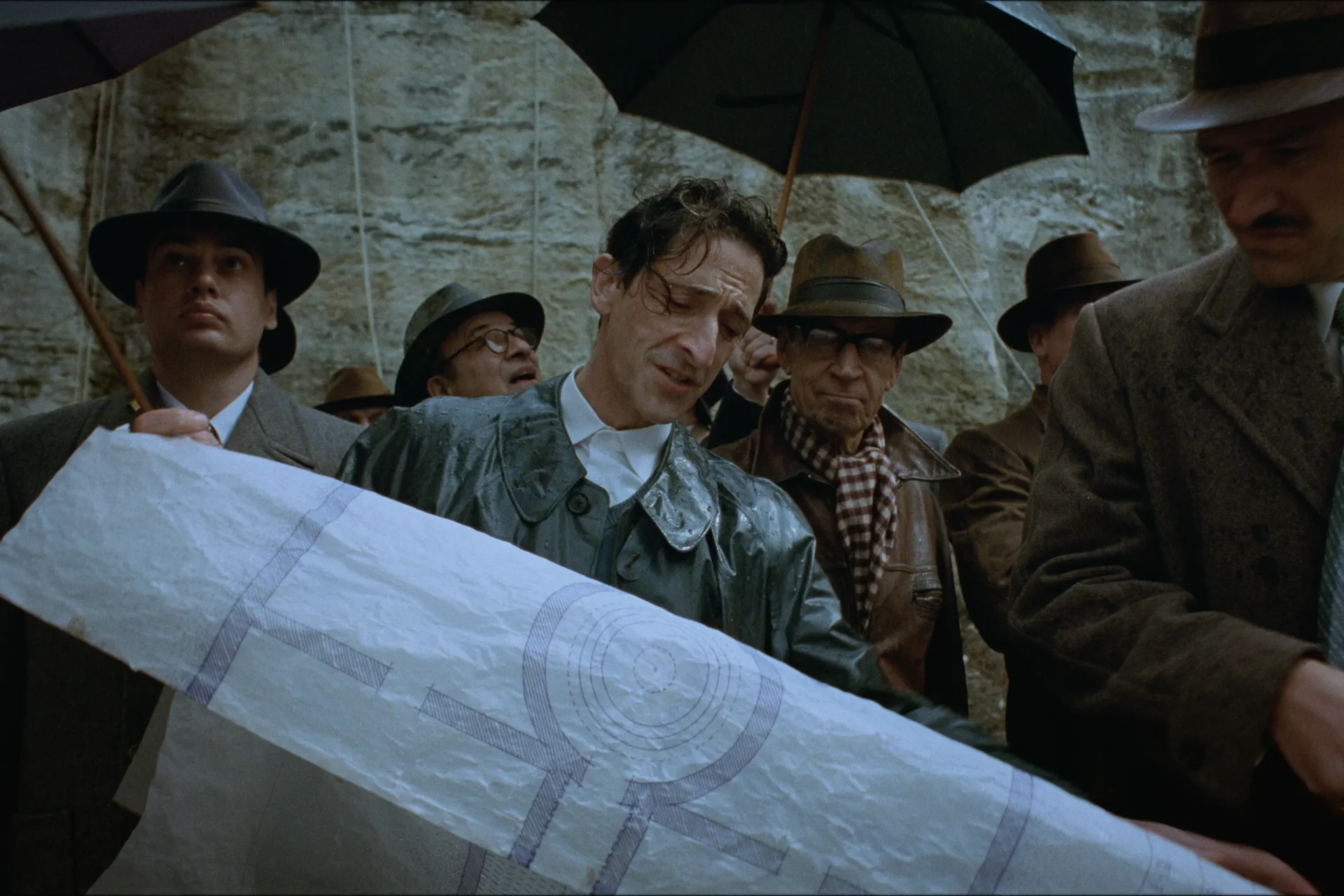
Exploring the history of Brutalist architecture through The Brutalist, one of this year’s Oscar Best Picture nominees.
Tracing the history of Brutalist architecture through this year’s Oscar Best Picture nominee.
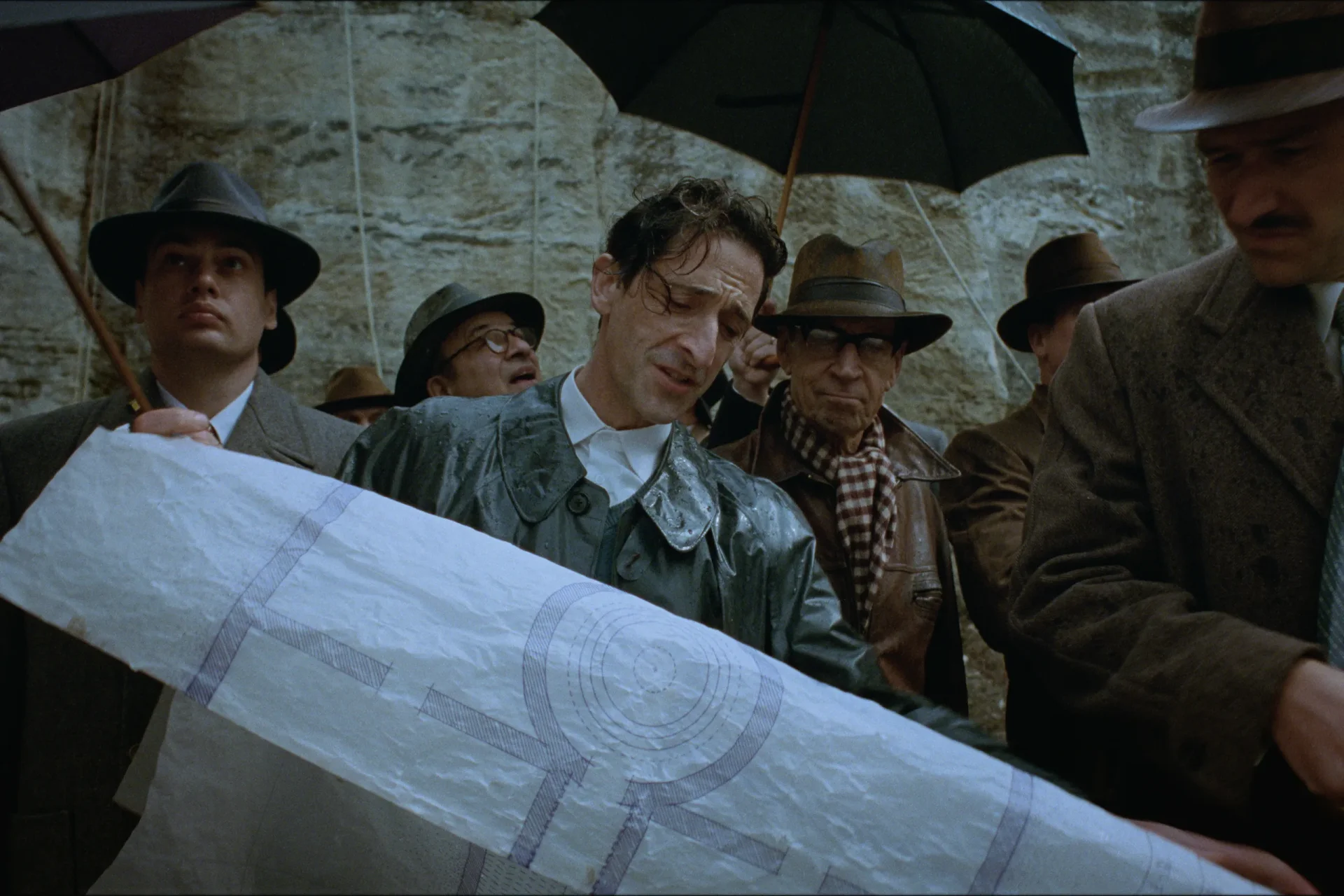
The Brutalist is one of the finest films about the life of an architect. It tells an epic story of an immigrant pursuing the American dream—the pursuit of success in a foreign land full of opportunities, a place long shaped by generations of immigrants.
Starring Adrien Brody, the film was a favorite to win Best Picture at the 2025 Academy Awards. Unfortunately, only Brody took home a trophy, winning Best Actor for his remarkable portrayal of Lazlo, a Jewish architect who flees his native Hungary amid the persecution of Jews during World War II.
Lazlo is a fictional character, but he is a composite of several real-life architects who embraced the Brutalist style. The film’s title refers to the architectural style that rose to prominence in the 1950s. According to Reyner Banham, in his writing on the style, Brutalism emerged at the time as an antithesis to, or rejection of, the luxurious, nostalgia-laden designs of the preceding decade.
Brutalism leans toward functionality without excessive artistic embellishment. It is often manifested in simple buildings where materials are left in their raw state, such as exposed brick walls, cement floors, and pipes crisscrossing the ceiling.
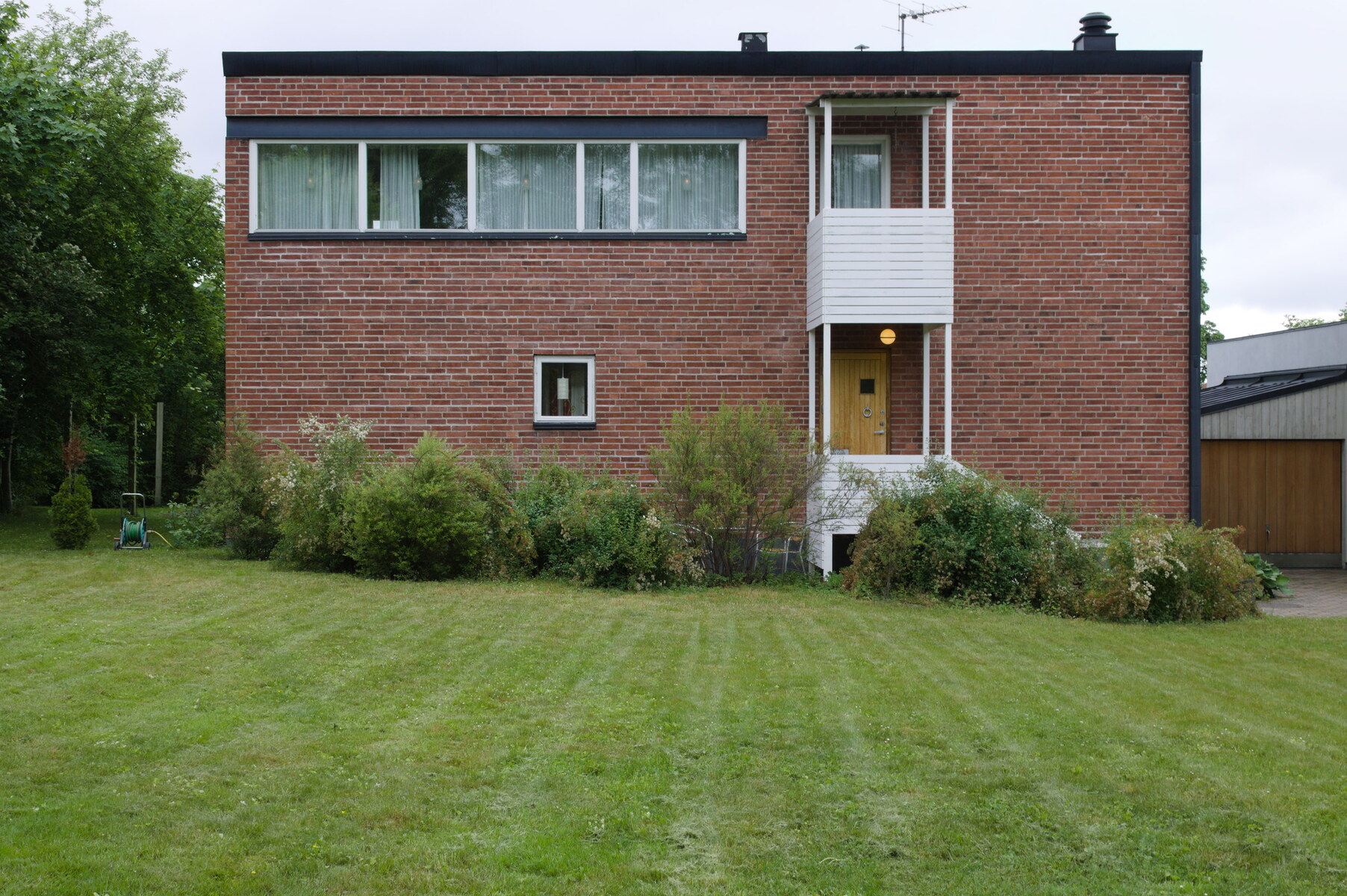 Villa Goth di Swedia
The term “Brutalist” was first used by Swedish architect Hans Asplund when commenting on Villa Goth, a charming and modest house that he described as nybrutalism (“new brutalism”). He further characterized the style as one that conveyed an “as found” quality—left as it is, without ornamentation.
The label was later popularized by Reyner Banham through his writings on the architectural works of British architect duo Alison and Peter Smithson. They associated the style with postwar reconstructed buildings, which tended to be minimalist and functional.
The Birth of Brutalist Architecture
According to several observers, the style had actually existed earlier and was inspired by foreign influences, such as architectural techniques commonly found in France, “beton brut,” or raw concrete, and “art brut,” or raw art, referring to artworks created by non-artists. Another external influence was the rise of socialist movements across postwar Europe, which emphasized elements of austerity and simplicity.
Names of architects embracing Brutalist architecture began to emerge. Besides the Smithsons, some of the most internationally renowned included Hungary-born Erno Goldfinger, Estonia-born Louis Kahn, Germany-born Mies Van Der Rohe, and France-born Le Corbusier.
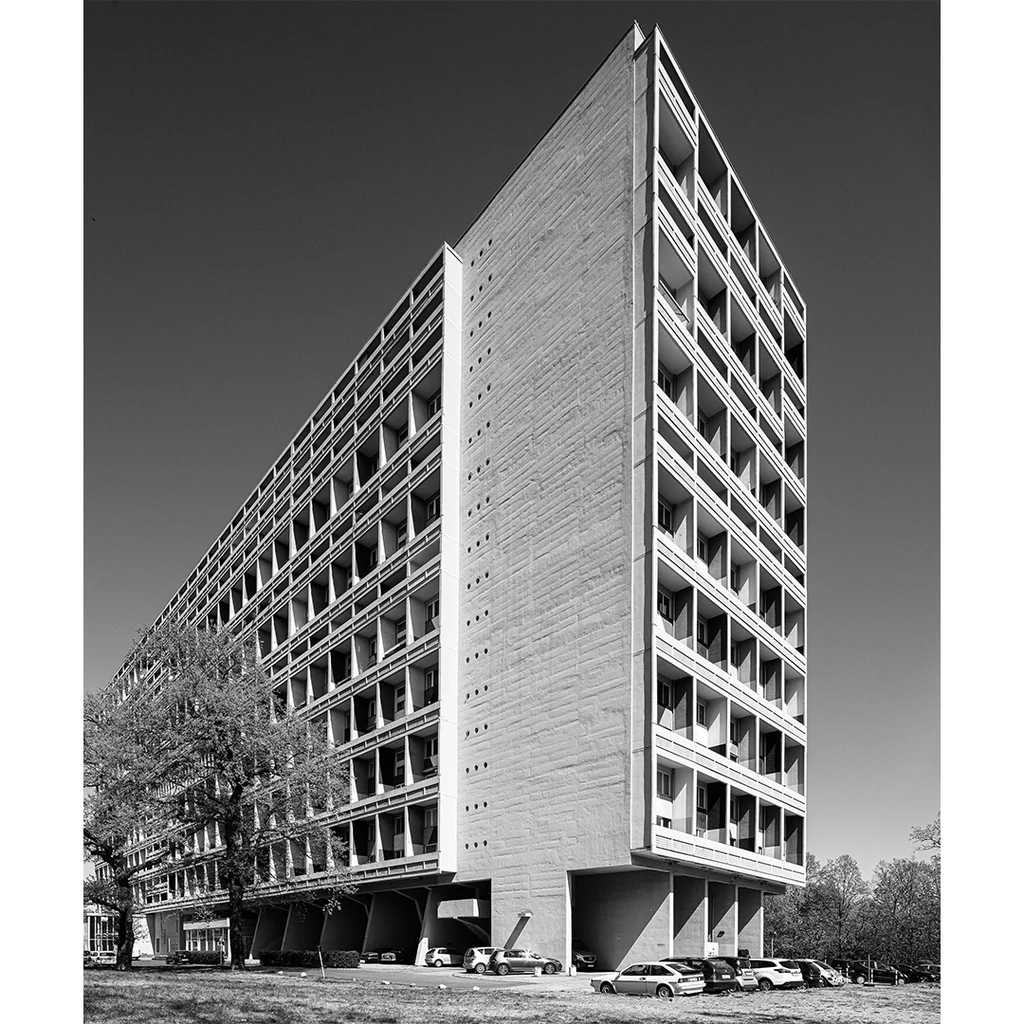 Corbusierhaus di Berlin
Unbeknownst to architect and artist Le Corbusier, one of the pioneers of modern architecture, he had already incorporated elements of simplicity into his designs—later labeled proto-Brutalist by architectural observers—because he believed there was no place for decorative design in a dwelling.
In fact, in his 1925 book The Decorative Art of Today, he wrote, “Why call bottles, chairs, baskets and objects decorative? They are useful tools. The decor is not necessary. Art is necessary.” A bit of trivia: Le Corbusier was the first to use the term beton brut.
Of course, Brutalist architecture has evolved since Le Corbusier made those observations. Corbusier’s designs appear more artistic and elegant (such as Villa Savoye) because he was an artist himself, while Brutalist concepts at the height of the movement were more commonly applied to government buildings, cultural centers (such as the Royal National Theatre), and high-rise, space-efficient apartment buildings (such as Goldfinger’s Trellick Tower in London).
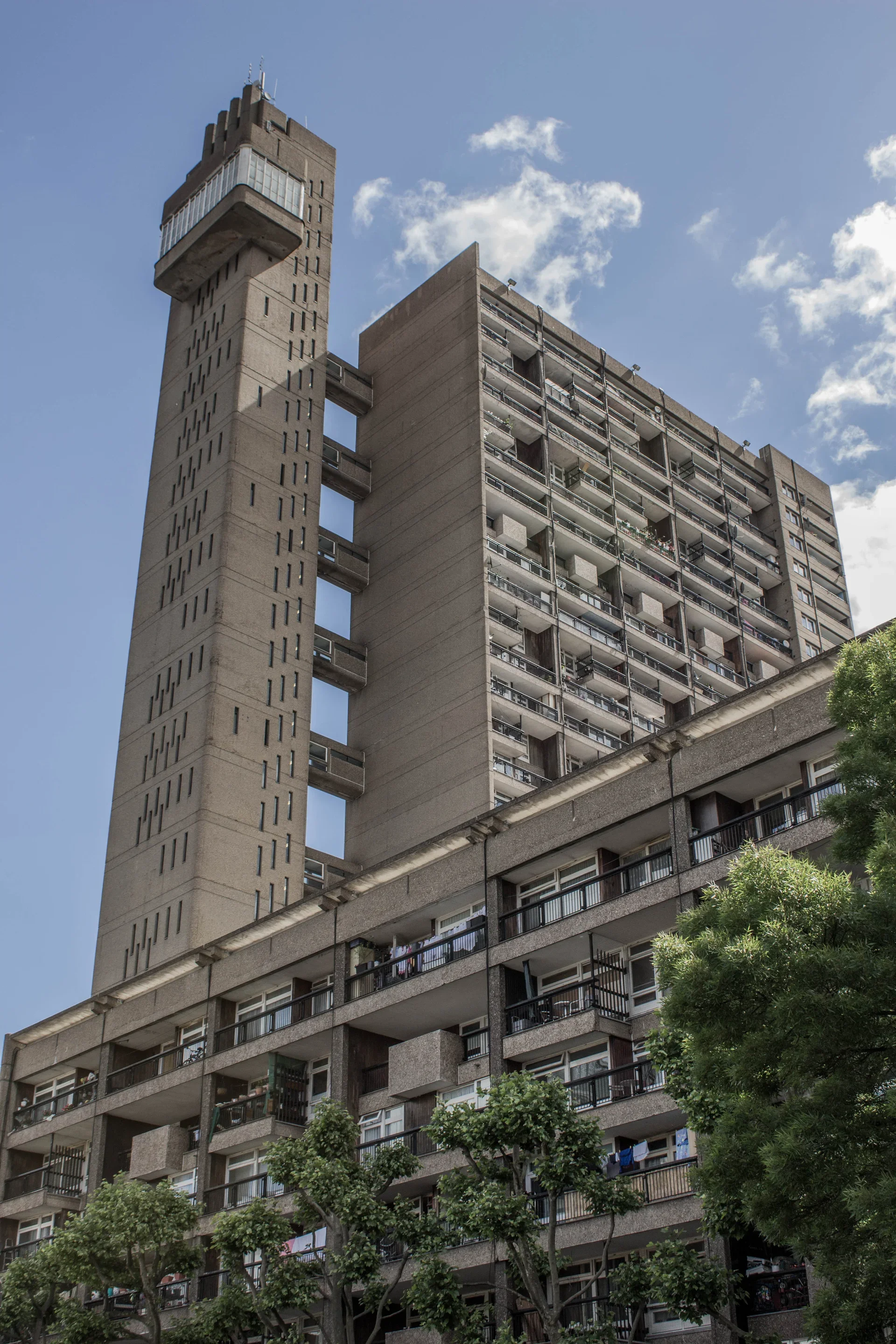 Trellick Tower karya Erno Goldfinger
In The Brutalist, Lazlo is commissioned to build a grand community center containing a variety of rooms. He explains that his design concept is inspired by the design of the Jewish concentration camp where he once lived—a building that undeniably evokes painful memories, yet which he observes through the eyes of an architect as practical, minimalist, and functional.
A concept that, in short, is brutal in its execution.