From an unpainted canvas to a critical view of Balinese culture, Valasara shares his journey and perspective as an artist.
Made Wiguna Valasara, or more familiarly known as Valasara, is a Balinese artist who has developed his practice through explorations of material, texture, and form. After studying art at the Indonesian Institute of the Arts Yogyakarta, he spent approximately 12 years pursuing his artistic journey in Java before returning to Bali in 2013.
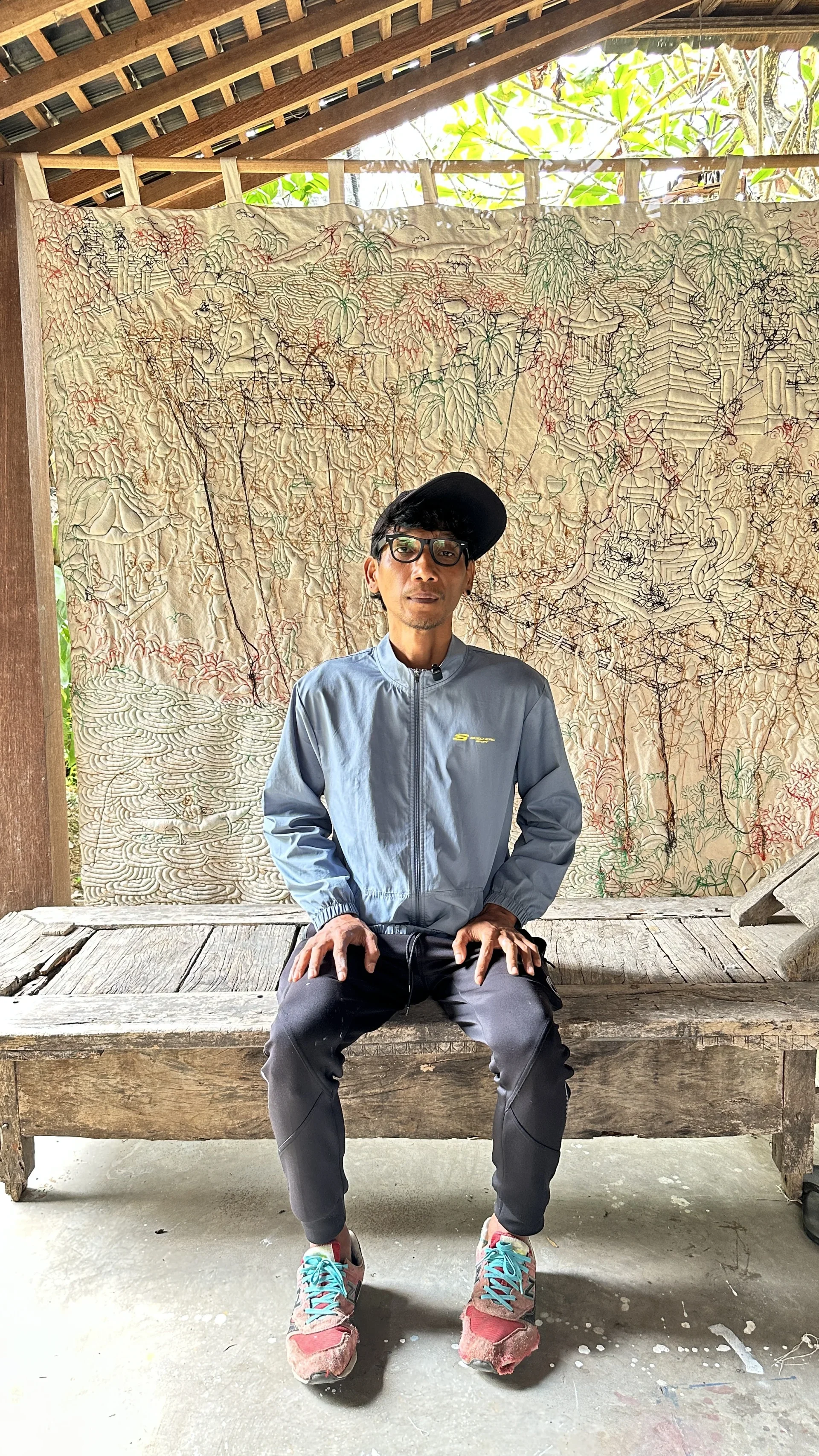
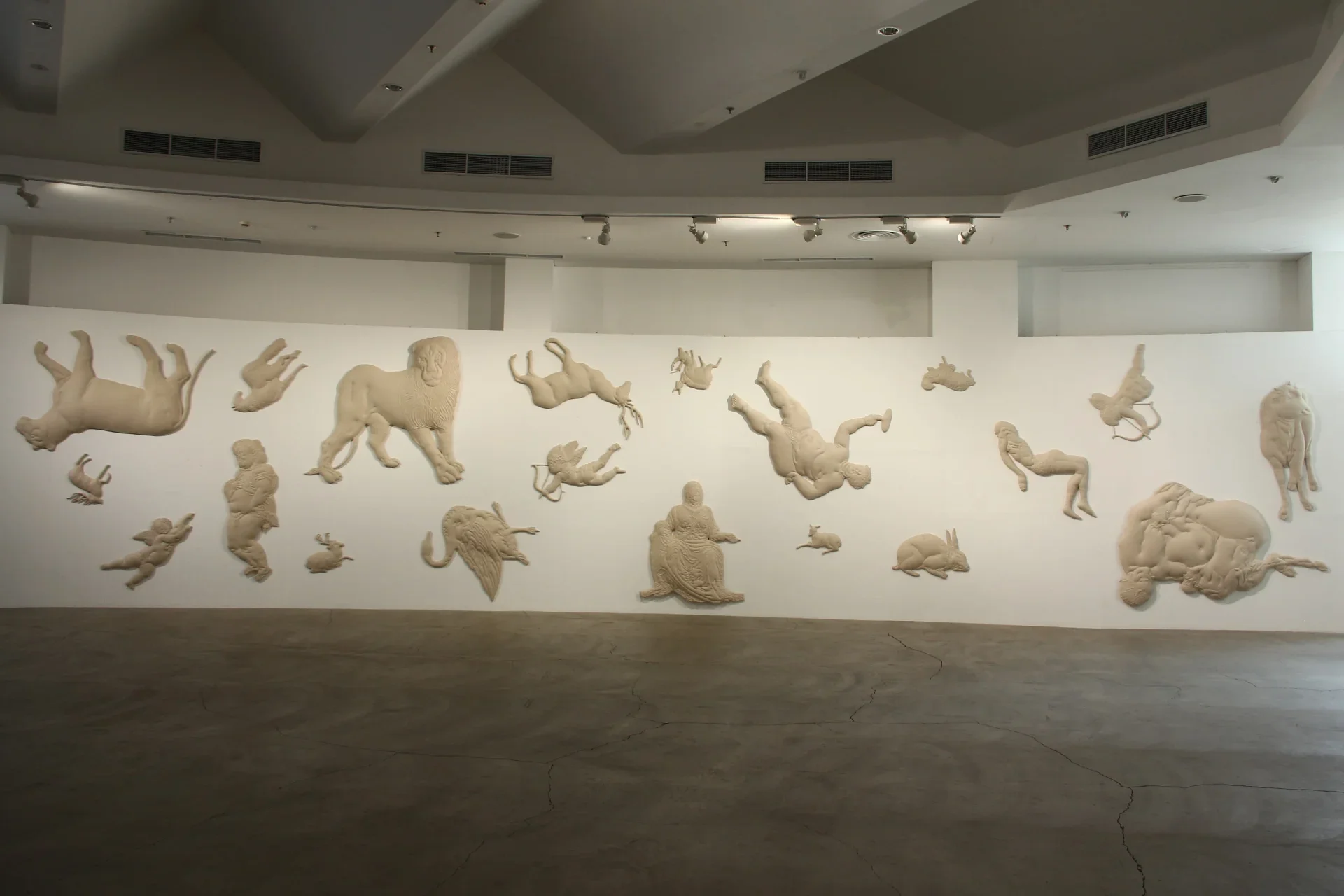
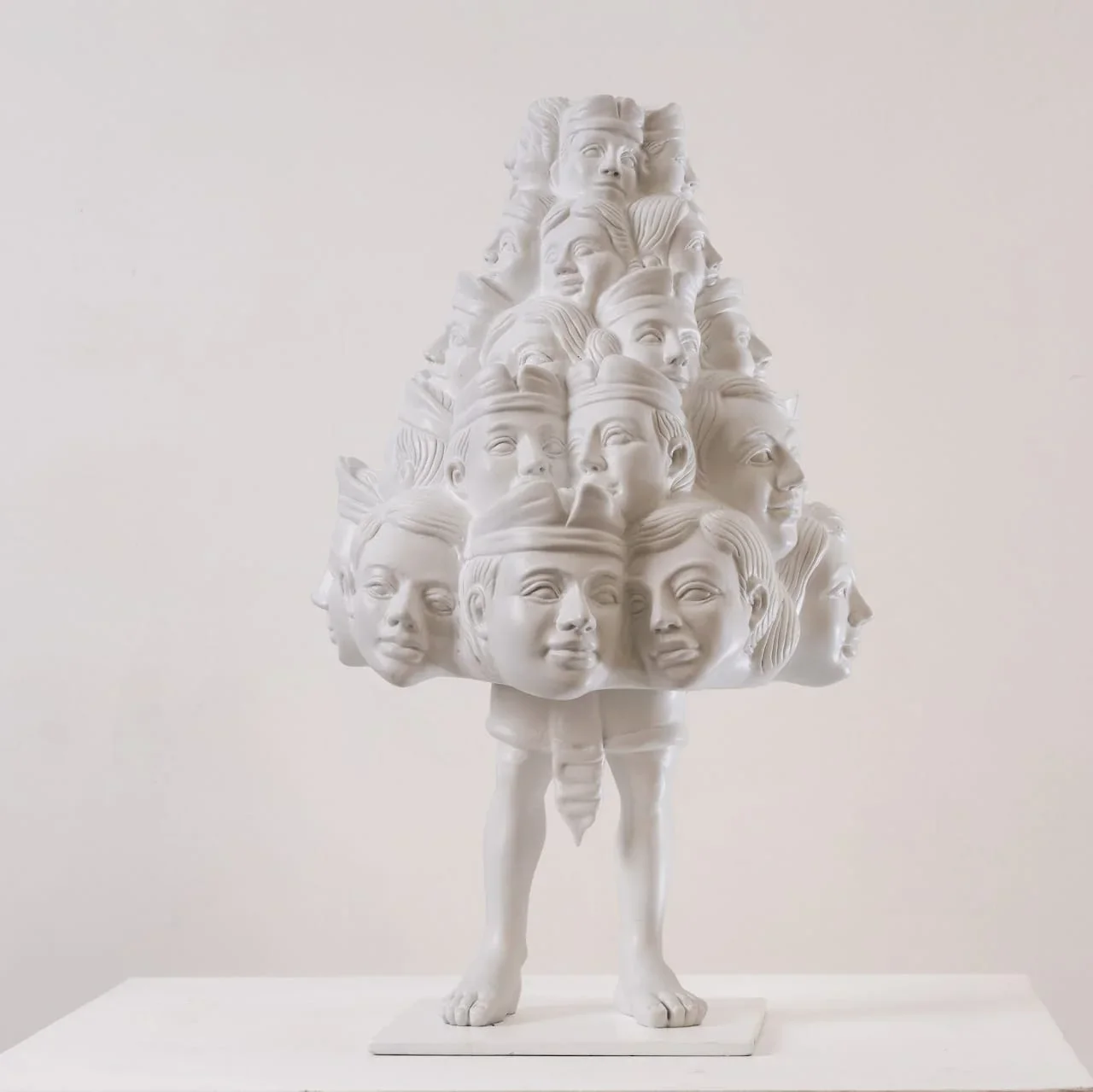
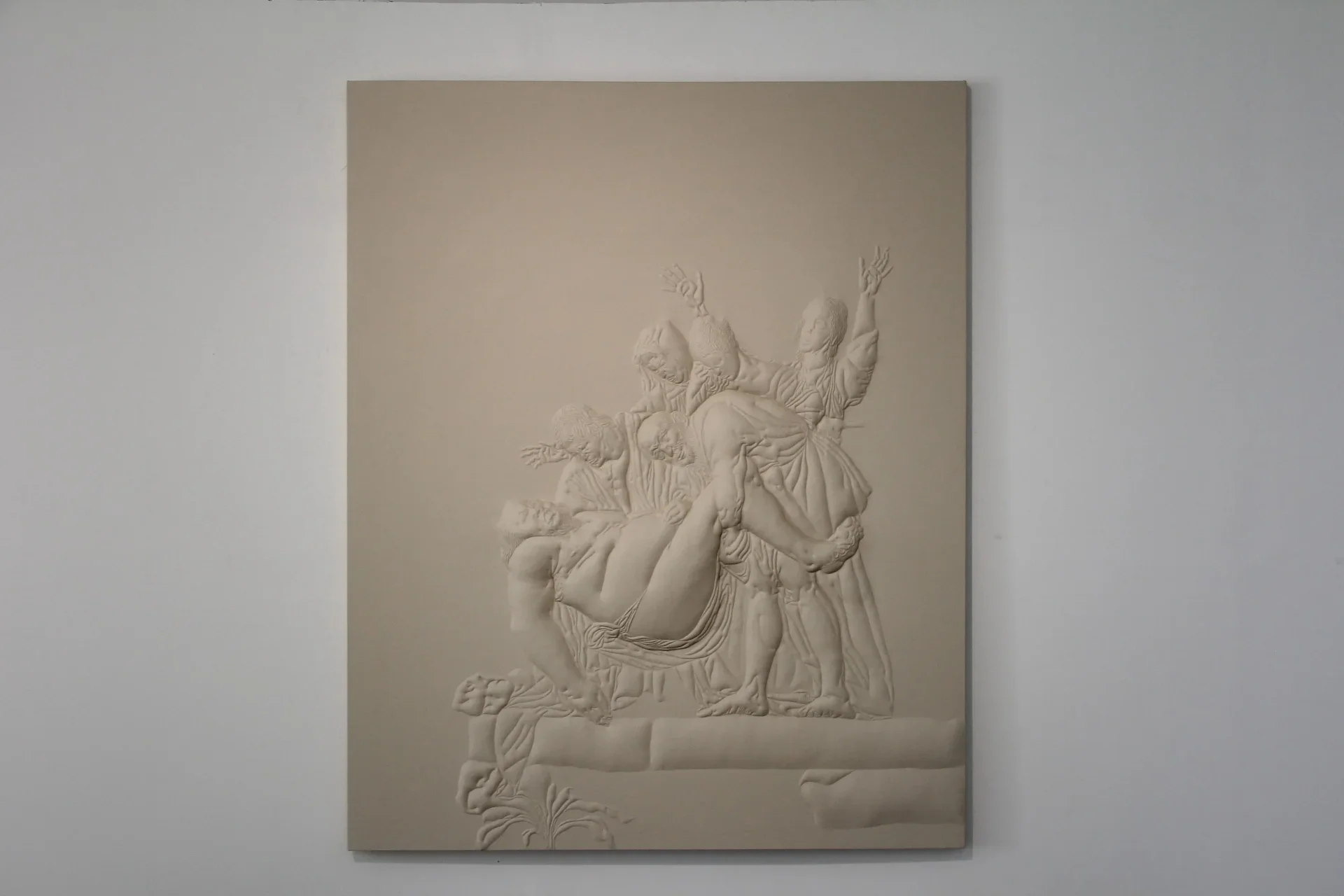
In his work, Valasara is known for his unconventional approach to the canvas. Rather than relying on brushstrokes and color, he explores surface, stitching, volume, and light to construct form.
His practice demonstrates how a simple medium can open up a diverse range of visual possibilities. Written spoke with Valasara about his artistic journey, his exploration of mediums, and his experience as an artist who grew up and continues to work in Bali.
The Language of White and Perspective
Written: Indonesian visual art today is known for being very lively and colorful. Meanwhile, Bli Vala’s work tends to be quite plain. What is behind this approach?
Valasara (V): The issue of white, or the plainness of the canvas, is actually about how I use the canvas as a language. What I mean is, I don’t want to exaggerate my work with color. Instead, I make use of light.
Light is what creates the form. When texture meets light, it produces something beyond the form that I intended. Maybe it is somewhat surreal.
I simply don’t want to be a painter who uses paint as a tool to create an illusion. I want to make that illusion real through texture.
Written: What kind of subject matter do you explore most often?
V: After living in Java for 12 years, I eventually returned home to Bali. I was once again surrounded by the Balinese environment. It had a very strong influence on my thoughts.
So a lot of what emerged was related to Balinese traditions. In the beginning, I tended to focus more on things outside of Bali, but when I moved back, I realized that Balinese visual culture had a very strong influence on me.
Written: How did you adjust when you returned to Bali? Did it affect your work?
V: Perhaps it was more about perspective. When I explore Bali, it doesn’t mean I am repeating the past. At this point, I approach Balinese themes from a critical perspective. Especially because I had been “away.”
The perspective of Bali from a distance is certainly different from the perspective of being inside it. So, after returning, my work became more about questioning my own culture and the rituals that I myself take part in. Questions started to emerge: What is this, actually? Where did this influence come from? Where did this culture originate? It was like learning about my own culture all over again.
Written: Going back to your works, which tend to be quite empty, have you ever received a surprising interpretation from someone looking at your work?
V: I call it the language of white. I started using it when I was doing a residency at Selasar Sunaryo. Since then, I have encountered many different perceptions of this language of white. Some people have said that my work is frightening. That made me realize that white is not always interpreted as something good, beautiful, or empty.
White can also be something very frightening to certain people. So it cannot be generalized. Apparently, it can be very different from one person to another.
A Process Without Rushing
Written: How much time do you usually spend making a single work?
V: In terms of the process, most of them do take quite a long time. Technically, they are very complicated. The longest a single work has taken is seven months. I am not someone who likes to work quickly. I enjoy taking in the process. In fact, I don’t feel that it is tiring.
Written: Since the process is quite long, do you ever feel bored while working on a single piece?
V: Of course, because you can’t control your thoughts. Artists can have these bursts of ideas from time to time. That’s why I don’t always work on a single piece for several months. I usually have several ideas that I work on simultaneously. As a kind of diversion, I often work on smaller pieces.
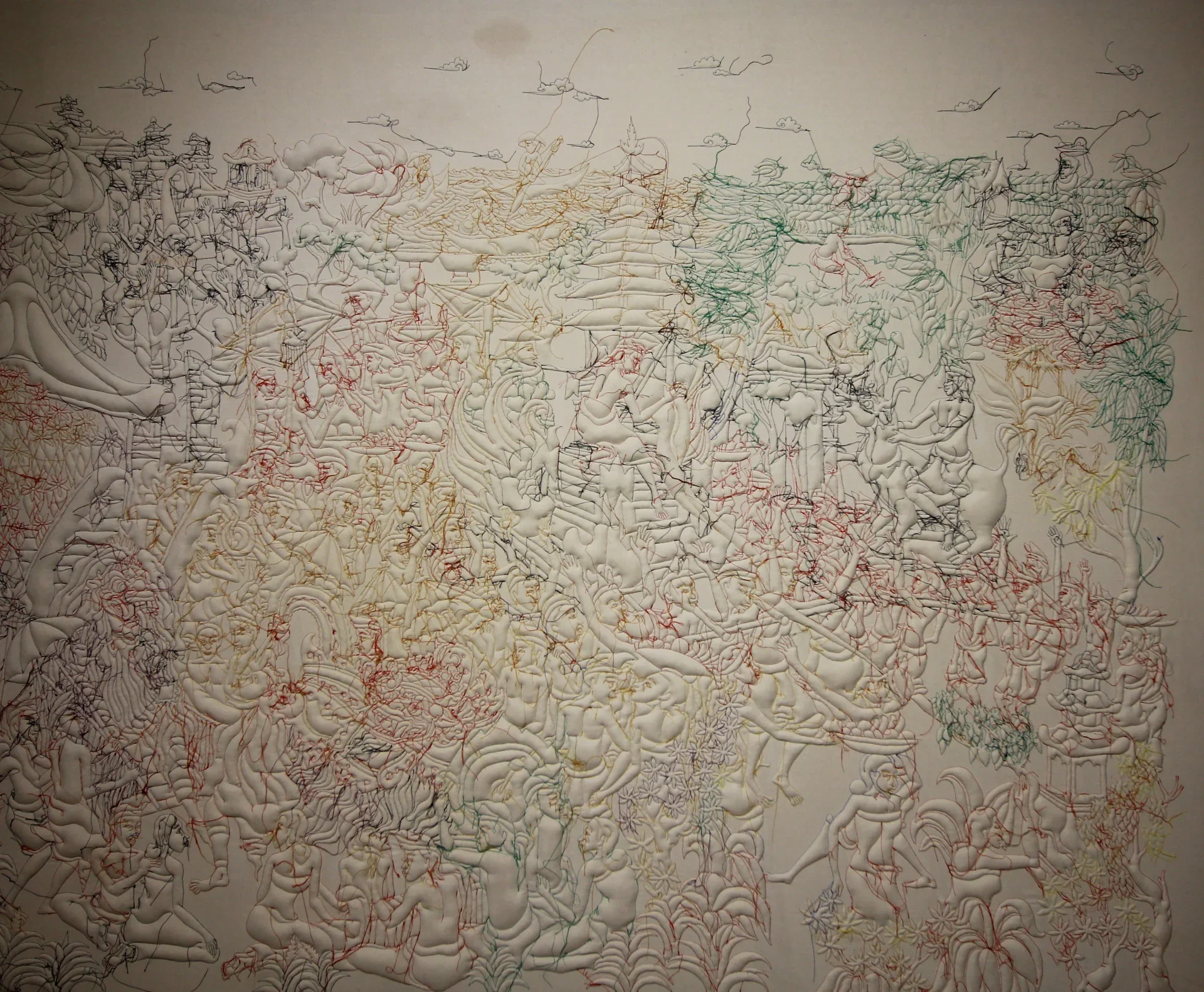
Written: You have an artisan who helps you complete your works. How do you make sure that the message you want to convey still comes through when the work is made by someone else’s hands?
V: Working with an artisan is not easy. It takes time and a lot of extra energy, because we have to teach someone to understand us as well.
Fortunately, I have been working with my artisan from the very beginning. So he is not just a worker, but also a friend I can share with, both technically and in terms of ideas. He has even become my alter ego. He probably understands 90 percent of what I am thinking and what I want.
Written: What about caring for your works? Do you have any advice for collectors on how to take care of the pieces they own?
V: For collectors, I usually explain what the work is about, its meaning, and how it should be displayed so that it can last. I usually recommend using a glass frame. But as an artist, I let the work be as it is. Even if it is affected by time or becomes weathered, I just let it be, because that is natural.
Bali, Tradition, and Self-Critique
Written: Your work often questions Bali. Is there an example of a tradition that you have translated into a work?
V: I have been digging deeper into where the cultures or rituals we practice actually come from. Take Ngaben, for example, one of Bali’s major rituals. Ngaben has different levels, and I started questioning these rules. Where did they come from? It turns out they have a connection to colonialism.
These are perhaps questions that Balinese people rarely ask. But they have always bothered me. So what I can do is address them through my work. I simply put all my thoughts about my own culture out there through my art.
Written: Do you have any advice for young Balinese artists who are still studying? Do they need to incorporate Balinese visual language into their work?
V: I don’t think so, because I feel that it could actually become a trap. I usually tell my friends not to use the same visual language. As artists, we should use the language that we like. And this can be developed without having to leave Bali first. We can still be expressive through a different visual language, even while living in Bali.
Written: Since you enjoy taking care of plants in your spare time, what kind of plant do you think best represents Valasara?
V: Frangipani. Because I like frangipani flowers. They are simple, and their growth process is also slow. Their appearance is calm and white. At home, I have nothing but frangipani plants.