What makes a place memorable goes beyond its visual language. Chris Godfrey explores how spatial planning, cultural nuances, and subtle design decisions shape the way people experience a place.
What makes a place memorable? Beyond its architecture, materials, or visual identity, there is the experience of being in a space, how people interact with it, how it makes them feel, and what they take away from it.
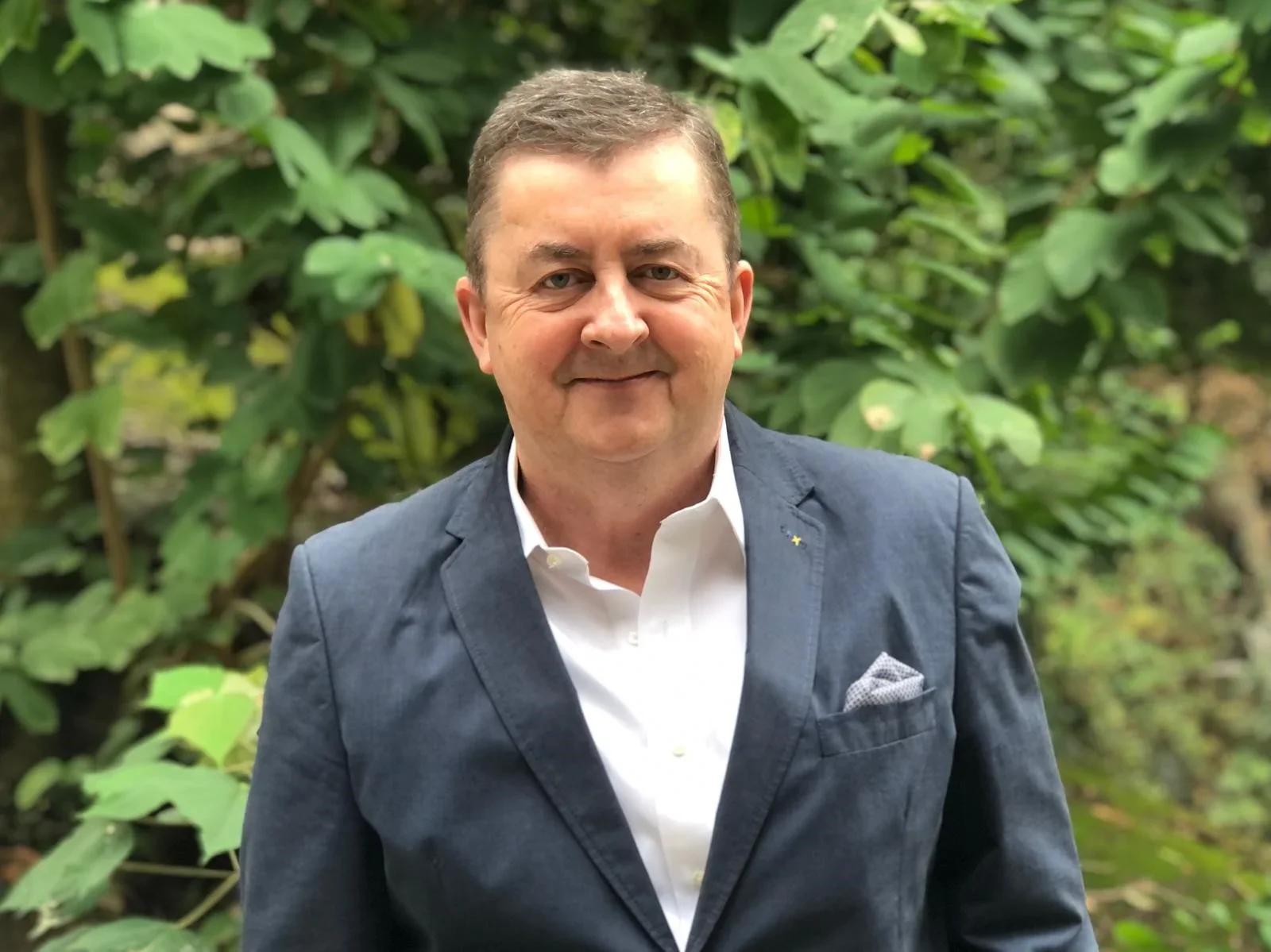
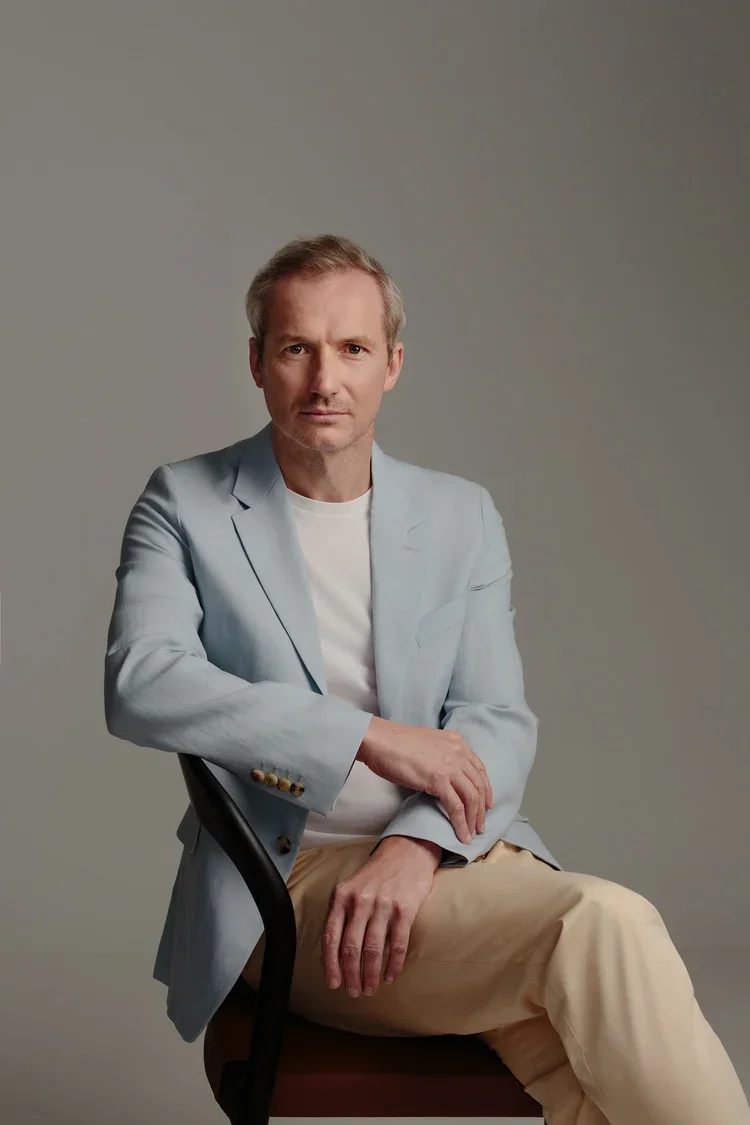
For Chris Godfrey, Partner and Global Co-CEO of Hirsch Bedner Associates (HBA), these questions sit at the heart of design. An award-winning RIBA Chartered Architect with more than 25 years of international experience, Godfrey joined HBA in 2014 to establish its residential division before being appointed Global Co-CEO in 2022. His role has since extended beyond the practice of architecture and interiors to encompass the broader business of design, leading the firm's development into a multidisciplinary hospitality design practice.
In conversation with Written, he discusses HBA's approach to global growth, the relationship between emotion and spatial design, and why challenging the status quo remains essential to the future of the profession.
Legacy at Global Scale
Written: How would you explain HBA to someone who may not have heard of the firm? What does HBA do?
Chris Godfrey (CG): We're the world's leading hospitality design business. More specifically, we've become a multidisciplinary hospitality design business.
Our core business is hotel interior design, but over the last 15 years, we've developed a much broader range of services. Most people in the industry know HBA for its interior design practice, but many may not realise how much the business has evolved.
We've developed a substantial landscape design practice over the past seven years. We acquired Bell Collins, a leading hospitality landscape design company in Southeast Asia, and renamed it Uppersville. We've since replicated that model in Europe by bringing a London-based hospitality landscape practice into the group under the Uppersville name. We're also developing this capability in Miami for the Latin American and Caribbean markets, particularly in master planning.
In parallel, we've been building our architectural practice in these locations. This has allowed HBA to enter projects much earlier in the process. Interior design typically comes further along in a project's development, whereas master planning, architecture, and landscape design allow us to influence the project at a much earlier stage.
More recently, we're developing a strategy division that will move us further upstream. Drawing on our experience, we can advise on feasibility studies, relationships between owners and operators, and the potential of sites and assets. We can help determine what a project could become and how best to approach it.
Initially, we expanded our core business by adding disciplines such as lighting and graphic design. Now, we're also moving further upstream, bringing these capabilities together into a more comprehensive system
Written: HBA has been shaping hospitality design for six decades and now operates across multiple offices and regions. How do you preserve the spirit and values of the original HBA as the organization continues to grow?
CG: I think it's a positive challenge, and spirit is the right word for what underpins everything we do. As a design company, we're staffed entirely by designers, and our senior management team consists of designers as well. We're a big business, but we're not a corporate organization in the conventional sense.
We're run by spirited people. What's taken us around the world is that spirit of enquiry and the attitude that, if we can do something, we'll try. For me, that spirit is inseparable from who we are and what we do.
We've continued to do what we've always done: move with the times, respond to changing dynamics, and understand where the hospitality market is, where it's going, and what drives it, including its broader economic forces. We want to remain in step with those changes and, sometimes, ahead of them.
What's interesting about our evolution is that we're not one big business in one place. We're a series of relatively small entities spread around the world. We're establishing a presence in more territories and connecting these studios more strategically.
In each location, we have a relatively boutique studio working with local people, in the local language, and focusing on local projects first. Jakarta is a good example. The majority of its work serves Indonesian clients, with an understanding of their needs and the local context.
Historically, HBA may have had larger studios in major capital cities. Now, we're operating in a more structured but boutique way. The benefit is that these smaller businesses can develop their own identities and personalities, shaped by the people and places they're in.
At the same time, we've built an infrastructure over 60 years that supports each studio. From operations, finance, and digitization to processes and technical drawings, we have standards and systems developed over a long period. We've had a studio in India dedicated to producing drawings for more than 25 years, for instance.
We're not new to these business models, and we keep our information in-house. That gives us an incredible knowledge base and infrastructure, allowing each small business to be better equipped than it would be on its own.
We've genuinely developed a model that balances the local and the global. It's a bit of a cliché, but in our case, it's something we've built and continue to develop.
Written: With such a large and geographically dispersed team, how do you maintain a shared design culture without forcing every studio into the same design language?
CG: It's important to have continuity, but also newness and renewal. When we bring someone new into the organisation, it's imperative that they bring what's unique to them and to the place they're in. They should be able to create work that's culturally relevant to that location, while also understanding what we stand for and how we work. That's very much part of the process.
Jakarta is a good example. Historically, it operated as an extension of our Singapore office, but today it has become an enterprise in its own right. Kristen, who heads the Jakarta studio, previously worked in Singapore. This is typical of how we operate: someone is part of HBA, moves to another location, builds a presence there, and eventually that studio develops into its own business.
Our expansion into Europe follows a similar approach. It's also a strategic response to how the world has changed, particularly after COVID-19, when borders, relationships, and the dynamics between markets shifted. There's been a growing emphasis on domestic markets and local capabilities.
Spain and Italy, for example, are similar in some ways but very different in others. Both studios are connected to our London office, which has served as a nucleus for education and integration for many years, much like Singapore has in Asia. At the same time, we continue to explore new territories and test new ways of working.
Written: As HBA expands into new disciplines, markets, and generations of designers, what do you believe must remain unchanged—and what should be allowed to evolve?
CG: Within HBA's core business, a lifetime of hospitality knowledge is essential. We have accumulated extensive experience, relationships, and an understanding of hospitality design in all its manifestations.
That includes the relationship between owners and operators, what different brands represent and are trying to achieve, and how we approach design, execution, and delivery. We take pride in our track record of relationships, understanding, and execution. Anyone new to the organization needs to be aligned with and understand those principles.
At the same time, the hospitality market is constantly evolving, and that's relevant to us. We've remained at the forefront for 60 years because we've been comfortable with continuous change.
The industry is evolving more than ever, with new territories, typologies, brand architectures, and directions emerging. We've always sought to understand these developments and remain in step with them.
Evolution is constant for us. What matters is balancing what we stand for and what we want to remain with what we need to understand and respond to in an evolving world.
Designing Emotion
Written: HBA describes its philosophy as “Design that gives form to emotion.” What does it actually mean to give form to something as intangible as emotion?
CG: It's closely related to the idea of working from interiors outward. Many multidisciplinary design companies begin with architecture and then work towards smaller scales. We start here, with the interior and the human experience.
For us, giving form to emotion is very much about the spirit of a place and the experience of being there. How do people interact? How do they feel?
We like to begin at the scale of the table, the interaction, and the qualities of a particular moment. From there, we consider how to build an environment that supports those experiences. Many people develop the overall vision of a space first and only afterwards consider what it might feel like to be in it, if they consider that at all.
Ultimately, seeking to understand the spirit of a place and the subtle enjoyment of being there is how we shape environments that support those moments.
Written: Emotion is highly personal and culturally specific. How does a designer translate a feeling into tangible decisions about space, material, light, scale, or detail?
CG: In hospitality, we need to create moments that appeal to more people, sometimes in ways that are subtle enough for people to appreciate them without necessarily knowing why.
In design, cultural specifics are paramount, but there are also what I call good design manners, which are universal. I think this balance is at the heart of good design: understanding the fundamentals while responding to the particularities of a project.
Those particularities include the physical and cultural context, as well as the objectives of the owner and operator, whether it's a private residence or a commercial project. These are the factors that make each project unique.
What we try to do is distil all those inputs. We consider what's fixed and what's variable, what's universal and what's specific, and then develop responses that work on both a conscious and a subconscious level.
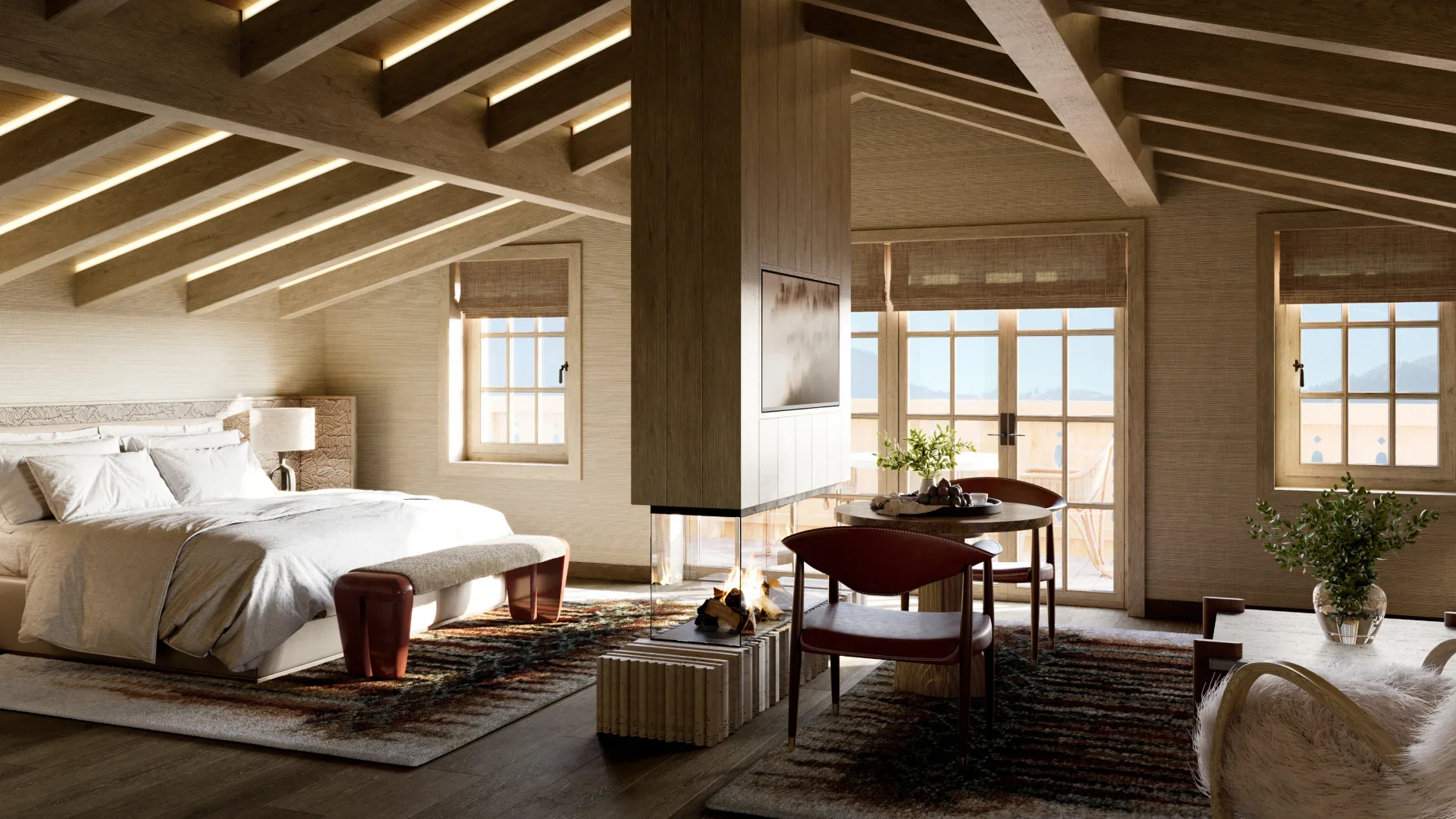
Good design manners begin with how a building is planned, its proportions, where the light comes from, and what people see when they look out. These are universal criteria, but they are also specific. A window facing one direction will receive different light and frame a different view from one facing another way.
Our approach is fundamentally about understanding the physical, cultural, and commercial context, then making a genuine, considered, and emotive response to it. That means understanding the sun, the wind, the site, and the view, while also considering operational planning in hospitality and how service is brought to guests.
The sequence of an experience matters, too: how you arrive, how you're received in the first space, how spaces open and close, and the transitions between light and dark. These subtleties are part of what we've learned and seek to apply in our work.
Written: Do you think the most successful hospitality spaces are designed around a particular visual language, or around the experience and emotion they want people to remember?
CG: When designing spaces, I often compare them to the human body. If the skeleton is right, if the spine is straight and the symmetry, balance, and form are there, then the skin will be inherently beautiful. That's how I think about the plan and the underlying structure of a building.
If you design something correctly and paint it white, it should be beautiful. Everything that comes afterwards isn't necessarily just an addition, but a further development. There can be layers, materials, and cultural elements, but the essence should come from the place itself.
All those elements of knowledge need to inform the design, but if the fundamentals are right, the space should already have an inherent quality of its own.
Beyond Trends: The Future of Design
Written: We're seeing more design fairs, biennales, exhibitions, and design weeks around the world. From your perspective, what makes a design event genuinely meaningful today, rather than simply another platform for brands to showcase products?
CG: I try to avoid those fairs at all costs, which makes this a difficult question. I think discourse is more important to me.
When we talk about where the industry is going, I find that more interesting than simply looking at what came before or what happened next. It's about having a conversation and exchanging ideas.
Whenever I attend these events, they're useful if there's a meaningful discussion. If I do go, I usually attend as a speaker, and I always learn from the other people there. We're a significant part of the hospitality design industry, but I only attend events if I can learn something from them.
When people are simply showing their work, the value can be limited. When they're exchanging ideas, there's inherently more value. I think that's true beyond design events, too.
Written: What do you think about trends that move fast through social media?
CG: I don't like trends, but they do exist. I prefer to call them drivers.
Health, wellness, and longevity are important global drivers, not just within hospitality but across many aspects of life. Sustainability and technology are also important. I see these not so much as trends, but as forces that will continue to shape how we live and design.
What's interesting is how these drivers are beginning to come together. Health, wellness, and hospitality have always been connected, but in the past, wellness might have been treated as a separate facility, such as a gym tucked away in a corner. Now, health, wellness, and longevity are becoming much more all-encompassing.
Food and mental well-being are part of that conversation, too, and they bring us back to the spirit of a place. When we think about universal design principles and the broader forces shaping the industry, these considerations become increasingly interconnected.
Technology can contribute to this. Wearable devices, for instance, can help collect and share data, potentially informing how a hospitality experience is designed and delivered.
Sustainability is similarly connected to the larger picture. It begins with the land: how we use it, where we position buildings, what we build with, and how we bring food and other resources into a place.
All these elements are becoming integrated. For HBA, that integrated approach is a particularly interesting direction for the future.
Written: Speaking to young designers and design students, what do you think is the most important quality to have as a designer?
CG: A spirit of enquiry. You always have to ask questions of yourself, of others, and of the status quo. Challenge the status quo, always. But challenge yourself as well. You have to do both together.