Want to visit ArtJog 2025? Read our review, unpack the meaning behind this year’s ‘Amalan’ theme, and get practical tips for your visit before August 31.
Yogyakarta’s air felt different the moment I stepped onto the grounds of Jogja National Museum (JNM). No, not because it was hot and humid. I had finally fulfilled my long-standing wish to visit ArtJog. “Wait, this is your first time at ArtJog? Wow, that’s embarrassing!” joked an art collector and director of one of Jakarta’s largest art exhibitions. Maybe it was just a joke, but there was some truth to it. After a decade of covering art galleries, it was admittedly quite embarrassing that this was my first time attending the major event often referred to as the Lebaran Seni Rupa, or the Eid of Visual Art. But, better late than never.
What Is ArtJog 2025?
Before we dive deeper, let’s go over some important facts you need to know. Here’s a quick cheat sheet that Google’s AI probably loves, and you might too.
What: Indonesia’s largest annual contemporary art festival, held since 2010.
Theme: Motif: Amalan
Location: Jogja National Museum (JNM), Yogyakarta
Dates: June 20 – August 31, 2025
Ticket Prices: Rp50,000 (children) and Rp80,000 (adults). Children under 6 enter for free.
Breaking Down the Motif: Amalan Theme
On opening day, there was a palpable sense of anticipation in the air, a mix of curiosity and awe among the hundreds of visitors in attendance. This year, ArtJog takes on the theme Motif: Amalan. It is the final chapter of the trilogy under the overarching Motif, together with guest curator Hendro Wiyanto.
When I read the theme text printed on the promotional materials, I found myself wondering: What exactly does ‘amalan’ mean here? And how are the artists presenting it?
The answer to my questions came from the man behind the event. The overarching Motif theme began with Lamaran. “At that time, we invited artists and anyone working in the arts to speak through their work,” explained Heri Pemad, founder and Artistic Director of ArtJog.
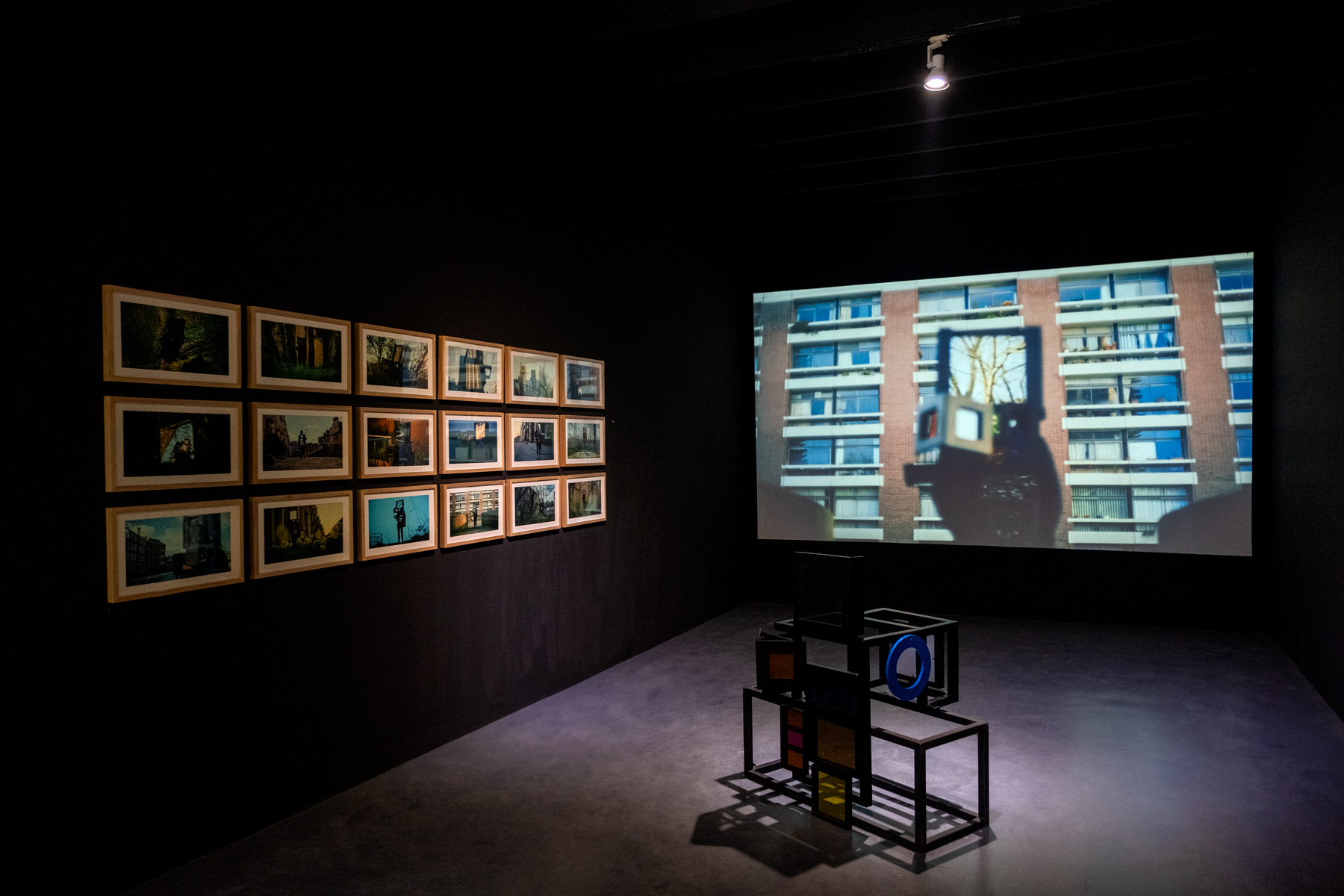 Bunga Yuridespita & Matthew Oaten – Did You See That?
Then came Ramalan. “Even though they may not intend to, sometimes an artist’s work accidentally becomes a prediction or is able to foresee something. The hope is that what artists offer the public through their work can open up new awareness through their interaction with it,” he added.
And finally, Amalan. “What is our motif? Do we want to ngamal or not? Sometimes, even we at ArtJog can assess someone, for example, through a program that has no particular agenda or ulterior motive, but actually contains a very significant amalan and has a major impact on life,” Heri explained further.
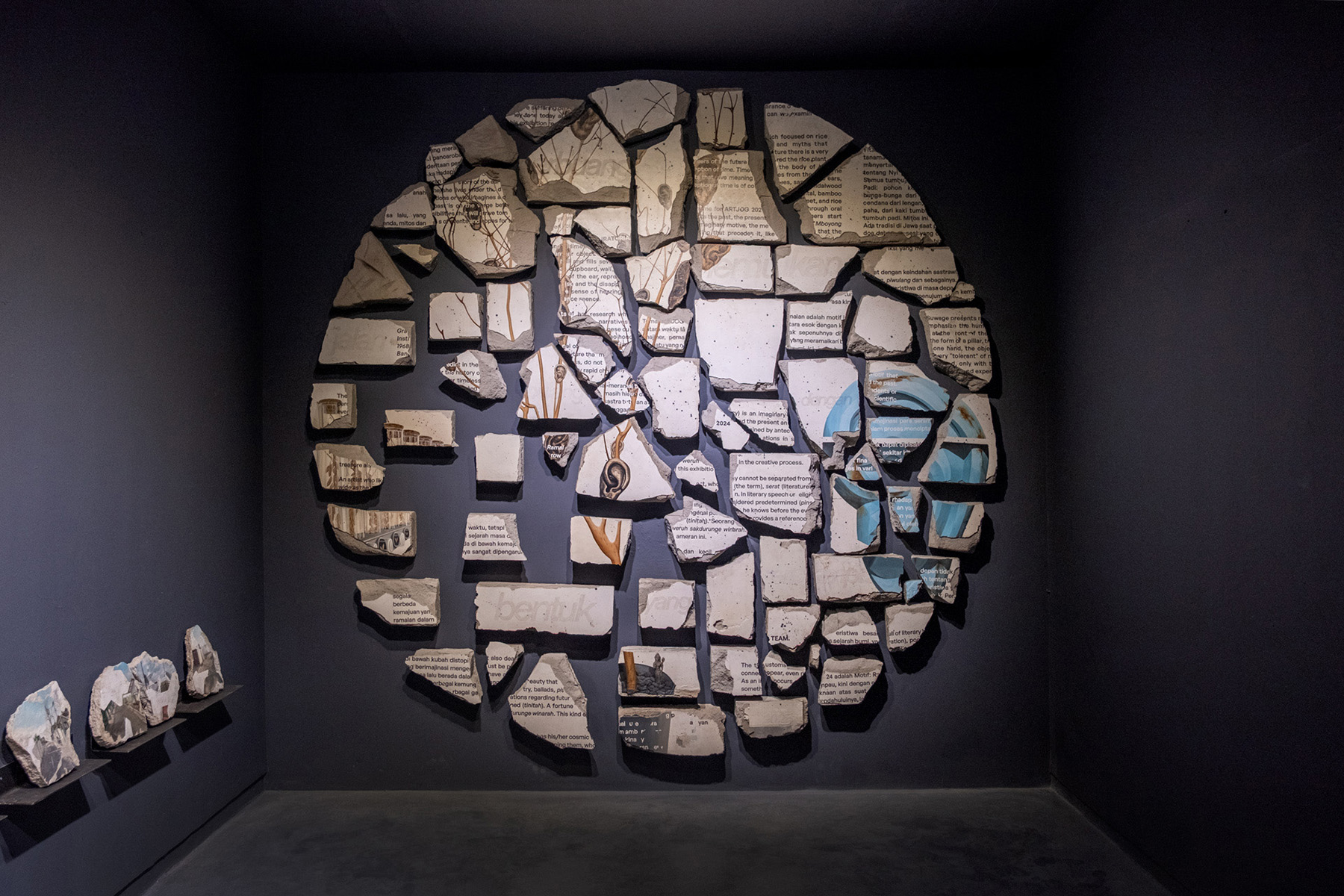 Begok Oner – Yang Terbuang Menemukan Jalan Pulang dengan Bentuk Terpampang (After Suwage dan Tita Rubi)
“The theme Motif: Amalan itself seeks to reread artistic practices and the function of artworks beyond their aesthetic value. Meanwhile, when the function of art is questioned, it has already come to be imagined as an action. The meaning of Amalan in this theme is not limited to the dictionary definition that emphasizes the ‘cliché’ notion of spiritual reward, but rather refers to the artist’s practical conduct as an active subject within aesthetic, social, political, and other contexts. Through this, artworks can be seen as ‘gifts’ toward the betterment of collective life, beyond calculations of profit and loss, and whose value often cannot be measured,” Hendro Wiyanto explained at a press conference held shortly before the opening of ArtJog 2025.
In my everyday-language interpretation, the artists responding to this year’s ArtJog theme are not simply fixated on the meaning of the word ‘amalan’ as an act of goodness. Instead, they approach it through various perspectives and contexts, including aesthetics, society, politics, the environment, and more.
These works attempt to speak to visitors, prompting them to become aware of their own amalan. This is one of the functions and gifts of art to the wider public.
Special Programs at ArtJog 2025
After passing through a small corridor into the exhibition space, we were immediately greeted by Anusapati’s Secret of Eden. This ArtJog-commissioned work features a dark room with a railway track running through its center. Tree roots emerge from the ceiling, while several wooden totems are scattered throughout the space. The work occupies two floors of JNM at once. The upper half of the tree can be seen from the floor above.
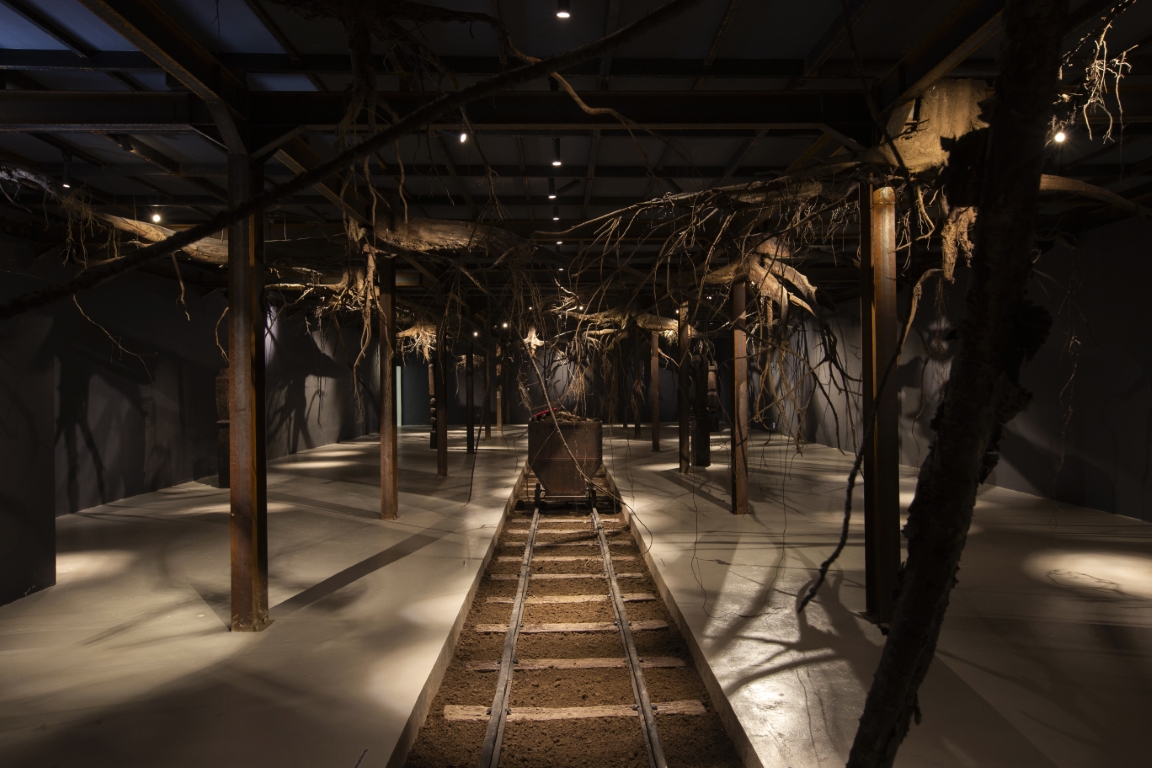
Pak Ninus, as he is affectionately known, seeks to express his concern over human exploitation of nature. The tree becomes a representation of life, art, and nature. He uses waste materials from nature to create an artwork, an attempt to “redeem” humanity’s separation from nature.

Moving deeper into the exhibition area, a black wall catches our curiosity. This is the dedicated Spotlight space, a new ArtJog program that bridges the visual arts with other formal sectors. “Finally, Reza Rahadian has entered ArtJog!” someone joked during the press conference.
The inaugural program features Reza Rahadian in collaboration with Garin Nugroho (Director), Siko Setyanto, (Choreographer), Aditya Surya Taruna (Composer), Andra Matin (Architect), and Davy Linggar (Photographer and Videographer). “This is a moment of reflection closely connected to what I have experienced as an actor…” Reza explained about the work Eudaimonia, which also marks his amalan of embodying a wide range of emotions as an actor over the past two decades.

This year’s ArtJog Special Project features three participatory art projects by Murakabi Movement, ruangrupa, and Devfto Printmaking Institute. Murakabi Movement presents Tanah Air βeta, referring to the βeta generation that will inherit the current state of the Earth. There is a warung where the water used to make coffee is distilled from rainwater, as well as elements of trasah watu construction. This local wisdom is practiced in the process of hardening village roads, allowing water to continue being absorbed and medicinal plants to grow between them.
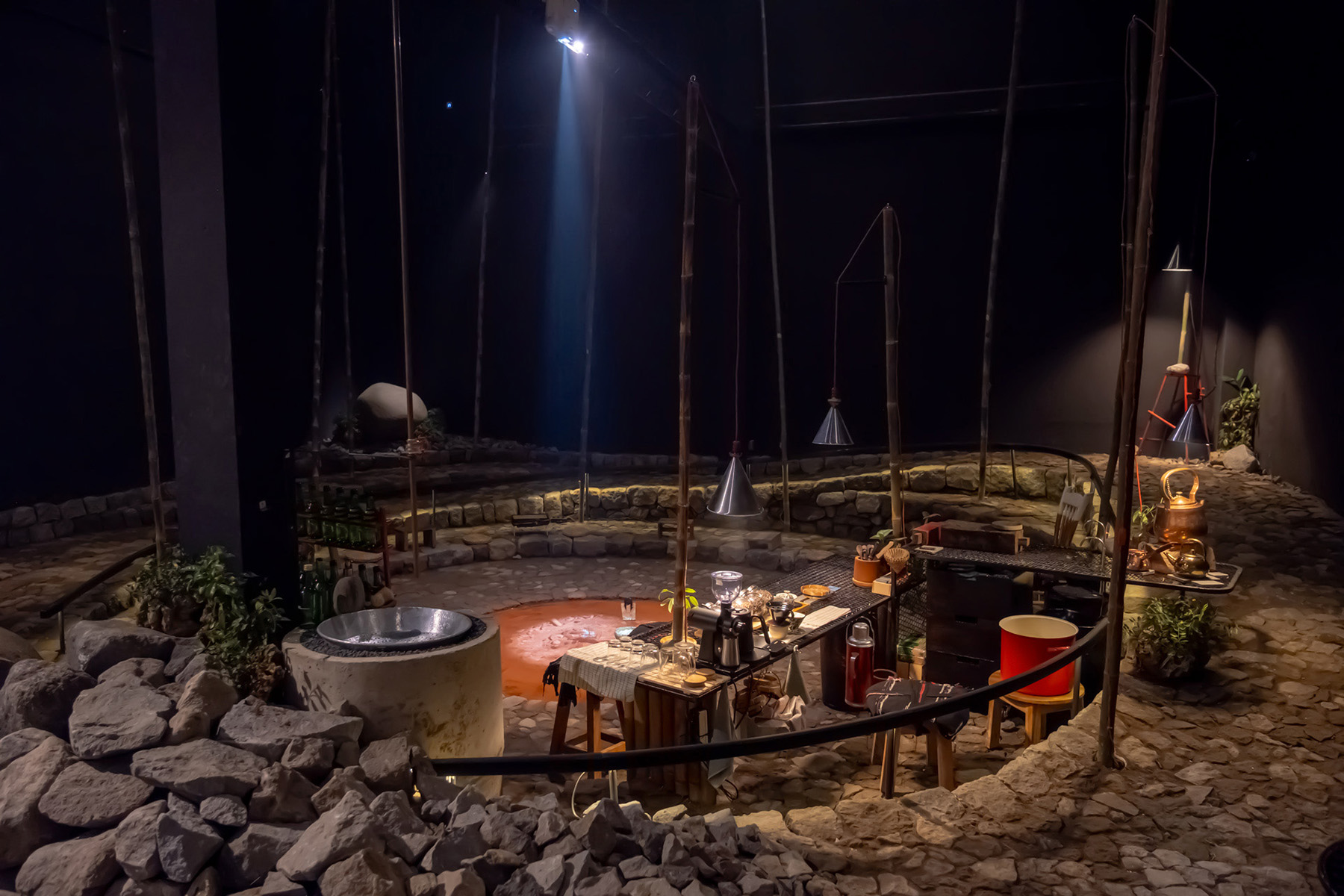
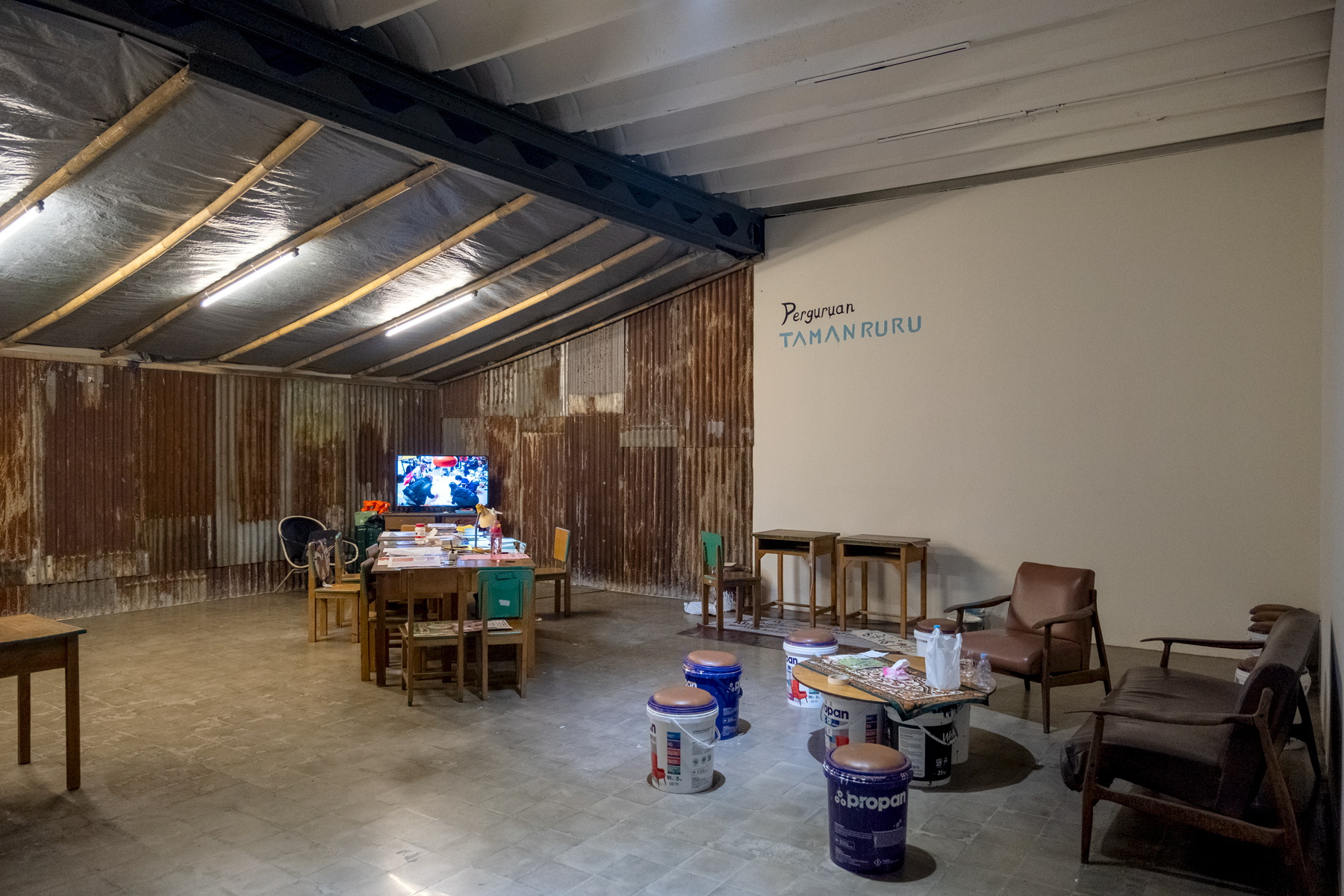
Ruangrupa (ruru) presents Perguruan Taman-ruru, inspired by Taman Siswa. It takes the form of a learning space that reflects the idea that learning does not always have to take place inside a classroom. Eleven artists have been selected to learn here throughout ArtJog 2025. Their works will then be exhibited during ruru’s 25th anniversary celebration on October 3-5, 2025, in Jakarta.
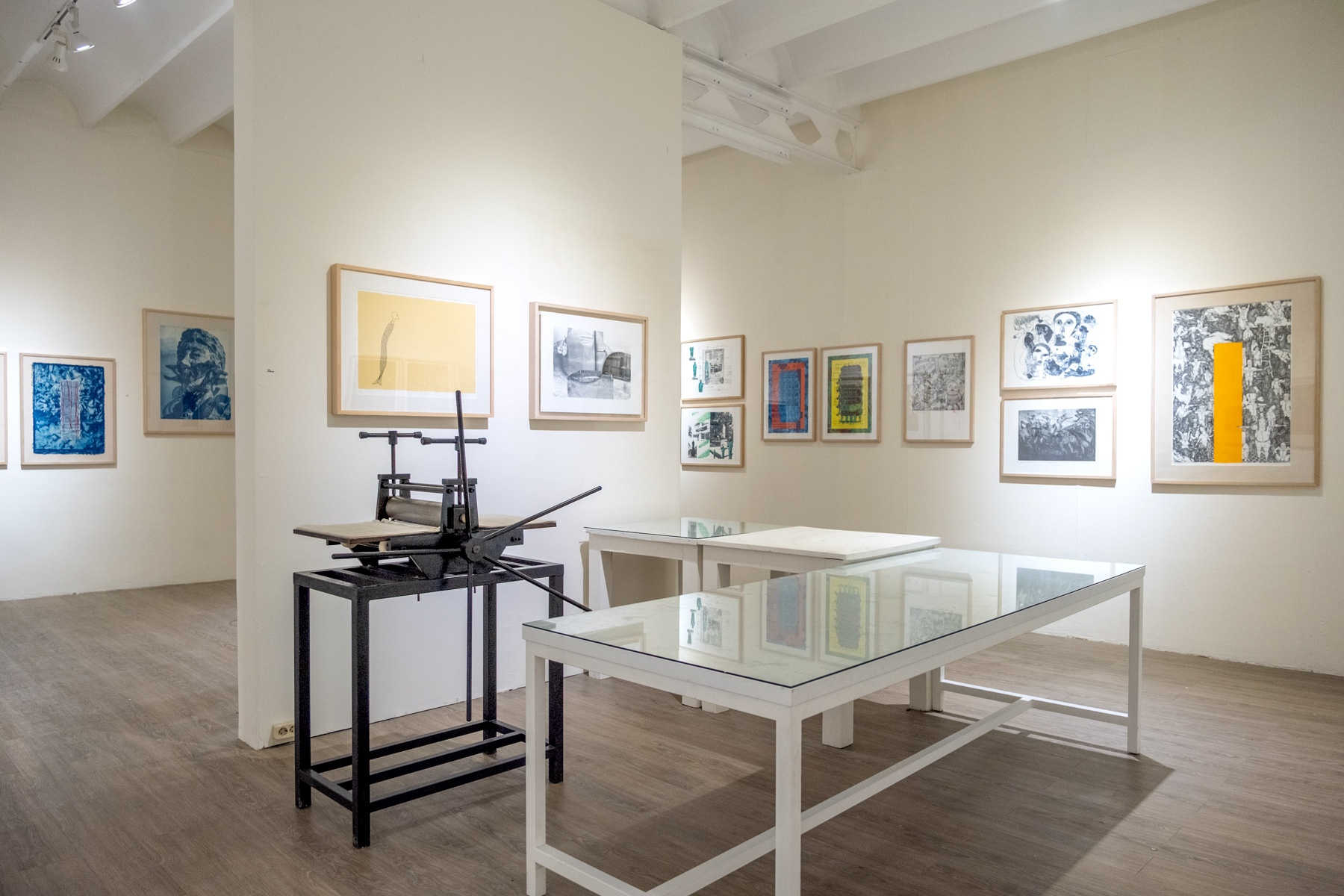
Devfto Printmaking Institute, based in Ubud, Bali, brings dozens of print works by renowned Indonesian artists. Its presence brings the visual arts community closer to printmaking, an art form that may still be unfamiliar to many.
Other programs include the Young Artist Award, an award for artists under the age of 35. There are 3 winners selected from this year’s 16 young artists. They are Faelerie with an installation titled The Thirteen Offerings, S. Urubingwaru with two works titled The World Farewell Parade and Nikola Tesla and the Lost Dialogues of the Equatorial Scientist, and Veronica Liana with a work titled Rupa Tan Matra.
Exploring ArtJog’s Exhibition Spaces
The journey through JNM feels like tracing the corridors of amalan itself. The echo of visitors’ footsteps meets whispers of interpretations surrounding the artworks. Several works make us pause for a moment and interact with them.
Large-scale works naturally draw attention with ease. One of them is Tisna Sanjaya’s work, which features a wooden waterwheel installation decorated with nine human figures made of metal. The waterwheel was taken from a river that was once clean but is now polluted by household waste.

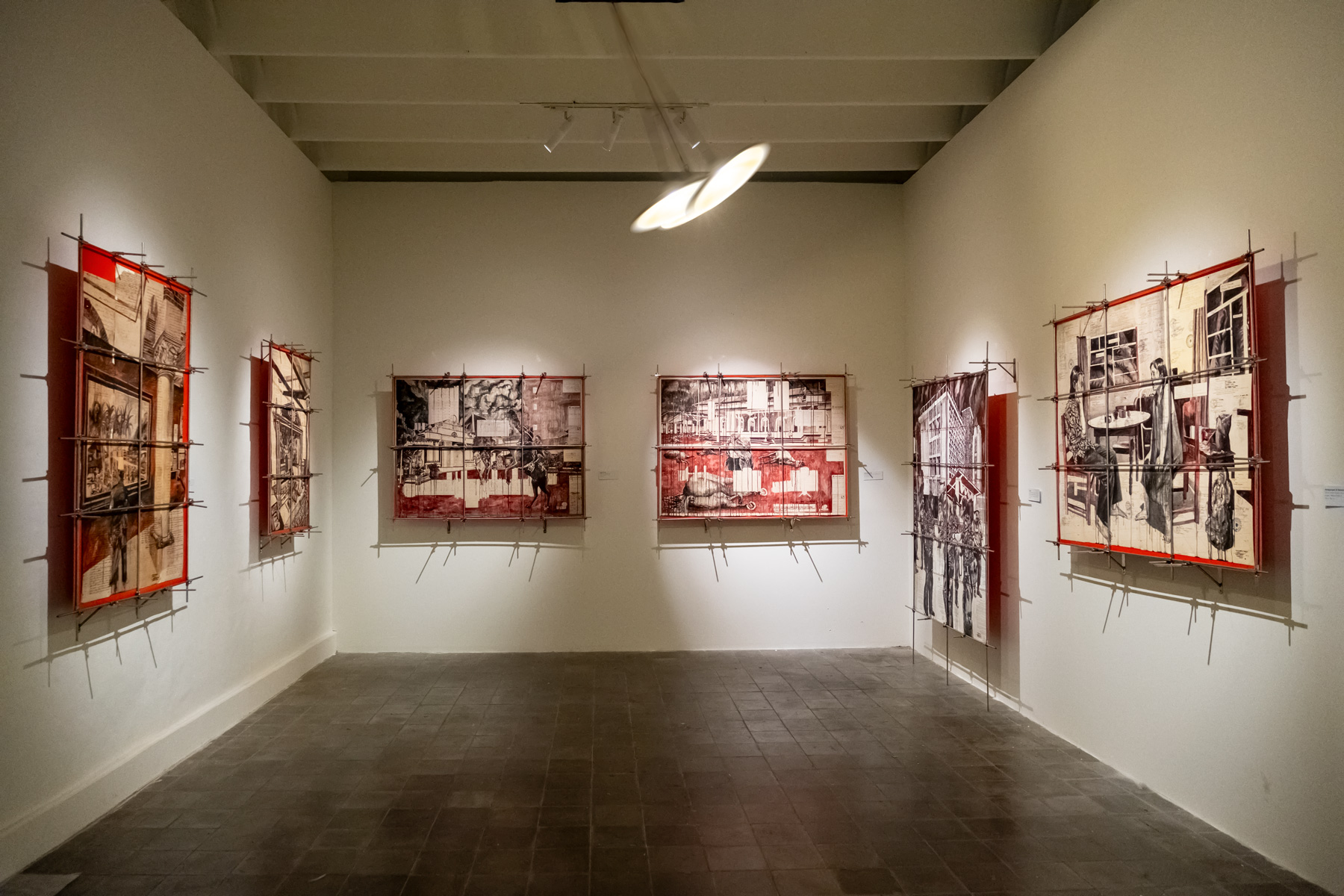
Works that intersect with archives and history are also presented by Aditya Novali and Enka Komariah. Enka presents episodes of ‘defeat’ in Indonesian history depicted on top of important documents. Her paintings are displayed in a room designed to create a sense of discomfort.
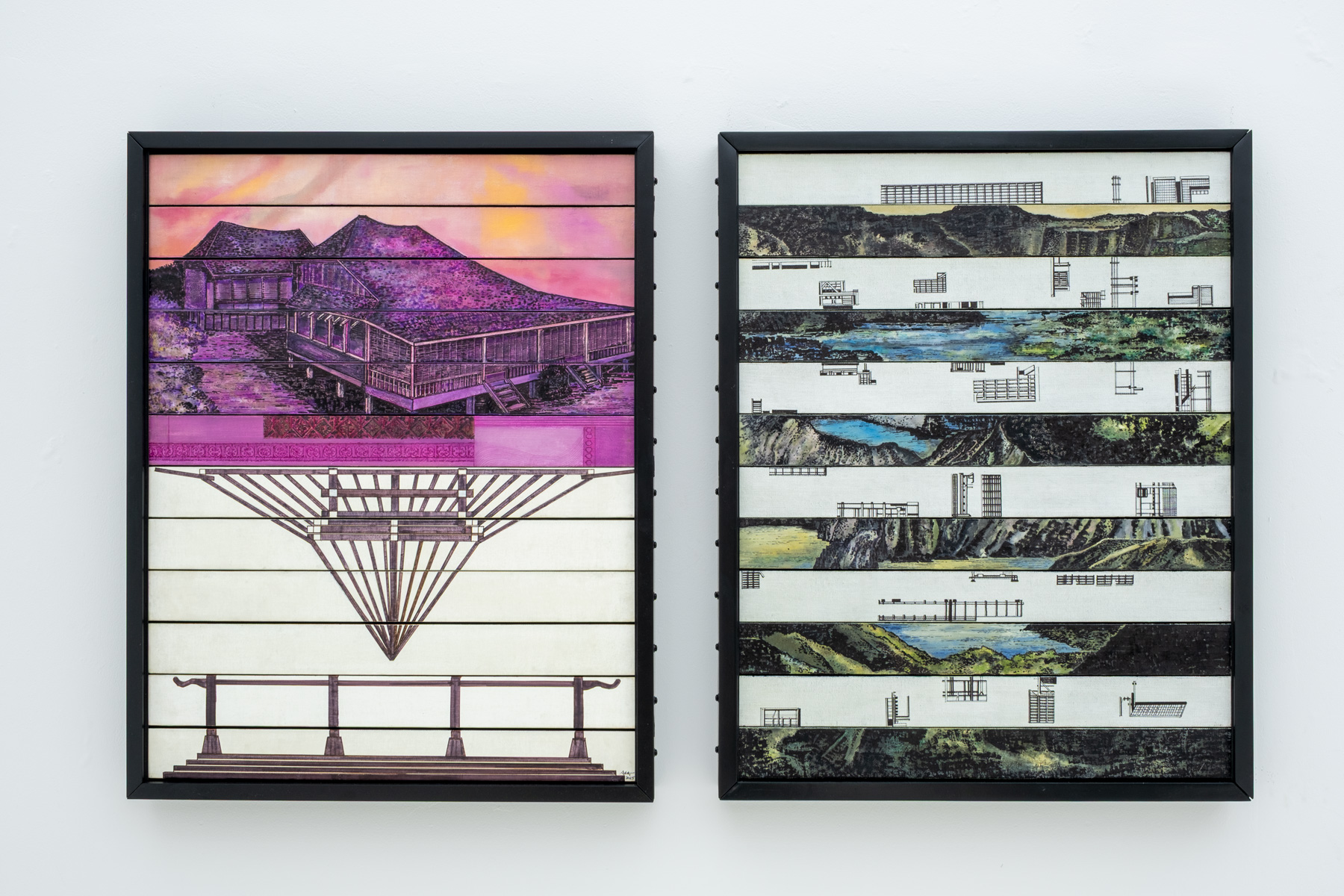
Aditya Novali’s educational background in architecture gives him a different perspective. The perspective he brings into his paintings this time is a visual archive of our national image, presented through banknotes. Fun fact from the artist’s findings: Prambanan Temple has appeared three times on Indonesian banknotes, while Borobudur Temple has appeared only once.
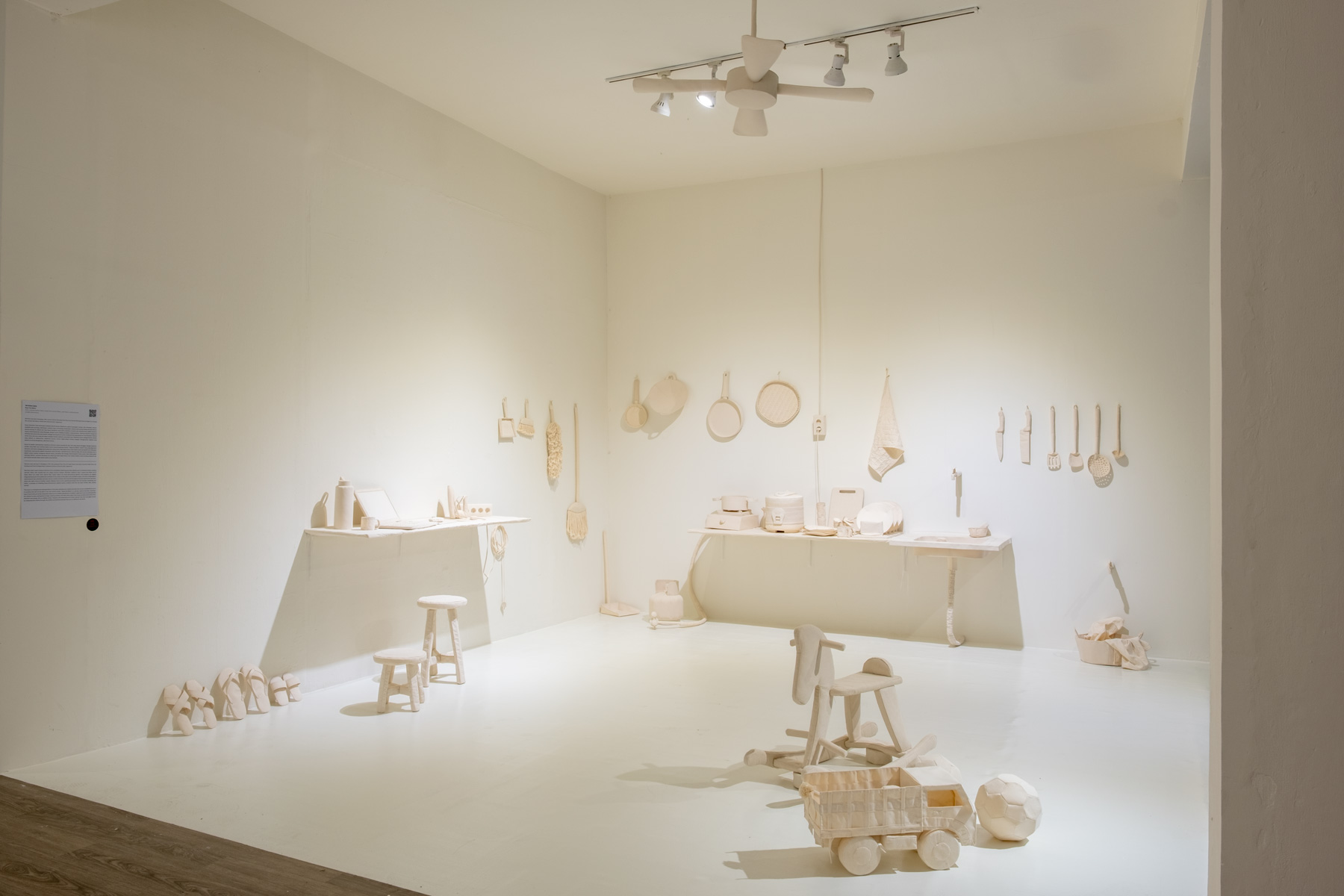
On the other hand, there are also works that feel deeply personal. One of the Young Artist Award winners, Veronica Liana, draws inspiration from her new role as a mother. Her installation consists of everyday objects such as cooking utensils, a work desk and laptop, and children’s toys, all made from cotton fabric.
Maharani Mancanagara imagines a conversation with her grandfather, whom she never met. A grandfather who lived in 1965 tells his granddaughter, who lives in the present day, about various events he experienced when he was accused of being part of the PKI. As visitors, we can eavesdrop on this grandfather-granddaughter conversation inside a phone booth.

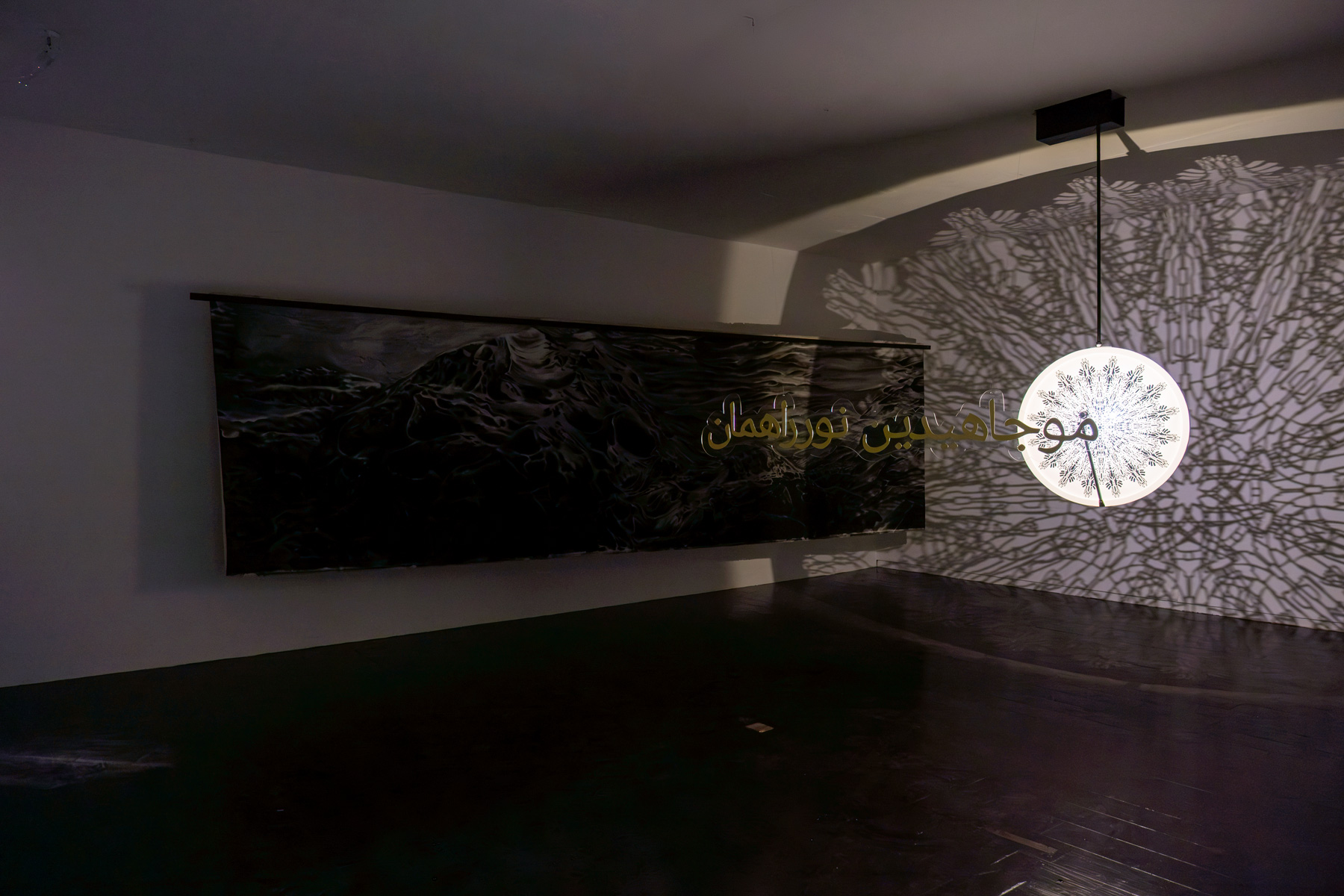
Mujahidin Nurahman’s installation contains an intimate conversation between himself and ‘his other self’. The text ‘Mujahidin Nurrahman’ is rewritten using Arabic Pegon script and projected onto the walls by lights arranged around the space. Not to be missed is Mujahidin’s geometric arabesque installation made from paper-cut AK47 rifles.
There are also works connected to science. A collection of works by Filipo Sciascia invites us to see that the universe is not merely an object of observation, but also a source of knowledge.

Venzha Christ presents facts surrounding the vortex line discovered by the Indonesia Space Science Society (ISSS) in Yogyakarta. This line is associated with natural phenomena, one example being the appearance of the constellation point of Orion’s Belt. The phenomenon even inspired the establishment of Kampung UFO in Yogya.
It feels as though the dozens of works by 47 artists spread across JNM’s three floors offer something for everyone, regardless of their background or personal experience. Even children.
ArtJog Kids 2025
On the way out, after visiting the merchandise shop, visitors are greeted by two colorful robots standing at the entrance to ArtJog Kids. The artist duo REcycle-EXPerience (Re Exp) from Bandung was invited to become this year’s commissioned artists. “When we create, we always lean more toward being playful. We want to share joy and happiness with as many people as possible,” said Attina Nuraini, one of the Re Exp artists.
Their works are made from found objects, everyday objects discovered in daily life. “In an indirect way, this teaches children about environmental preservation in a fun way,” Attina explained why they are often invited to exhibitions and workshops for children.

For ArtJogKids 2025, Re Exp wanted to present a story about relationships among living beings. The figures featured include humans, animals, and plants found around us. “We want to tell a story about balance when we live together. The ant is the main icon as a representation of children. It is small, but when observed closely, it turns out to have a lot of amalan. There is a lot children can learn from ants as they grow, such as cooperating with friends, gotong royong, and always moving forward without giving up.”
In addition to Re Exp’s installation, there are also artworks by 44 child artists in this area.
Practical Tips for Visiting ArtJog 2025
Best time: Visit on a weekday during the afternoon if you want more room to explore. Weekends are usually very crowded.
Ideal duration: Set aside at least 3-4 hours. Don’t rush; let each artwork sink in. Make a quick round of all three floors, then return to the works that caught your attention earlier.
What to wear: Wear comfortable clothes and shoes, as you’ll be doing plenty of walking and standing.
Keep an open mind: Leave your expectations behind. Allow yourself to be confused, curious, and eventually discover your own meaning in each artwork.
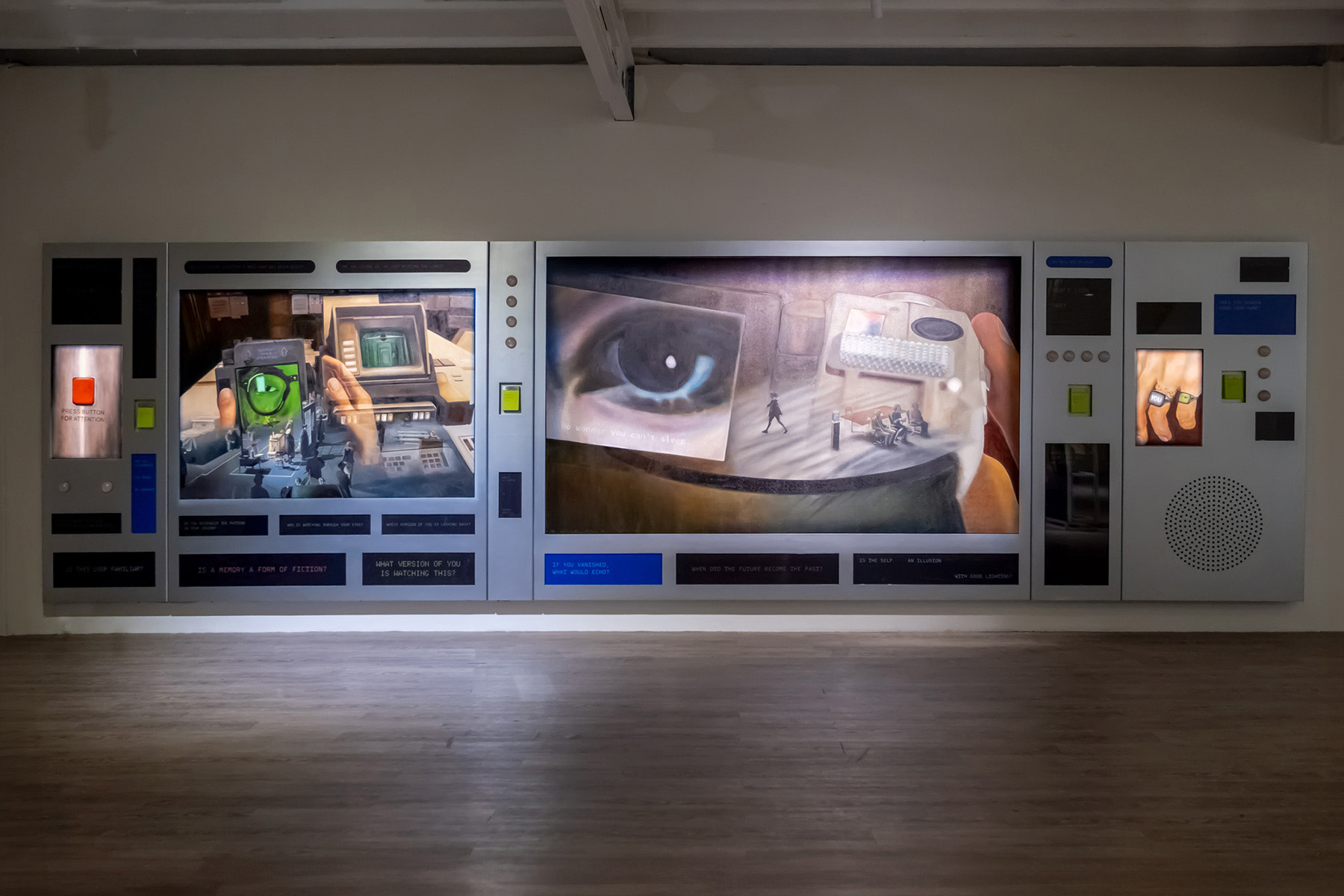 Syagini Ratna Wulan – The Labyrinth I Become I, II, III, IV
I entered ArtJog 2025 as an art enthusiast on a reporting assignment and left as a human being reminded of my own essence. Just as Heri Pemad said, “this exhibition seeks to knock on the sensibilities of every individual who comes. It offers awareness so that we can become stronger individuals in facing the world.”
This is no longer about whether you ‘understand art’ or not. It is an invitation to pause amid the noise of the world and reflect on what kind of ‘amalan’ we can offer to others. ArtJog 2025 is a reminder that in a world that can often feel noisy and harsh, we all have the capacity to become gentler, more peaceful, and stronger individuals in facing it.
Curious to start your own ‘amalan’ through art? The experience awaits you until the end of August 2025. Complete information about the schedule, daily programs, and ticket purchases can be found directly on the official ArtJog website, and you can follow the daily happenings on Instagram @artjog.id.