Amid Bali’s art landscape, rich in historical significance and traditional aesthetics, a new art initiative has emerged with a different story to tell: Ubud Art Ground (UAG). Housed at Gudang Kayu, within the Batu Kurung Estate in Ubud, its inaugural exhibition, titled “Parallels: Legacies in Flux,” ran from July 11 to August 10, 2025.
Amid Bali’s art landscape, rich in historical values and traditional aesthetics, an art initiative has emerged to voice something different: Ubud Art Ground (UAG). Housed at Gudang Kayu, within the Batu Kurung Estate in Ubud, its inaugural exhibition, titled “Parallels: Legacies in Flux,” runs from July 11 to August 10, 2025.
Mention “art in Ubud,” and many people’s minds might immediately turn to classical Kamasan paintings, the legendary works of Lempad, or grand museums preserving the legacy of the Pita Maha era.
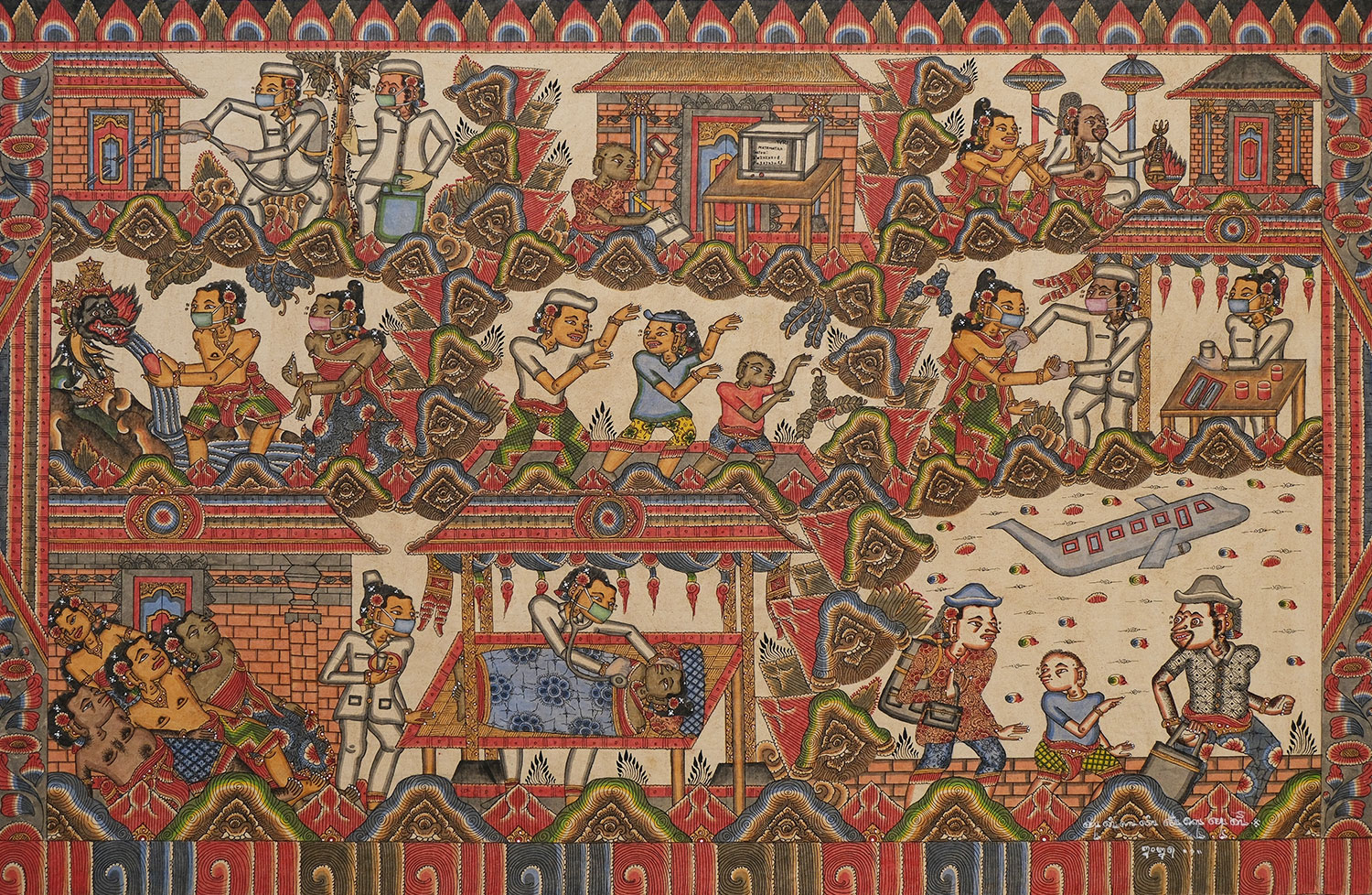
 I Wayan Taweng, Untitled, 30×21,5 cm
Yet, an important question may linger in the minds of art enthusiasts, collectors, and even artists themselves: Where can we see the story continue? What is happening to Balinese art today?
There is a “gap,” or a missing link, in the larger narrative of art on the Island of the Gods. Many prominent museums stop telling the story around the 1950s, leaving a significant gap in knowledge for today’s generation.
UAG was born as an attempt to fill that void. Supported by Yayasan Satya Djaya Raya, UAG positions itself as a vital meeting point between traditional roots and the pulse of contemporary art.
“If no one starts, then who will?” said Yuanita Sawitri, Director of Ubud Art Ground, during our interview. The rhetorical question captures the essence of UAG’s courage to initiate something essential, even though she admits, “it’s not perfect yet.”
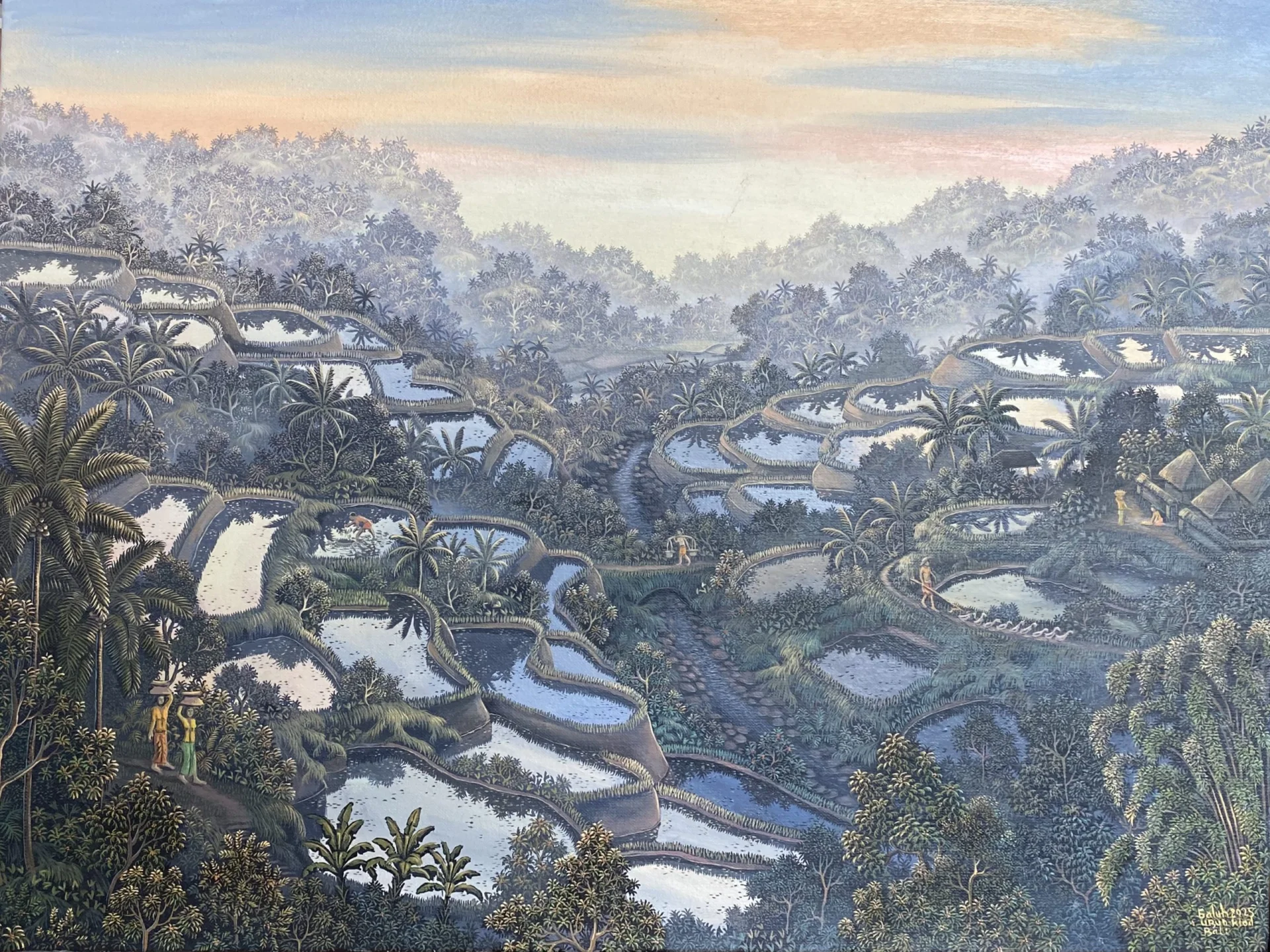
 Ni Nyoman Sani, Elegy of the Land, 2025, 160×180 cm
Parallels: Legacies in Flux – Shaping Heritage Through Change
Parallels: Legacies in Flux brings together more than 70 artists from Bali and China. More specifically, the exhibition features 51 Balinese artists and artists from outside the island who live and work in Bali, alongside 20 artists from CAFA (Central Academy of Fine Arts), Beijing, China. The exhibition is divided into two areas, Legacies in Flux: Bali and Legacies in Flux: China, curated respectively by Farah Wardani and Professor Qiu Ting, Dean of CAFA.
“I tried to shape this exhibition around the keyword ‘legacy’ — heritage that is passed down, and how it remains relevant to artworks being created in Bali today,” explained Farah Wardani at a press conference ahead of the exhibition’s opening. “The premise of tradition that we bring forward is that of legacy in change,” she added.
 Farah Wardani di depan lukisan Mia Diwasasri – Panca Wara.
The six-month curatorial process involved intensive dialogue with local artists to understand what is happening within Bali’s art scene. From these conversations and insights, Farah developed five curatorial frameworks that reflect different phenomena across Bali, ranging from works by masters to new generations’ interpretations of tradition.
As we step into the Gudang Kayu space, we are greeted by a work by one of Bali’s masters, I Made Djirna. The massive ship-shaped installation, accompanied by logs of wood and dragon heads, is titled Numpang Lewat: Berkelanjutan.
 I Made Djirna – Numpang Lewat: Berkelanjutan
This commissioned work invites viewers into a contemplative dialogue about the passage of time, enduring cultures, and personal legacy. The work continues into the exhibition space. While the piece outside relates to buana agung, or the macrocosm, referring to the universe, the installation inside depicts buana alit, or the human being. This marks the exhibition’s first chapter, titled Prelude: A Master’s Touch.
After I Made Djirna’s work, visitors are guided toward Legacies in Flux: A Timeline in Progress. This area presents selected works by other Balinese masters, accompanied by a historical timeline tracing the development of art in Bali, from the pre-Majapahit era to the present day.
 Mangku Muriati, V Monumen, 2025, 78×121 cm
The third chapter, Tradition Today: Contemporary Practices of Balinese Art, presents works by artists based in Bali, created over the past five years. This section explores how contemporary practices interact with, reinterpret, and innovate upon culture, tradition, and heritage.
 Area pameran Tradition Today di Ubud Art Ground.
The exhibition continues into its fourth area, Spectrum: Artists in Contexts. Here, the works explore artists’ contributions to traditional philosophies and the diversity of their contexts, offering a reflection of the multifaceted nature of contemporary art in Bali.
 Area pameran Spectrum di Ubud Art Ground.
The final area is titled Continuum: Balinese Art Between Legacies and Changes. This space presents contemporary artworks rooted in the legacy of Sanggar Dewata Indonesia (SDI), an art collective founded in 1970. It shows how traditions continue to be preserved while transforming through contemporary artistic dialogue.
 Area pameran Continuum di Ubud Art Ground.
Cross-Cultural Collaboration at Ubud Art Ground
Within Ubud Art Ground, there is a dedicated exhibition area for Legacies in Flux: China, curated by Prof. Qiu Ting. This section features works by 20 artists from CAFA, exploring the continuation of guohua (ink painting) techniques through contemporary mediums and narratives. In addition, CAFA presents 33 additional works by senior faculty members, Indonesian artist delegates, and artists who received scholarships from the Lie Siong Tay Charitable Foundation.
The exhibition explores recurring themes in classical Chinese painting, including landscapes, human figures, as well as flowers and trees.
“The collaboration between CAFA and UAG creates a cross-cultural space that brings together two major visual traditions of Asia. This exhibition encourages a younger generation of artists to revisit their heritage in new ways that remain relevant to the present,” said Prof. Qiu Ting.
The collaboration with artists from CAFA, Beijing, also serves as a strategic starting point. “We share many similarities with China, particularly when it comes to Balinese art,” explained Yuanita, referring to historical similarities in techniques such as the use of Chinese ink and a flat visual approach.
 Prof Qiu Ting di depan karya seninya.
Moving forward, UAG plans to expand its dialogue with cultures from other countries. However, CAFA will continue to be part of UAG’s events through various forms of programming.
More Than an Exhibition: An Ecosystem for Exploration
Yuanita Sawitri emphasizes that UAG’s purpose goes beyond passive appreciation. The hope is that visitors, whether newcomers or members of the art community, will be “inspired to explore further.” This learning experience is intended to continue even after visitors leave the exhibition space.
To support this, UAG held various public programs throughout the exhibition, including:
Curatorial and educational tours
Forums and discussions
Creative workshops
Artisan markets and cultural performances
Plan Your Visit
For those looking to experience the dynamic face of Balinese art, one that dares to engage in dialogue with tradition while looking toward the future, Ubud Art Ground is a destination worth visiting.
Location: Gudang Kayu, Batu Kurung Estate, Kedewatan, Ubud, Bali
Dates: July 11 – August 10, 2025
Opening Hours: Daily, 10:00 AM – 6:00 PM WITA
Information: ubudartground.com | Instagram: @ubudartground