Five outdoor sculptures selected by Written at Art Jakarta Gardens 2026.
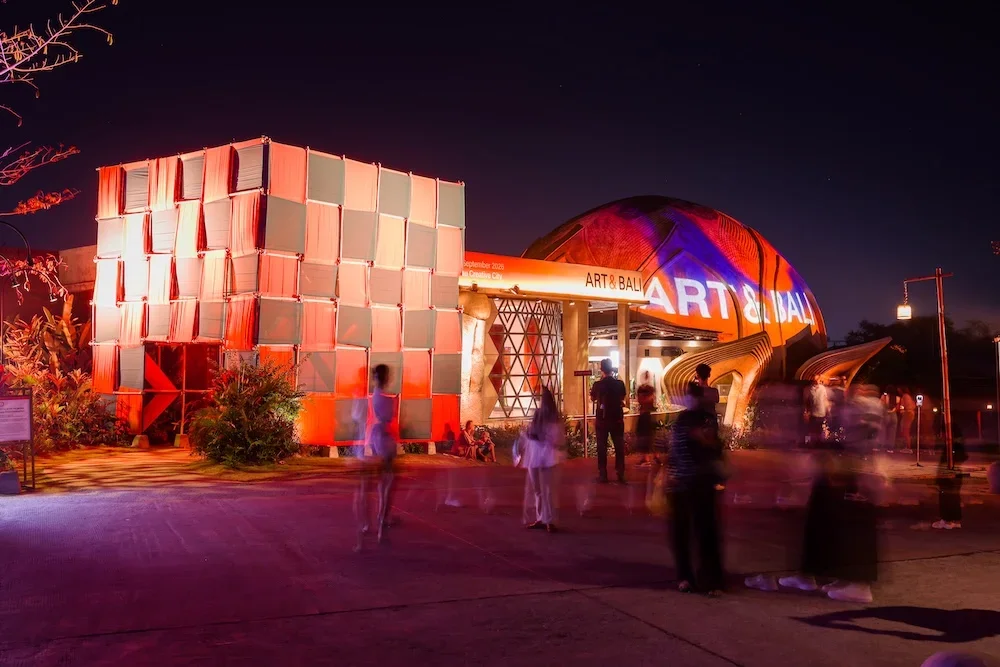
Amid the constant bustle of Jakarta, Art Jakarta Gardens 2026 offers a more fluid and accessible way of experiencing art. Rather than being confined within the enclosed white walls of a gallery, the artworks are placed in open spaces alongside trees, pedestrian paths, and areas for public interaction. This setting allows visitors to experience art in a more relaxed and personal way.
This year, Art Jakarta Gardens once again presents a range of outdoor sculptures and installations that draw attention through both their visual scale and the stories they carry. Some works are playful and invite interaction, while others offer reflections on modern life, spirituality, and humanity's relationship with its surroundings.
Here are five outdoor sculptures selected by Written at Art Jakarta Gardens 2026.
Naufal Abshar — The Space Boy (2026)
Naufal Abshar's The Space Boy depicts an astronaut reading a newspaper in outer space. The newspaper carries the words “Never Give Up,” which feel like a personal reminder to keep going even while being far from home.
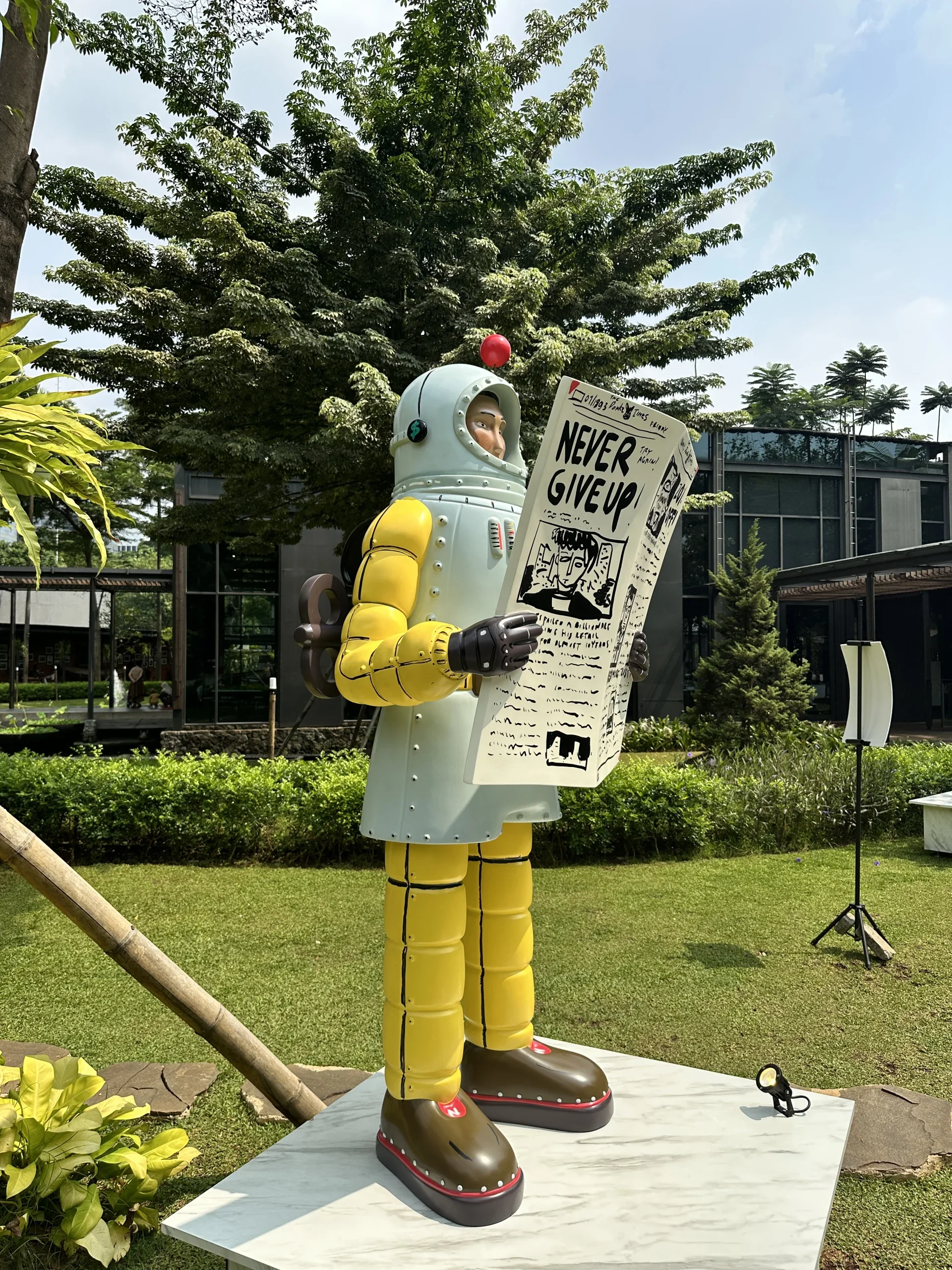 The Space Boy by Naufal Abshar.
With its playful yet emotional visual language, the work, made from fiber-reinforced plastic, presents an astronaut who feels less heroic and more human. Behind its seemingly simple appearance, the sculpture speaks about resilience, loneliness, and hope.
The work is presented by Museum of Toys, the first and largest designer toy museum in Indonesia, founded by Win Satria and Ando Saputra
Putu Sutawijaya — Aku Menjadi Tumbuh #1,2,3 (2026)
Through Aku Menjadi Tumbuh #1, 2, 3, Putu Sutawijaya presents a bowed figure representing a process of self-reflection. The posture captures a moment when someone pauses to understand the journey they have taken before deciding where to go next.
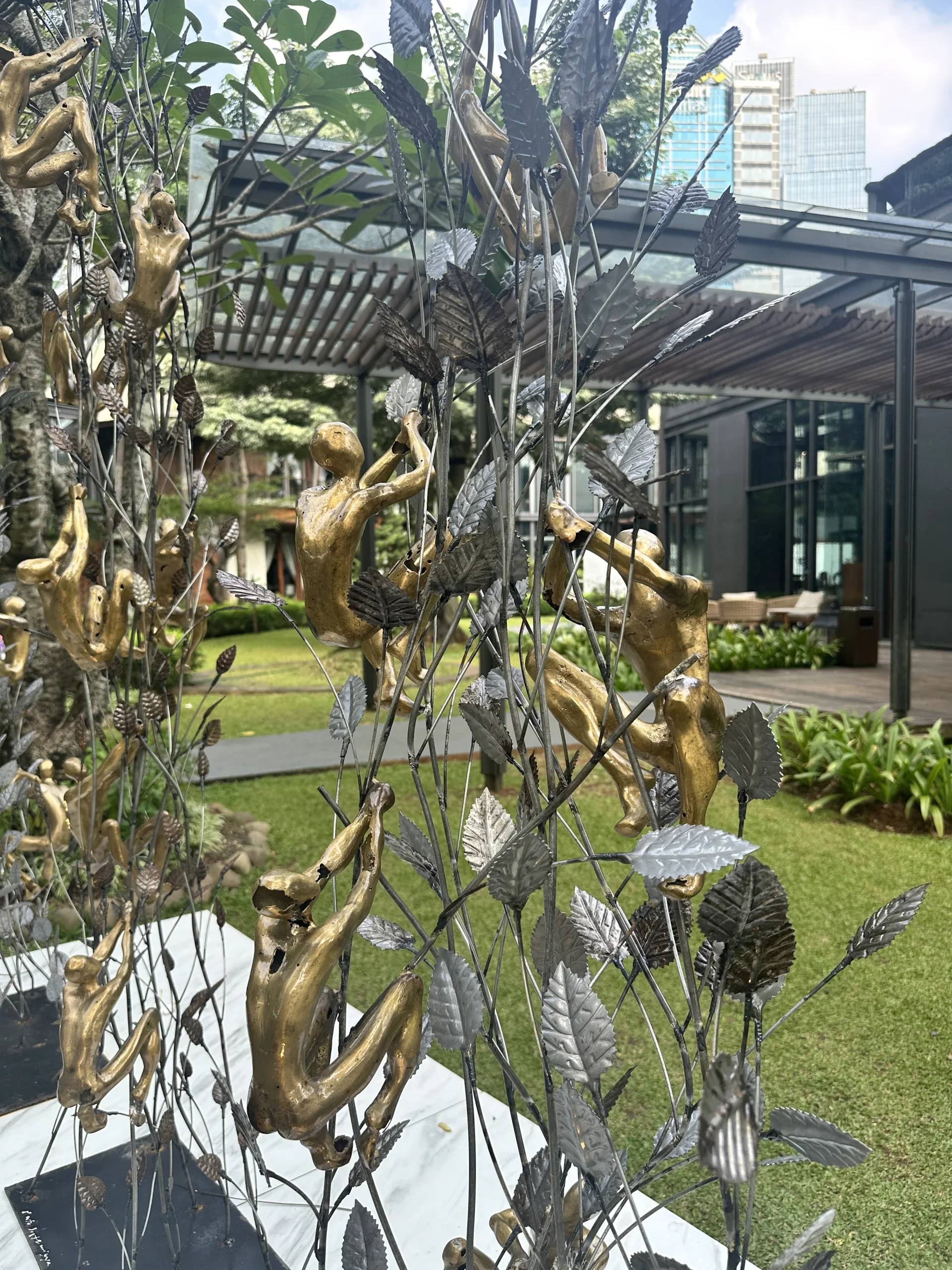 Aku Menjadi Tumbuh #1, 2, 3 by Putu Sutawijaya.
Made from iron and brass, the work creates a contemplative and emotional atmosphere. Its simple gesture reveals the inner struggle of seeking understanding, growth, and change.
The work is presented by Can's Gallery, a contemporary art gallery actively supporting the development of Indonesian artists.
Huang Yulong — By My Side (2018)
The hoodie-clad figure characteristic of Huang Yulong's work draws attention once again through By My Side. The Chinese artist is known for his anonymous hoodie-wearing characters, influenced by urban culture and Western street culture.
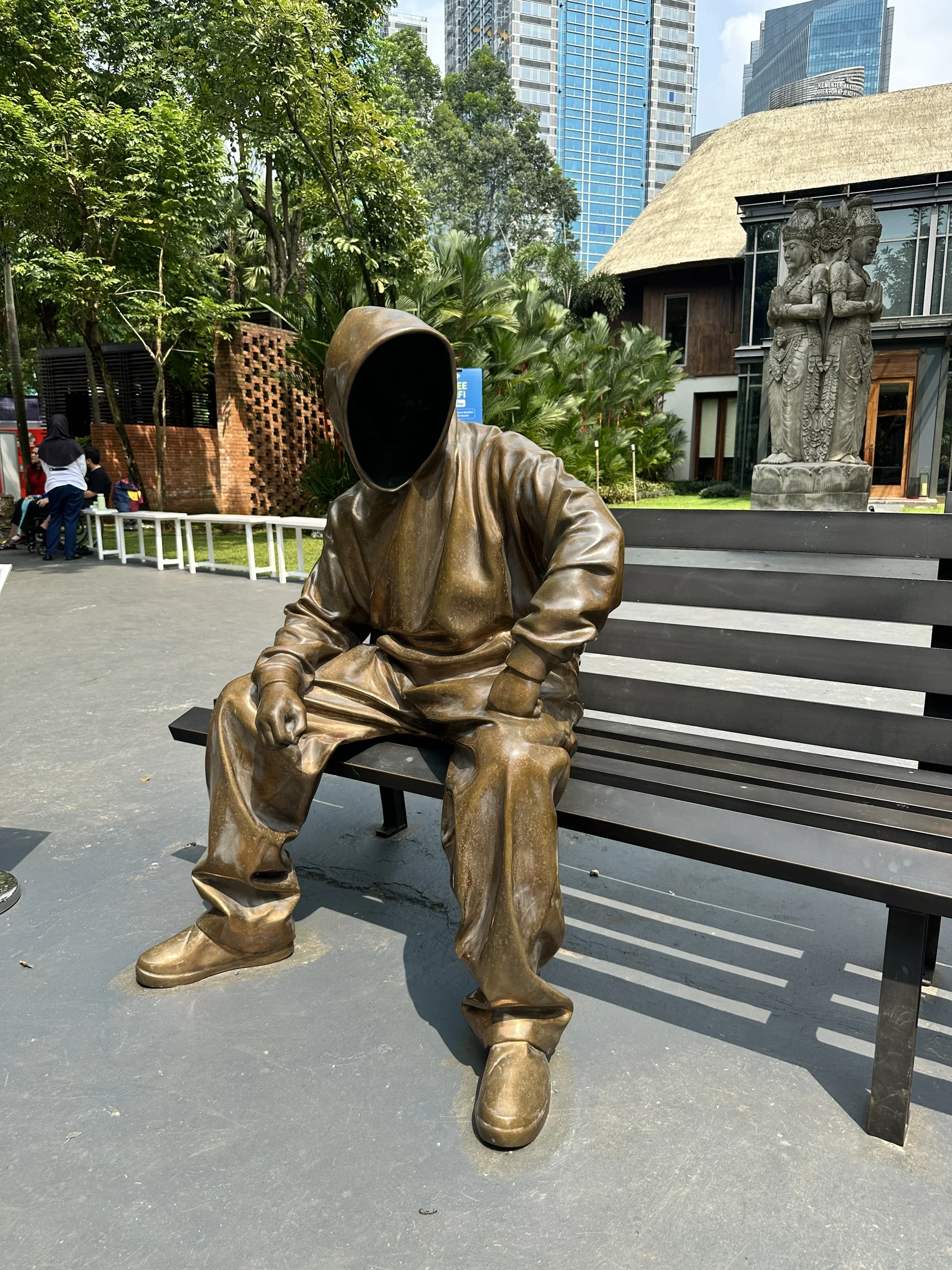 By My Side by Huang Yulong.
Placed beside a bench and facing visitors, the sculpture creates an interactive encounter. Visitors are almost invited to sit beside the figure and engage in an imaginary dialogue. This approach turns the sculpture from a visual object into part of a personal experience.
The work is presented by Art WeMe Contemporary, an international gallery based in Kuala Lumpur focusing on modern and contemporary Asian art.
Tisna Sanjaya — Aura Kesenian Aura Capital (2011)
As an important figure in Indonesian contemporary art, Tisna Sanjaya is known for works that explore social criticism and reflections on humanity.
In Aura Kesenian Aura Capital, he presents a nude figure standing on a grid-patterned globe, symbolising humanity's entanglement in the global capitalist system. Branches growing from the figure's body, accompanied by animal elements, represent humanity's increasingly marginalised relationship with nature.
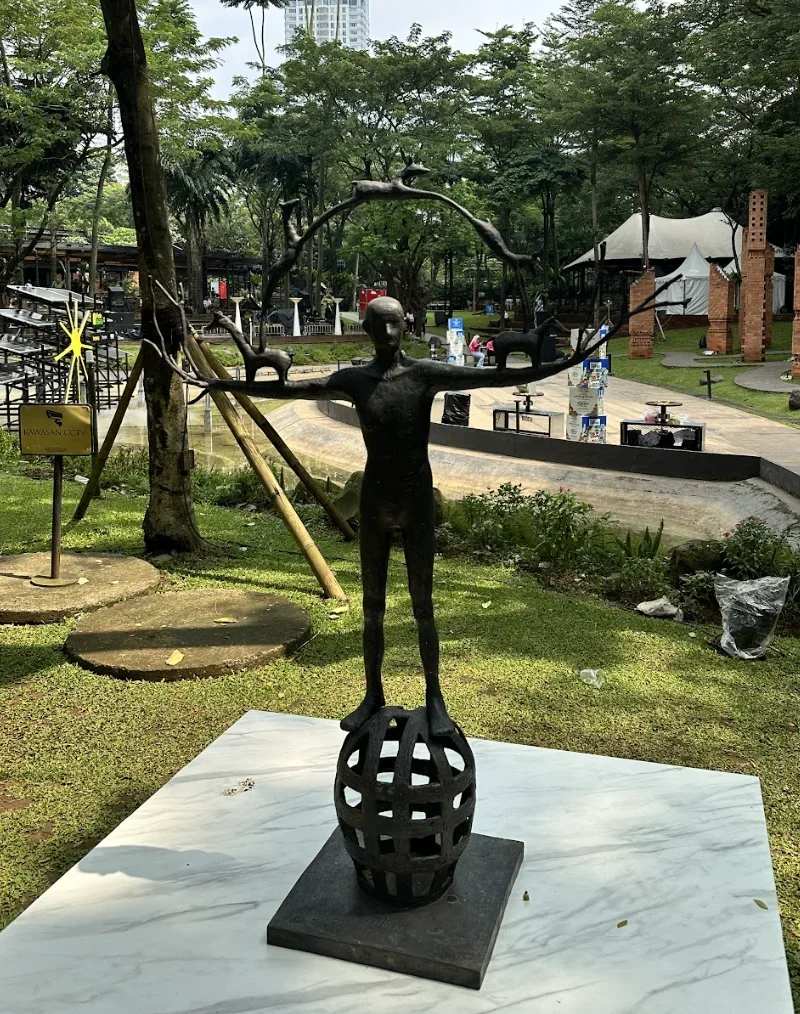 Aura Kesenian Aura Capital by Tisna Sanjaya. Foto: Dokumentasi Written.id
The aura-like arch surrounding the figure becomes a symbol of art's energy as a spiritual bridge that transcends the boundaries of modernity. Through this symbolic language, Tisna creates a visual dialogue around ecology, culture, spirituality, and critiques of capitalism.
The work is presented by Theo Gallery, an international contemporary art gallery from Seoul that now also has a presence in Jakarta.
Sugiri Willim — Mandi Kembang (2026)
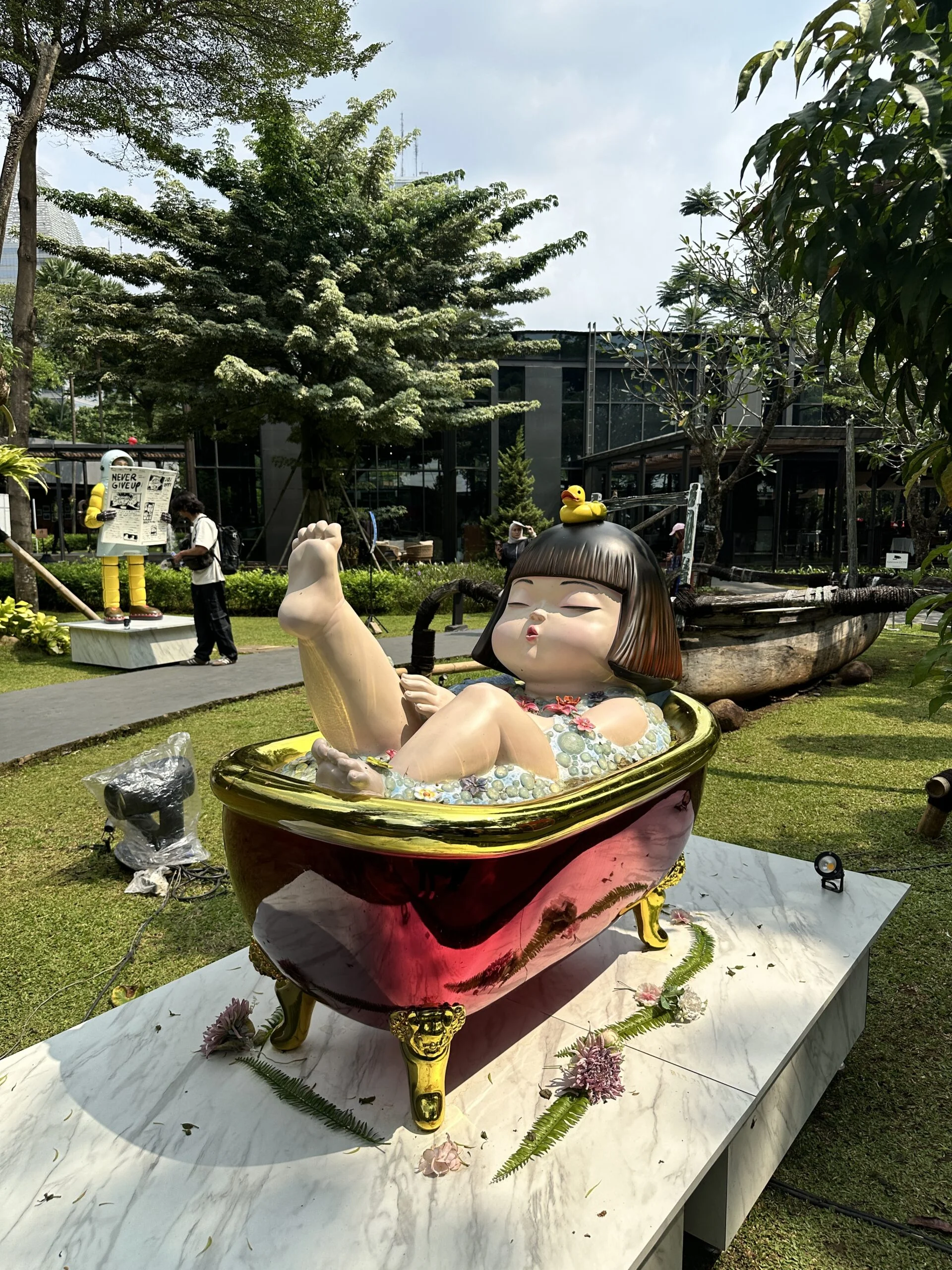
Through Mandi Kembang, Sugiri Willim presents Lala, a young girl with a calm expression as she sits in a bathtub. Its light and approachable visual language offers a contemporary interpretation of the traditional practice of mandi kembang, or flower bathing.
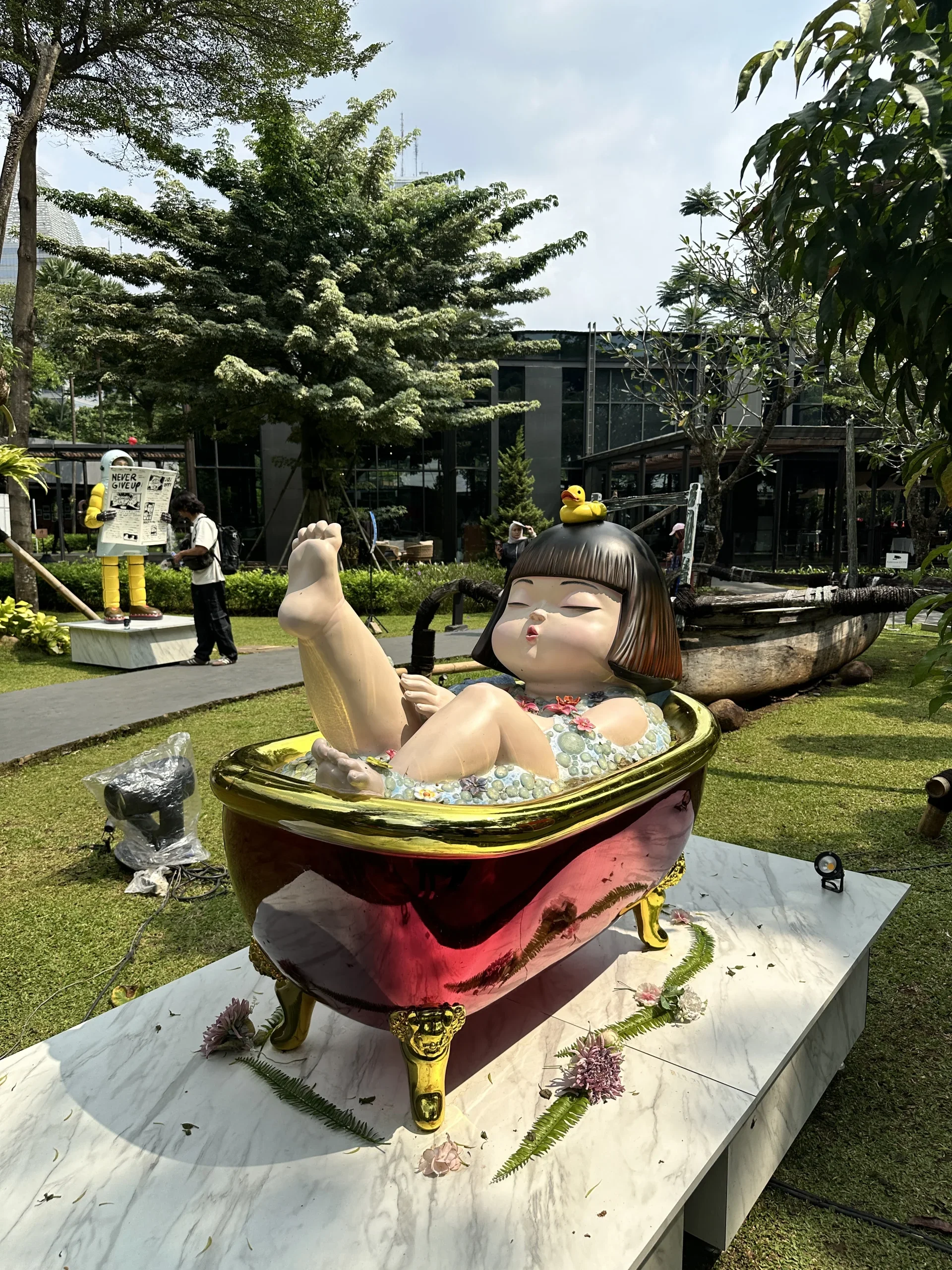 Mandi Kembang by Sugiri Willim.
Lala's relaxed posture creates a quiet and reflective atmosphere, inviting viewers into a contemplative space between humanity, nature, and spirituality. Meanwhile, the use of resin with an industrial paint finish creates a reflective surface that strengthens the contrast between tradition and contemporary aesthetics.
The work is presented by Puri Art Gallery, an Indonesian contemporary art gallery actively promoting the work of local artists.
Through the outdoor works presented this year, Art Jakarta Gardens once again demonstrates how art can come closer to the public. The works are not merely objects to be viewed; they also create opportunities for interaction, reflection, and new experiences within the urban landscape.
Each of the five works offers a distinct approach and experience. Some explore personal reflection, others social criticism, while others delve into spirituality through unique and compelling visual languages.
Which of these five is your favourite?