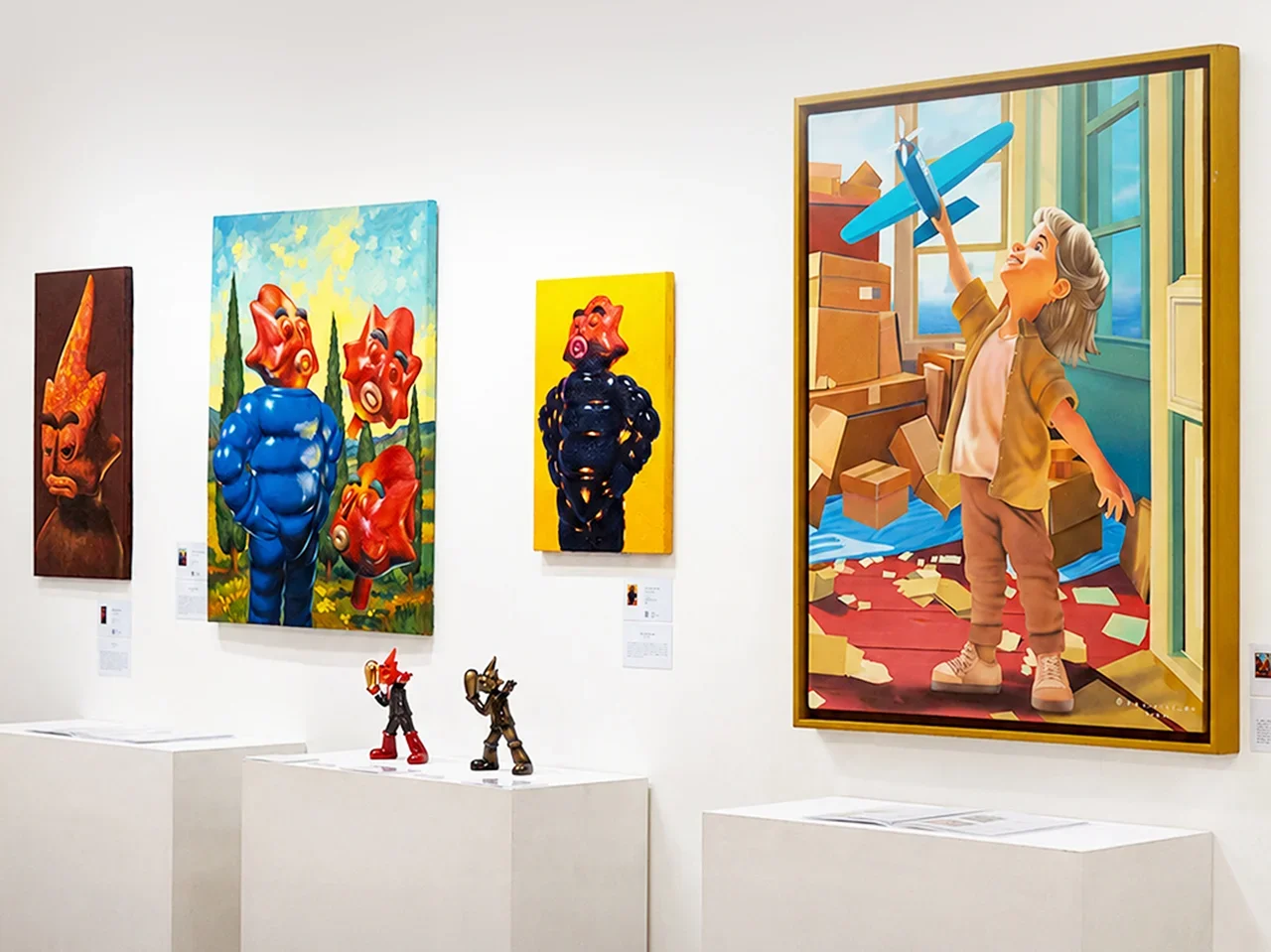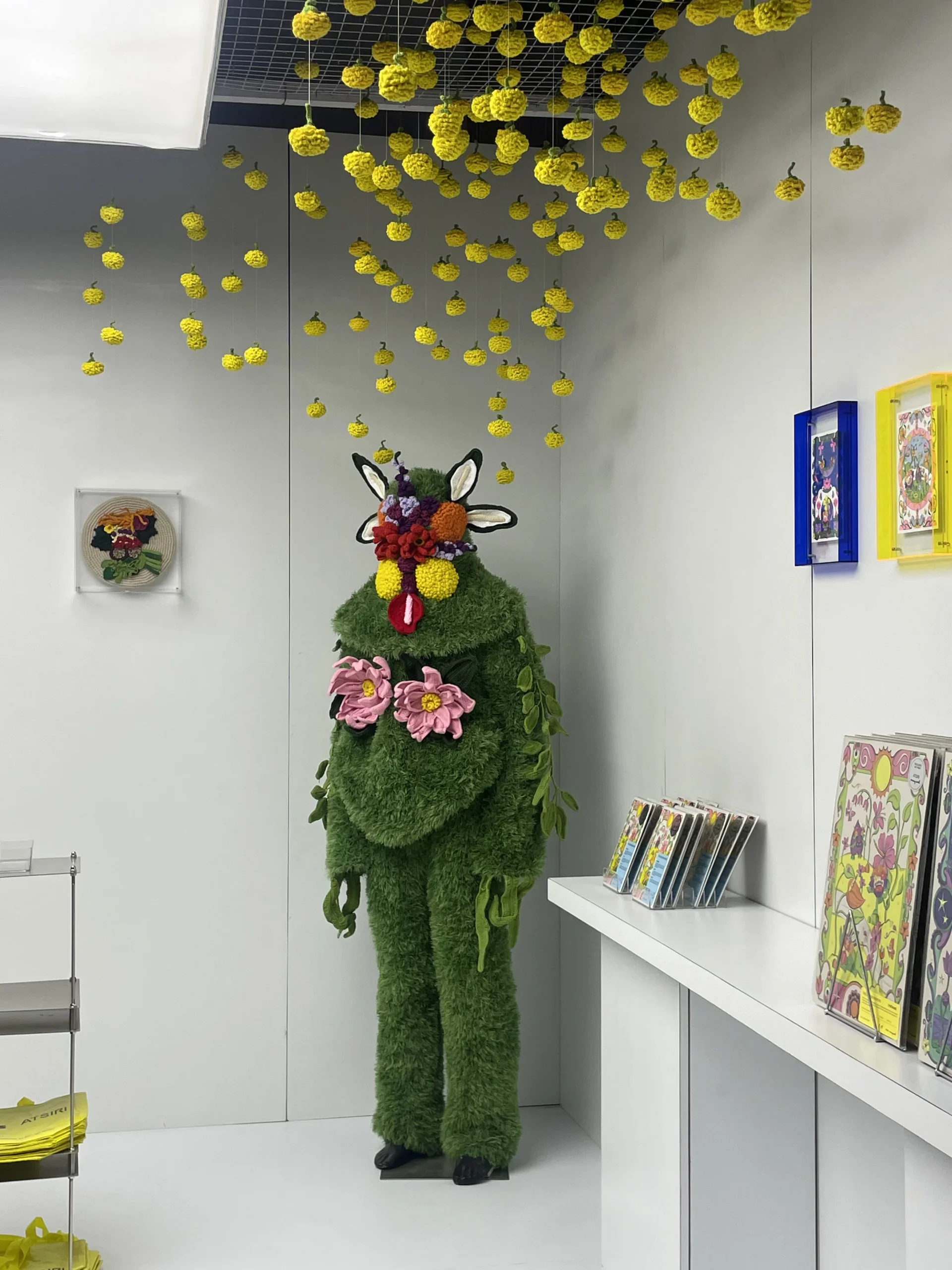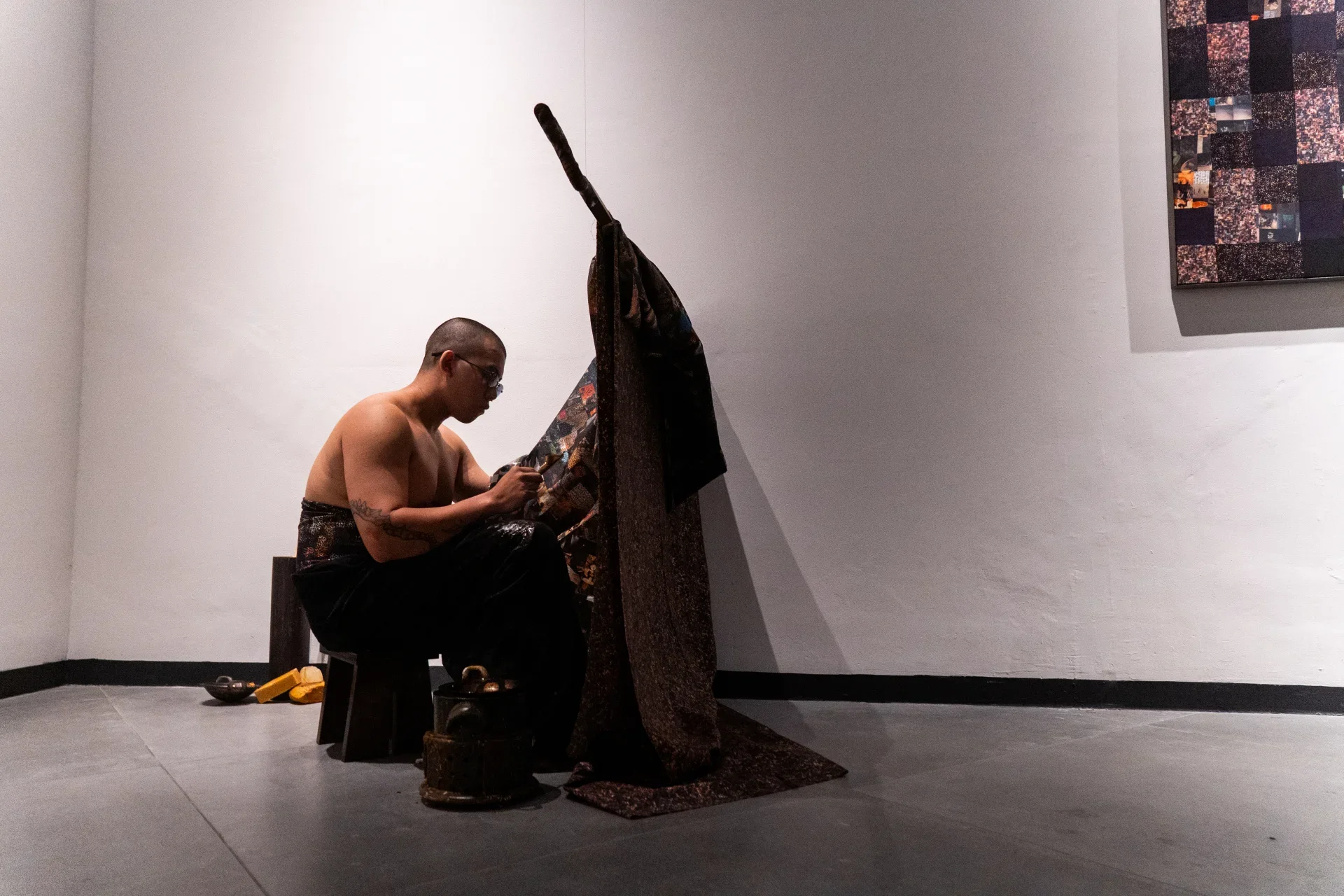
The debate between Wiyu Wahono and Timur Kadyrov at Art & Bali 2026: does the future of art belong to AI algorithms, or a return to the physical touch?
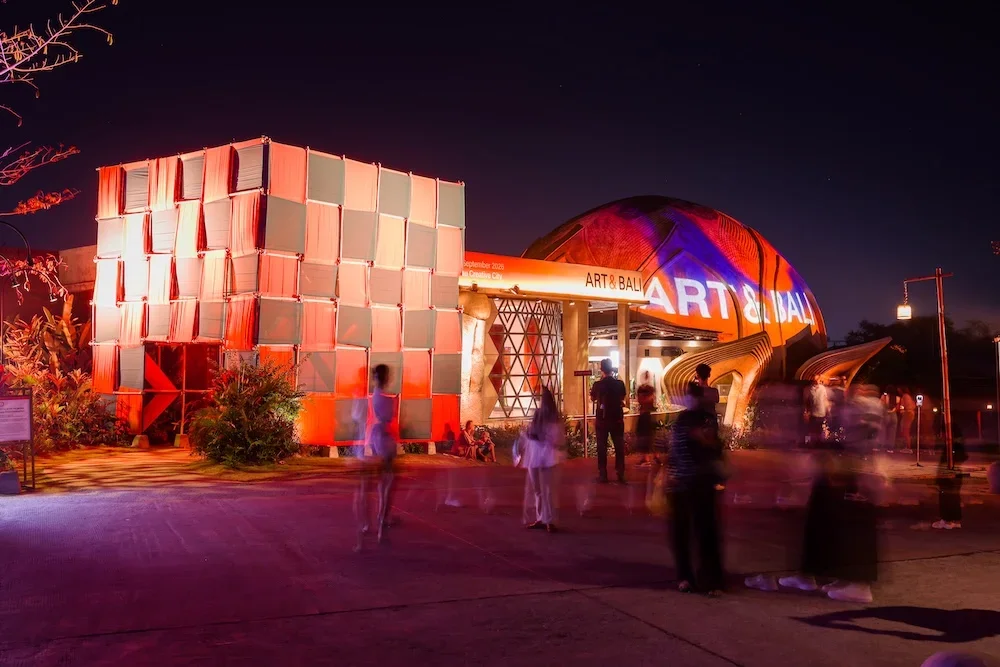
Amidst the lively buzz of Art & Bali 2026 at the Labyrinth Convention Centre, Nuanu Creative City, a series of compelling conversations unfolded during the Nuanu Future Talks program. Beneath the iconic dome-shaped architectural ceiling, creative practitioners, artists, collectors, and cultural thinkers gathered to exchange perspectives across an eclectic range of subjects.
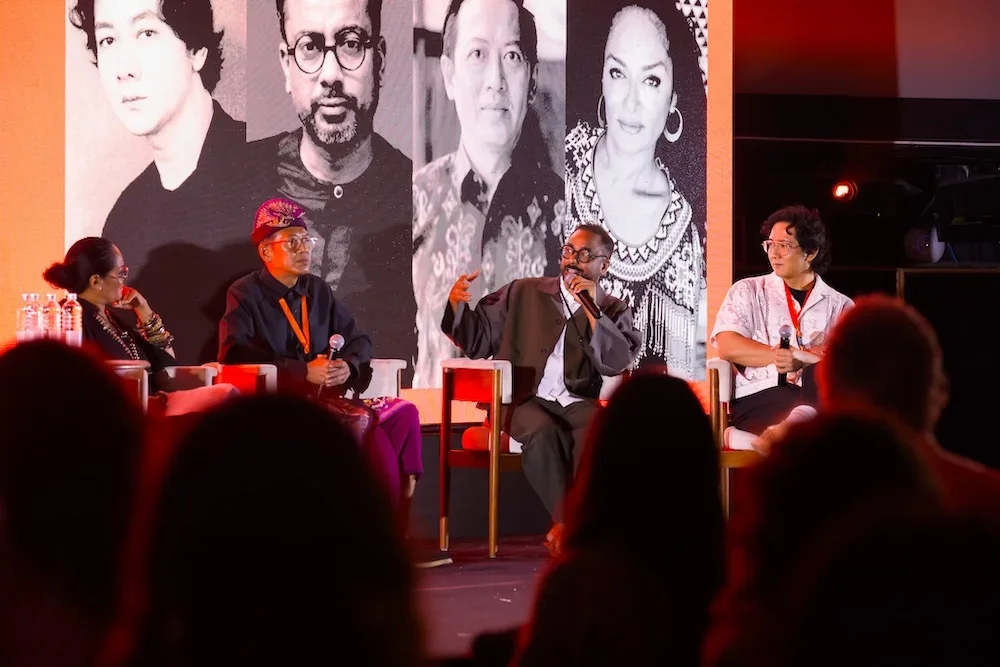
Sitting in the dim, atmospheric darkness of the auditorium, one particular session captured not only our attention, but that of the entire room—evident from the palpable audience reactions responding to the speakers' candid viewpoints and dynamic expressions.
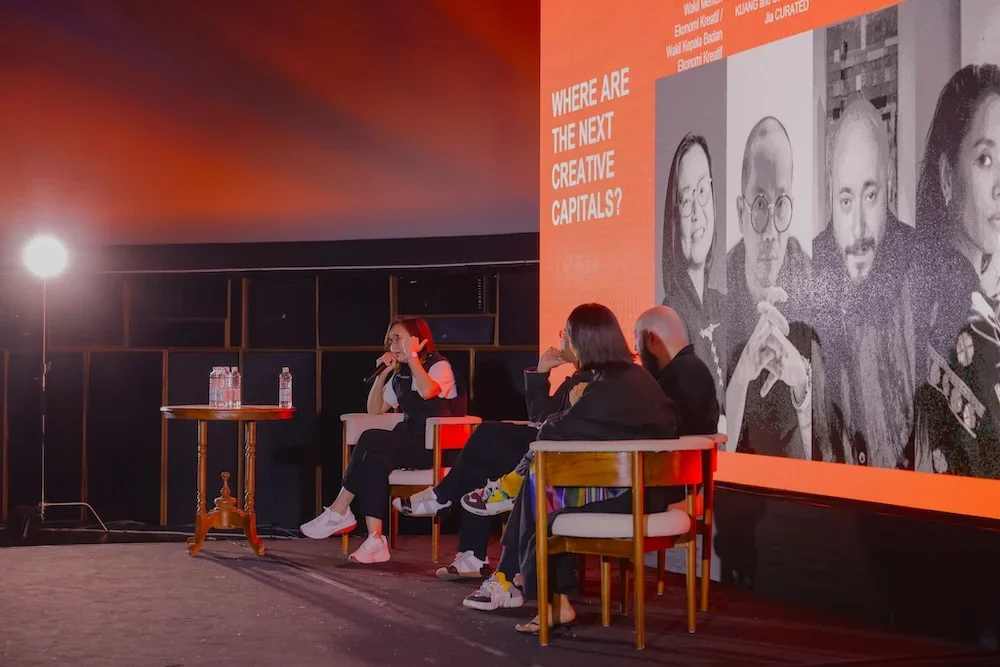
In this session, the CEO of Nuanu Creative City, Lev Kroll, brought together two figures with fundamentally opposing outlooks.
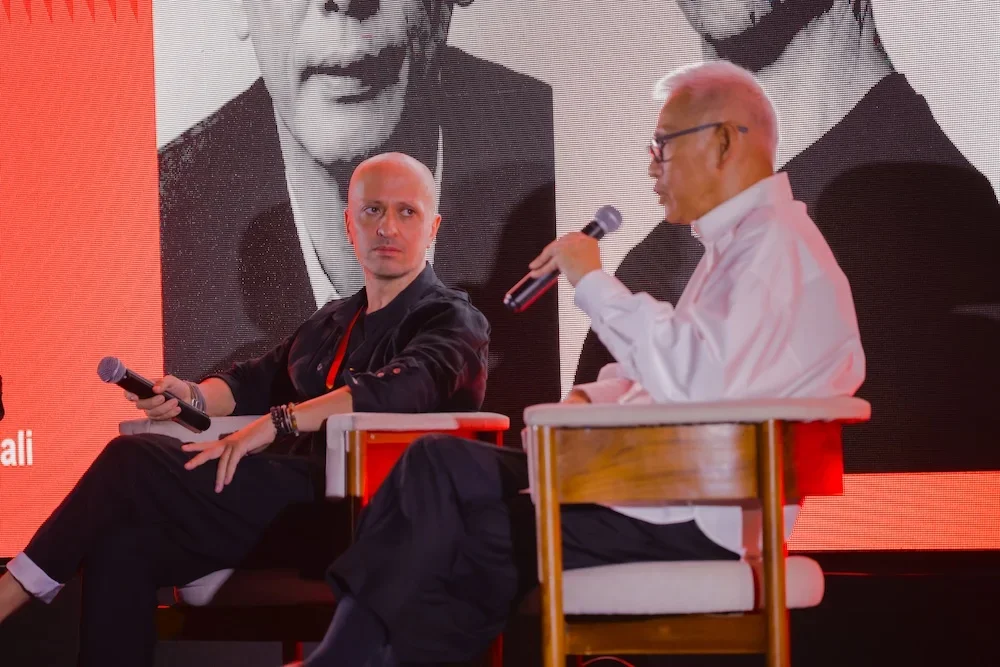
On one side sat Wiyu Wahono, a prominent Indonesian art collector with an engineering background from Germany who has spent the last five years dedicated to collecting artificial intelligence-based works (AI Art). On the other sat Timur Kadyrov, author of The Book: The Ultimate Guide to Rebuilding a Civilization and co-founder of Hungry Minds, who views human creative agency through the power of storytelling, narrative depth, and tangible physical forms.
Titled “The Future of Digital Art,” the dialogue moved far beyond a dry tech panel, evolving into an intelligent clash of ideas that examined the shifting line between the human hand and technological capability.
Why Do We Tend to Resist Digital and AI Art?
The discussion opened with a fundamental question from Lev Kroll regarding market hesitation toward digital art: why are works presented on screens so frequently perceived as less valuable than traditional paintings or sculptures?
The Value of Art and Market Barriers
Wiyu Wahono addressed this skepticism by examining collector behavior. In his view, the majority of collectors still acquire artworks with future financial returns in mind. Concurrently, digital art remains difficult to resell within traditional auction circuits or commercial galleries.
"Throughout the twentieth century, the value and meaning of an artwork were inextricably linked to its physical medium. Two-dimensional art meant a painting on canvas; three-dimensional art was a sculpture cast in stone or bronze. When the medium shifts into arrangements of code and points of light on a screen, many lose their bearings on where tangible material value truly resides," explained Wiyu.
In response, Timur Kadyrov drew a sharp distinction between digital art as a creative medium and art powered by artificial intelligence. For Timur, digital art is perceived as less valuable not because the medium itself lacks merit, but because digital files can be replicated infinitely without the slightest loss in quality.
A Sense of Being Cheated and the Fear of the Unknown
As the conversation turned to AI-generated art, the debate grew sharper. Timur argued that audience resistance to AI art stems from an inherent unease within the viewer.
"Many people feel cheated when they encounter AI art. There is a lingering feeling that something is missing, that something lacks soul. Humans have a complex and inherently suspicious relationship with things produced by intelligent machines," Timur observed.
Wiyu countered this immediately. His five years of collecting AI art have convinced him that societal rejection is largely rooted in misunderstanding. Psychologically, humans naturally harbor an innate tendency to reject what they do not yet comprehend.
Appreciating AI art is far more nuanced than merely picturing someone typing a few text prompts into a computer. The creative process is closer to that of an orchestral conductor: the conductor does not blow the trumpet or play the violin directly, but rather guides and harmonizes thousands of instrumental cues, visual data points, and concepts to bring forth a coherent aesthetic vision.
Reflecting on a remark he shared during Art Jakarta 2026, Wiyu reiterated that simply picking up a camera and taking a snapshot does not make someone an art photographer. By the same token, generating a video simply by typing a prompt does not automatically make the result a work of AI art.
The Future: Technological Inevitability Versus the Longing for the Tangible
When Lev Kroll steered the dialogue toward future art trends, both speakers diverged onto distinct paths.
Riding the Inevitability of AI
For Wiyu Wahono, the rise of artificial intelligence in the art world is an unavoidable historical reality. Modern human existence is already intertwined with the digital realm, and art bears the responsibility of reflecting that transformation.
"Whether you like it or not, AI is the future of art. Today's artists are left with two choices: create what AI cannot possibly do, or become an AI artist. Both paths, however, require artists to understand and work alongside the technology," Wiyu asserted.
The Pendulum Swings Back to the Brushstroke
Timur Kadyrov envisioned the future moving in the exact opposite direction. He predicted that audience appetite will inevitably swing back toward physical art that can be touched and experienced tangibly.
In Timur’s view, as high-fidelity digital imagery becomes effortless and instant for anyone to produce, AI art will suffer from dilution due to oversaturation. At that juncture, the public will crave the authenticity of handmade craft.
"When everything becomes so effortless to generate on a computer, people will seek out things with genuine texture—such as a painting bearing the tangible ridges of real brushstrokes. Physical artists will endure because their work tangibly inhabits living spaces and integrates into the interiors of our daily lives," Timur noted.
From a €1.2 Million Screen to Archiving History
Addressing the assumption that digital art lacks substantial market value, Wiyu Wahono dismantled the premise with a concrete example. He cited a monumental AI artwork that fetched €1.2 million.
Featuring an expansive 9-by-16-meter screen displaying an evolving desert landscape, the work was produced in an edition of just three worldwide: one in France, one in Thailand, and one in Jakarta (can you guess where the Jakarta piece resides?).
For Wiyu, the worth of an artwork must never be judged merely by the material cost of its medium, but by its capacity to encapsulate the spirit of its era.
"There is a sacred principle in the art world once articulated by the founder of the Museum of Modern Art in New York: the artist leads the way, and we follow. Today, major museums around the globe are acquiring AI art because their mission is to preserve the zeitgeist—the defining sign of the times. We live in the era of artificial intelligence. In the future, when people look back at the year 2026, AI will stand as the cultural marker of our time."
The Power of Theme, Knowledge, and Adaptability
As the session drew toward its close, the conversation converged on practical insights for the young artists and art enthusiasts gathered in the hall.
Narrative as the Leading Foot
When asked about the key driver of an artist’s success, Timur Kadyrov stressed that conceptual strength remains the primary foundation.
"The leading foot in artistic success is the theme. Anchor yourself in a compelling core idea first, and only then determine the medium and visual language needed to express it. The vital imperative for artists today is adaptability: be willing to change mediums, pivot themes, and recontextualize spaces to keep the work vital," Timur explained.
Refining Taste Through Knowledge
Closing his remarks, Wiyu Wahono reminded the room that the ability to evaluate art is not an innate gift, but a discernment cultivated through diligent learning.
"When we stand before an artwork and evaluate its merits, that judgment springs from a synthesis of taste and knowledge. Taste can be learned. If you wish to collect contemporary art, read extensively on contemporary discourse. Skip the historical treatises on modernism; the times have fundamentally changed. We now live amid an overflow of information that demands an entirely new lens," Wiyu advised.
Credit is due to Art & Bali 2026 for orchestrating a panel that dared to place two opposing philosophies on the same stage, fostering an intelligent, electrifying debate. One audience member even prefaced their question to Wiyu with: "I completely disagree with you, but I find your opinion fascinating."
Ultimately, the afternoon concluded without the need for a definitive victor. Wiyu Wahono looked toward the horizon through the acceleration of technology and historical archiving, while Timur Kadyrov anchored us back to humanity's primal longing for the warmth of tactile, handmade creations.
This divergence underscored a vital reality: in the unfolding landscape of art, oil-laden canvases and glowing screens do not exist to cancel each other out, but to flourish side by side.