Art Jakarta Gardens 2026 at Hutan Kota by Plataran brings together contemporary art, green space, and multidisciplinary public programs.
What would happen if a shaded green park in the middle of Jakarta were transformed into an art space? As visitors, perhaps we would find ourselves wanting to stay a little longer. That was precisely the feeling that emerged while visiting Art Jakarta Gardens 2026, held from 5–10 May 2026 at Hutan Kota by Plataran. The exhibition brought together contemporary art, Jakarta’s urban landscape, and a range of multidisciplinary public programs within an open green space in the heart of the city.
Since its first edition, Art Jakarta Gardens has offered an experience that differs from the typical art fair. While many art exhibitions are associated with enclosed spaces and a formal atmosphere, Art Jakarta Gardens invites the public to experience artworks in a more relaxed and open setting. This year, 26 galleries from Indonesia and across Asia took part. The continued growth in participation since its inaugural edition points to growing enthusiasm for outdoor exhibition formats, which are increasingly gaining public interest.
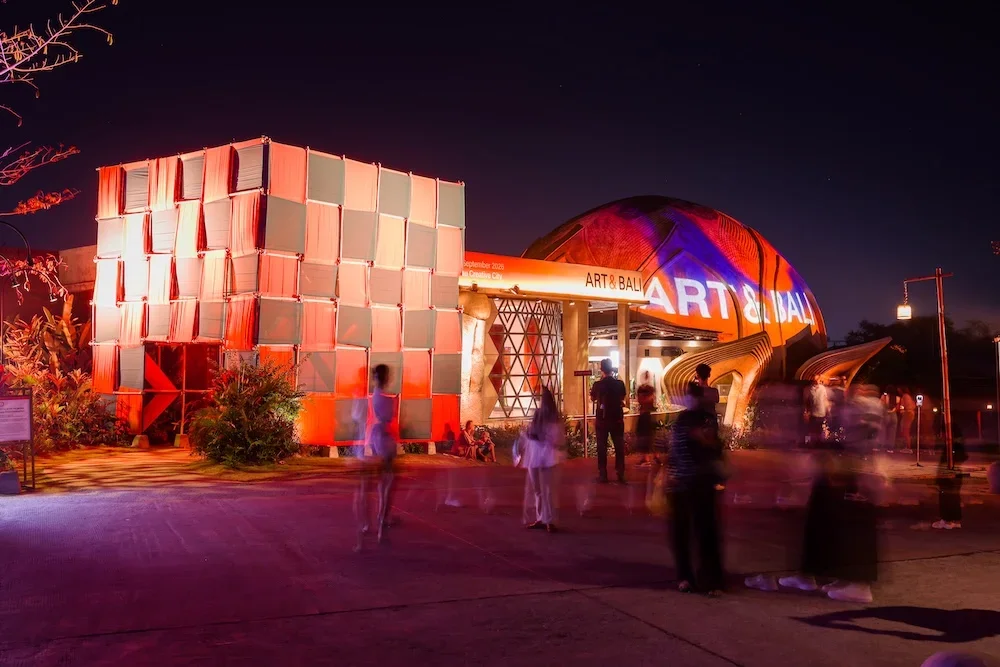
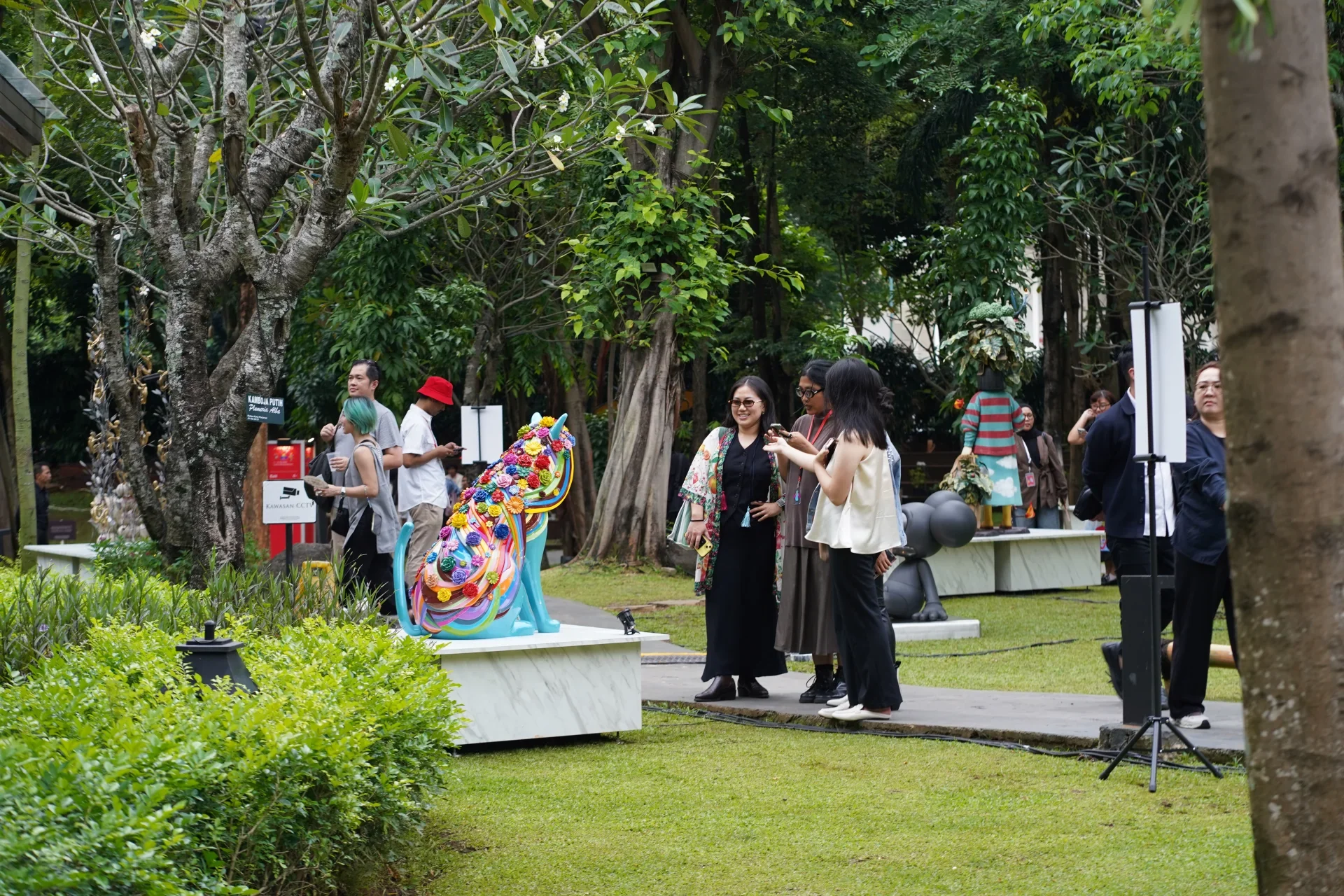 Visitors enjoying the artworks on display. Photo courtesy of Art Jakarta Gardens 2026.
A Diverse Selection of Works at Art Jakarta Gardens
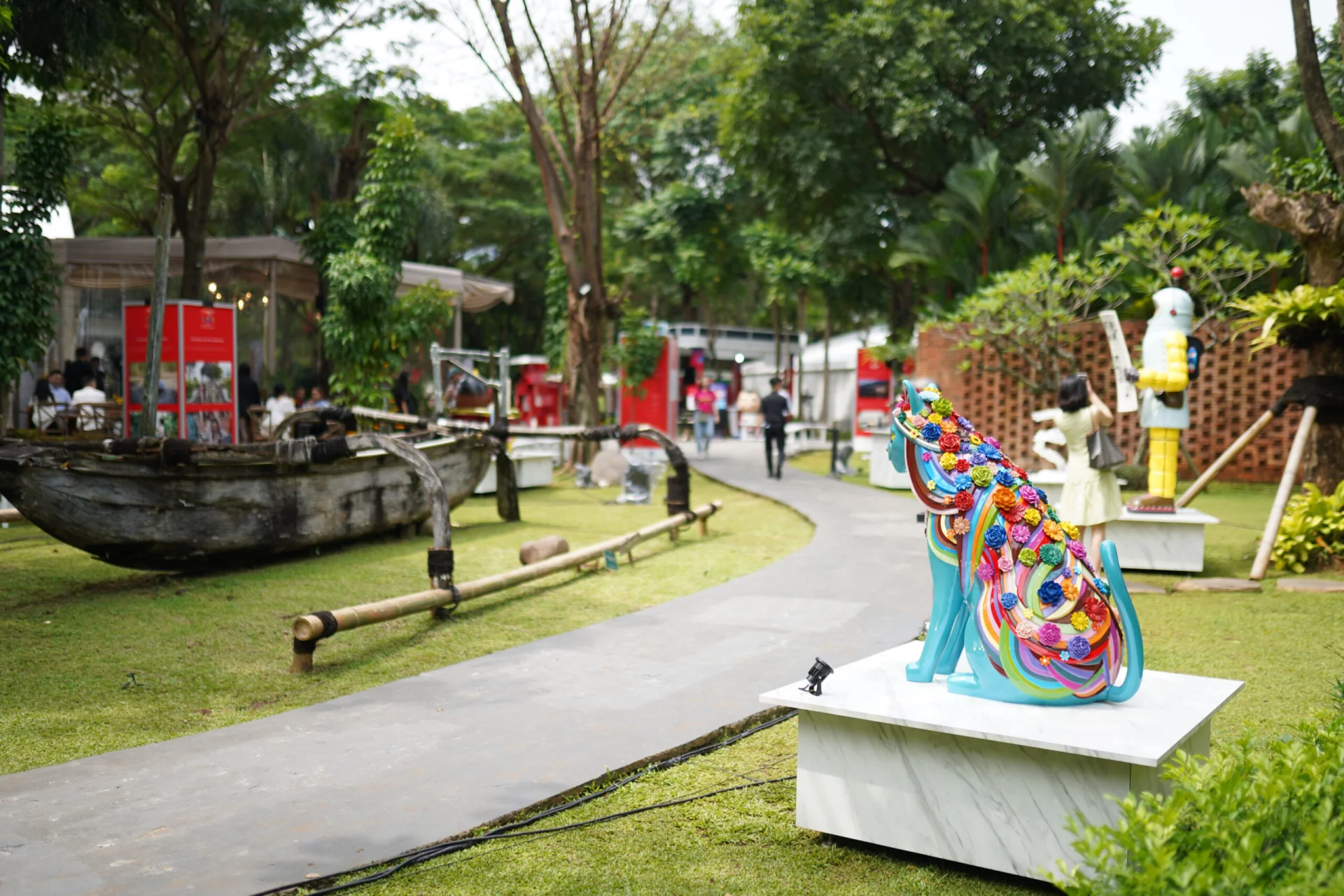
Art Jakarta Gardens 2026 presented artworks across indoor and outdoor spaces throughout Hutan Kota by Plataran. Complementing the indoor presentations, the art fair once again featured its main Sculpture Garden segment, a signature format that sets Art Jakarta Gardens apart from other art events.
This year’s Sculpture Garden featured works that sparked both curiosity and admiration through their forms, scale, and dialogue with their surroundings. One of the works that caught attention was T-REX by Indra Lesmana, presented by ZEN1 Gallery, a metallic balloon sculpture that creates a futuristic impression while reflecting the space around it.
Meanwhile, Dian Hardiansyah of Rachel Gallery presented Dialog Hijau (Living on Affinity), a work made from porcelain and stoneware, with organic forms that evoke a contemplative quality. Tisna Sanjaya also presented Aura Kesenian Aura Capital, reflecting on the relationship between humans, nature, and art. Meanwhile, Yunizar from Gajah Gallery returned with his distinctive visual character through Turtle, a fantastical animal figure that appears simple yet leaves room for multiple interpretations.
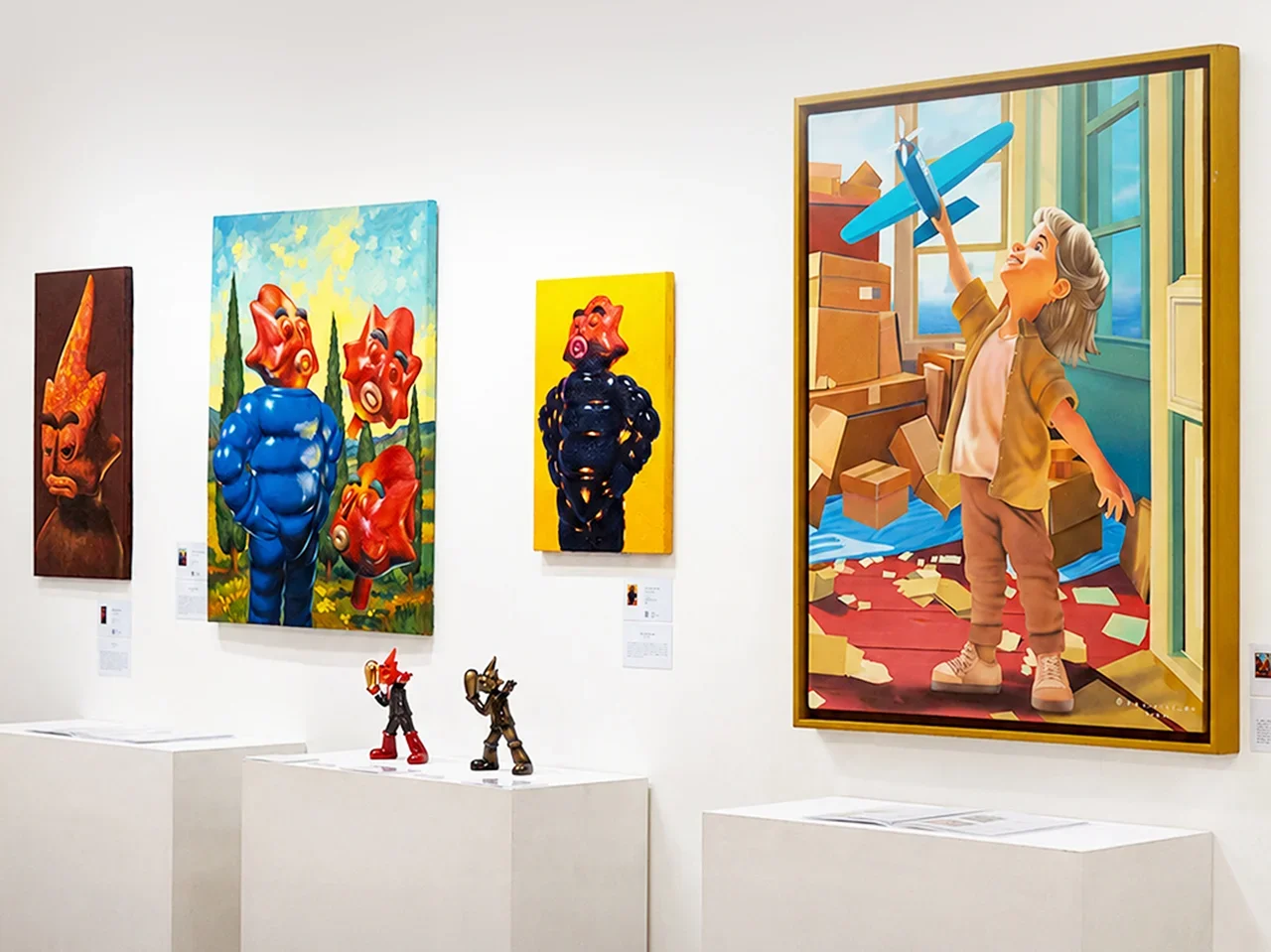
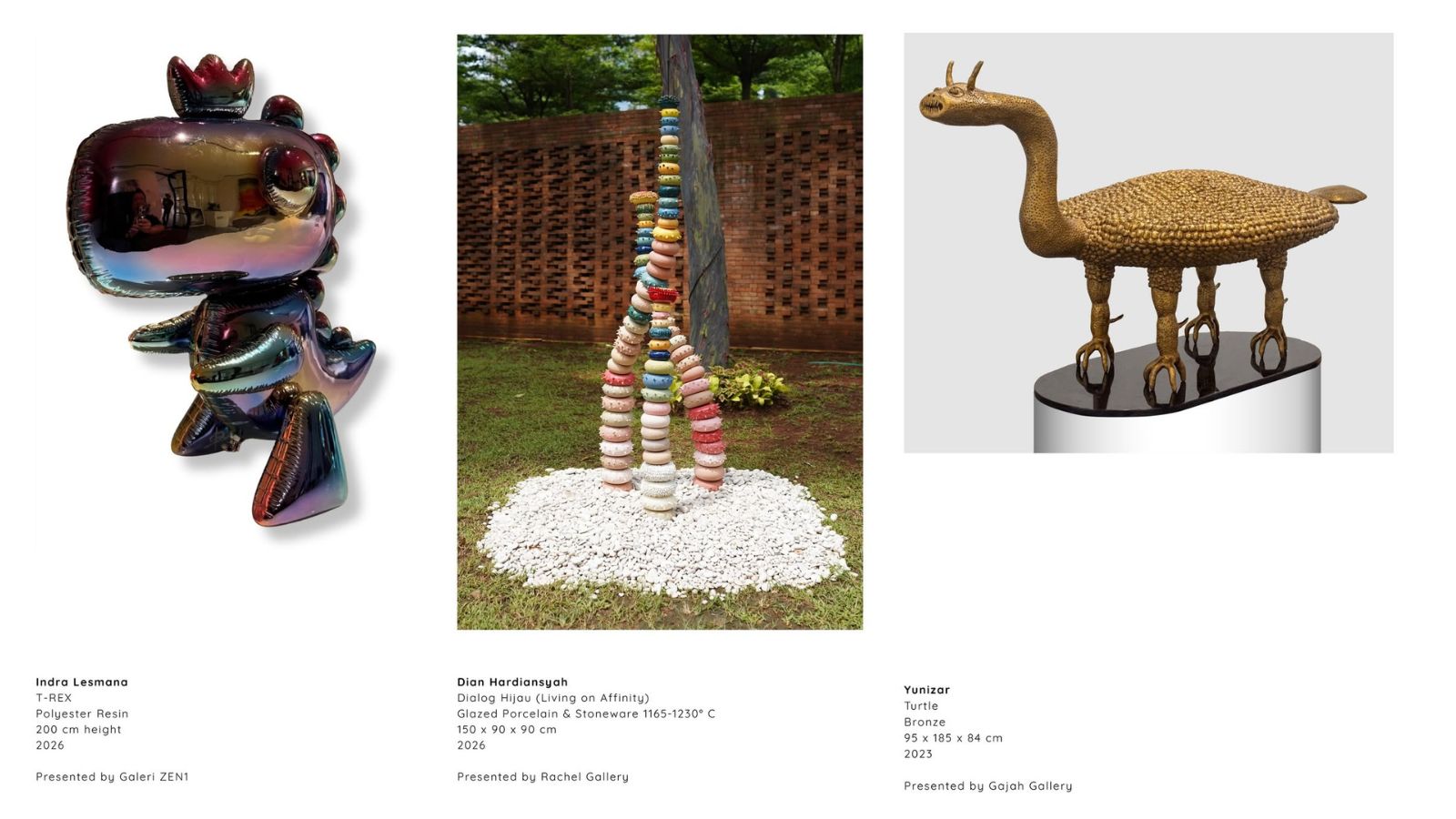 Three works presented at Art Jakarta Gardens 2026. Source: instagram.com/artjakarta.
These works not only enriched the visual experience but also changed the way the public encountered art. Visitors did not simply come to look at the works; they walked among them, observed their details, and experienced how the installations became part of the green surroundings in the heart of Jakarta.
Public Programs and Multidisciplinary Collaborations
Complementing the experience of viewing the artworks, Art Jakarta Gardens 2026 also presented a series of multidisciplinary public programs. These included Kisah dari Samudera by Agus Nur Amal PM Toh, presented by MTN Seni Budaya, and Laku Swargaloka by Swargaloka, supported by Bakti Budaya Djarum Foundation. The presence of these programs demonstrates how Art Jakarta Gardens is not only a space for visual art, but also a meeting point for different creative disciplines.
One collaboration that drew considerable attention this year came from iForte Energi and designer Sigit D. Pratama through a new media installation titled Solagua. Based on solar panels, the installation combines solar energy and water elements within a rhythmic moving system. Water mist periodically cleans the surface of the solar panels, helping maintain their efficiency while offering a reflection on the relationship between technology and natural cycles.
Through Solagua (Sun and Water), visitors are invited to see energy not merely as a commodity, but as part of an ever-moving and interconnected system of life.
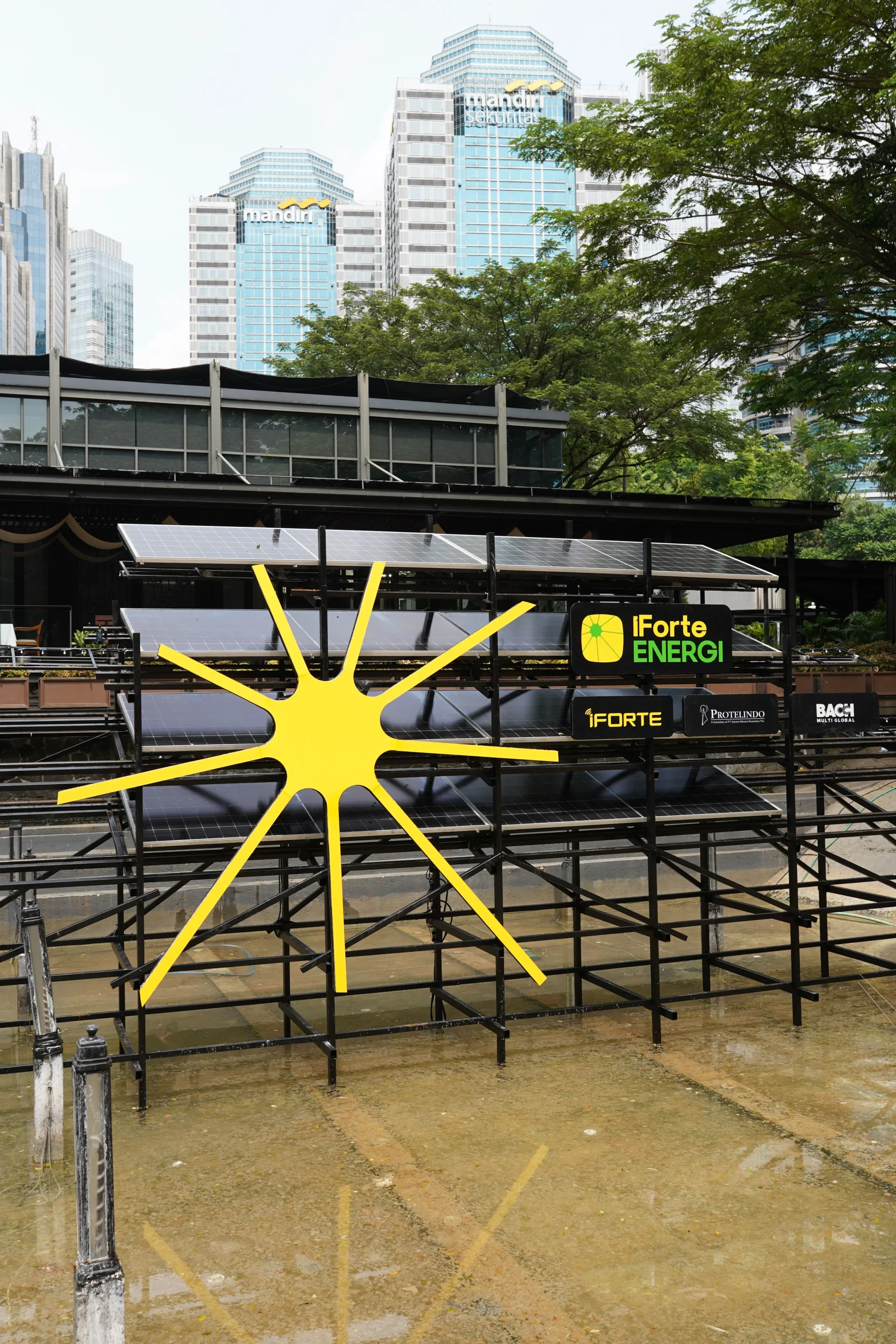 The Solagua installation at Art Jakarta Gardens 2026. Photo courtesy of Art Jakarta Gardens 2026.
Meanwhile, TACO designed the ticket box through an exploration of red-toned ACP material that complements the visual theme of Art Jakarta this year. As a provider of interior and exterior material solutions, TACO also supported the event by supplying HPL bases for all sculptures presented in the Sculpture Garden segment.
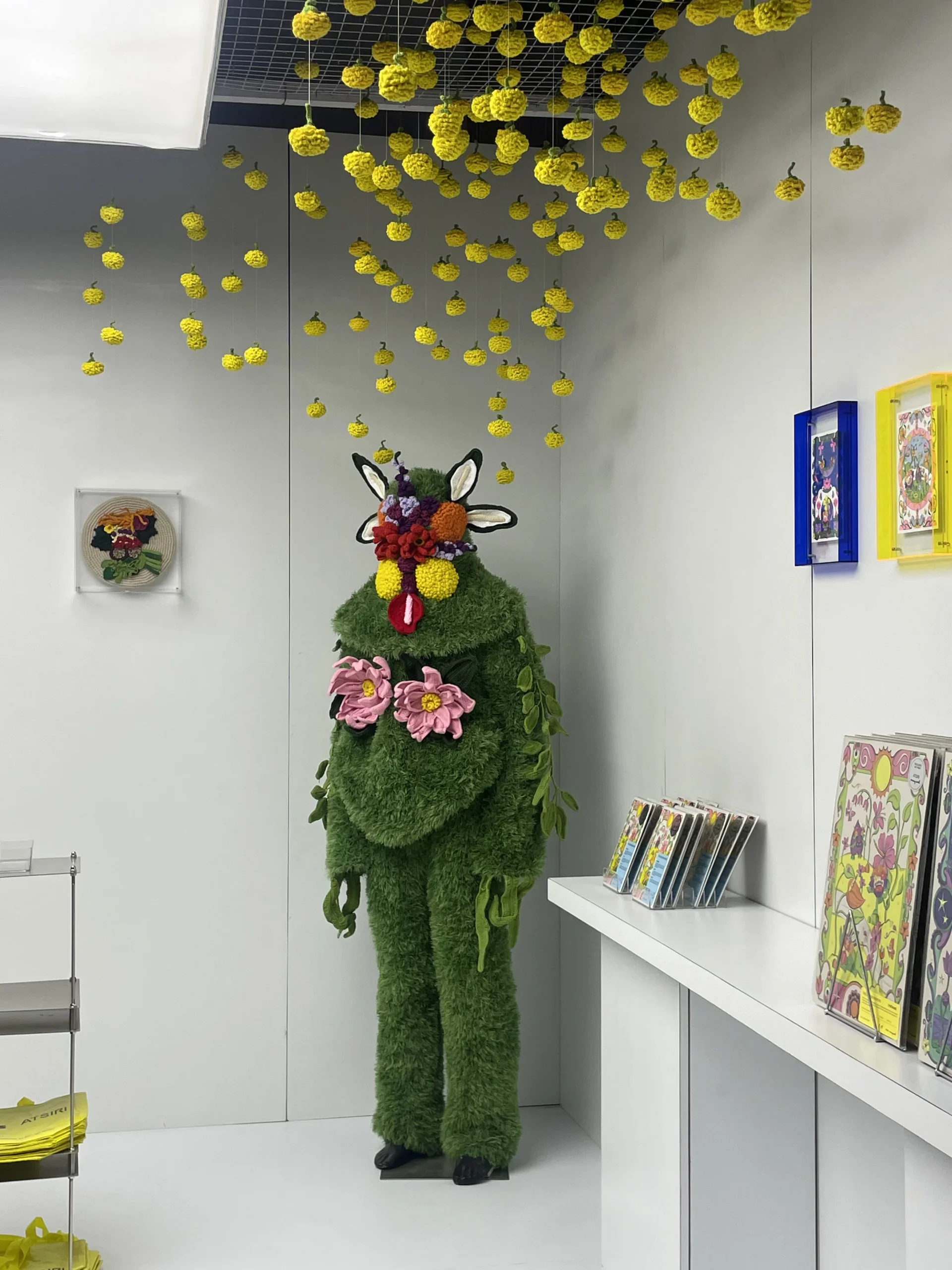
Another multidisciplinary collaboration came from Bibit, which worked with Yogyakarta-based artist Mangmoel. In a presentation titled Tentacles of Wealth, visitors were invited to reflect on the journey of investment through the character of the octopus, known for its ability to adapt to different situations. Mangmoel presented Mogus (Monster Gurita Sigarantang), an iconic knitted installation featuring an expressive and imaginative octopus figure. Through the work, Bibit sought to connect the octopus’s flexibility and ability to survive amid change with the ways people navigate uncertainty in investing today.
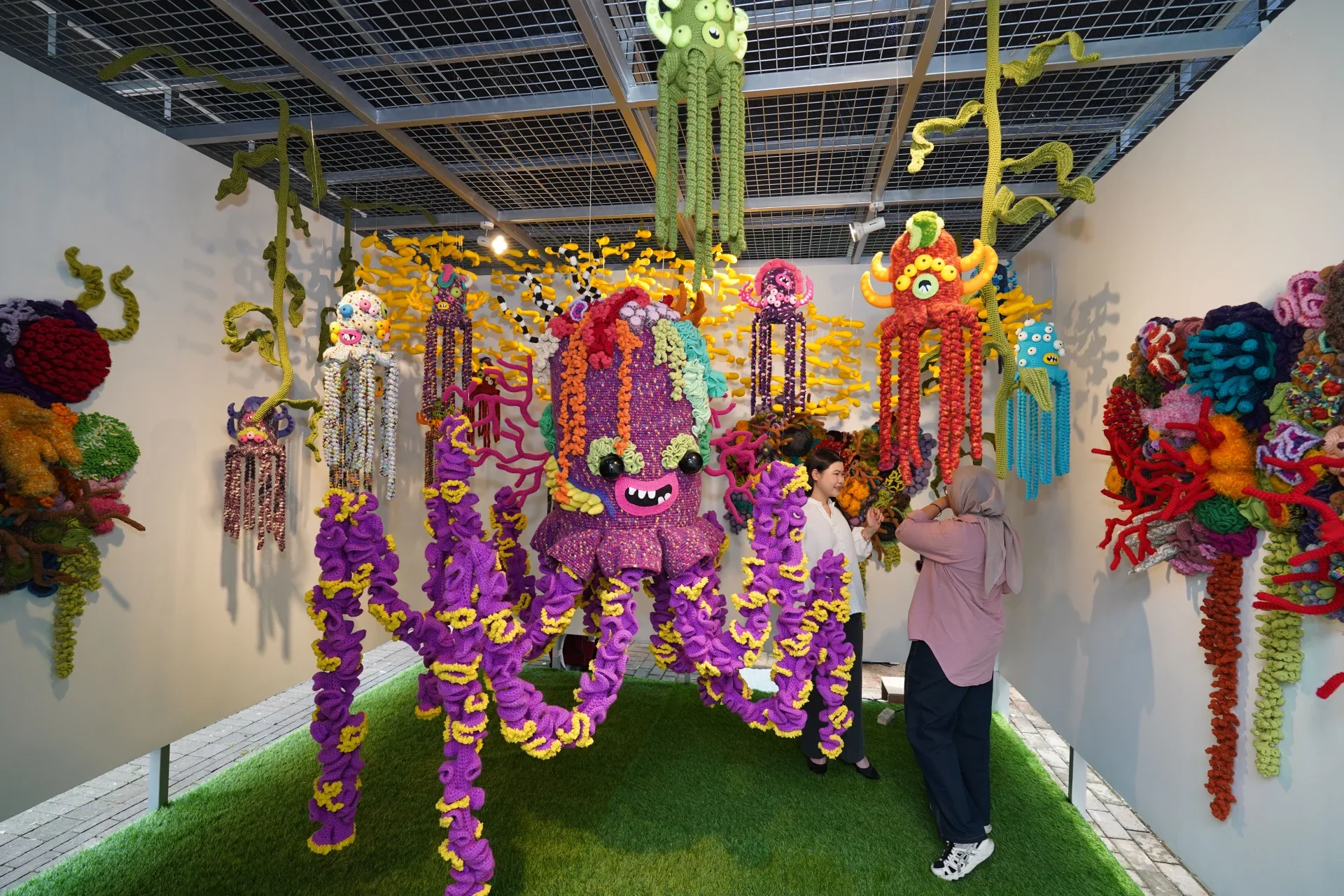 The Tentacles of Wealth installation at Art Jakarta Gardens 2026. Photo courtesy of Art Jakarta Gardens 2026
With the diverse range of artworks, installations, and collaborations presented this year, Art Jakarta Gardens further establishes its position as an art space offering a different experience within Jakarta’s urban landscape. Beyond bringing visual art into an open-air setting, the exhibition also opens up new possibilities for how art can come closer to the public, coexist with nature, and become part of the city’s everyday experience. Through an exploratory yet approachable approach, Art Jakarta Gardens 2026 succeeds in creating an art experience that feels alive, relaxed, and relevant to the dynamics of Jakarta today.
If you enjoy following art exhibitions and discovering stories from the creative world, be sure to explore more art stories on Written.id.