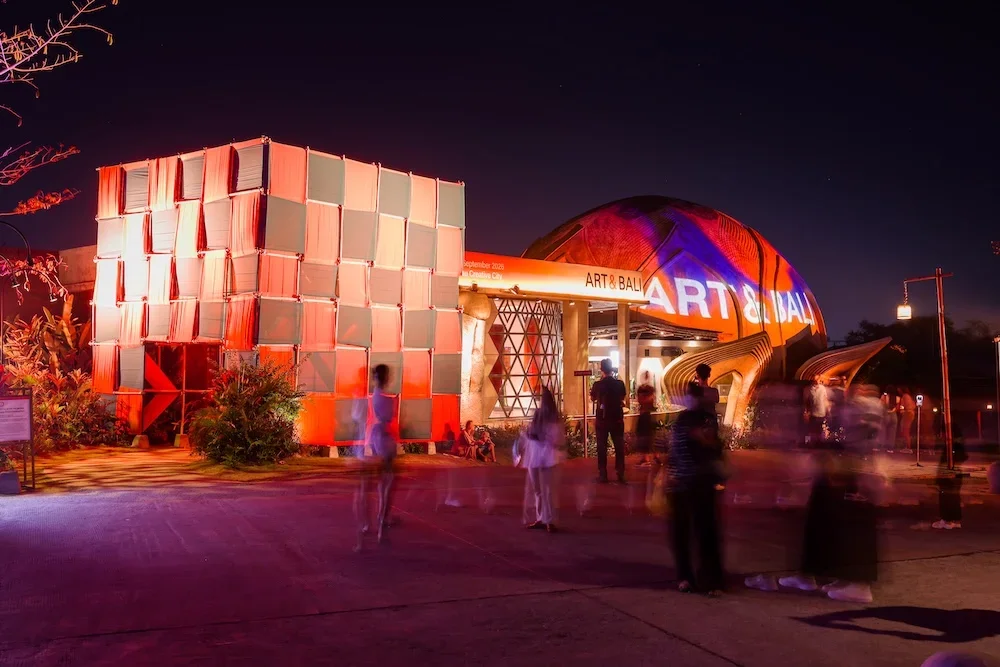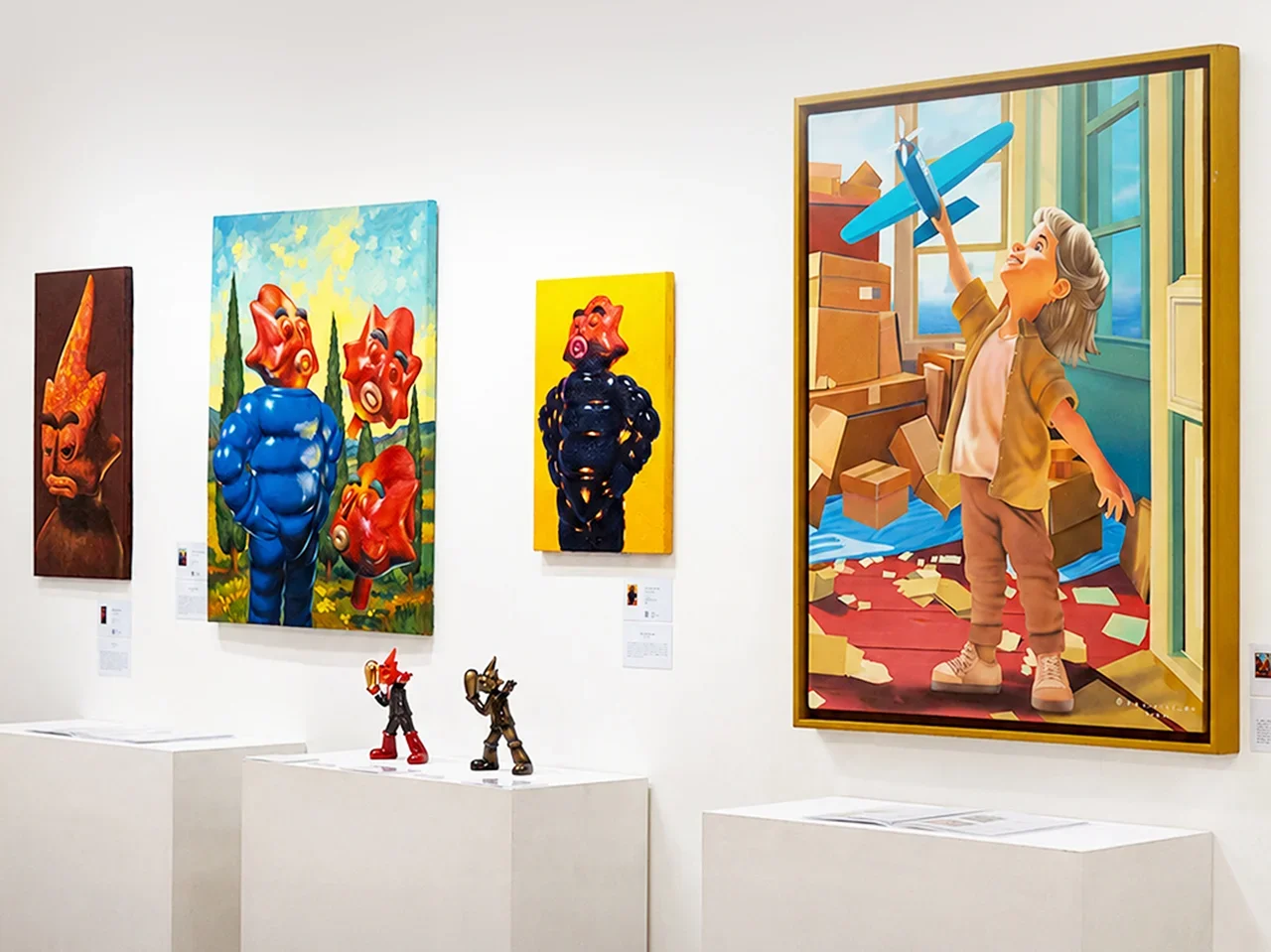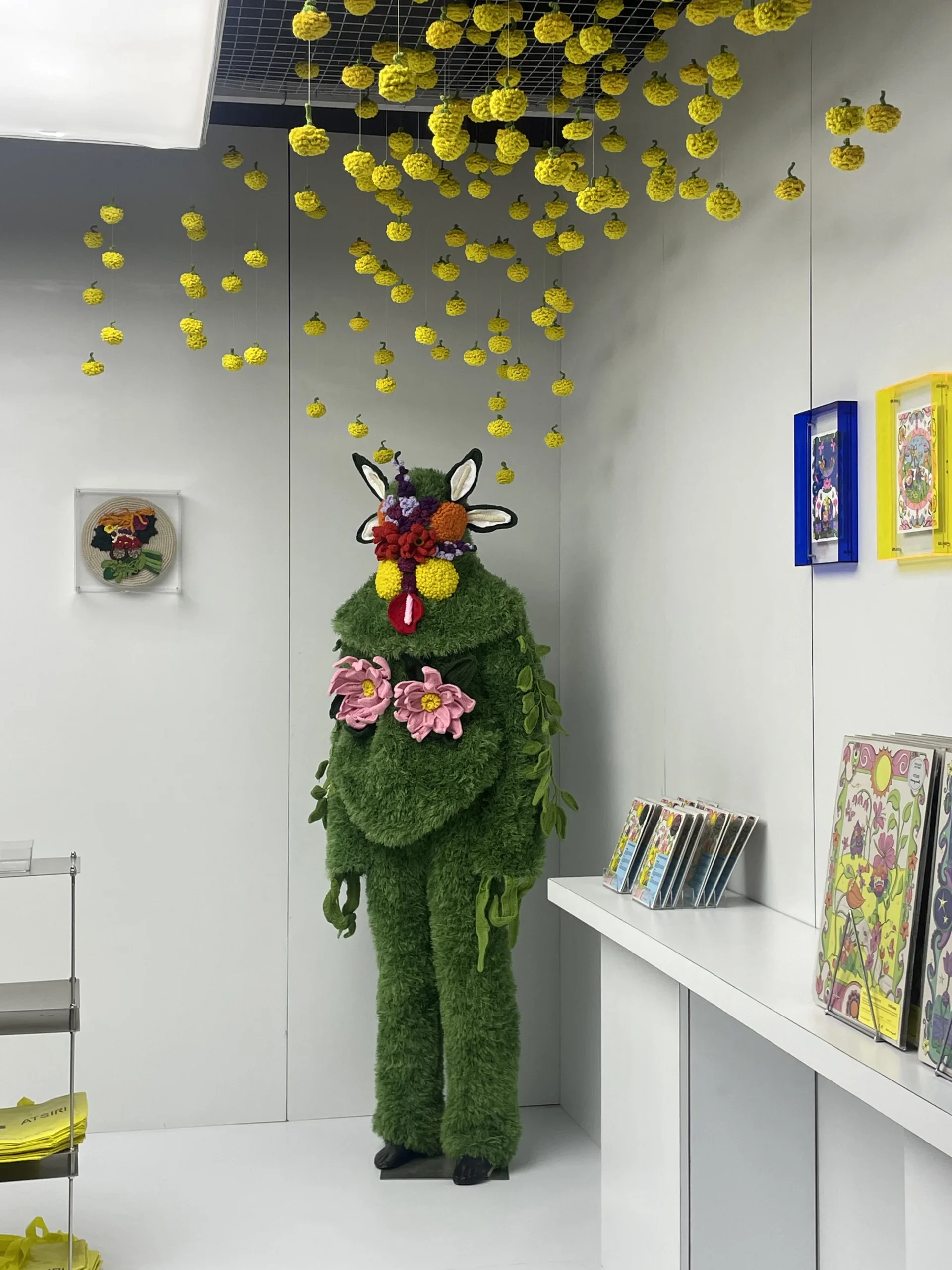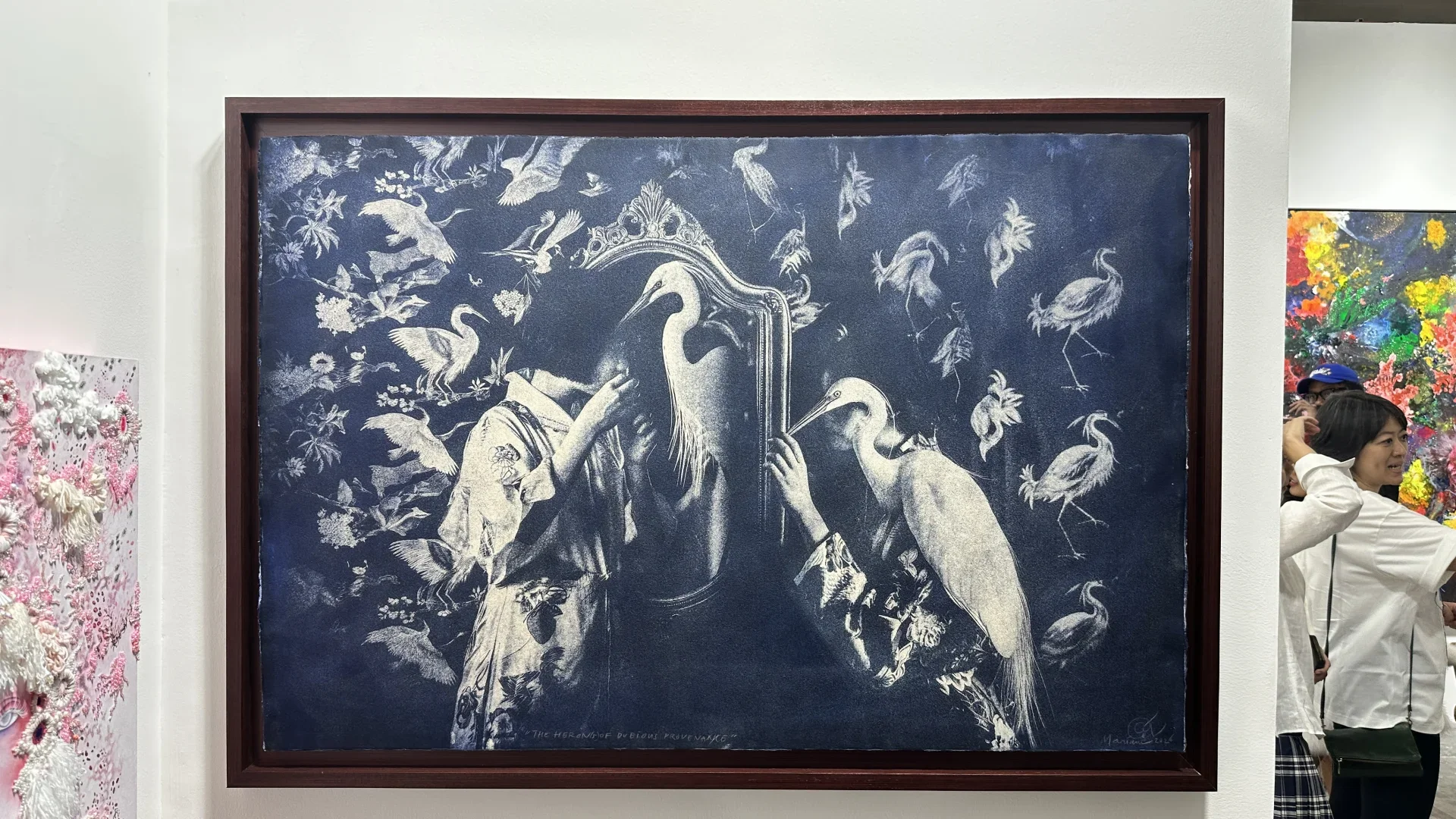
Art Jakarta is consistently held every year, and even in its 16th edition, it continues to bring a sense of freshness.
There was a different rhythm when we arrived at JIExpo Kemayoran early last October. Entering its sixteenth edition, Art Jakarta no longer functions merely as a large-scale art fair showcase.
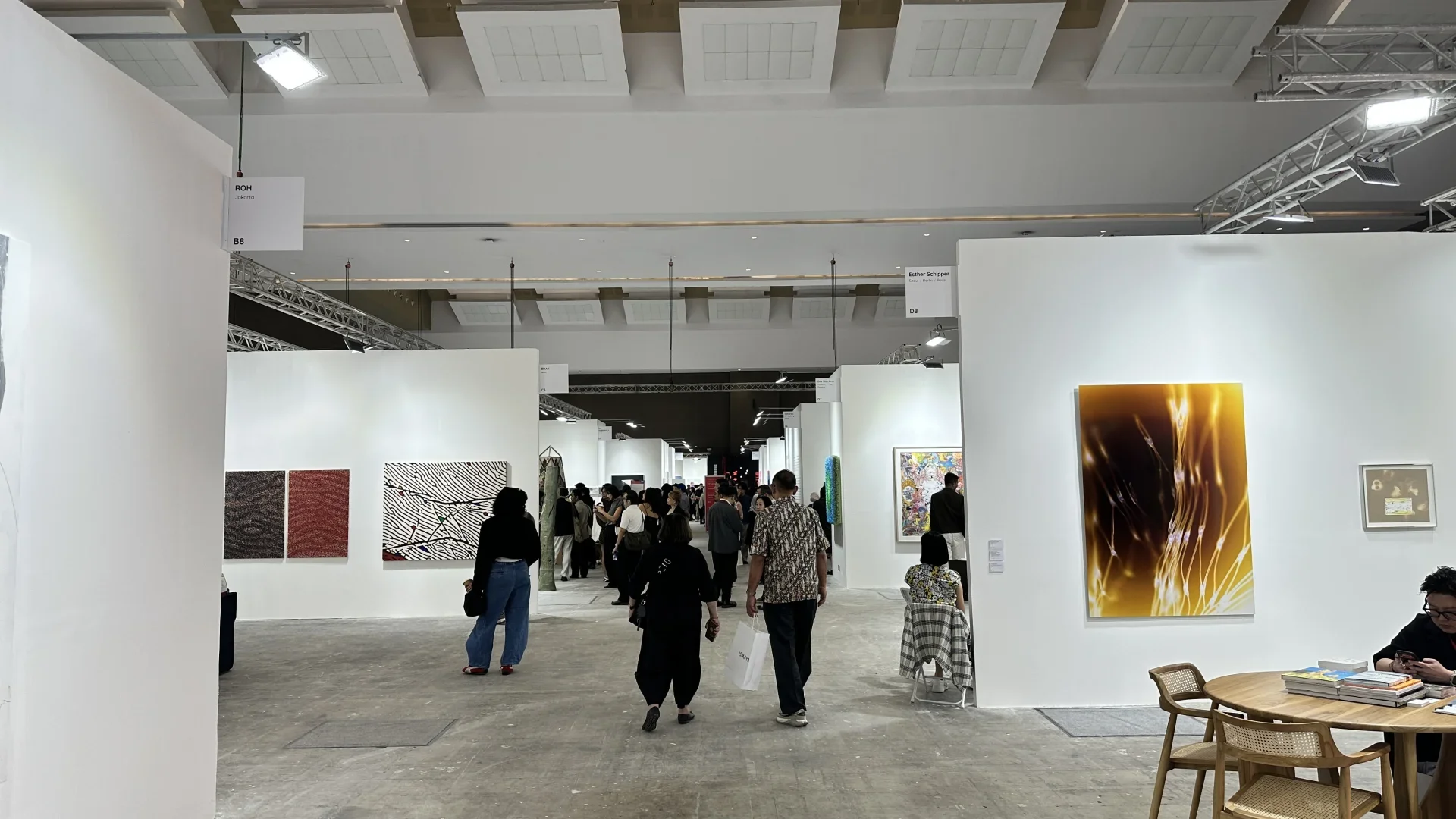
As a visitor who keeps returning year after year, I felt a shift where Art Jakarta now breathes as an incubator of ideas. This year, the discourse that lingered in my mind wasn't about the massive scale of the exhibited works, but rather conversations regarding bodily vulnerability, value, and how we treat tradition and memory.
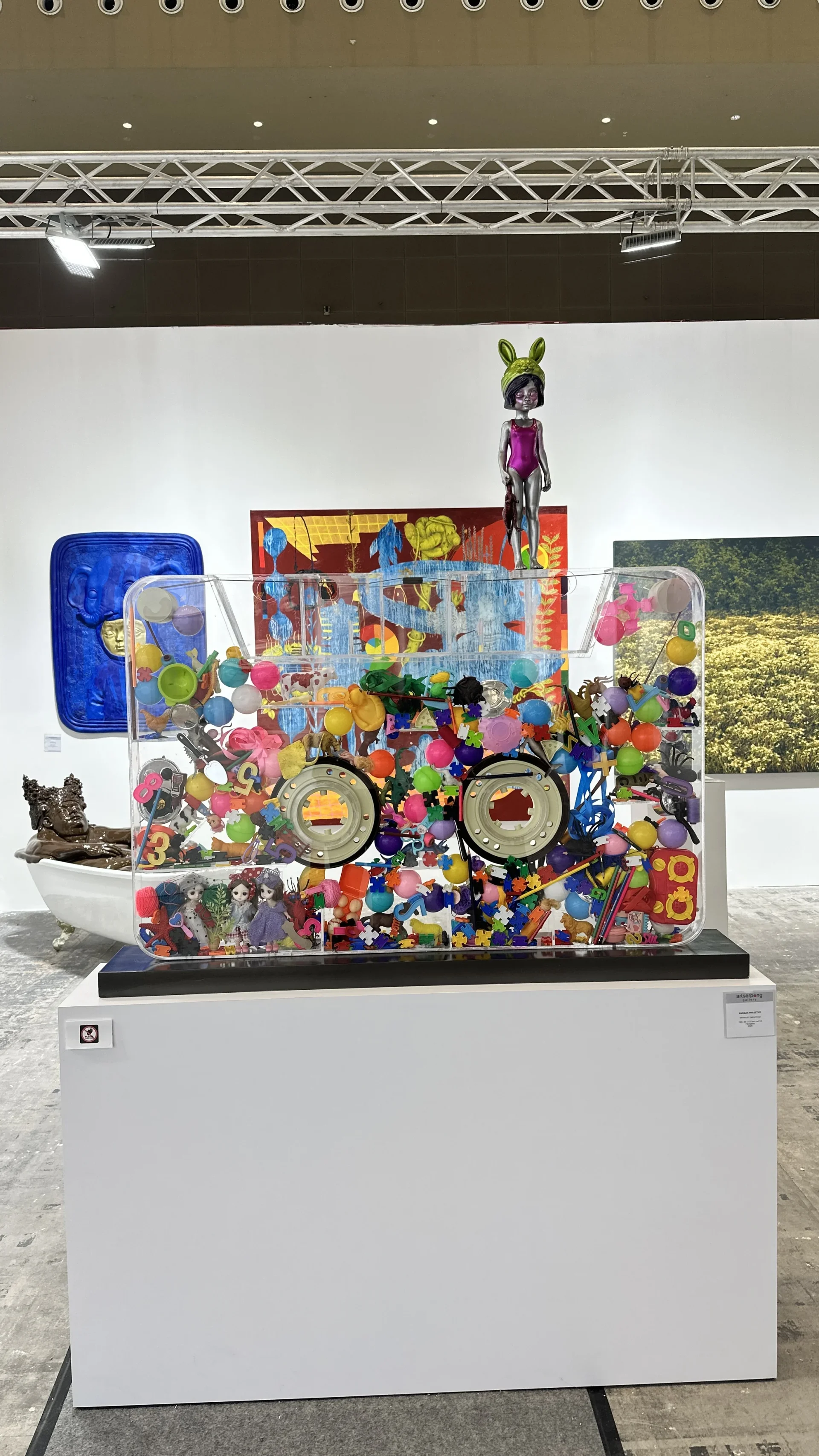
Reinterpreting Tradition and Medium
In the main area, the collaboration between AIA and Batik Maestro Iwan Tirta sparked reflections on heritage. Seeing classic batik patterns translated into hand-tufted carpets in a presentation titled "The Living Legacy" leaves us transfixed on one question: when a traditional motif is uprooted from its original medium (batik cloth) and placed into a new context (carpet), does its meaning mutate as well? This work invites us to view tradition not as a frozen artifact, but as something that must continuously adapt to remain relevant in modern spaces.
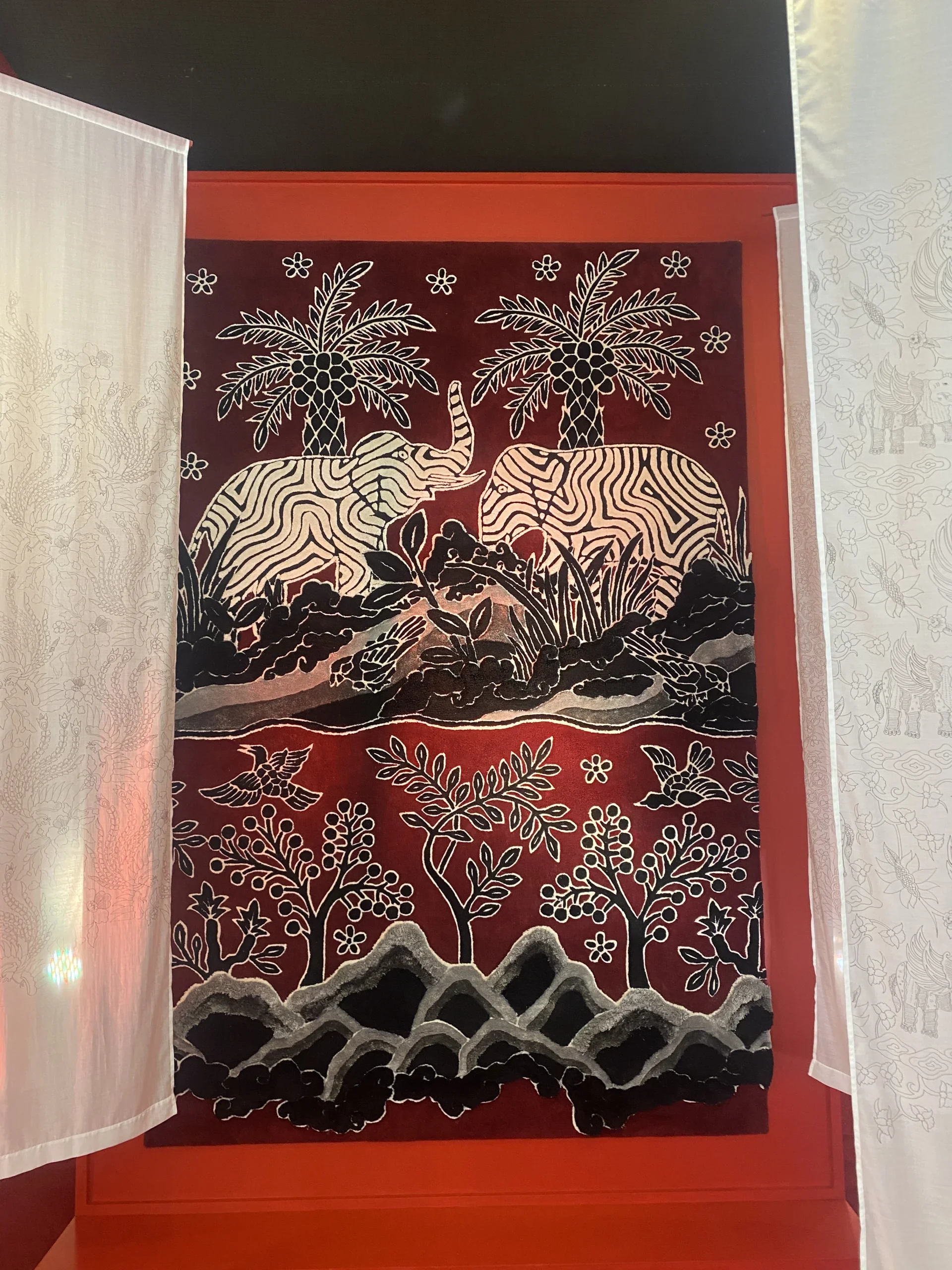
The courage to challenge medium boundaries was also presented by EDISII. As a pioneer publisher of fine art prints in Indonesia, they invited several artists to translate their paintings into museum-scale art print formats.
Remarkably, the details of the brushstrokes and the emotional texture of the original paintings remained clearly visible. This proves that paper can produce serious collectible works without sacrificing depth of meaning and value.
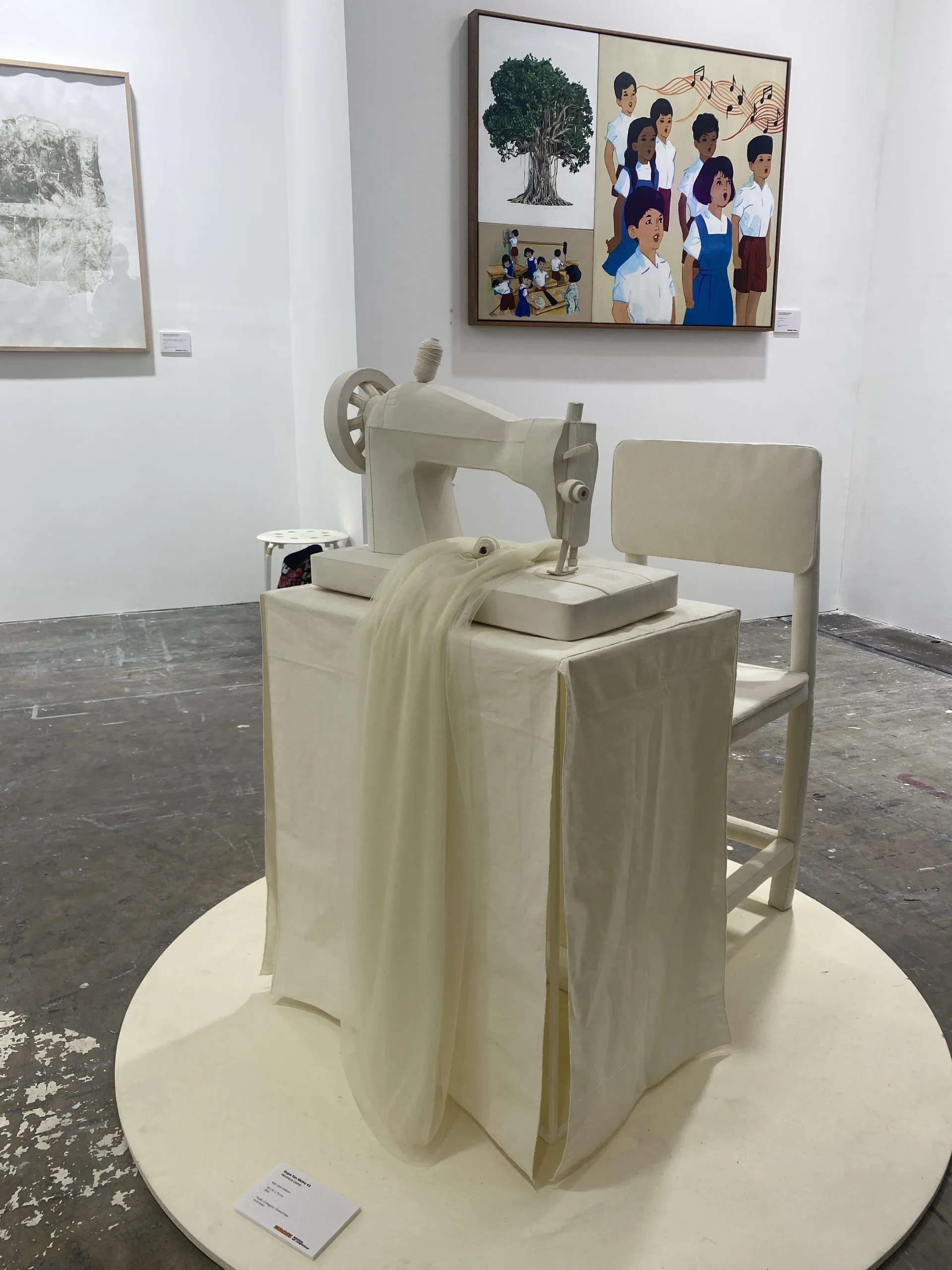
Ecology, Technology, and the Bodily Landscape
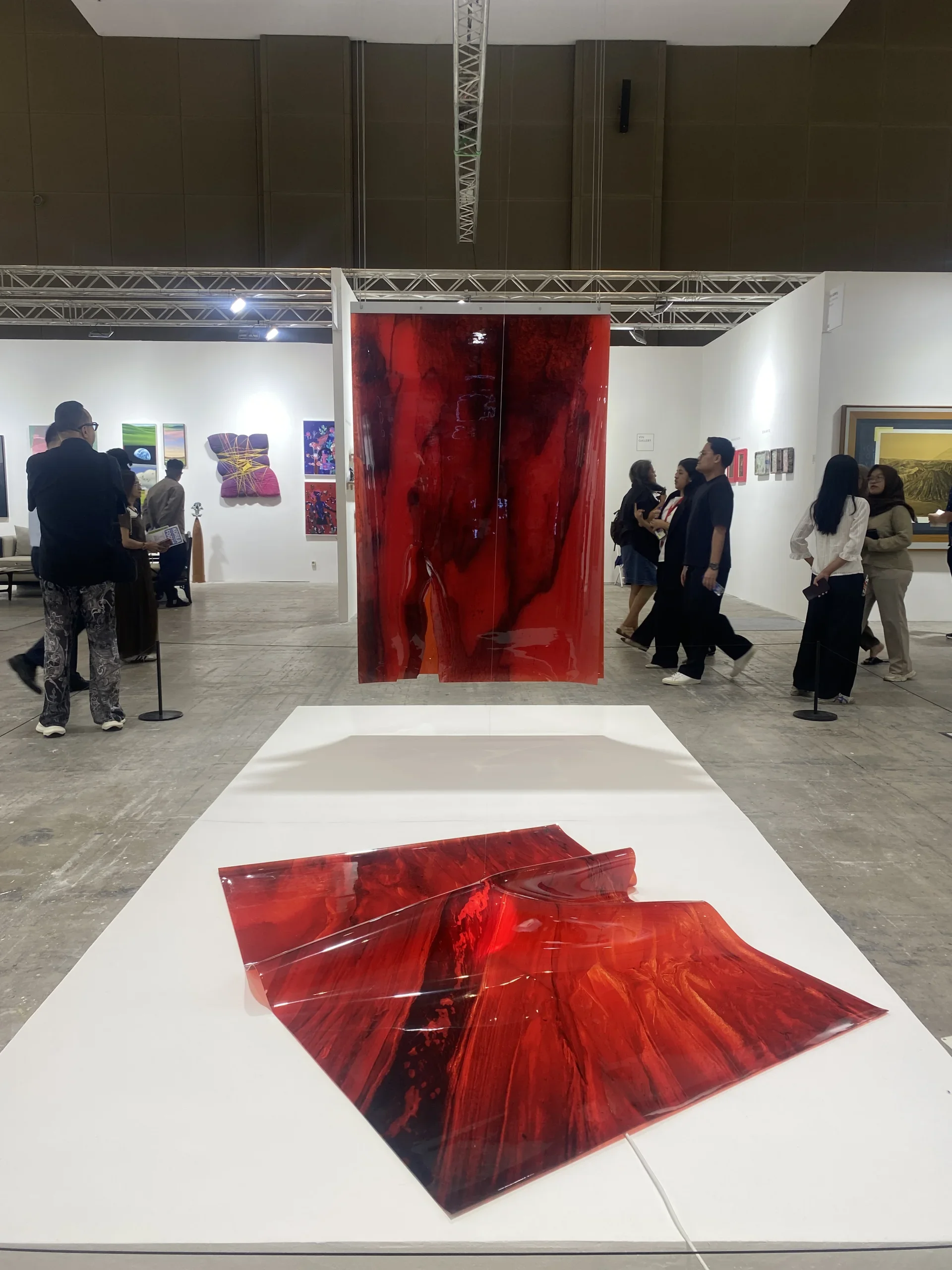
The spatial and conceptual surprises in the SPOT area are always a distinct draw. The presentation by Vietnamese artist Nguyễn Phương Linh, presented by Ara Contemporary, was one of the most memorable.
Stemming from her long experience with clinical care and physical rehabilitation, she formulated visuals where human anatomy and natural landscapes overlap. Through her work, visitors are invited to view the body like an ecosystem landscape—vulnerable to destruction, yet simultaneously possessing a magical power to heal itself.
This conversation about ecosystems found an odd intersection through "Hutan Kabel" (Cable Forest) by Agnes Hansella, a collaboration with iForte and Protelindo Group. Using thousands of meters of cold, industrial discarded fiber optic cables, the artist knitted them into an organic canopy resembling the aerial roots of a banyan tree (Ficus).
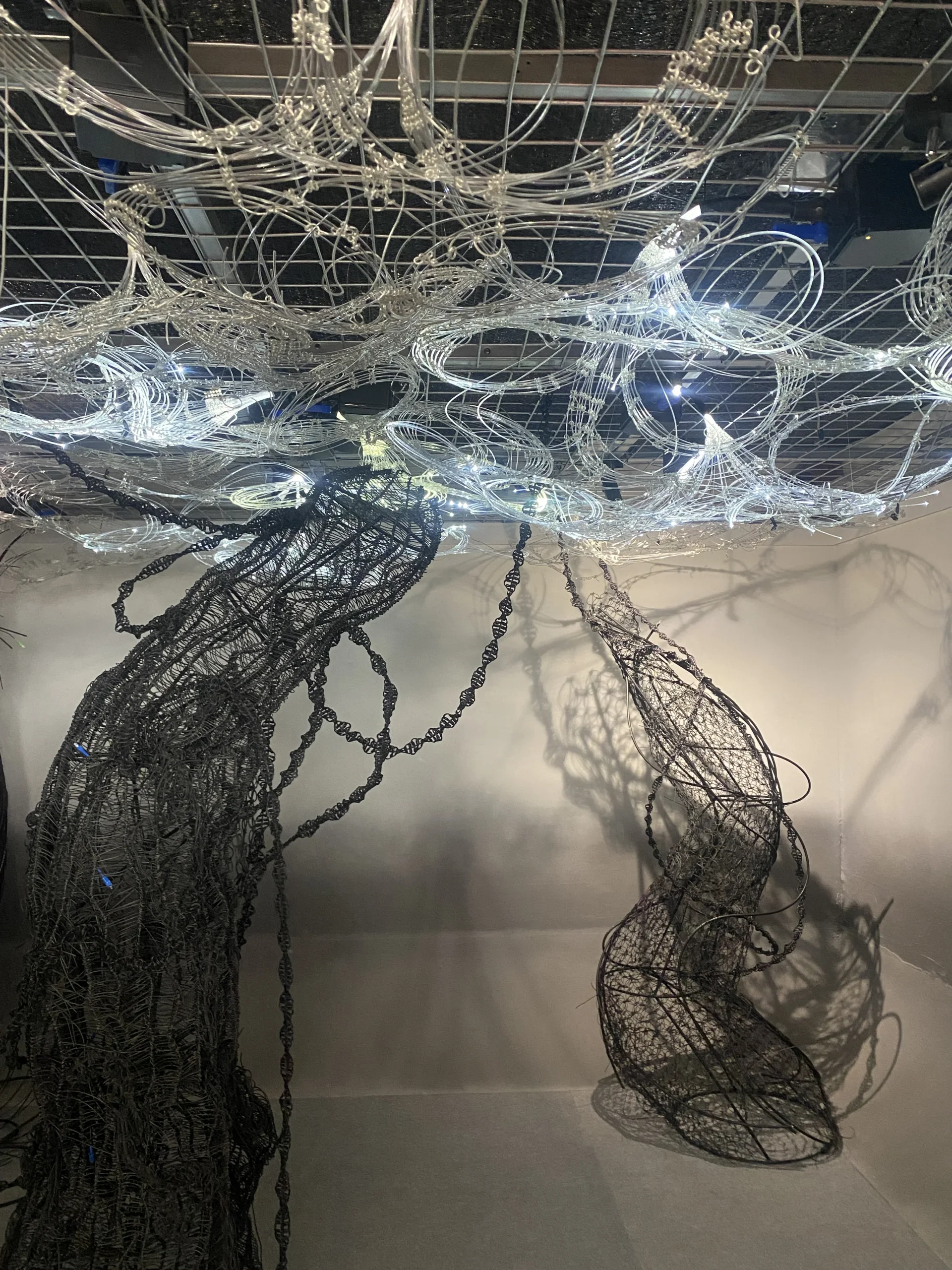
This interactive installation demonstrates that technology and ecology may no longer sit at opposing poles, but are beginning to form a hybrid ecosystem within our lifetime.
Finding Value Amidst Uncertain Waves
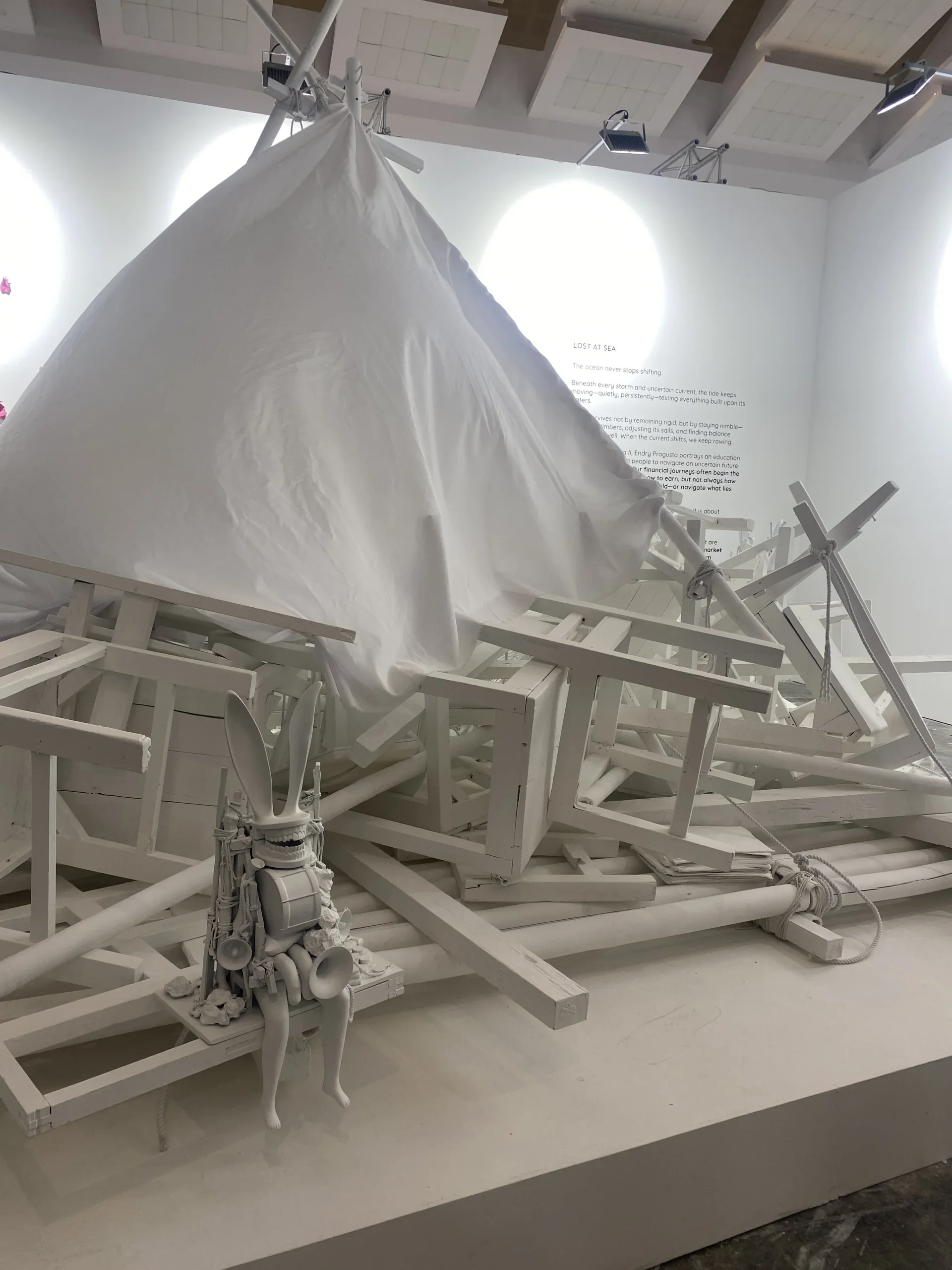
How do we face a murky future? Bibit and Stockbit responded through the boat installation "Lost at Sea" by Endry Pragusta. Drawing inspiration from the infamous tragedy of the raft of the Medusa, this piece metaphorically discusses our paralysis when battered by the waves of uncertainty.
Its message is straightforward yet highly relevant: in the middle of an unpredictable ocean, the ability to adapt and the courage to cast an anchor of investment are the only life preservers we have.
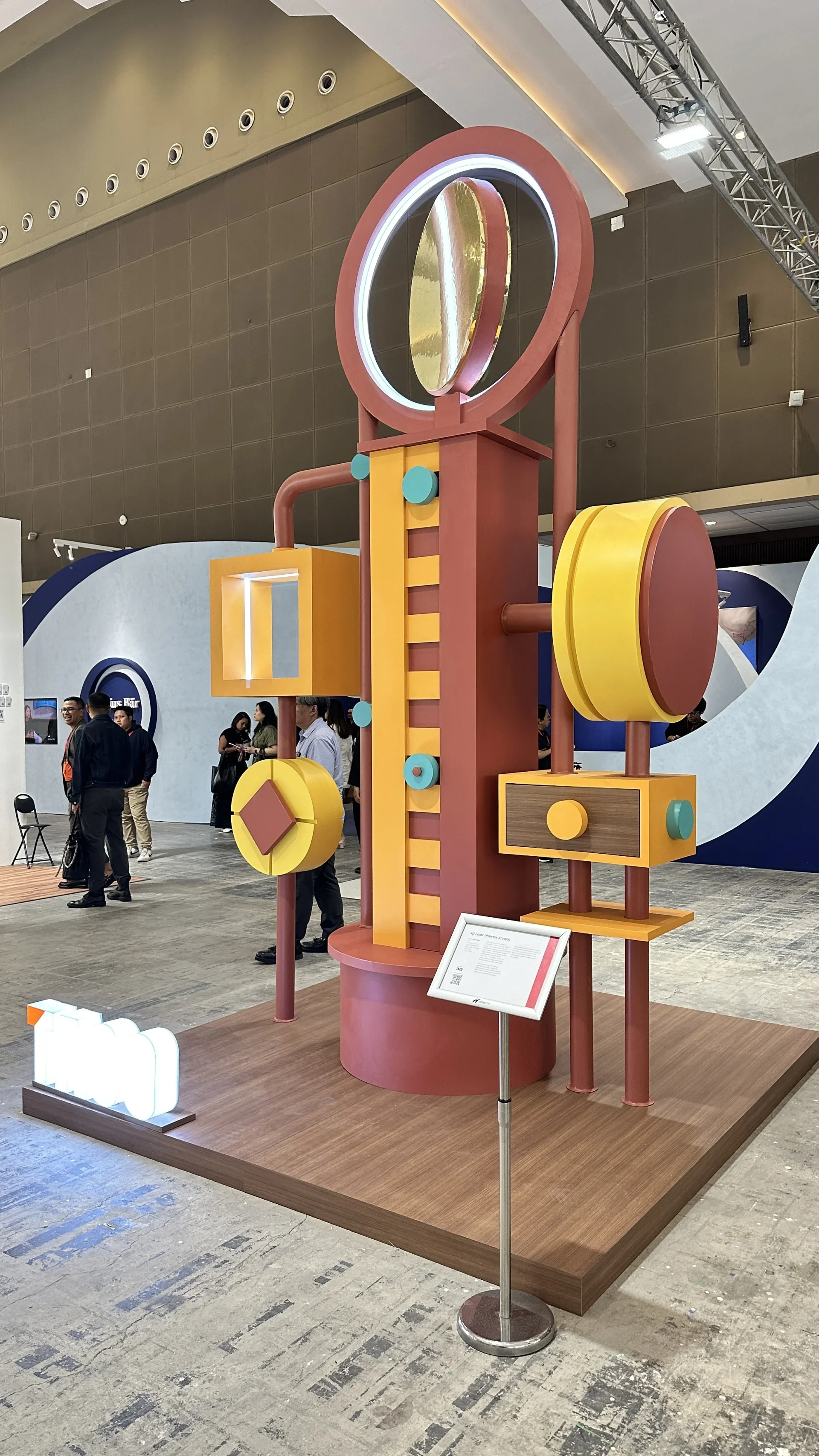
In another corner, a brighter collaborative spirit emerged through "The Curiosity Engine," a joint effort by TACO and Aji Fajar/Palette Studio utilizing discarded HPL (High-Pressure Laminate). Carrying the warm hues of a sunrise spectrum, this installation inserted a pragmatic breath of sustainability—its structure was intentionally designed modularly so it could be disassembled and reused later. The presence of drawers, both mysterious and functional, offered possibilities for a life after the exhibition.
Slowing Down to Pay Attention
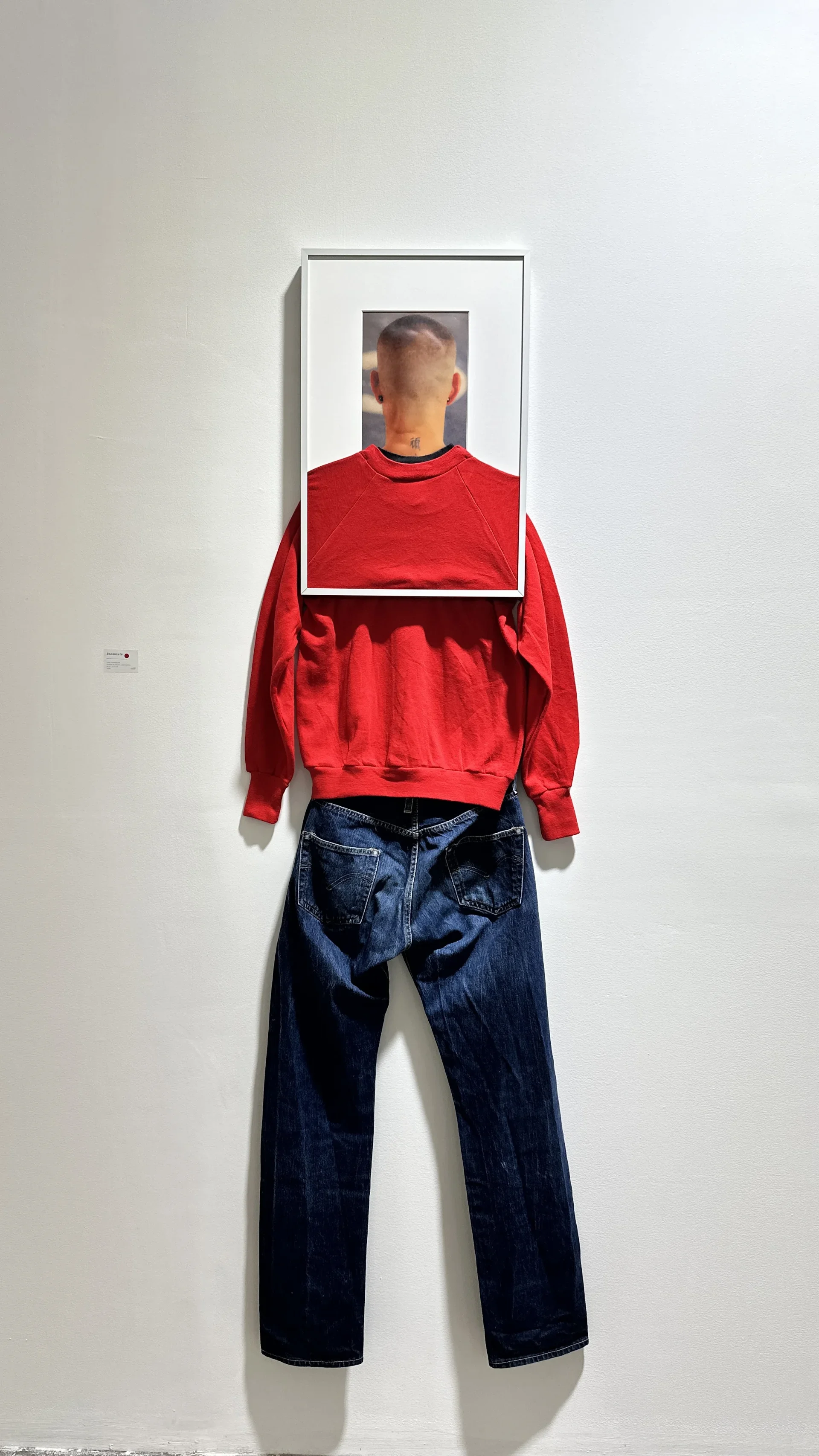
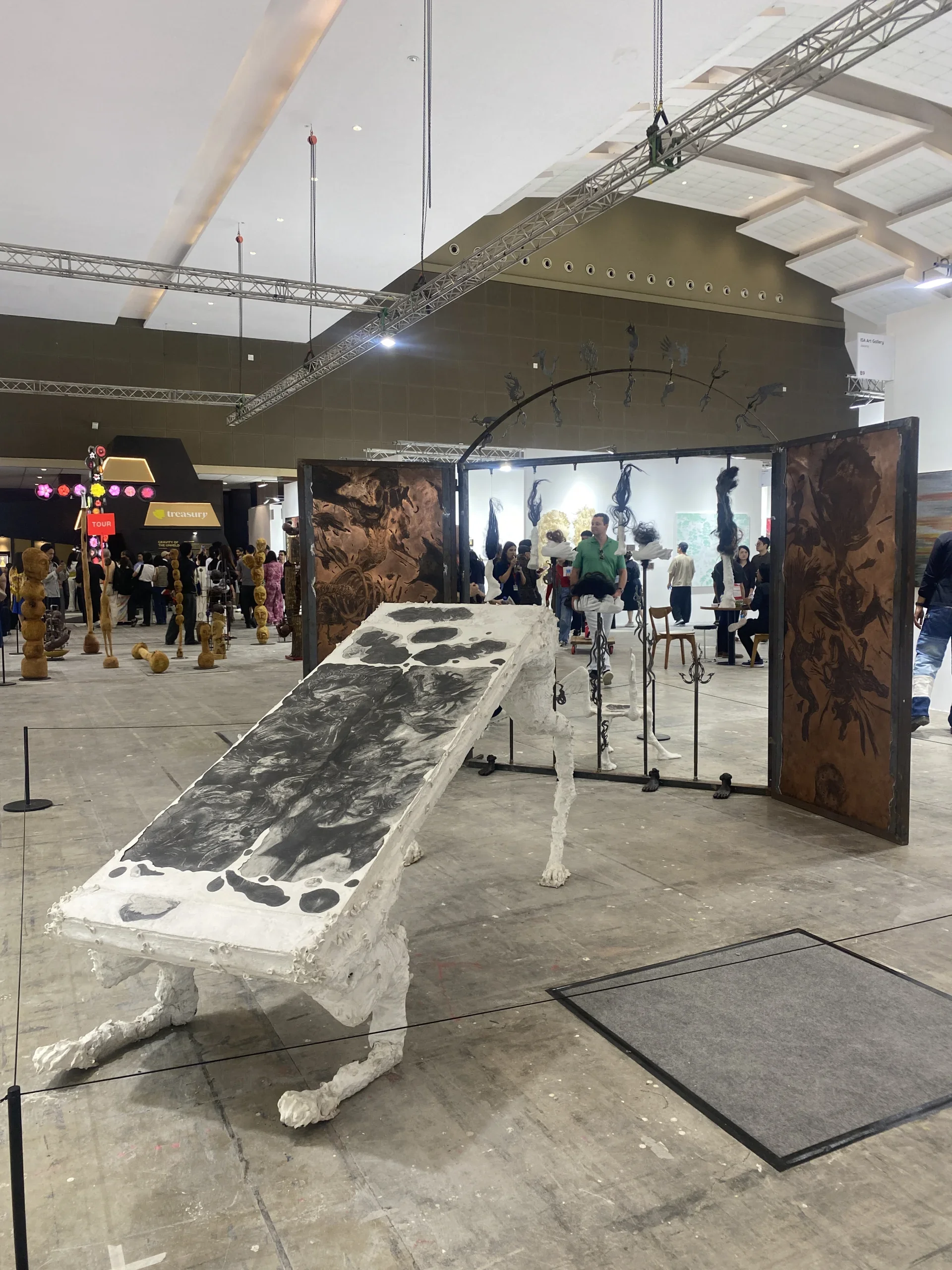
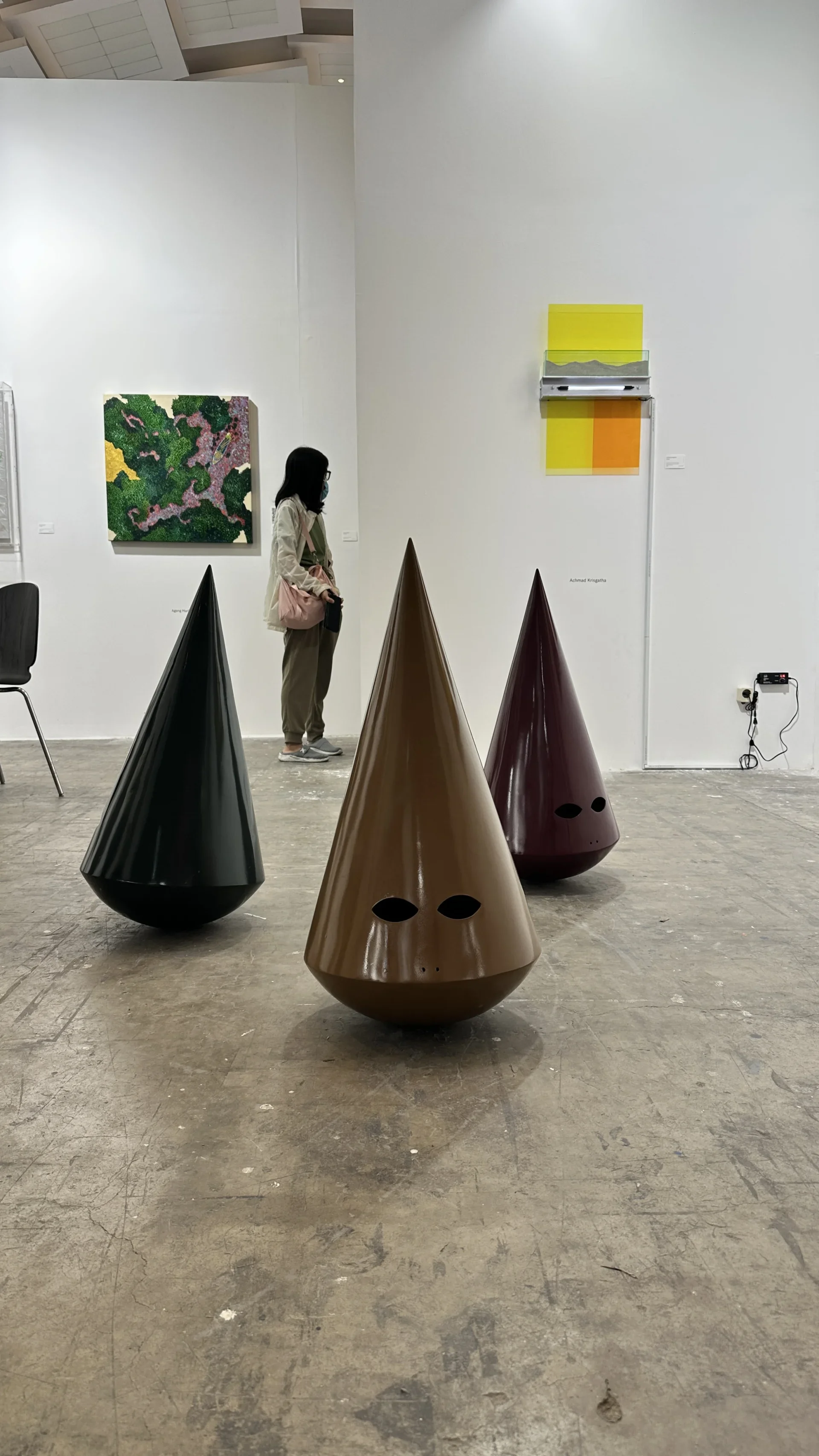
An art event tends to trigger adrenaline, pushing us to consume works rapidly. Henryette Louise, presented by ArtSociates, precisely deconstructed that rhythm through her presentation, "Mammalian Locomotion."
Working with intentionally inverted logic, she demanded the audience slow down, walk around, and truly savor her work.
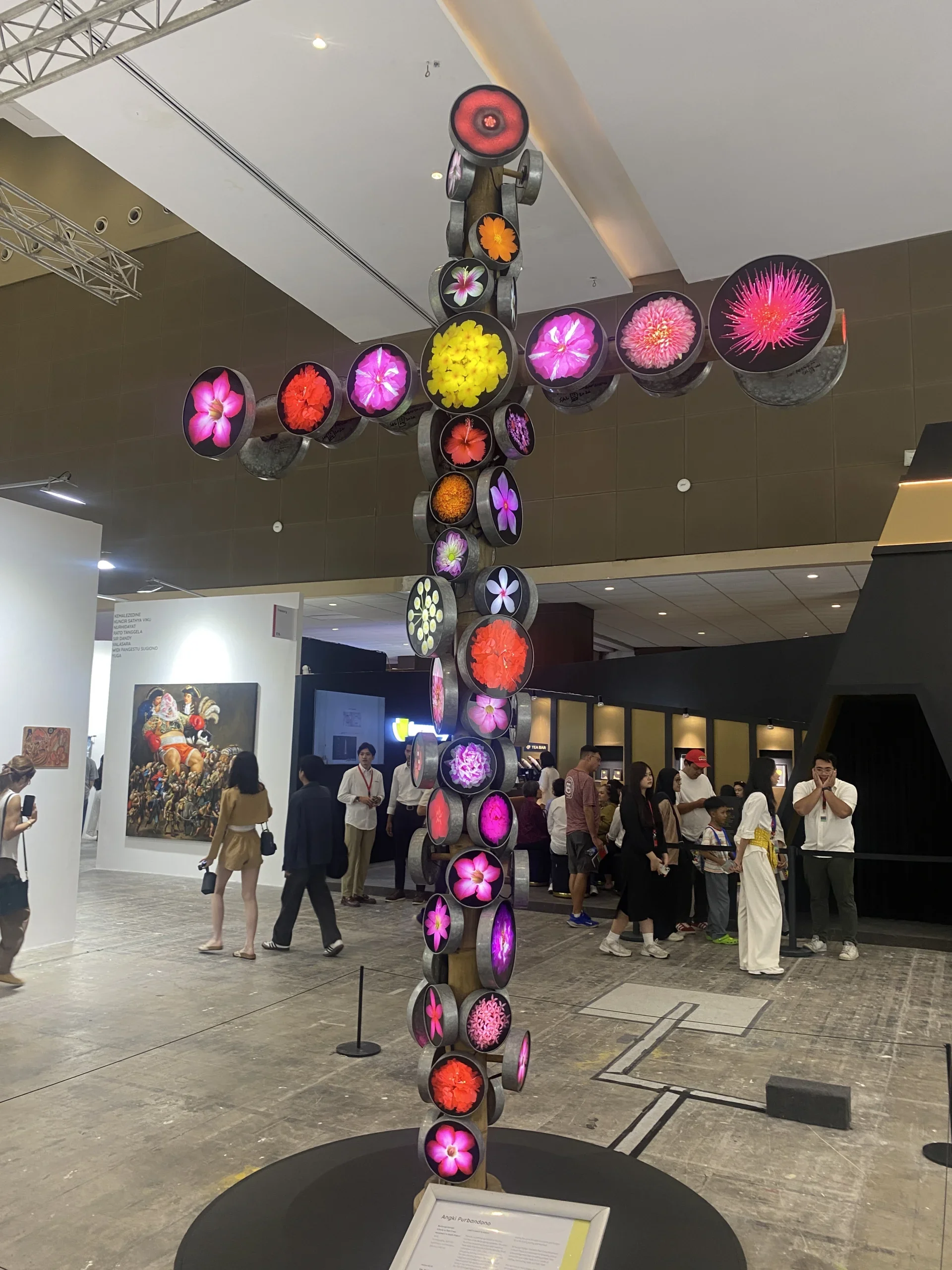
It wouldn't be an art fair without a piece that marks the times. A more sociopolitical voice resonated from "Berbunga-bunga" by Angki Purbandono, presented by SAL Project. Serving as a tribute to the Red Cross movement in South Papua, this work stitches humanitarian values together with the local Pesta Babi (Pig Feast) ritual. This serves as a marker that the contemporary art realm still provides space for grassroots issues.
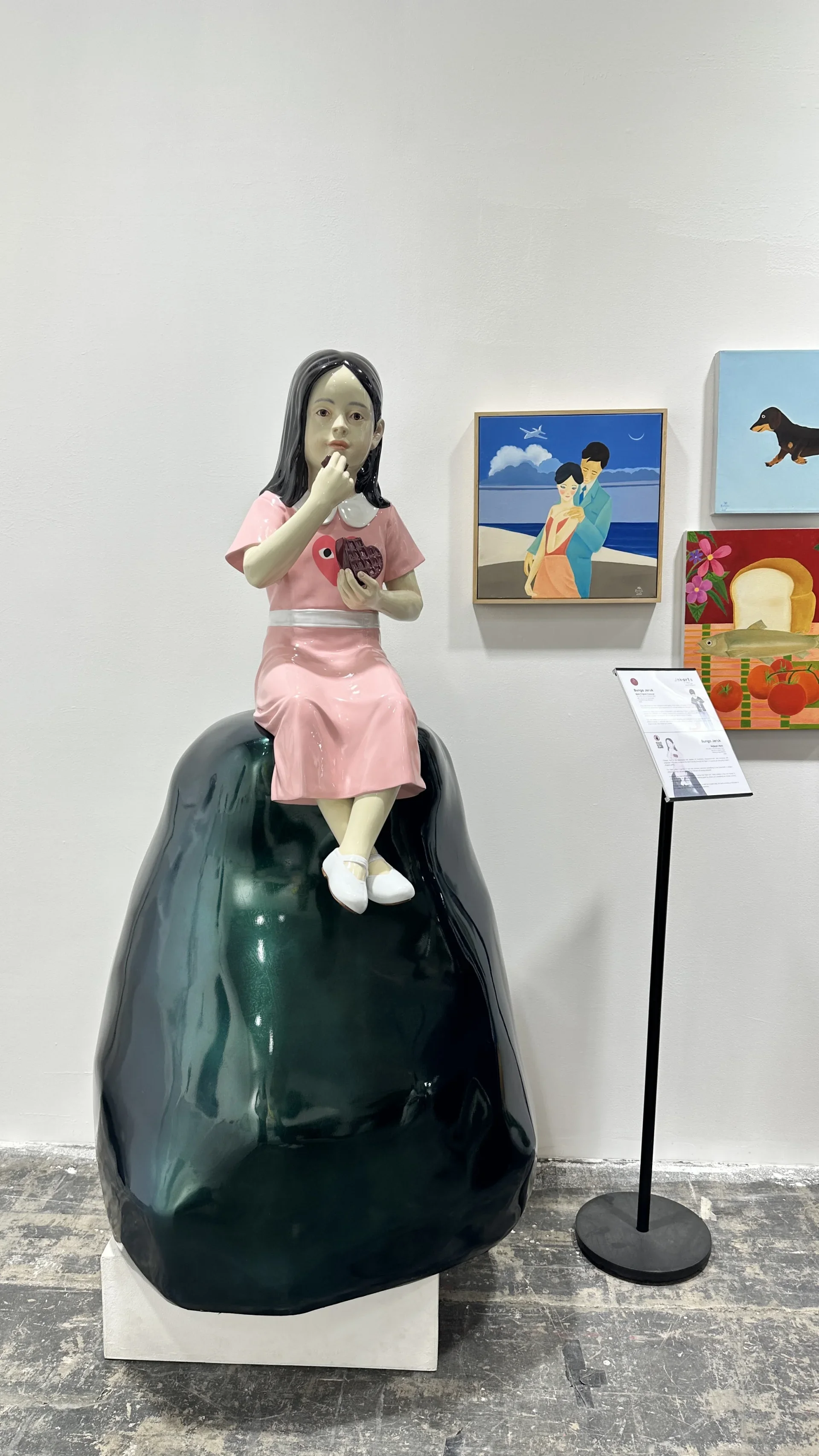
The National Talent Management (MTN), initiated by the Ministry of Culture, did not miss the chance to show out in their second appearance at Art Jakarta. This time, through the MTN Market, they brought works from artists representing six fine art initiatives: Mini Art Malang (Malang), Artists Art Fair (Pekanbaru), ART HEY (Banyumas), Maa Ledungga (Gorontalo), Hello Goodbye Photo Market (Bekasi), and Watercolor Art Fair (Yogyakarta).
My exploration wandering past dozens of galleries and hundreds of artworks culminated in the intimate silence of the Aesop Women's Library. Thousands of books by female authors were not only displayed to be read on-site but were distributed for visitors to take home.
Perhaps, that is the answer to why Art Jakarta continues to endure and remain relevant. It retains its charm not by flaunting its sheer size or the volume of its participants and visitors, but by continuously nurturing a sensitivity to champion the things that truly matter to us.