Three ARTJOG 2026 works explore sustainability through water, waste, and technology.
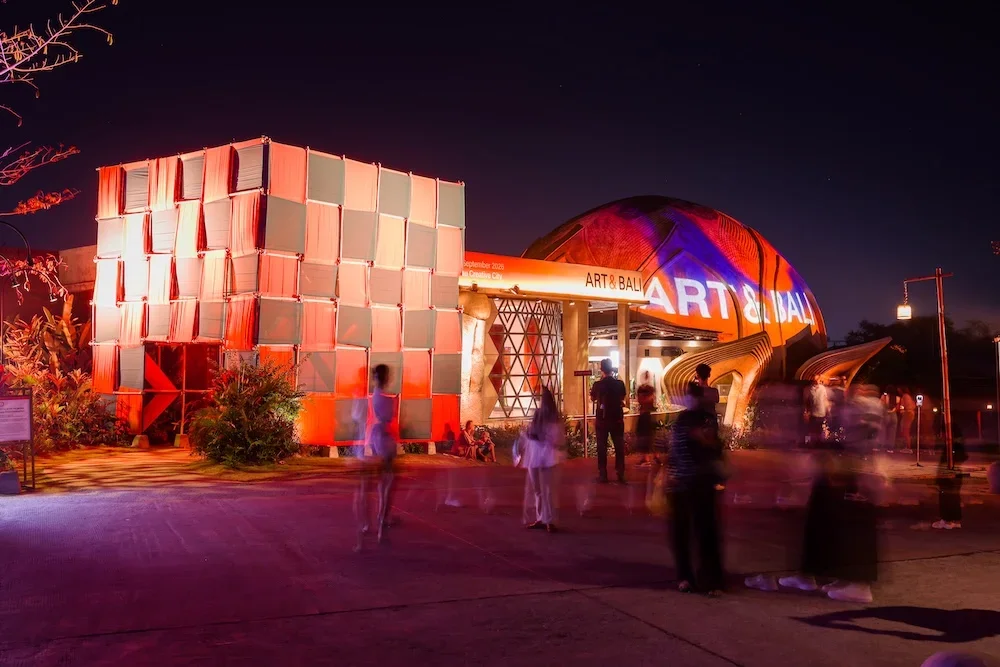
Sustainability in art does not always take the form of green landscapes or overt environmental messages. At ARTJOG 2026: ARS LONGA: GENERATIO, the idea emerges instead through wells, corn husks, plastic waste, and textiles capable of responding to touch.
The following three works show how a “sustainable” layer can take on very different forms. One speaks about communities’ rights to water, another gives discarded materials a new life, while the third weaves together technology, tradition, and ecology.
Sumur Sinaba: Protecting Water, Protecting Shared Life
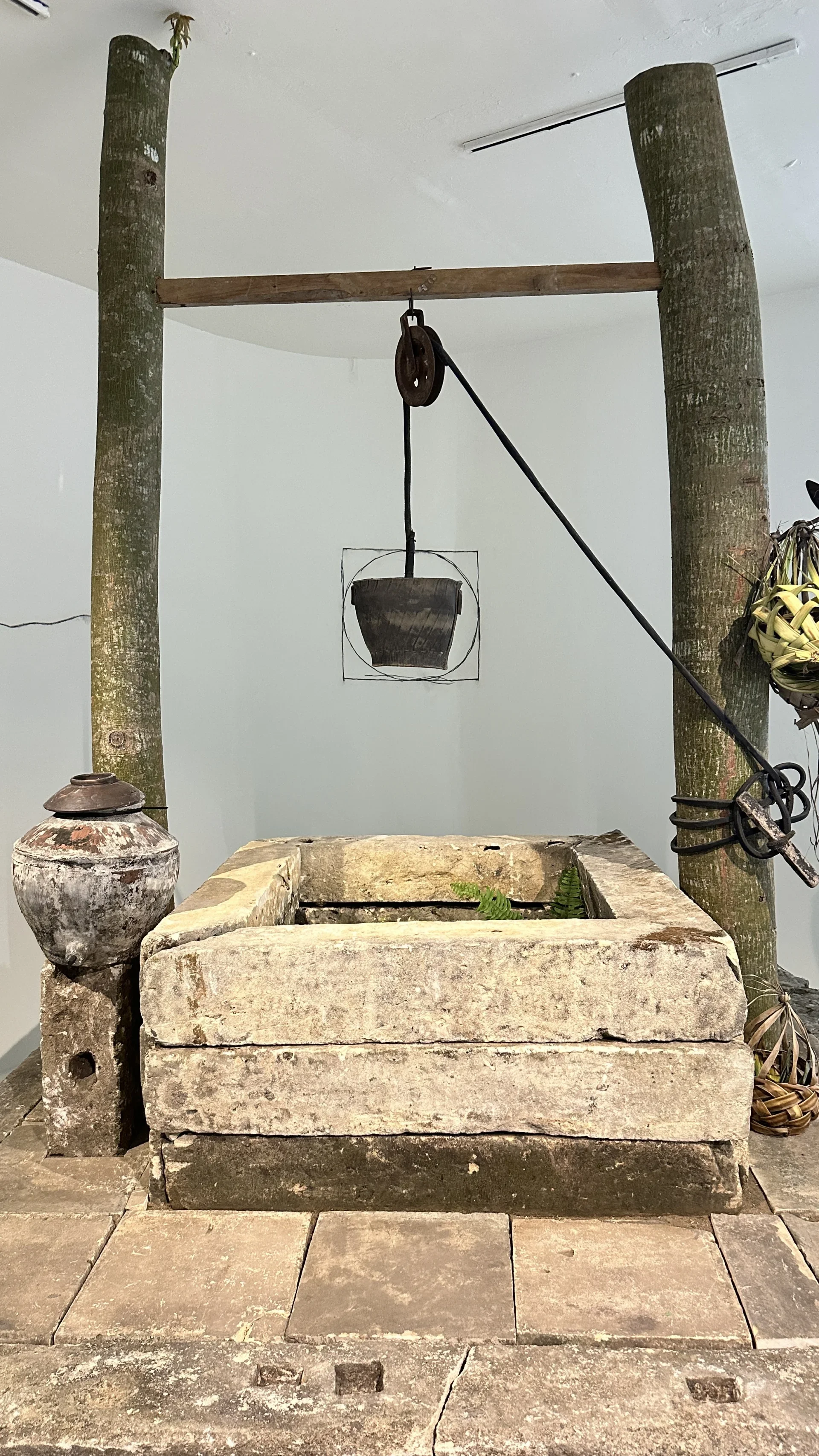
Through Sumur Sinaba, Sirin Farid Stevy and Paseduluran Nandur Banyu present two contrasting interpretations of a well. The first is constructed from limestone, wood, clay water vessels, and objects reminiscent of traditional community life. On the other side, an iron well structure is filled with plastic bottles, water jugs, and everyday consumer packaging.
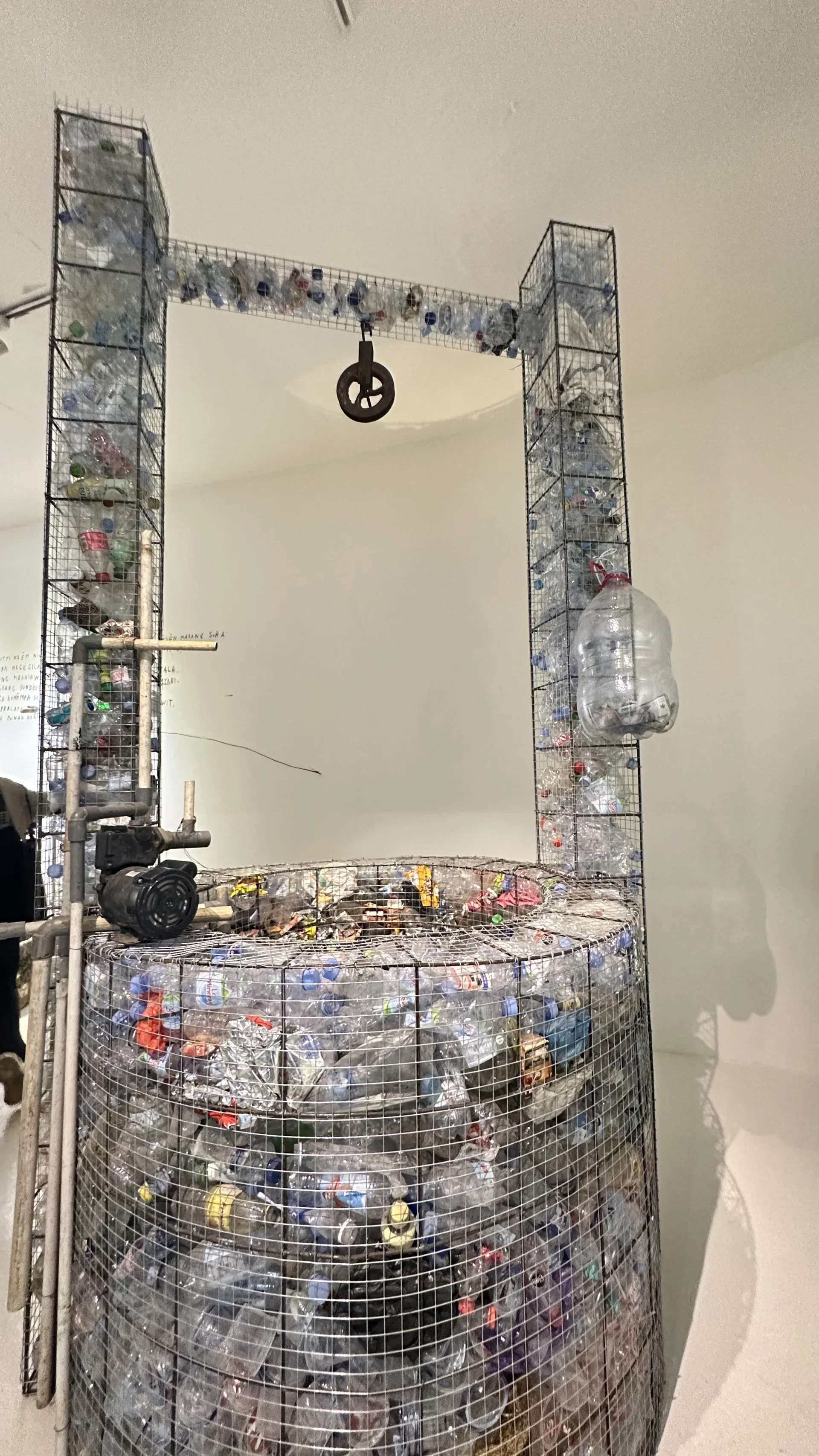
The contrast points to a shift in the way humans perceive water. In the past, wells served as communal spaces that were cared for collectively. Today, water increasingly comes in packaged form, enters distribution systems, and is sold as a commodity.
The work draws from Paseduluran Nandur Banyu’s activities in Gunungkidul, where the community plants conservation trees, cares for water sources, and preserves local knowledge. Through the well, they challenge the narrative that Gunungkidul is simply a region suffering from water scarcity. The issue also concerns management, access, and changes in land use.
Here, plastic is not merely a symbol of waste, but a marker of how a shared source of life is gradually becoming a product that must be purchased.
Resonansi: When Waste Finds Its Voice Again
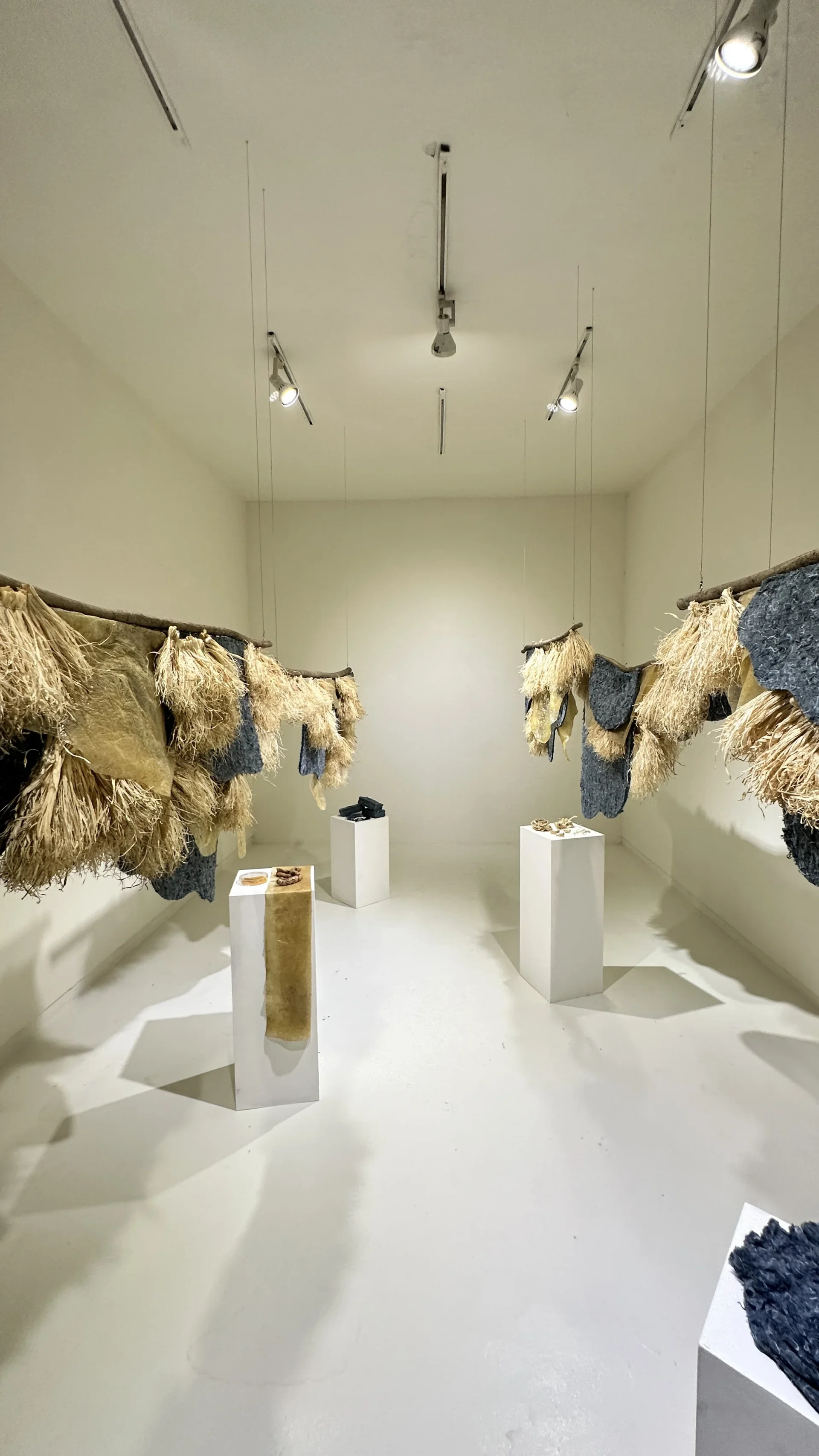
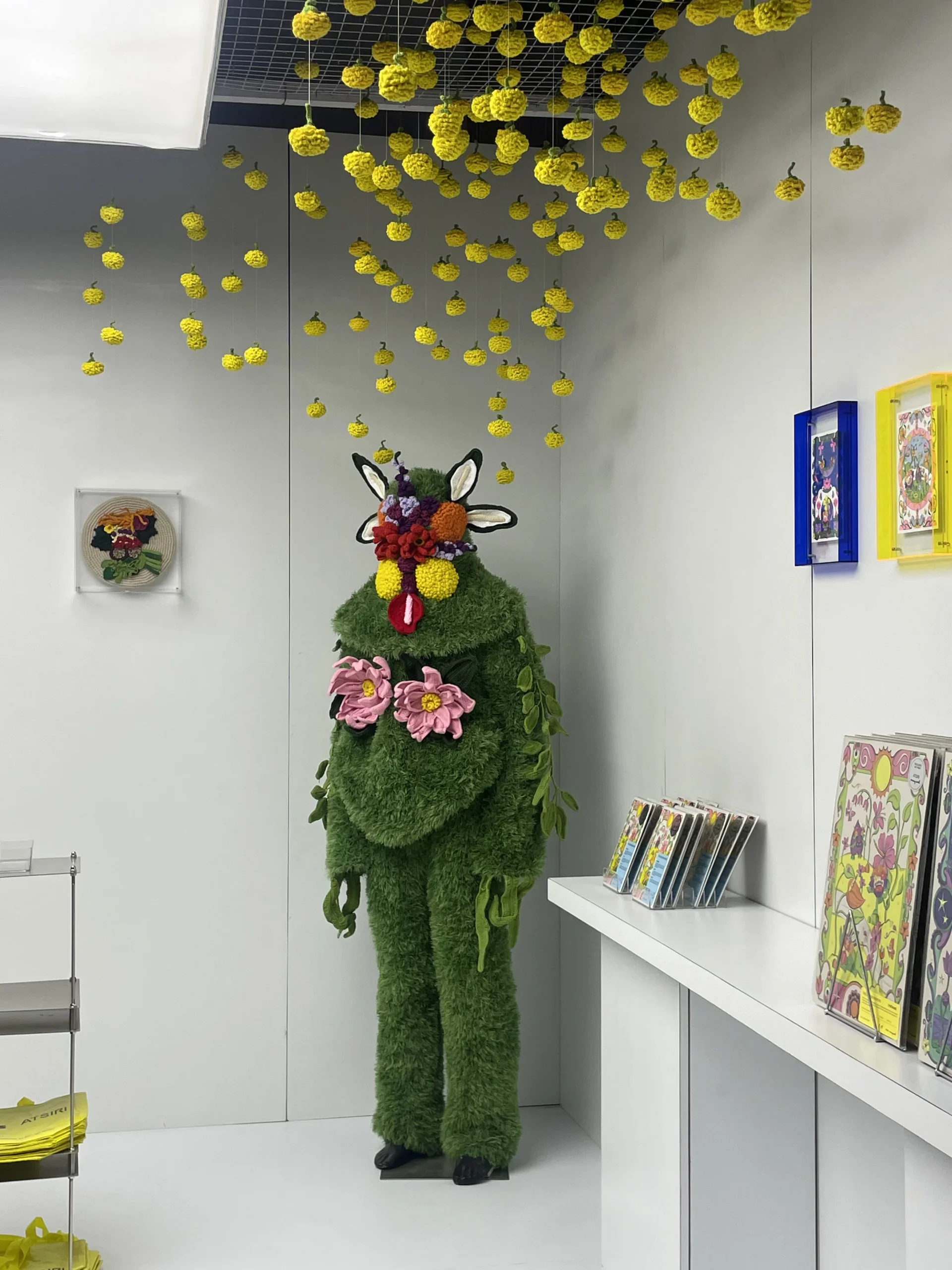
Dahana Rupa Interior Lab. BINUS Jakarta invites visitors into a passage constructed from discarded plastic, textile waste, corn husks, natural dyes, and various other materials.
Titled Resonansi, the installation does not rely solely on sight. Visitors can feel the textures of the materials, smell their scents, and hear the sound of dried corn husks rubbing against one another. Materials that are normally discarded from everyday life return as an experience that engages the body.
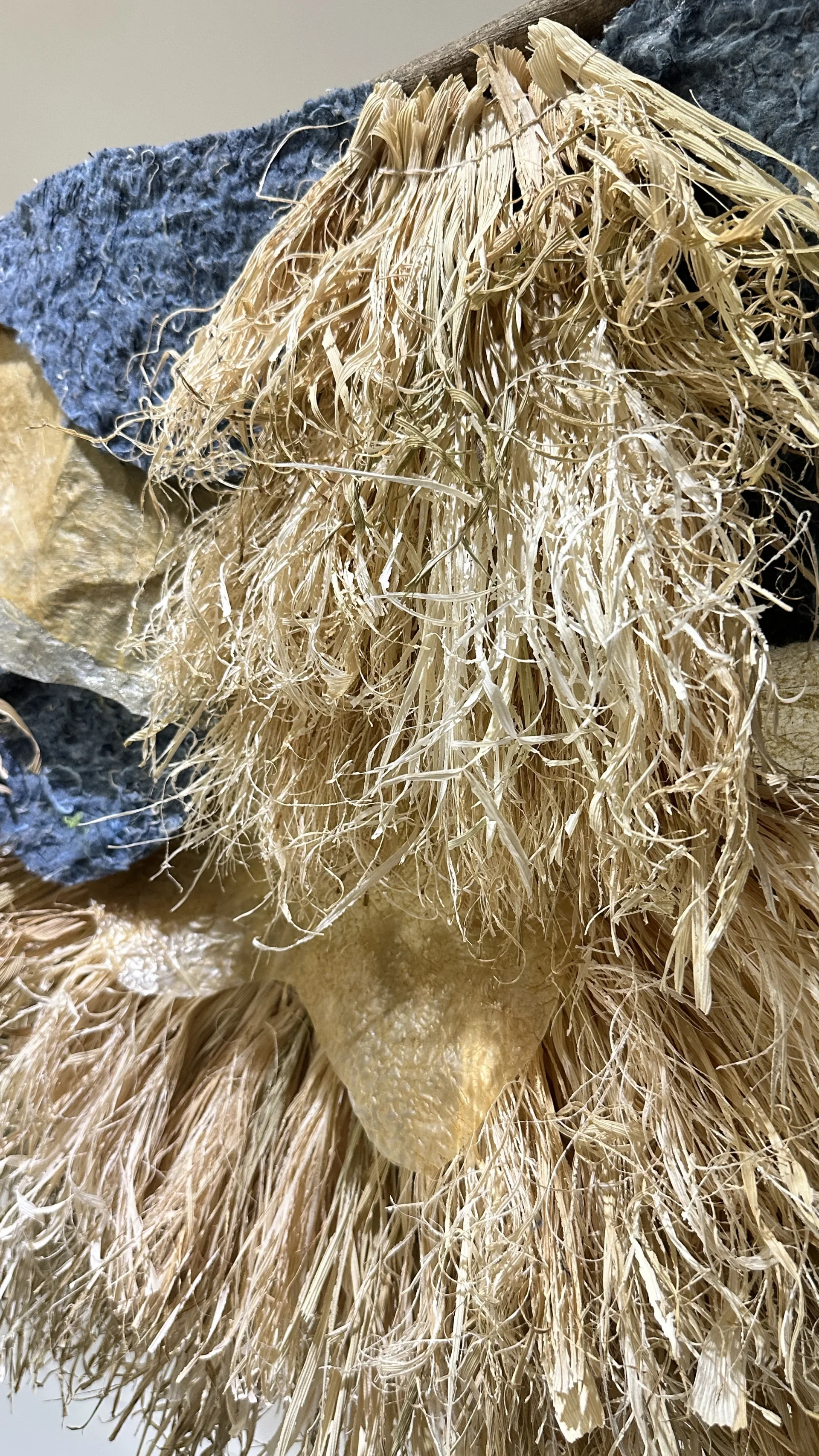
The materials used in the work come from industrial waste, markets, and commercial areas around West Jakarta. Plastic, food waste, and discarded clothing reflect the rapid pace of urban consumption.
Yet the work does more than suggest that waste can be transformed into something beautiful. Resonansi questions how we assign value to objects. Materials considered useless can still carry histories, functions, and possibilities for new lives.
Sustainability, then, becomes an effort to understand an object's journey—from production and use to disposal, and eventually to how it might be passed on to the next generation.
Knitwork: Weaving Technology, Tradition, and Ecology
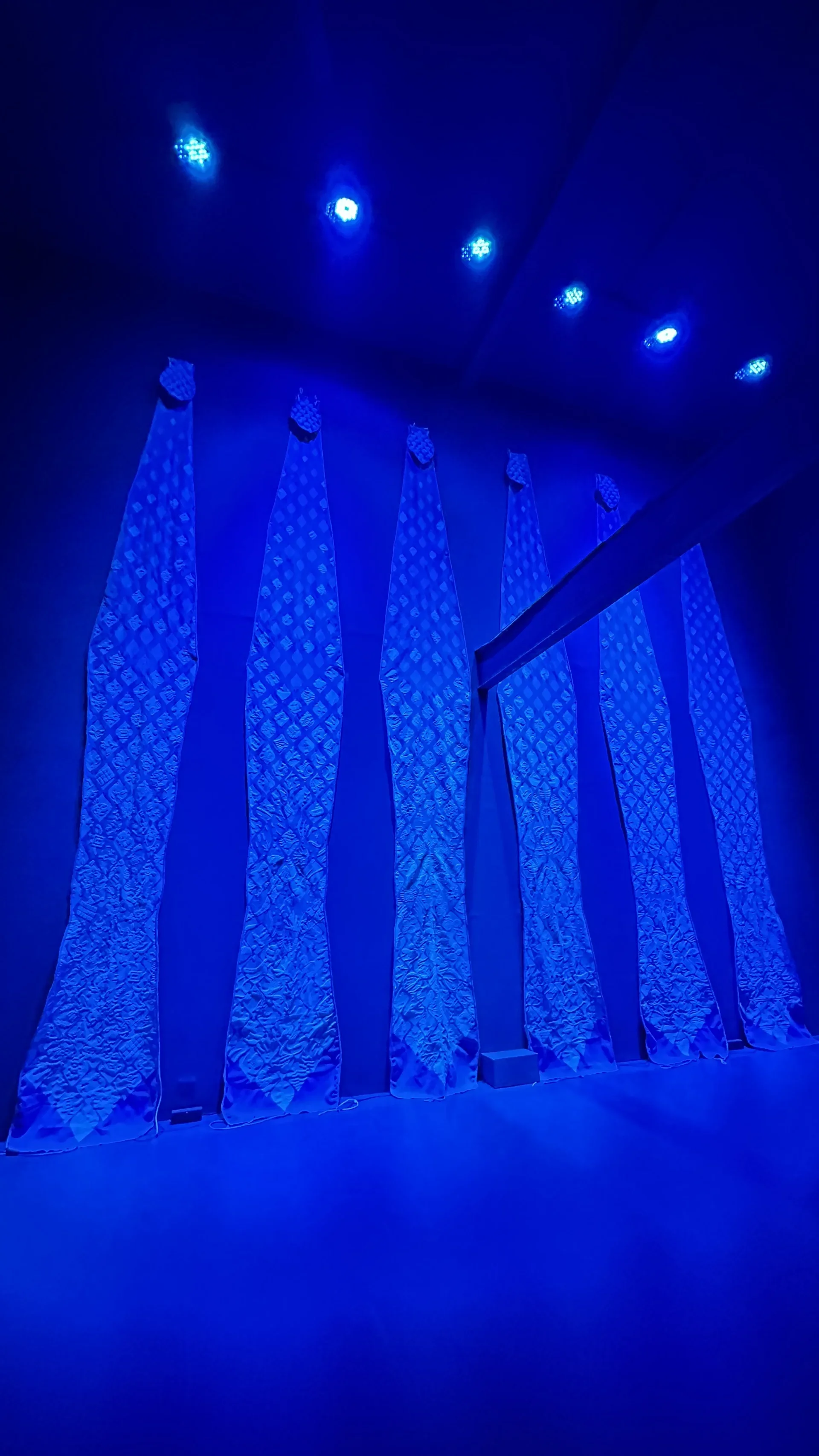
Inside a blue-hued space, six textile panels more than seven meters tall rise like futuristic gunungan. This is Knitwork by Irmandy Wicaksono, an installation made from recycled polyester, spandex, thermoplastic, and conductive yarn.
The textiles are not passive objects. Conductive fibers embedded within them respond to visitors' touch and movements, activating sound in real time. The fabric becomes a bridge between the human body and digital systems.
Inspired by the gunungan in wayang, each panel imagines a different future world: solar-powered cities, underwater life, biotechnology, outer space, and encounters between mythological creatures and robots.
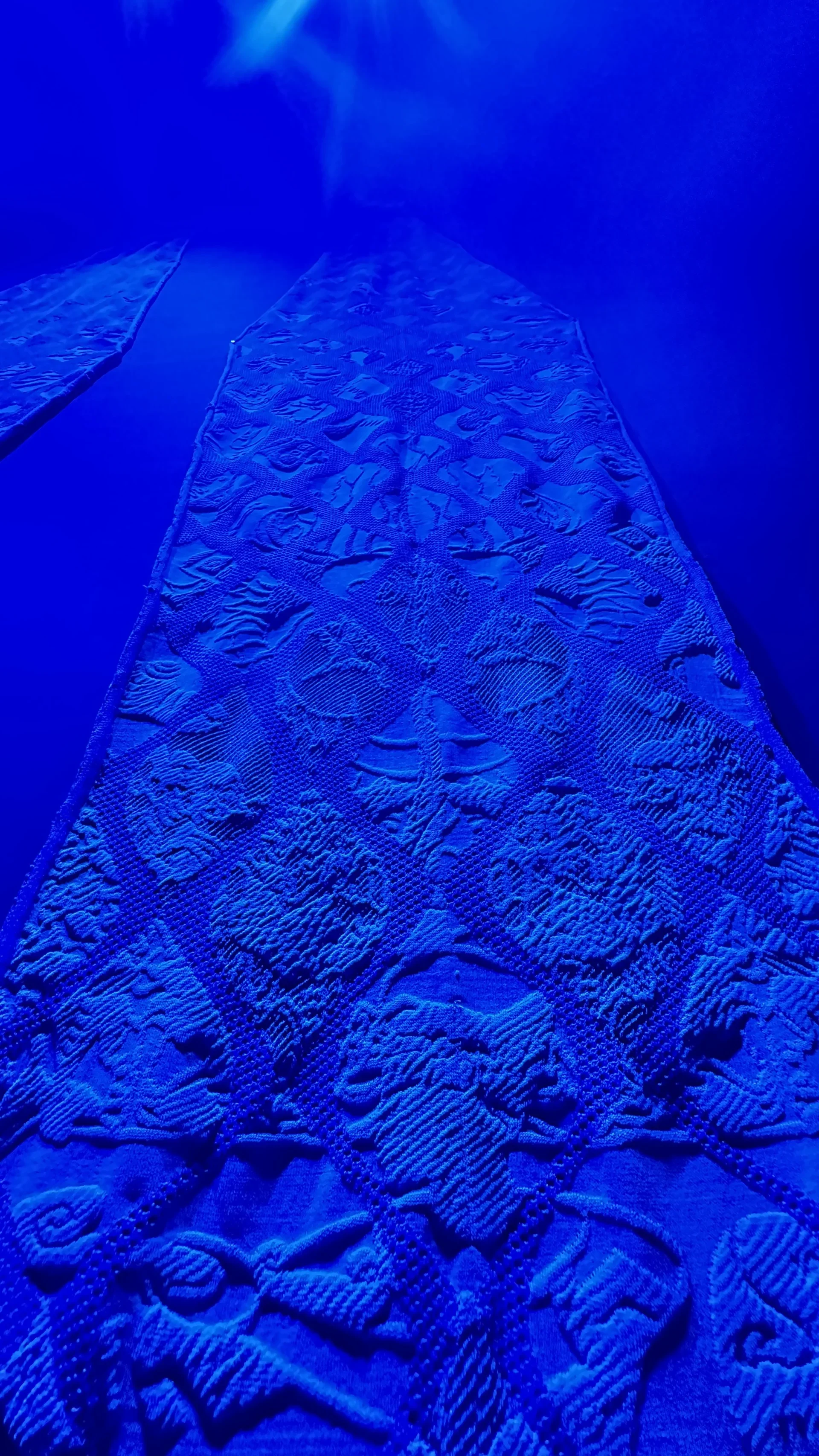
Knitwork expands the conversation around sustainability. Sustainability is not only about using recycled materials, but also about considering what kinds of technologies humans want to build. Will technology continue to distance us from nature, or could it instead help create a more attentive relationship with it?
Together, these three works show how art can become a space for looking at environmental issues from a broader perspective. Sustainability is not only about repurposing waste, but also about protecting resources, local knowledge, culture, and relationships between generations. At ARTJOG 2026, the future is not simply imagined—it is questioned, then woven anew.