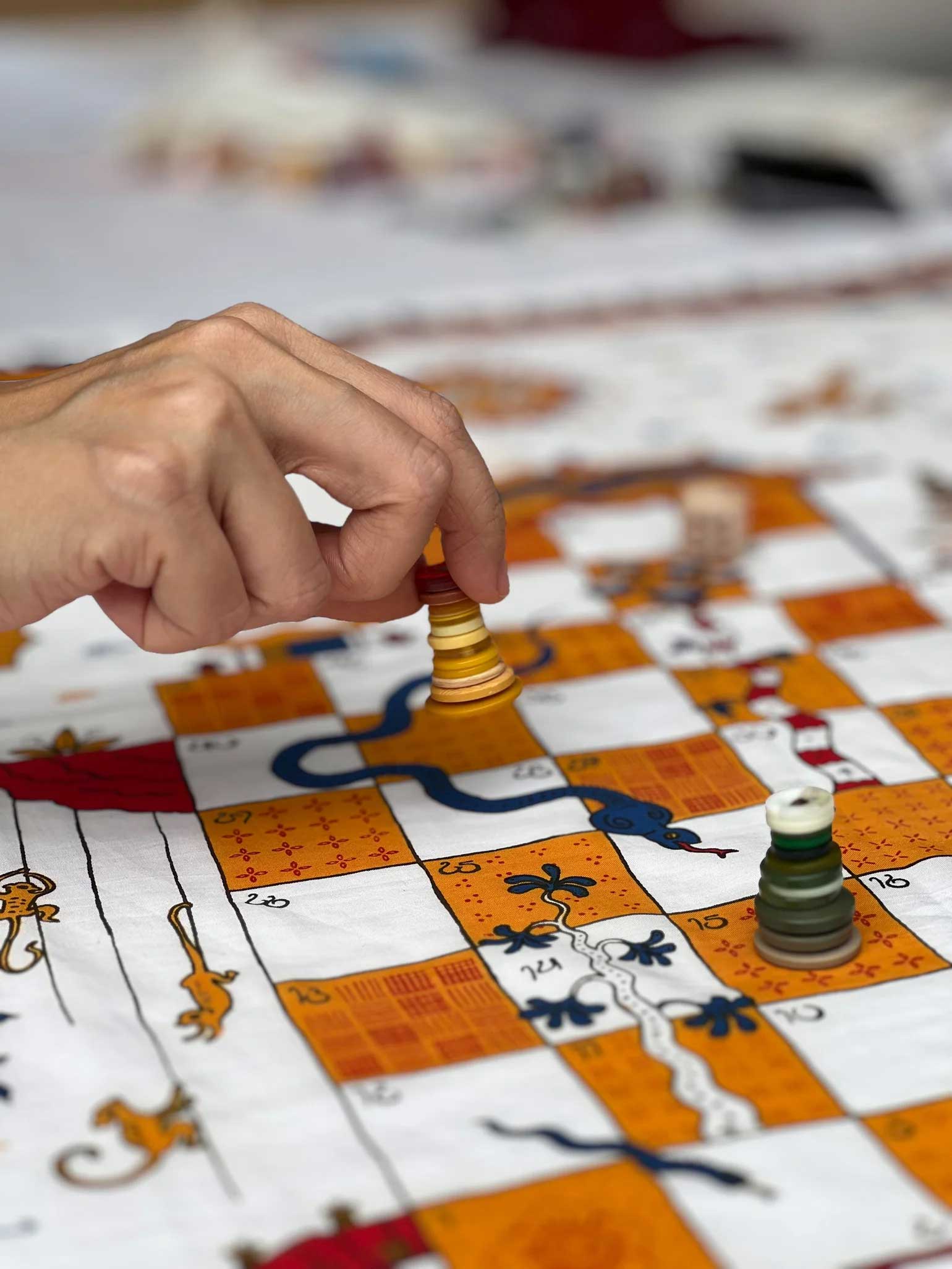
More than just a childhood game, Snakes and Ladders was originally created to teach us about philosophy and the consequences of our choices at every step.
Who doesn’t know this board game? A board filled with zigzagging lines, illustrated snakes and ladders intertwined across the board. But behind its simple design, did you know that Snakes and Ladders has often inspired art, fashion, and architecture?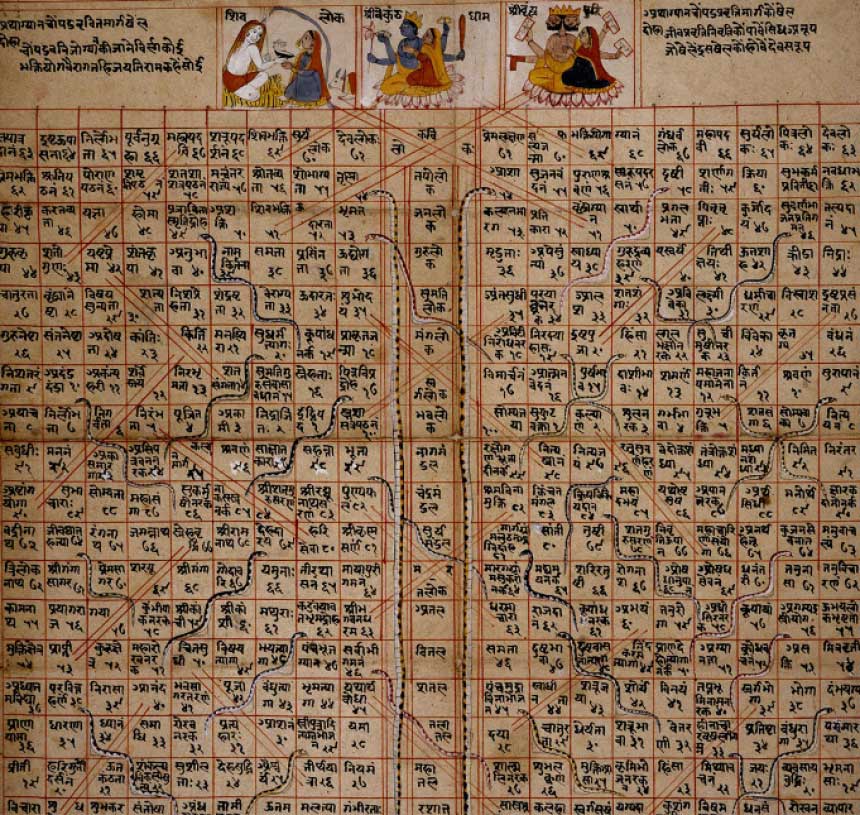 An ancient Indian version of Snakes and Ladders
Paris Fashion Week Runway
 Louis Vuitton Spring/Summer 2026 di Paris Fashion Week; Dok.: Louis Vuitton
One of the latest examples can be found in Paris, specifically in the courtyard of the Centre Pompidou. Snakes and Ladders became the runway design for Louis Vuitton’s Spring/Summer 2026 show on the first day of Paris Fashion Week. On the colossal earth-toned “board,” models and guests spent several hours “playing” among five fluorescent-colored snakes.
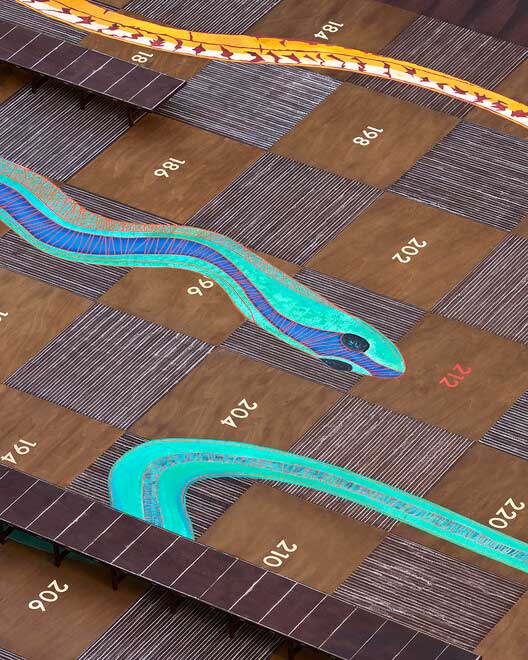
Doc. Louis Vuitton
The set design was created by Bijoy Jain of Studio Mumbai. For Bijoy and Pharrell, the dynamics of Snakes and Ladders represent the uncertainties of life. Fashion observers may also have noticed that the numbered squares on the board were a reinterpretation of Louis Vuitton’s signature Damier check pattern.
Sejauh Mata Memandang
From Indonesia, there is the “Ular Tangga” – Ramayana collection by Sejauh Mata Memandang. It features scarves and versatile outerwear made using hand-screen-printing techniques. Why Ramayana? Because Chitra Subyakto’s designs are inspired by the Ramayana story, with a visual touch drawn from the Kamasan painting style of Bali.
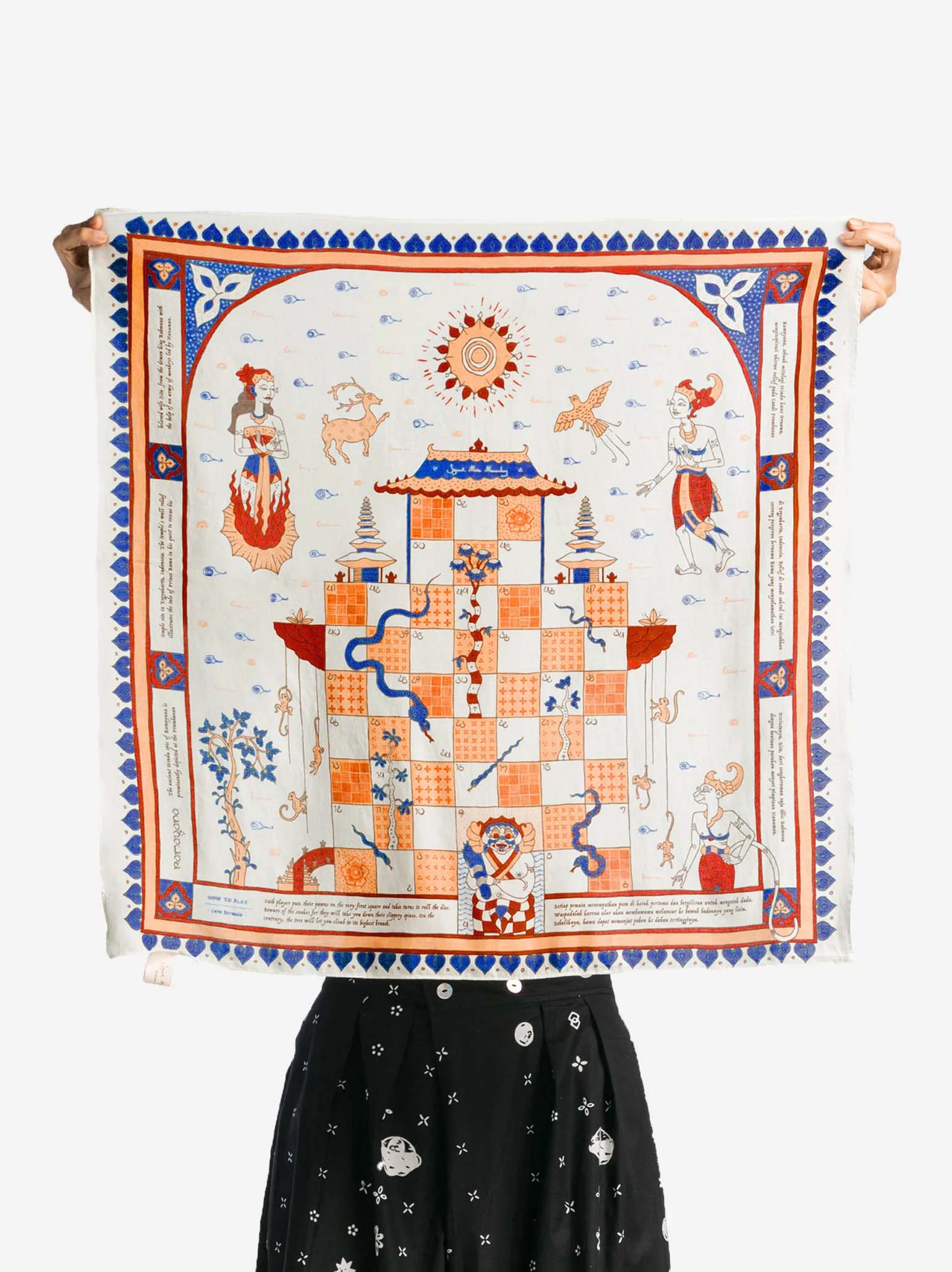 Doc. Sejauh Mata Memandang
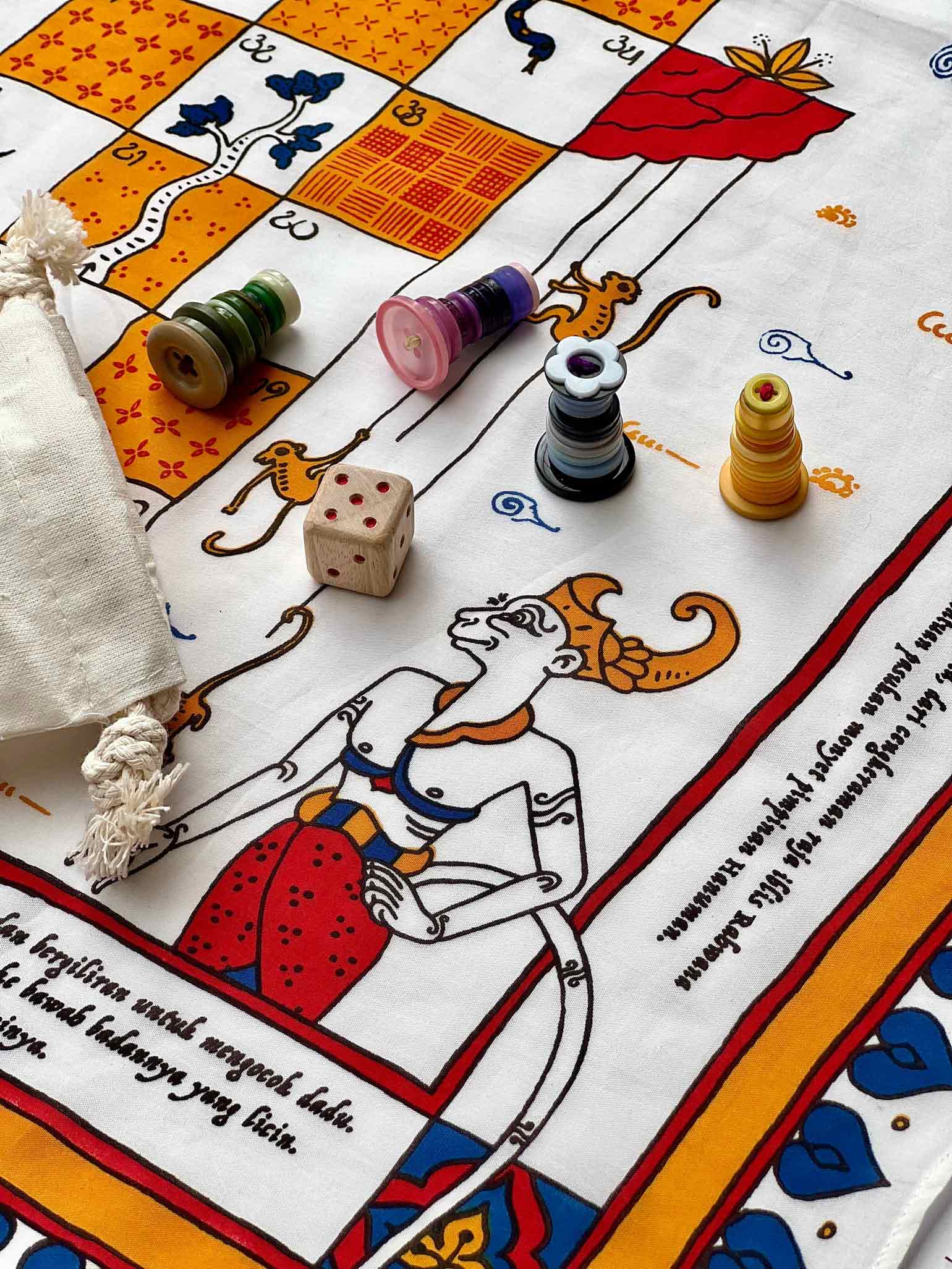 Doc. Sejauh Mata Memandang
The Origins and Philosophy of Snakes and Ladders
Originating in ancient India under its original name, Moksha Patam, the game was rooted in Hindu philosophy, particularly the concept of karma. Its religious variations also went by different names, including Gyan Chaupar in Jainism and Vaikunthapali among the Telugu people. It also found its way into Islamic culture. One example is Shatranj Al-’Urafa, a version played by Muslims that depicts the desire to leave behind worldly attachments in pursuit of unity with God.
Originally, the game was created as a tool for teaching moral and spiritual values: good and evil, birth and death. In its original design, the board featured symbols drawn from ancient Indian culture. The upper sections depicted gods, angels, and other noble beings, while the lower sections were filled with imagery of animals, flowers, and humans.
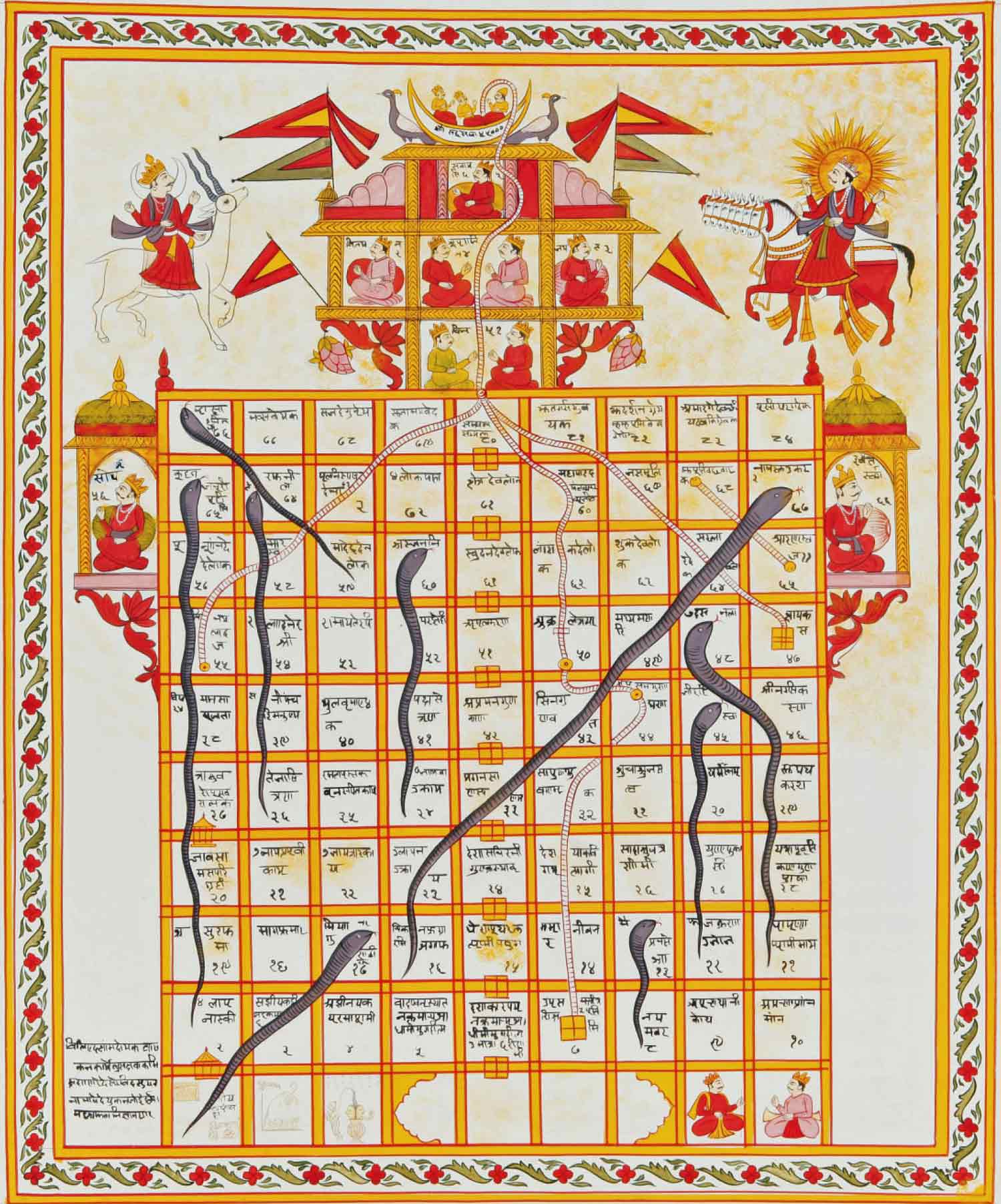 Gyan Chaupar – The Jainism Version of Snakes and Ladders; Doc. National Museum, New Delhi
Each ladder represents a virtue, such as generosity, faith, and humility. The snakes, meanwhile, symbolize vices such as lust, anger, greed, theft, and even murder.
As Pharrell, Louis Vuitton’s Creative Director of Menswear, explained, the colorful board design filled with graphic elements is more than just decorative. Instead, it symbolizes the twists and turns of the human journey through life.
Snake and Ladders
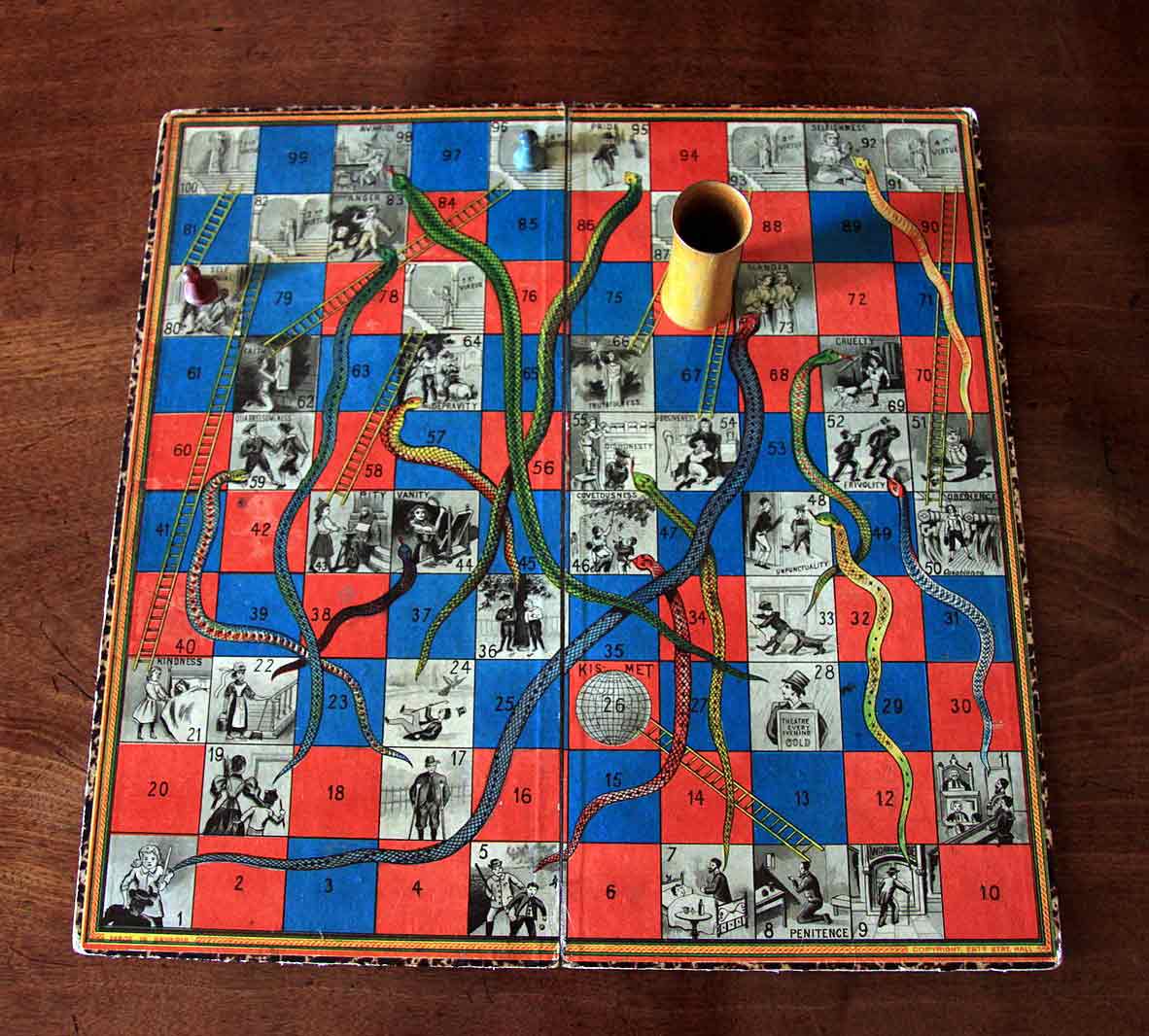 Snake and Ladders, ular tangga versi Inggris; Dok.:Flickr.
In the United Kingdom, it is known as Snakes and Ladders. The British version emerged in 1892, introduced to align the game with the teachings and values of the Victorian era. It is said that the English version was more “forgiving” than its ancient Indian counterpart. In Britain, the number of snakes and ladders on the board was balanced, while the Indian version featured more snakes.
Chutes and Ladders
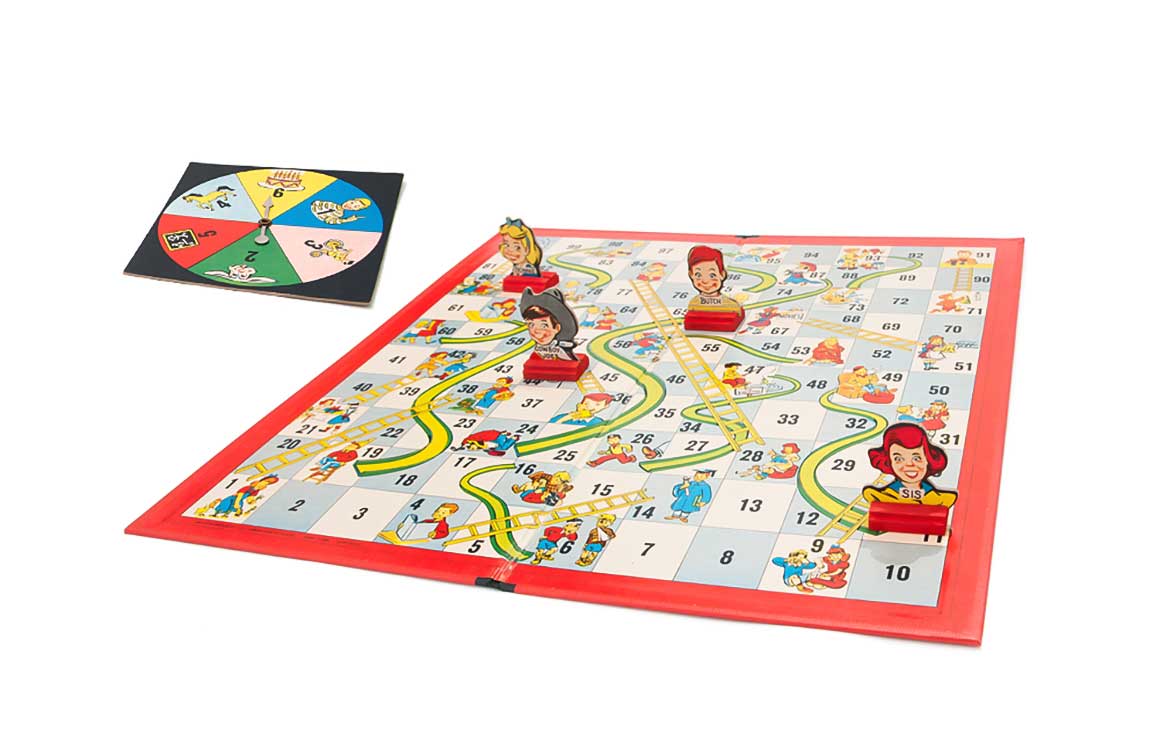 Chutes and Ladders – An American, child-friendly adaptation of Snakes and Ladders; Doc. Milton Bradley
In the United States (US), board game manufacturer Milton Bradley introduced the game as Chutes and Ladders in the 1940s. As the name suggests, the snakes were replaced with slides. The basic idea remained the same. At the ladders, cheerful children can be seen enjoying their rewards, while those sliding down appear less happy, as they are being punished for misbehaving. To appeal to children, the Chutes and Ladders board was designed with a playground setting. The US version uses a spinner instead of dice, so no one “dies.”
Milton Bradley, which was acquired by Hasbro in 1984, also released several more child-friendly versions of Chutes and Ladders. One of them features Sesame Street, with colorful and friendly characters that are anything but scary.
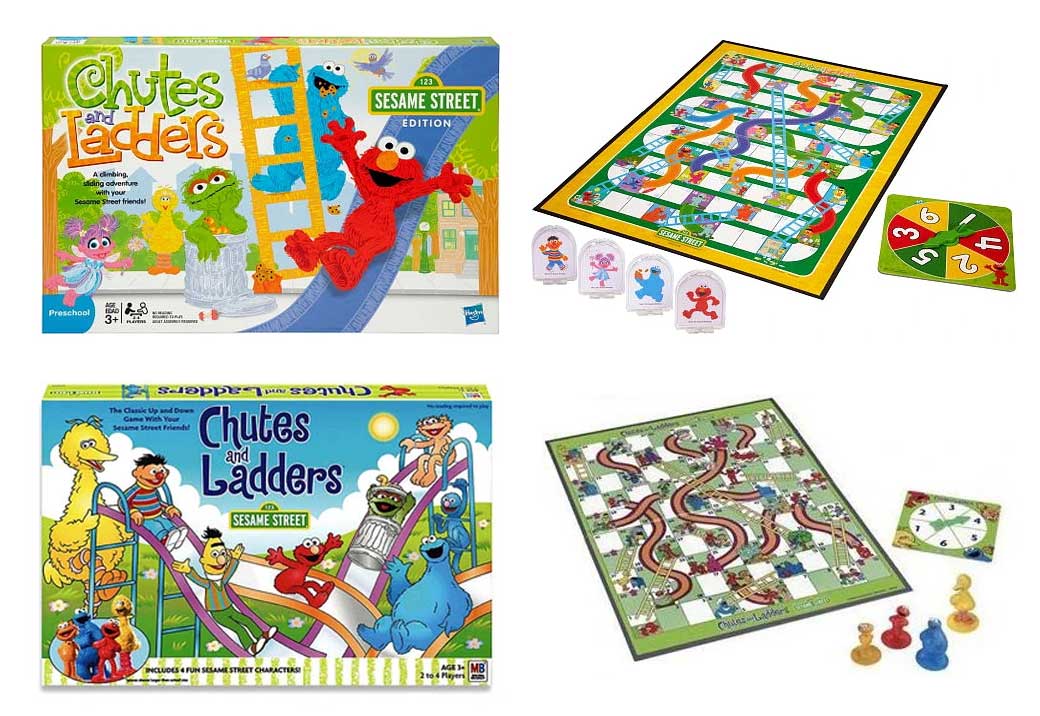 The evolution of Snakes and Ladders, or Chutes and Ladders, in Hasbro’s Sesame Street edition. Doc. Hasbro
Snakes and Ladders in Design
Trends and interpretations can be found everywhere, from the runway to the home kitchen. Just as Chitra and Pharrell have done with their own interpretations, translating their ideas into their respective labels.
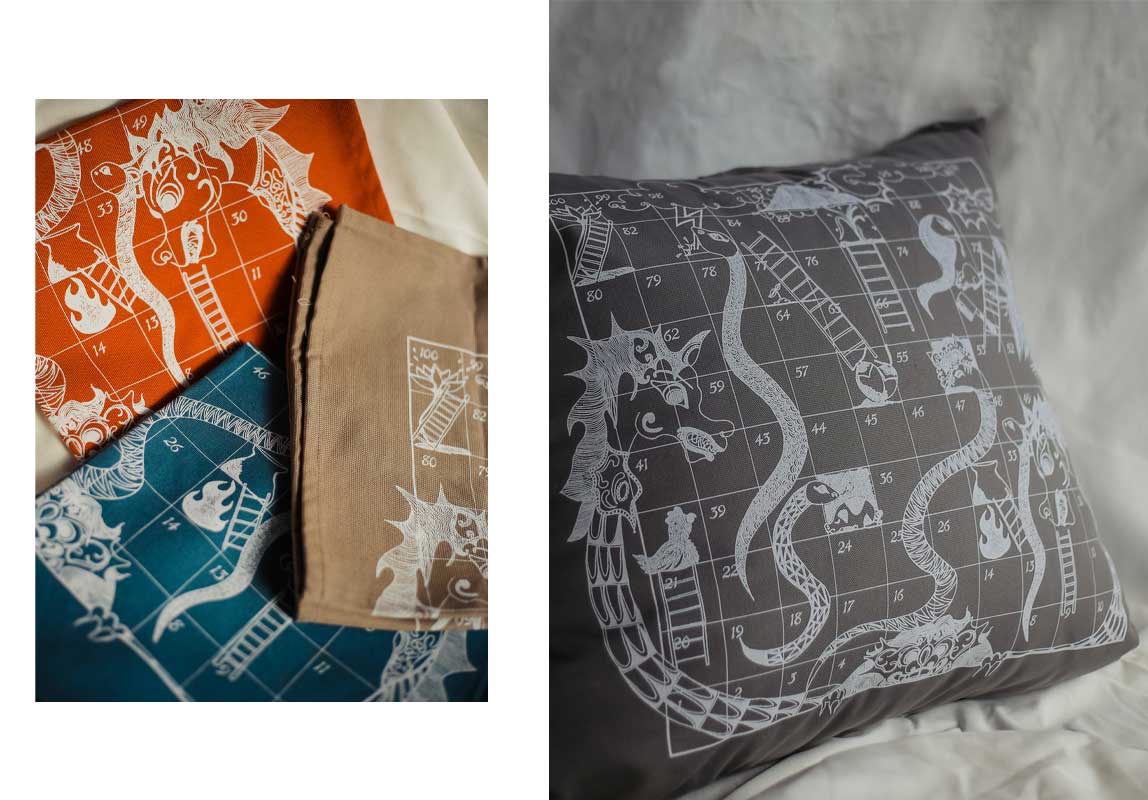 Snakes and Ladders design as a cushion cover by Toko Elami in Ubud, Bali
Same goes for design. There are plenty of examples out there, including Maya Kerthayasa’s design, which has been turned into a cushion cover. While still retaining its function as a game, Maya’s design draws on Balinese mythology and comes complete with two wooden dice and four wooden game pieces.
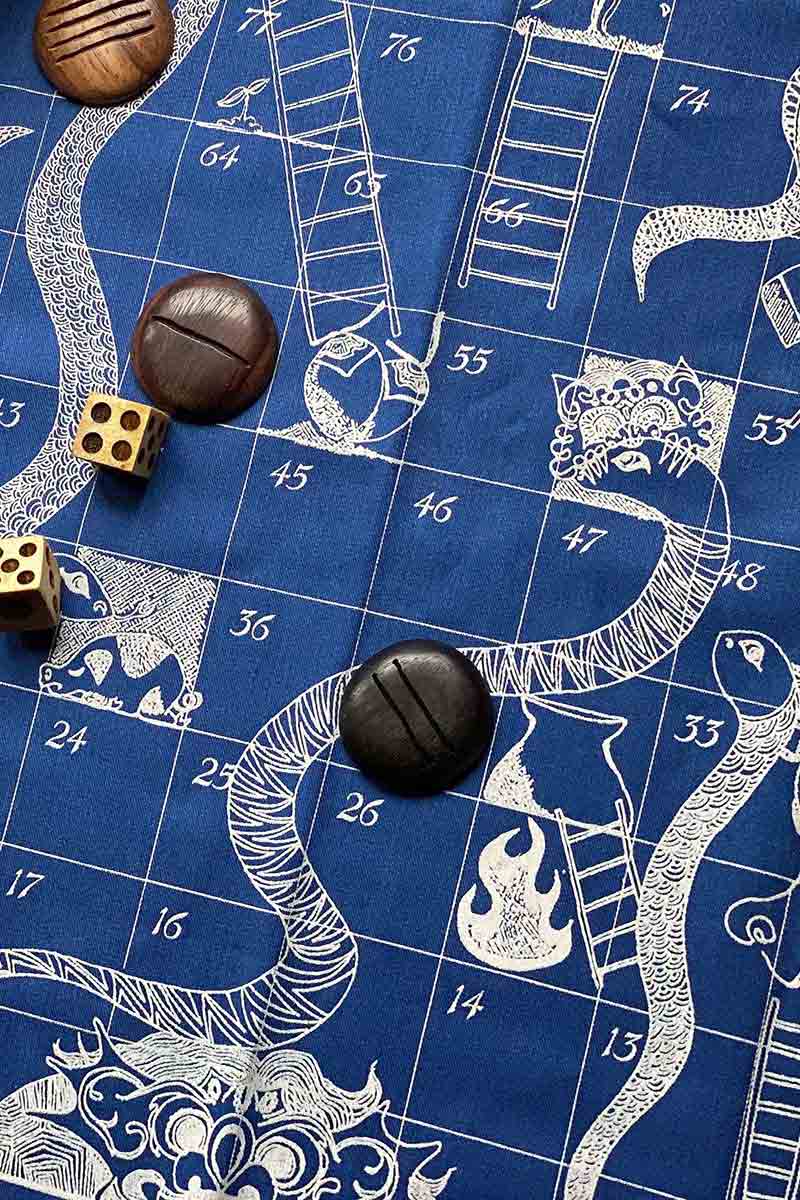 Snakes and Ladders on fabric, a collaboration between Threads of Life and Elami and Co.
You can also play with the medium. Take the collaboration between Threads of Life and Toko Elami (Maya), for example. Usually found on cardboard or a game board, the Snakes and Ladders design was screen-printed onto cotton fabric instead. Others have incorporated iconic motifs into the classic Snakes and Ladders design, such as the work by S.O.K Design at Kopi SeIndonesia café in Kelapa Gading, which has unfortunately since closed.
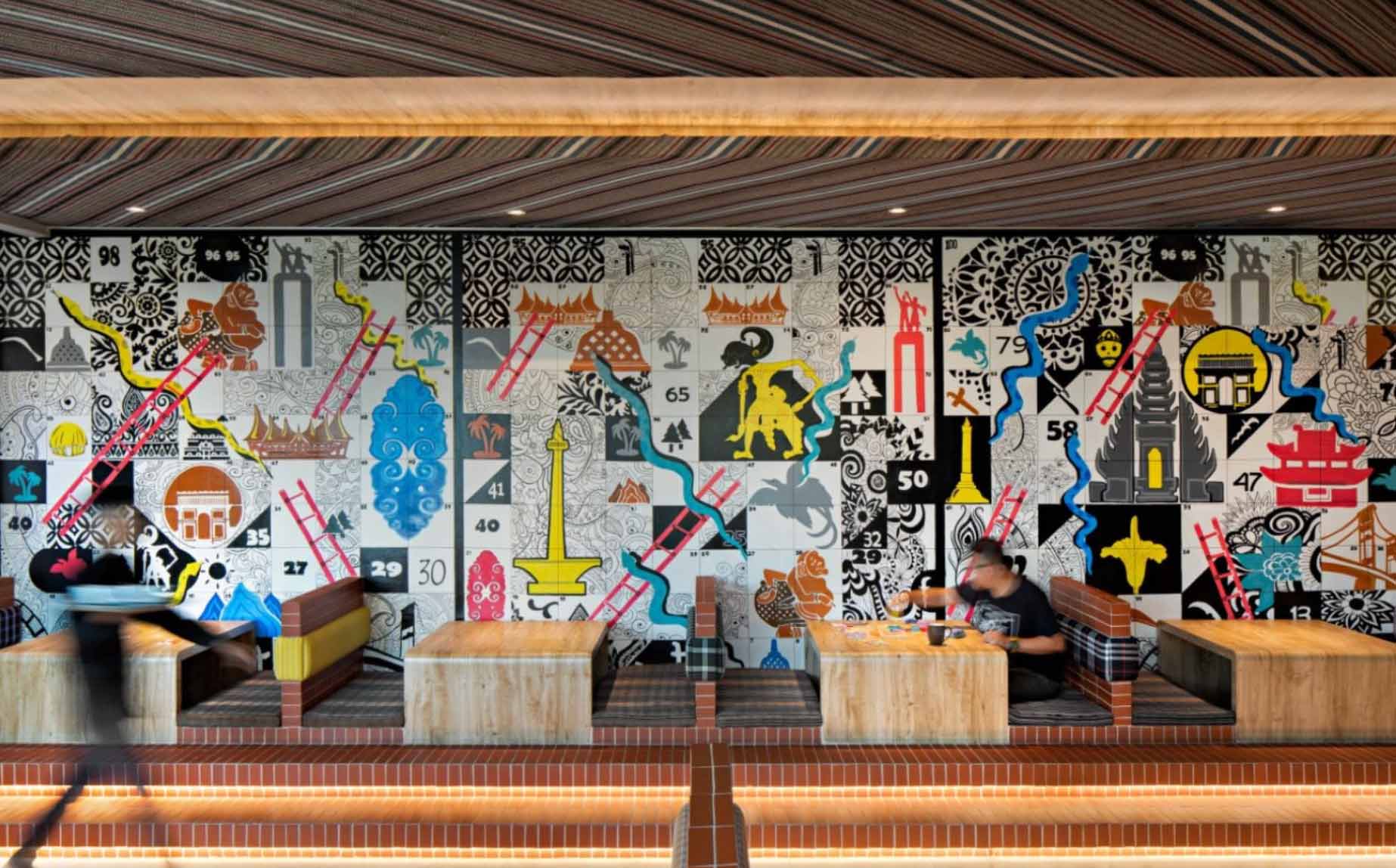 Interior design of Kopi SeIndonesia in Kelapa Gading by S.O.K Design
Snakes and Ladders reminds us that every step we take, both in life and in the game, comes with its own consequences, whether good or bad. That is why there is a saying often used when you experience a setback: “Back to square one.” So, beyond their benefits for mental well-being, art and design can also teach us a thing or two about the philosophy of life.