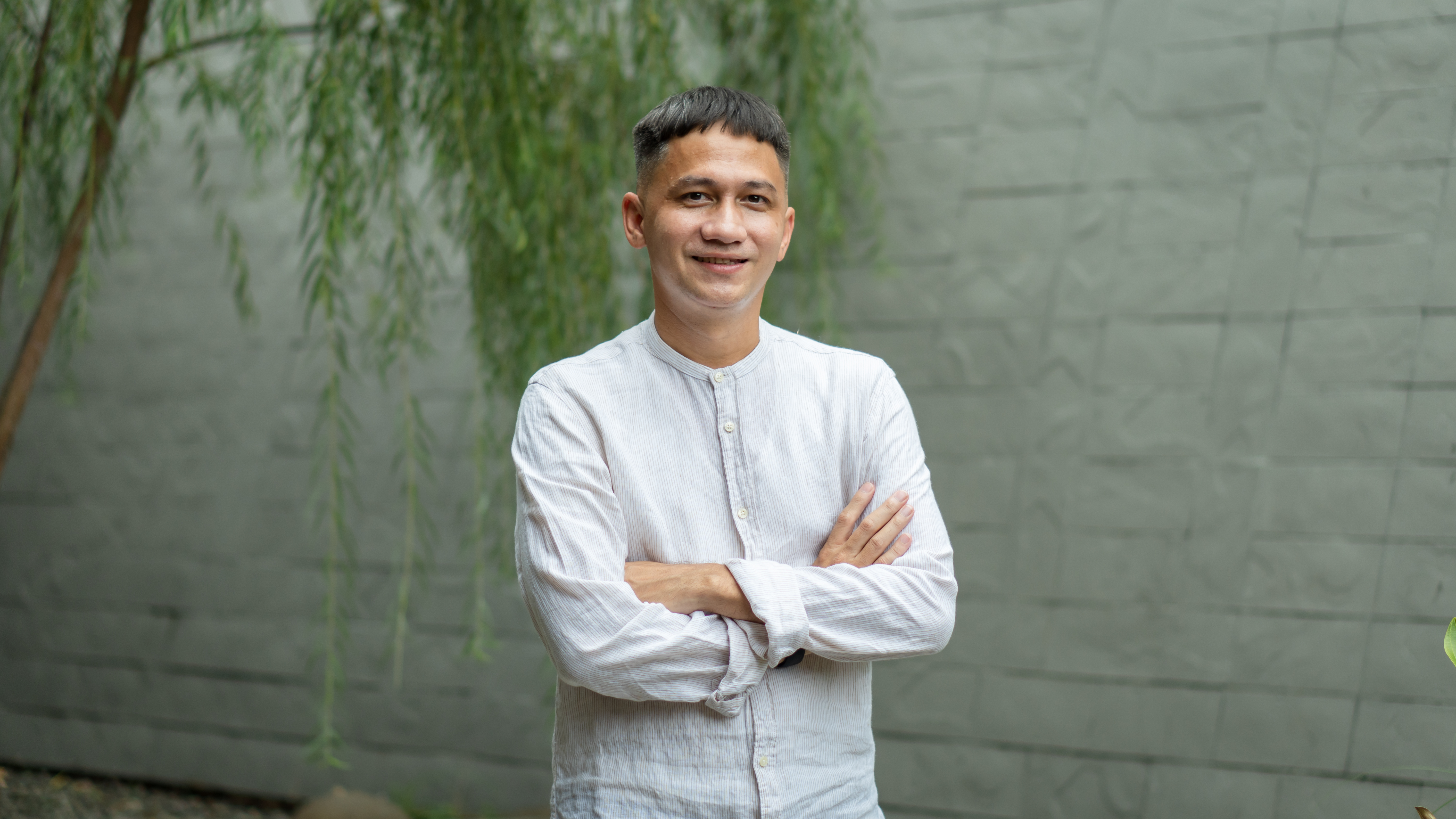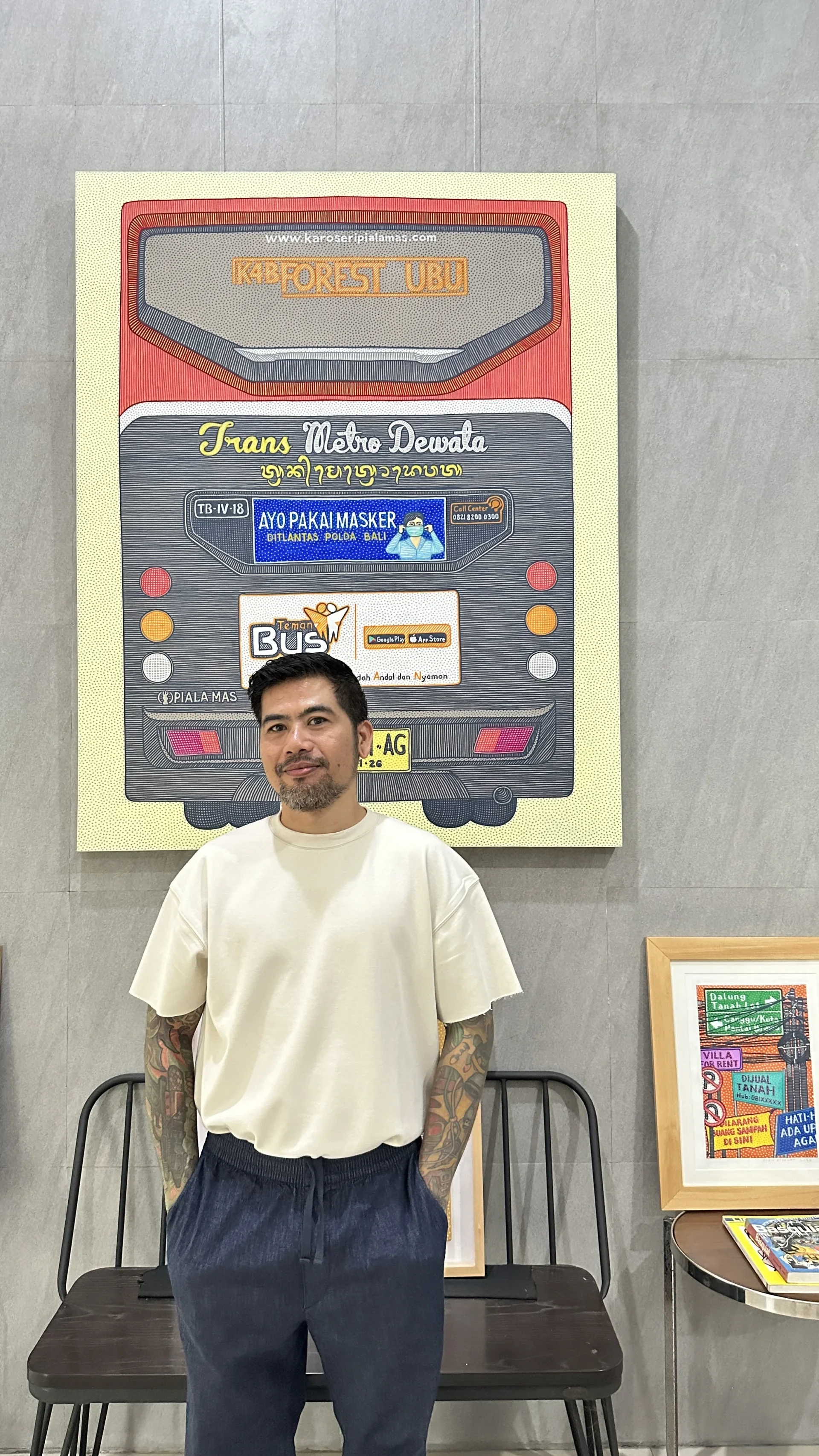
In a conversation with Written, Dodit Artawan discusses his journey as an artist, the evolution of his practice, the place of art within the industry, and how life in Bali today continues to shape his work.
Dodit Artawan is an artist born and raised in Bali, whose practice has evolved over more than two decades. His journey as an artist has taken him through different phases, while also carrying him through changing times.
In a conversation with Written, Dodit speaks openly about this journey: how an artist navigates changes in their practice, negotiates with an ever-evolving art ecosystem, and sees Bali not merely as the place where he lives, but as a space that continues to shape the way he reads the world around him.
Read Written’s conversation with Dodit Artawan...
Leaving Photorealism Behind, Finding Lines and Dots
Written: After around 15 years of working with photorealism, what made you decide to change direction?
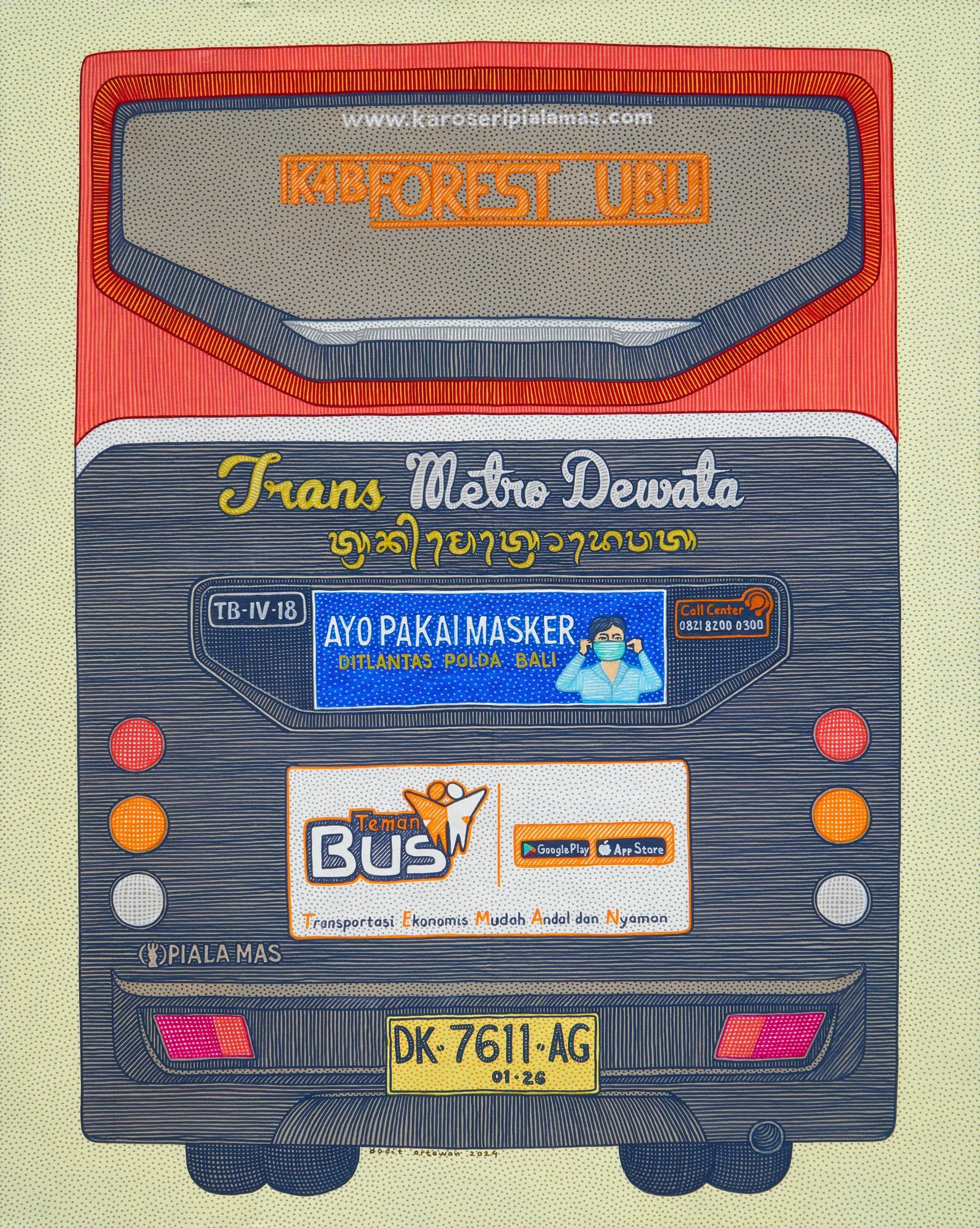
Dodit Artawan (DA): It started in 2015 as an experiment with my photorealistic work. Eventually, I found this approach in 2018, after going through various experiments with photorealism. I began introducing flat colors into my photorealistic work, along with cartoons, brushstrokes, splashes, drips, spray, lines.
Throughout the experimental process, I tried many things, from cutting up the work, attaching things, moving objects around, making scribbles—basically, I tried everything. From there, I started thinking about what would happen if I used a single primary material. That’s when I began experimenting with markers. Because I was using markers, the character of the material could be emphasized through lines and dots.
Written: What happened between 2015 and the point when you felt you had to leave photorealism behind?
DA: I had reached a point of saturation. I felt stuck, so I had to move on.
Although it was quite difficult. At that point, I already had strong self-branding, I was known by the public within the art scene, and I already had a collector base. So there were consequences to the change I was making. It took time to promote my work again.
I started participating in events, and there were a lot of rejections. A lot of them. Most of the galleries I approached for collaborations didn’t want to work with me. Collectors didn’t want it either. Because I had changed. I knew that was the consequence. So it took time.
Written: The technique of working with lines and dots is physically quite demanding. How do you personally enjoy the process?
DA: It’s actually more joyful. With my previous photorealistic work, the process took much longer. There were also many layers involved. So now, working with a new material makes me happier. I actually enjoy it more.
But technically, things like drawing lines and making dots can still make you physically tired—your eyes, hands, shoulders, and neck. But I also see the impact it has on the audience. They seem to hold their breath when watching a long line being drawn.
That’s why I sometimes make reels for Instagram, deliberately looking for moments where I’m drawing a long line, slowly, so people can watch it. It has a psychological impact. So, you can feel the muscle behind it.
The Purity of Art and the Demands of the Industry
Written: In an era when artists are expected to do so much, how difficult is it to simply be an artist without also having to become a marketer?
DA: It’s actually a common problem among many artists. They’re weak when it comes to management, promotion, marketing, and all kinds of other sales-related matters. That’s generally how it is.
But in this day and age, artists are expected to learn those things, unless they work with a gallery or art management. If an artist isn’t used to it, it can definitely feel overwhelming. I experience that myself, especially when I have to create content sometimes.
That’s why it’s important to build relationships and connect with the art ecosystem. Artists can’t possibly do everything on their own.
Written: You often critique consumerism and capitalist lifestyles, while the art industry is closely connected to luxury and collectors. Have you ever experienced an inner conflict between the two?
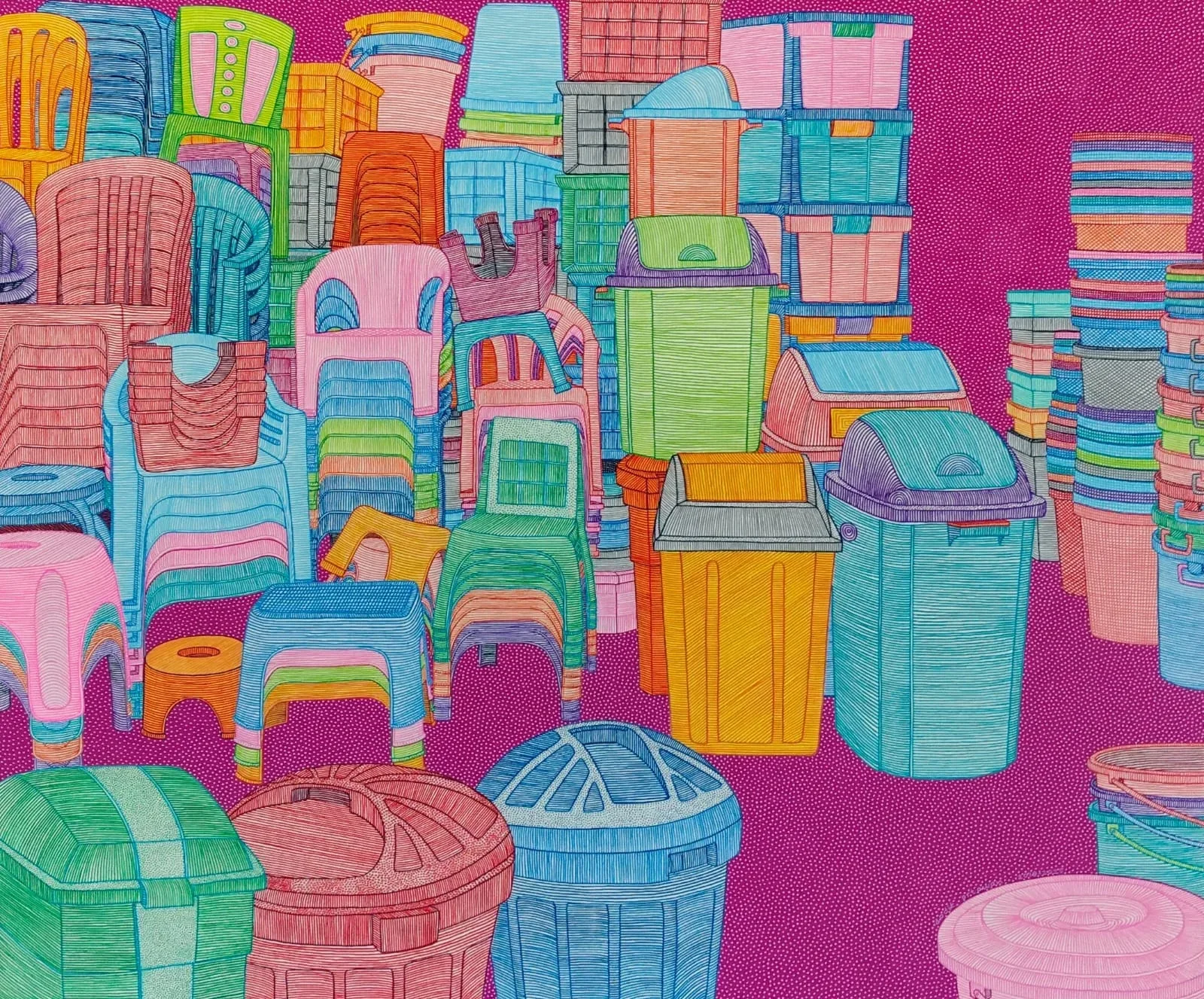
DA: Personally, I’ve never felt an inner conflict. For me, the themes of consumerism are both about critiquing and celebrating it. Celebrating it as an individual who is part of that global culture.
So there is also a kind of self-criticism. I admit that I’m also a consumerist, and it’s difficult to avoid.
Besides, I work in contemporary art, where the market is very important. So naturally, the market is part of what keeps the ecosystem alive. I’m simply being realistic about it. I’ve never been anti-market.
Written: One of the exhibitions involving you has just opened. Could you tell us a little about it?
DA: The exhibition is being held at NADI Gallery in collaboration with LANO Contemporary Art Gallery. It is titled POST-TRADISI I: AMBANG BERLAPIS and will be presented in four cities: Jakarta, followed by Bandung, Yogyakarta, and finally Bali.
For this exhibition, together with artists from different regions, we’re exploring the theme of post-tradition. When looking at Balinese artists or artworks, the expectation is often that they will highlight mythology or the grandeur of Balinese culture. But I want to emphasize the essence of being a Balinese artist: having a strong character, a high level of skill, meticulousness, and perseverance.
Archiving Bali Today
Written: How much does the current state of Bali influence you when you paint and create?
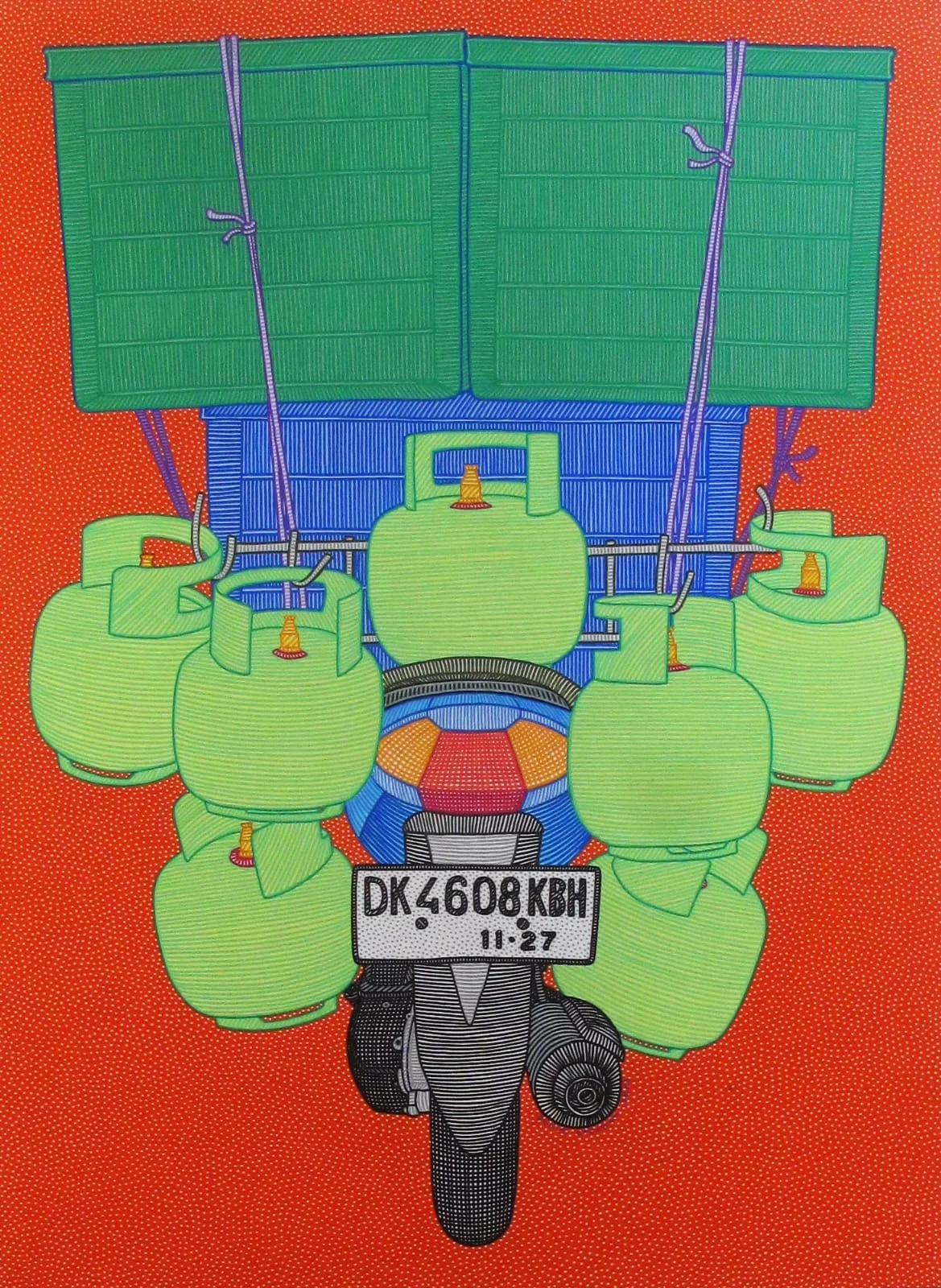
DA: It influences me a lot, actually. Thematically, the concepts behind all my works and my choice of subject matter reflect what I see as current phenomena and everyday life today.
So in the future, when people look at my works, they will represent the spirit of their time. All the works I’m making now are about time, about the period in which they were created. They represent the phenomena and the spirit of the era during my lifetime.
Written: Why have everyday objects become such an important subject matter in your work?
DA: I choose daily life objects, domestic stuff, and things like that to express and communicate social issues, environmental issues, cultural issues, and the issues surrounding me and the place where I live.
That’s why everyday objects can be used. We’ll see these objects everywhere, thrown into drains and things like that.
In the future, these works will become a kind of artifact. A marker of an era. When people see them 100 years from now, they’ll know what kinds of things people used during the period in which I lived.
Written: If you were a color, what color would Dodit Artawan be?
DA: I would choose yellow, because it really attracts attention. It’s bright, and it can also serve as a warning. It really catches your eye. Yellow is eye-catching, bright, attention-grabbing, and very striking.