Finishing is often seen as the final stage of an interior project. For Ferdinand William Widjaja, however, it is the starting point for understanding how a space works.
Finishing is often positioned as the final stage of an interior project, becoming the last layer before a space is ready to be used. For Ferdinand William Widjaja, however, finishing is instead the starting point for understanding how a space works—from user experience and decision-making to how a project can realistically be executed.
This way of thinking eventually developed into Colours of Chroma, a material brand and finishing exploration founded together with Stanly Trisna. Ferdinand focuses more on the technical side of reading project problems on site and decision-making, while Stanly focuses on communication and understanding market needs. For both of them, Colours of Chroma is a long-running search for answers to various challenges, from material limitations and Indonesia’s climate to installation processes and how materials can work more realistically in response to human needs.
Drawing from his experience as an interior project and finishing consultant, Ferdinand sees materials not merely as aesthetic elements, but as a medium for problem-solving that can influence many aspects of a space. Finishing is not simply the final layer, but part of how to read risk, comfort, durability, maintenance, and the human experience within a space. From this perspective, his practice and exploration continue to evolve: questioning standards that have long been treated as absolute, and looking for new possibilities in things that may appear familiar.
Read the full conversation between Written and Ferdinand William Widjaja.
When Design Alone Is Not Enough to Address a Project
Written: How would you explain the role of a finishing consultant to someone unfamiliar with the field?
Ferdinand William Widjaja (FWW): A finishing consultant essentially helps the owner read a project from an aspect that is often overlooked: the final outcome. Many people focus on design or construction, while what users actually experience later is the material, texture, reflected light, and even how a space feels in everyday use.
A consultant doesn’t simply choose finishes that look “good,” but helps connect the design, budget, timeline, and realities on site. Decisions about finishes can affect comfort, maintenance, durability, and even the structural efficiency and overall cost of a project.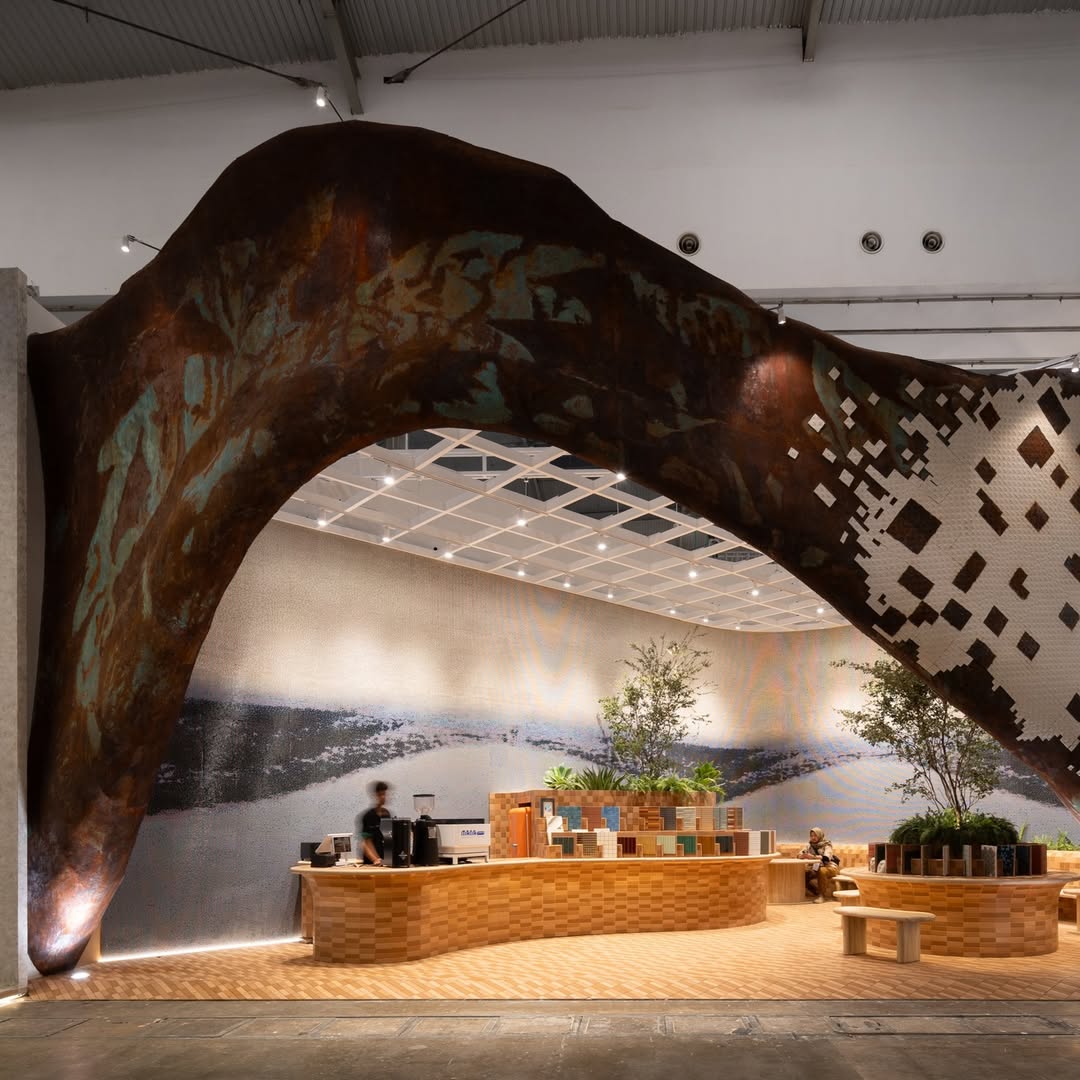 Collaboration between Colours of Chroma and Singres Mosaic at ARCH 2025. Photo: Instagram/coloursofchroma.
Written: As a finishing consultant, how do you manage a budget effectively?
FWW: I always say that we should invest in materials that directly interact with the human body and our everyday experience. For example, an ergonomic chair, a table made from a durable material, or areas at eye level that we look at most frequently.
A lot of people see marble as a way to create a sense of luxury, and it can indeed be an important part of a design. But for me, comfort can come from how different finishing elements work together in balance, from the walls and lighting to material textures and the human experience within the room. An important task of a finishing consultant is to establish priorities based on our experience of a space, rather than visual appearance alone.
Written: There is a line on your website that says, “Time is not managed, it is decided.” What does that mean?
FWW: In my view, a project isn’t about managing time, but about determining the priorities for decisions at each stage of the work. Many things that are initially considered minor can become extremely important midway through a project and even affect the entire timeline.
Once time is decided, many other decisions are effectively locked in. And I think time is harder to negotiate than budget. When an owner cannot compromise on time, the project cost will inevitably increase.
Written: A little about Colours of Chroma—how did it begin?
FWW: Colours of Chroma was formed by Stanly Trisna and me as the result of our concerns over the many recurring problems we encountered in projects. We agreed that finishing should not be the “final layer,” but part of the way a project itself is conceived. So this is not simply an exploration of aesthetics, but an answer to actual problems.
Seeing Materials Before They Become Form
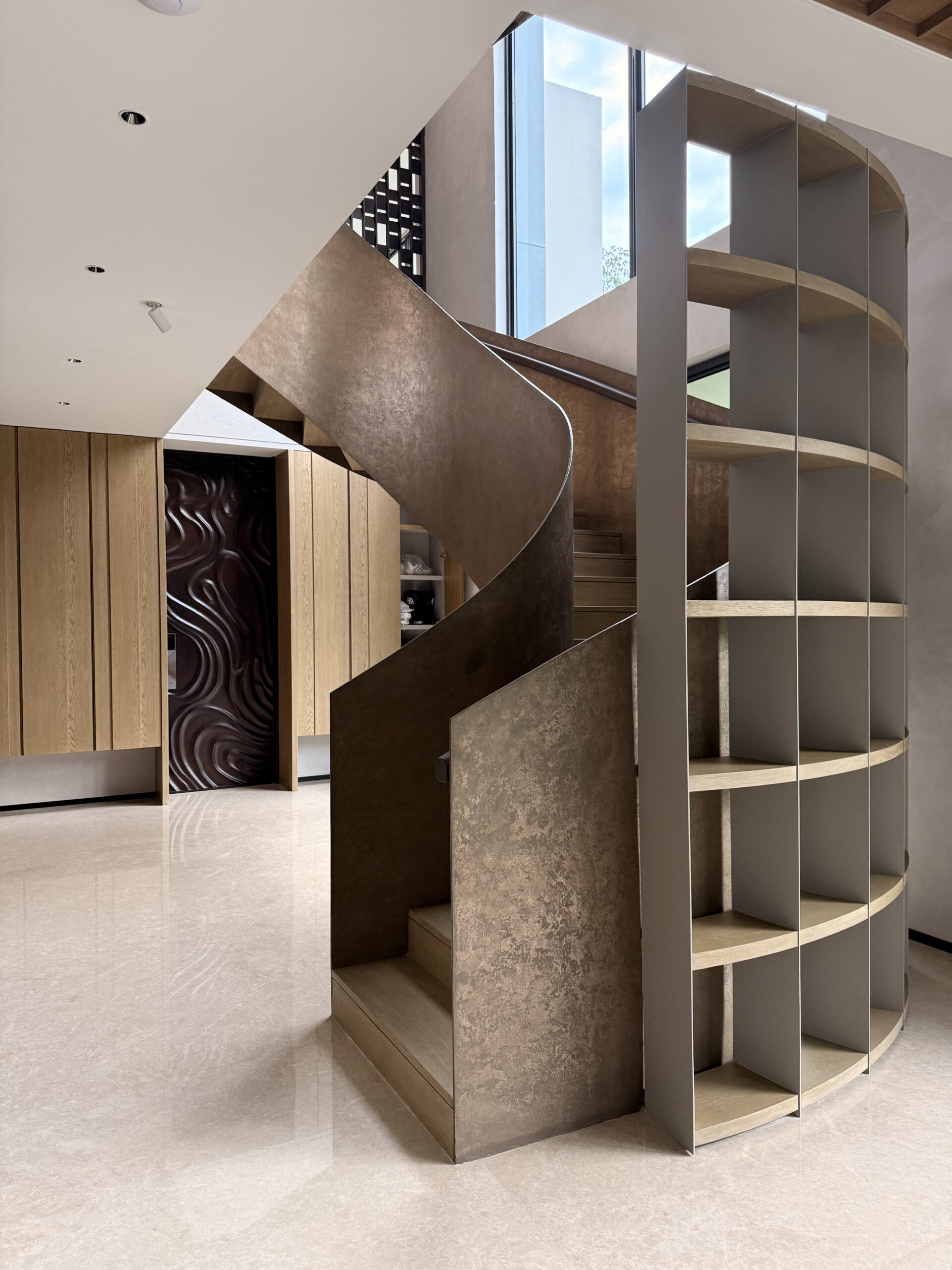 Liquid metal by Colours of Chroma applied to a staircase railing. Photo: Instagram/coloursofchroma.
Written: Colours of Chroma works with a range of materials, so why do you always look at materials in their granular form?
FWW: Because all materials actually come from those small forms—granules. We’re simply too accustomed to seeing their final forms: marble is hard, metal is rigid, wallpaper is something you apply to a surface. But materials can be continually engineered, for example by re-engineering them, adding a binder, pressing them, or developing their performance. From there, the possibilities of a material become incredibly broad.
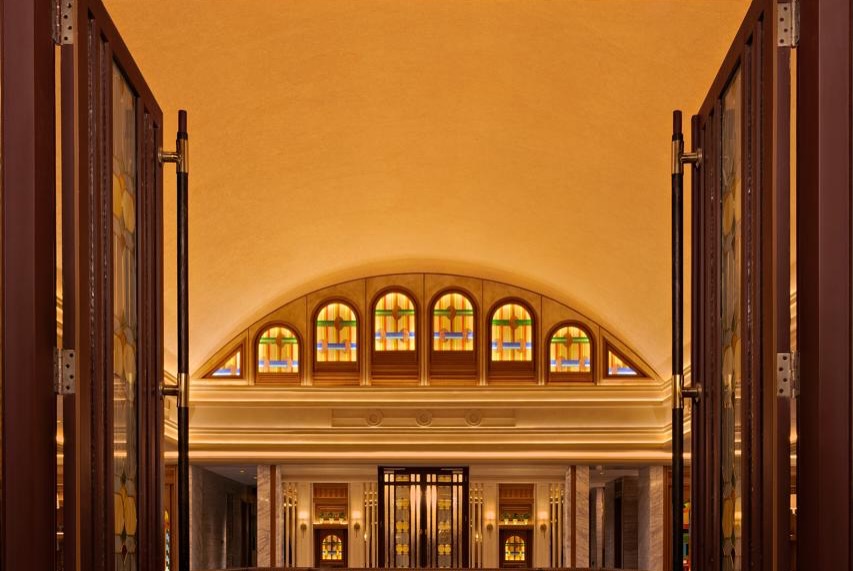 Liquid wallpaper by Colours of Chroma applied to the ceiling. Photo: coloursofchroma.
Written: So materials shouldn’t be limited by their conventional functions?
FWW: Exactly. We are too often taught through the habits of the industry. “Metal has to be like this,” “modules have to be this size,” “wallpaper has to be like that.” But that’s not necessarily the case.
What we need to understand is their inherent character, rather than their limitations. Once we understand their fundamental properties, we can look for other ways to work with them. For me, material always complements shape. The designer may create the form, but the material is what gives a space its character.
Written: Material exploration inevitably comes with a lot of failures. What keeps you going?
FWW: There have been so many failures. Maybe it’s because I have a habit of “looking for problems.” All of the explorations I do started becoming more serious during the pandemic. I began experimenting with liquid materials and looking at the possibilities they could offer. But through the failures I experienced, I learned that material exploration isn’t about finding quick answers, but about continually understanding the fundamental character of a material. The bottom line is, I can’t just sit still. Challenges are what keep me exploring.
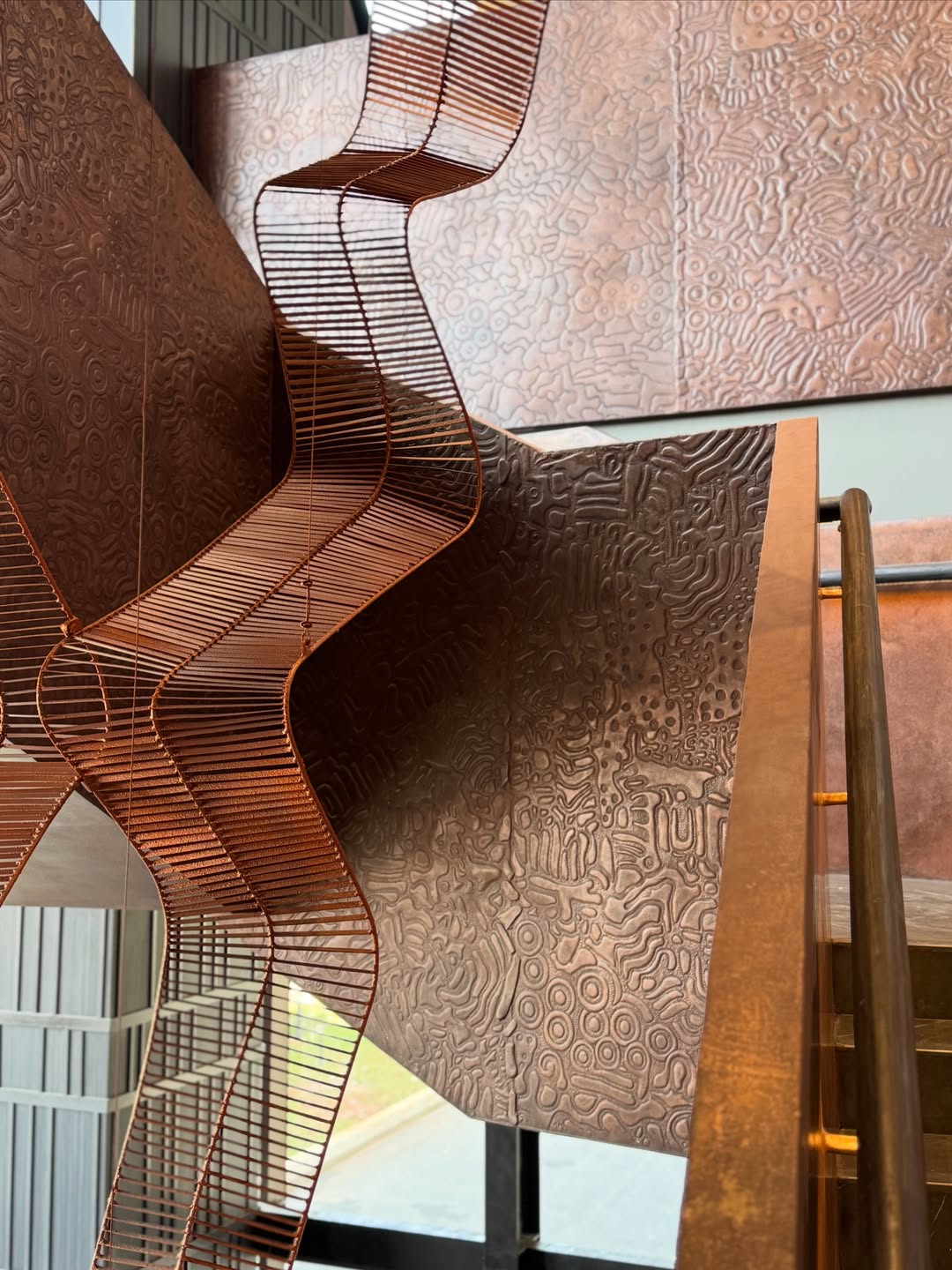 Liquid Copper metal by Colours of Chroma applied to a hotel staircase railing. Photo: coloursofchroma.
When Finishing Becomes the Language of Space
Written: How much do you think finishing influences the human experience within a space?
FWW: A great deal. Materials can create different perceptions and sensations for different people. Without us realizing it, a rough surface, the reflection of light on a particular texture, or the temperature of a material when touched all contribute to shaping our emotional experience of a space.
So finishing is not only about appearance, but about how a space can create a particular feeling for the people who use it. Material is not merely a complement to design; it completes the experience of the space itself.
Written: Sustainability and circular design are becoming increasingly prominent. In the context of materials, can this narrative coexist with premium design?
FWW: Absolutely. But the expectations need to be clear first. What is luxury? What does eco-friendly actually mean? Sometimes a material is labelled eco-friendly, but its production actually consumes much more energy.
In my view, sustainability needs to be connected to the Indonesian context: climate, weather, humidity, and how spaces are used in everyday life. A material that works well in another country may not necessarily be relevant here. The same applies to luxury. We first need to understand what it means within each project, and only then can we choose the right finishing to achieve that particular meaning of luxury.
Written: What kind of mindset do you think design students or young designers need to have today so that their knowledge remains relevant five to ten years from now?
FWW: Don’t be too quick to believe the words “it can’t be done.” This is no longer an era in which we should focus on the limitations of materials. What materials have are strengths and weaknesses. Nature determines their fundamental properties, but how we process and work with them can continue to evolve. Curiosity and the courage to question old habits will be far more important than simply following industry trends.