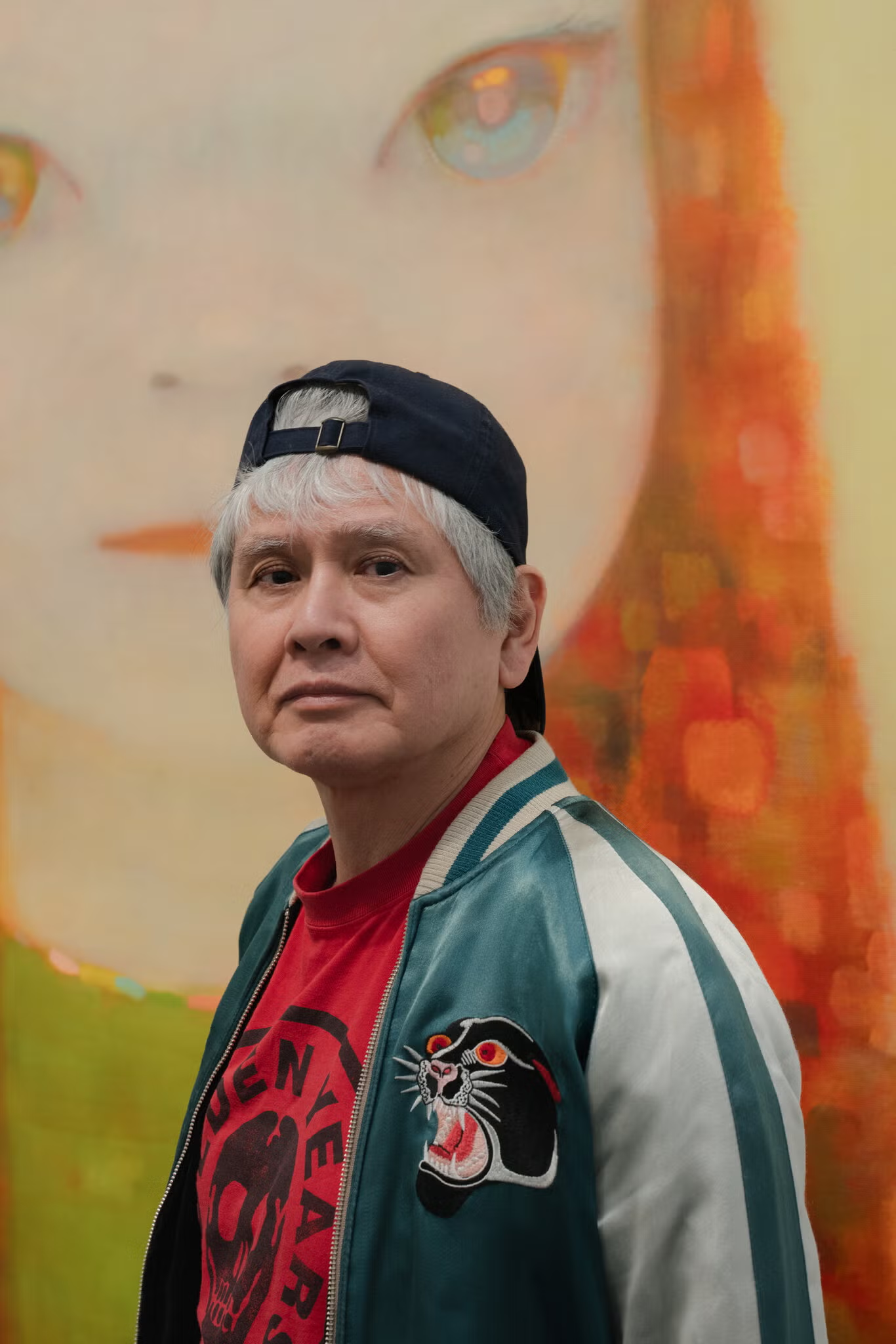
Through childlike figures with big eyes and sardonic expressions, Japanese artist Yoshitomo Nara turns loneliness, vulnerability, and a spirit of defiance into a visual language that transcends generations.
There is something unmistakable about Yoshitomo Nara’s characters. With their oversized heads, round eyes, and petite bodies, the childlike figures in the Japanese artist’s work might initially resemble illustrations from a storybook. Yet their gazes often suggest something else: anger, irritation, loneliness, or an apparent indifference to what others think.
Some even hold knives or display gestures far removed from any sense of innocence. It is this contrast between their endearing appearance and defiant expressions that makes Nara’s work so instantly recognizable.
For younger generations familiar with the visual culture of the internet, these characters feel familiar. They can serve as representations of moods that are difficult to put into words. But Nara’s appeal goes beyond his ability to create recognizable figures. Beneath their visual simplicity lies a personal journey that has shaped how the artist understands the world.
Loneliness That Shaped a Visual Language
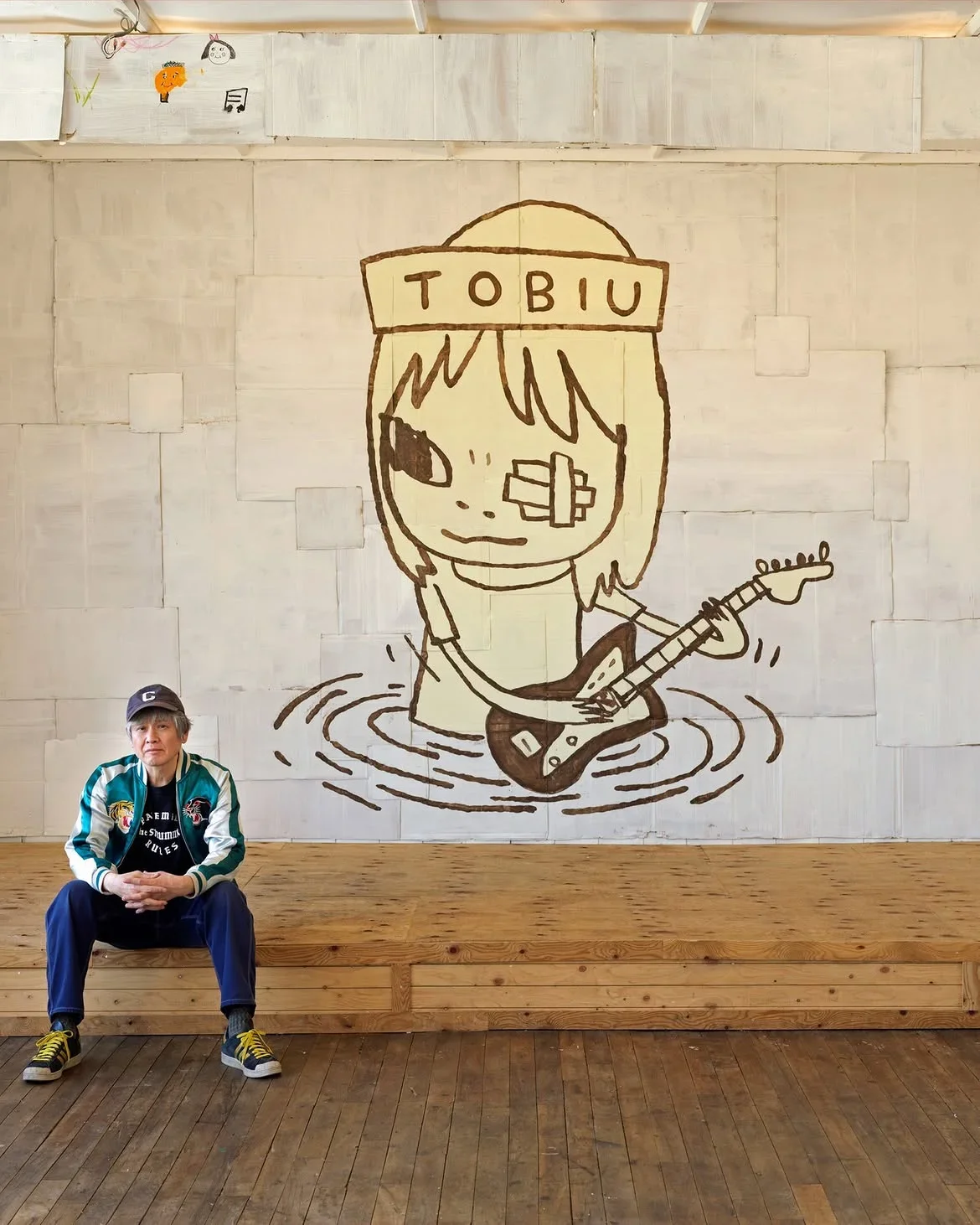
Yoshitomo Nara was born on December 5, 1959, in Hirosaki, Aomori Prefecture, Japan. He grew up in northern Japan and spent much of his time alone while both of his parents were at work. In solitude, he found room to draw, imagine, and build a world of his own. This childhood experience would later become one of the important foundations of his artistic practice.
Music also played a significant role in shaping his perspective. Through the radio, Nara discovered Western folk and rock music, which eventually led to an interest in punk. The independent spirit and anti-establishment attitude associated with the genre resonate in his work: small figures that are not always willing to conform.
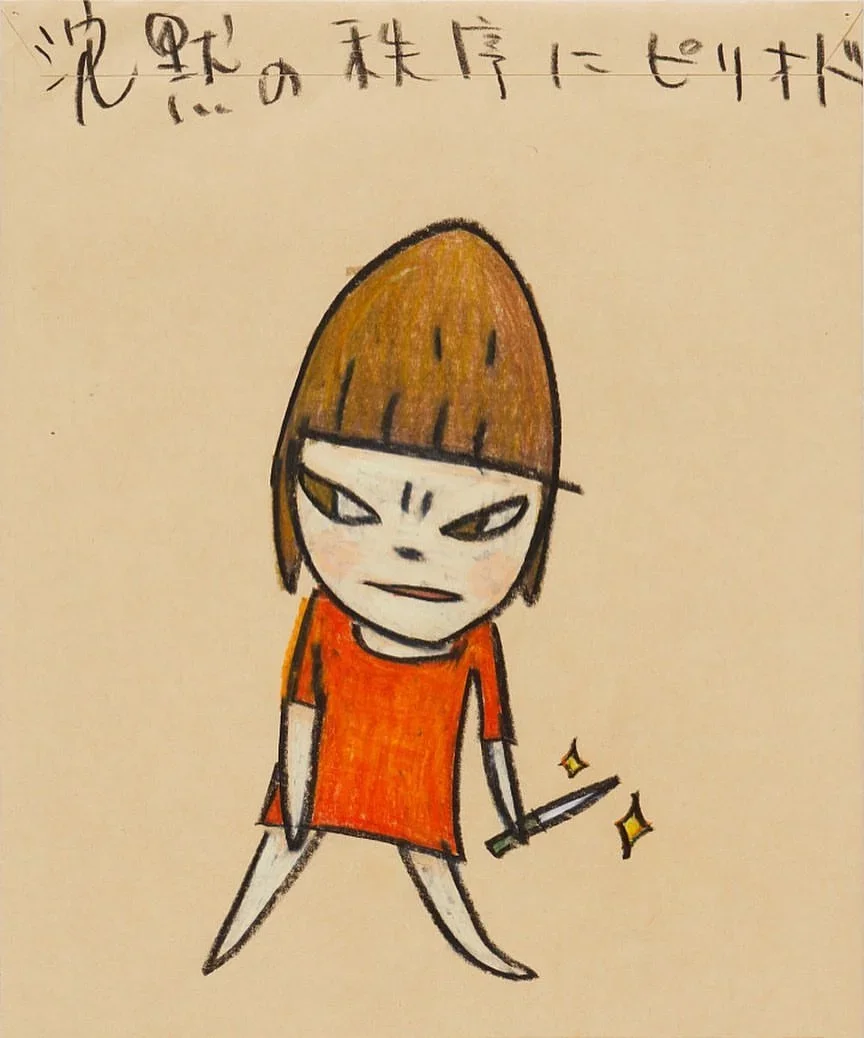
After graduating from Aichi University of the Arts in 1987, Nara continued his studies at Kunstakademie Düsseldorf in Germany in 1988. He remained in Germany until 2000 before returning to Japan. Living abroad exposed him to a different kind of alienation, particularly when navigating environments and languages that were not entirely familiar to him.
Solitude, music, and the experience of living across cultures became part of the foundation of his artistic practice. Rather than developing elaborate narratives, Nara chose relatively simple figures to hold much more complex emotions.
Cute, but Not Here to Please You
Childlike figures are among the most consistent motifs in Nara’s work. With relatively simple forms, large eyes, and backgrounds that are often sparse in detail, his characters appear easy to understand. Yet their expressions resist overly simple interpretations.
The children in Nara’s paintings do not always represent innocence. They can appear sullen, irritated, curious, or defiant toward anyone looking at them. Some seem vulnerable, while others convey a sense of courage, as if ready to face the world on their own terms.
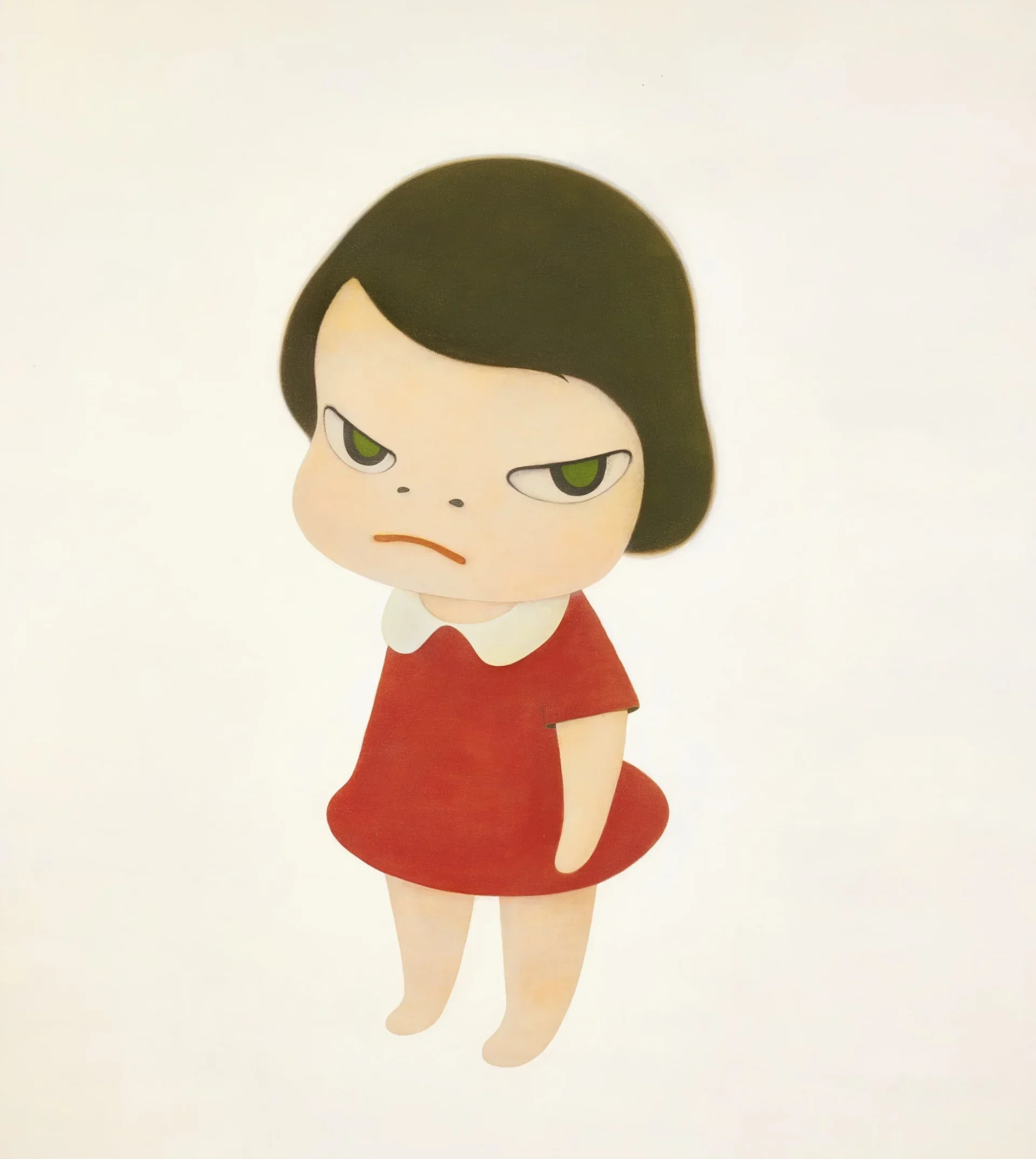
One of the most compelling examples is Knife Behind Back (2000), which depicts a young girl with a sharp gaze and an unfriendly expression, her hands held behind her body. The knife mentioned in the title is nowhere to be seen. Its absence becomes an important part of the work. Rather than depicting a threat explicitly, Nara leaves the viewer’s imagination to fill the gap.
This is where his childlike figures become more than simply endearing characters. They cannot be entirely controlled or predicted by the people looking at them. Beneath their small frames lies the potential for resistance, alongside an ambiguity that encourages viewers to question their own assumptions about innocence and strength.
The significance of the work is also reflected in the art market. In 2019, Knife Behind Back sold at Sotheby’s Hong Kong for HKD 195.7 million, equivalent to approximately US$24.9 million at the time. The sale set an auction record for Nara’s work at the time. It demonstrated how a seemingly simple figure could occupy an important place in international contemporary art.
Why Does His Work Resonate with Gen Z?
On social media, Nara’s characters are instantly recognizable, even without a lengthy explanation. An irritated gaze, a blank expression, or a face that seems reluctant to engage can resemble moods encountered in everyday life. Yet reducing them to an aesthetic suited for a profile picture or meme overlooks the emotional layers that give his work its lasting appeal.
For some Gen Z audiences, Nara’s appeal can be understood through its connection to self-expression, social pressure, and the desire to be accepted without constantly having to meet other people’s expectations. His figures do not try to appear pleasant all the time. They are given room to be angry, withdraw from others, and reveal aspects of themselves that may not always be comfortable for others to see.
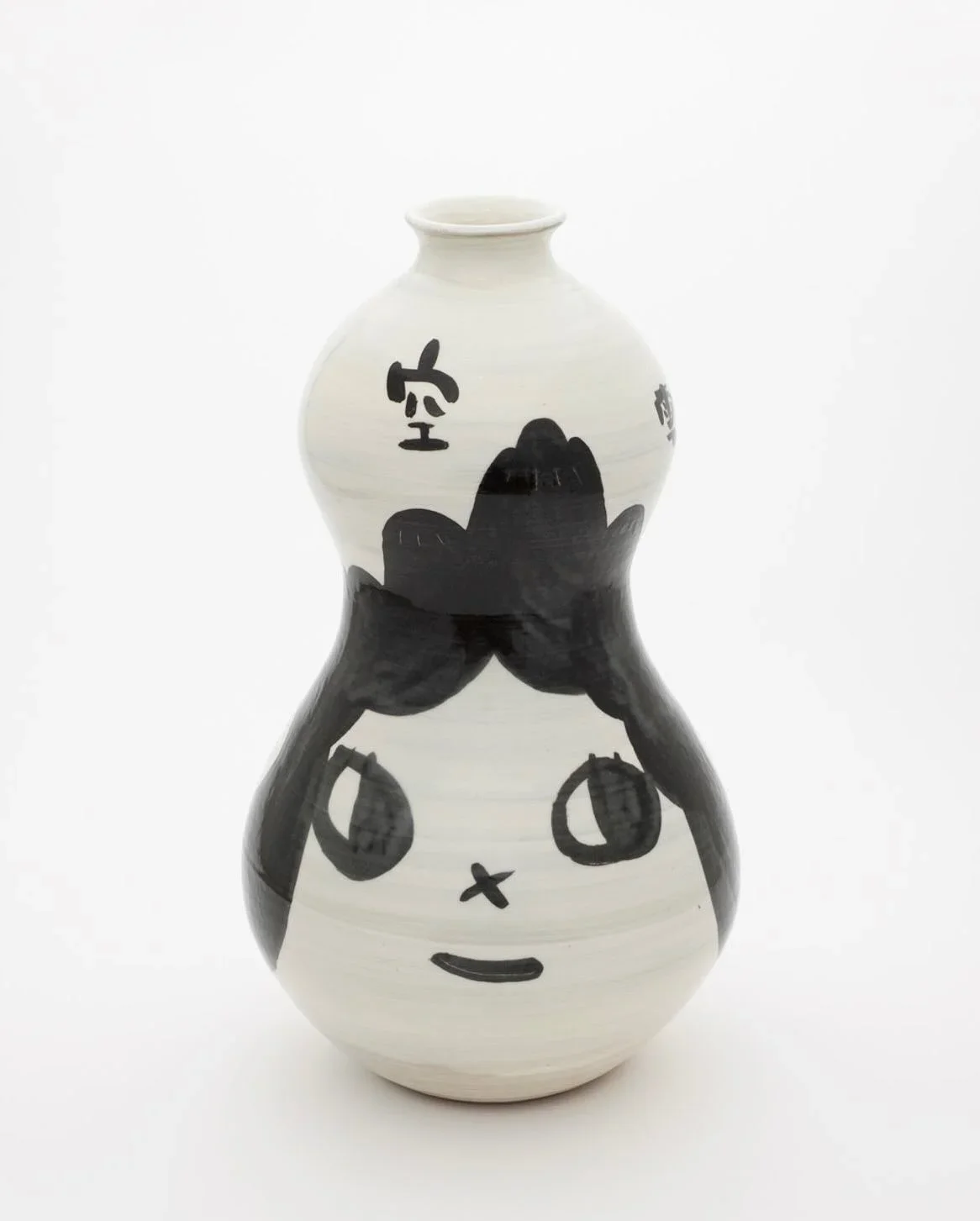
Of course, Nara’s work was not created specifically for this generation. He had developed his visual language long before social media became part of everyday life. Its relevance lies precisely in its ability to convey emotions that audiences from different backgrounds and generations can reinterpret in their own ways.
The simplicity of the forms also plays an important role. Nara’s characters can be recognized at a glance, but they do not necessarily offer definitive answers about what they are feeling. Viewers end up filling that space with their own experiences. One person might see anger, while another finds sadness or a desire for self-protection.
The connection with Gen Z, therefore, is not simply a matter of visual trends. There is room for interpretation, allowing these characters to become mirrors of personal experiences without requiring everyone to find the same meaning in them.
From Galleries to Popular Culture
Yoshitomo Nara’s appeal to Gen Z is not solely a result of how easily his characters can be recognized on social media. With their cynical gazes and rebellious attitudes, these figures offer a space for expressing emotions that are not always easy to articulate, from loneliness to the desire to stop meeting other people’s expectations. Although they were not created specifically for this generation, Nara’s work allows audiences to find their own interpretations.
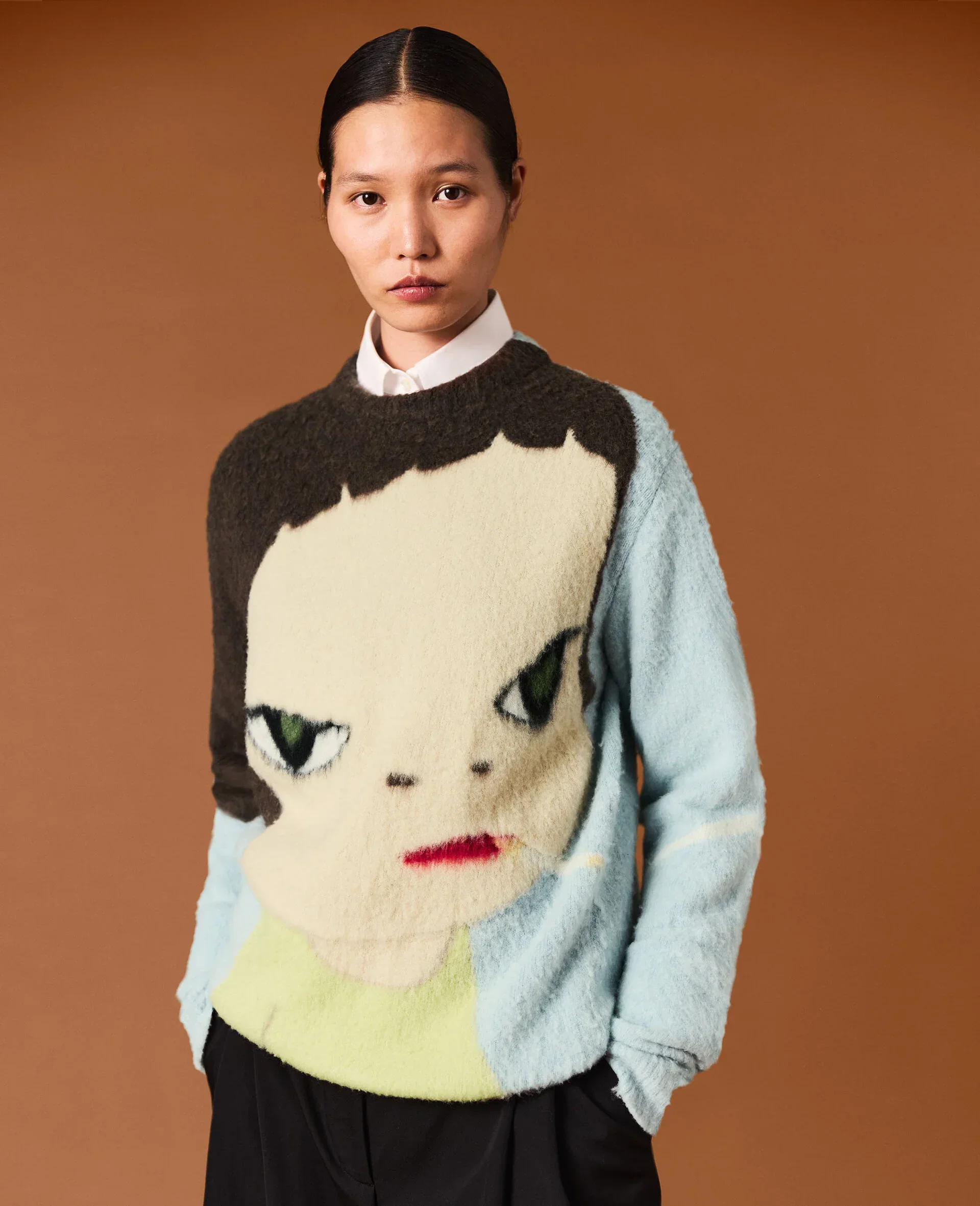
This visual language has also extended beyond the art world through his collaboration with British designer Stella McCartney. Beginning with the Spring/Summer 2021 collection, their partnership continued with the Spring/Summer 2023 collection and a third collaboration in 2026.
Nara’s distinctive illustrations appeared on clothing and accessories, bringing the rebellious spirit of his work into dialogue with McCartney’s approach to self-expression and activism. The collaboration demonstrates how art can reach new audiences through fashion without losing its original character.
Ultimately, Yoshitomo Nara’s strength lies in his ability to convey complex emotions through seemingly simple forms. He invites us to question what might really lie behind an expression. Because beneath a fierce-looking face or an apparently indifferent attitude, there is always another possibility: vulnerability, loneliness, or simply the desire to be oneself.