Cox London on Slow Design, fine art sculpture, nurturing craft, and expanding to Indonesia.
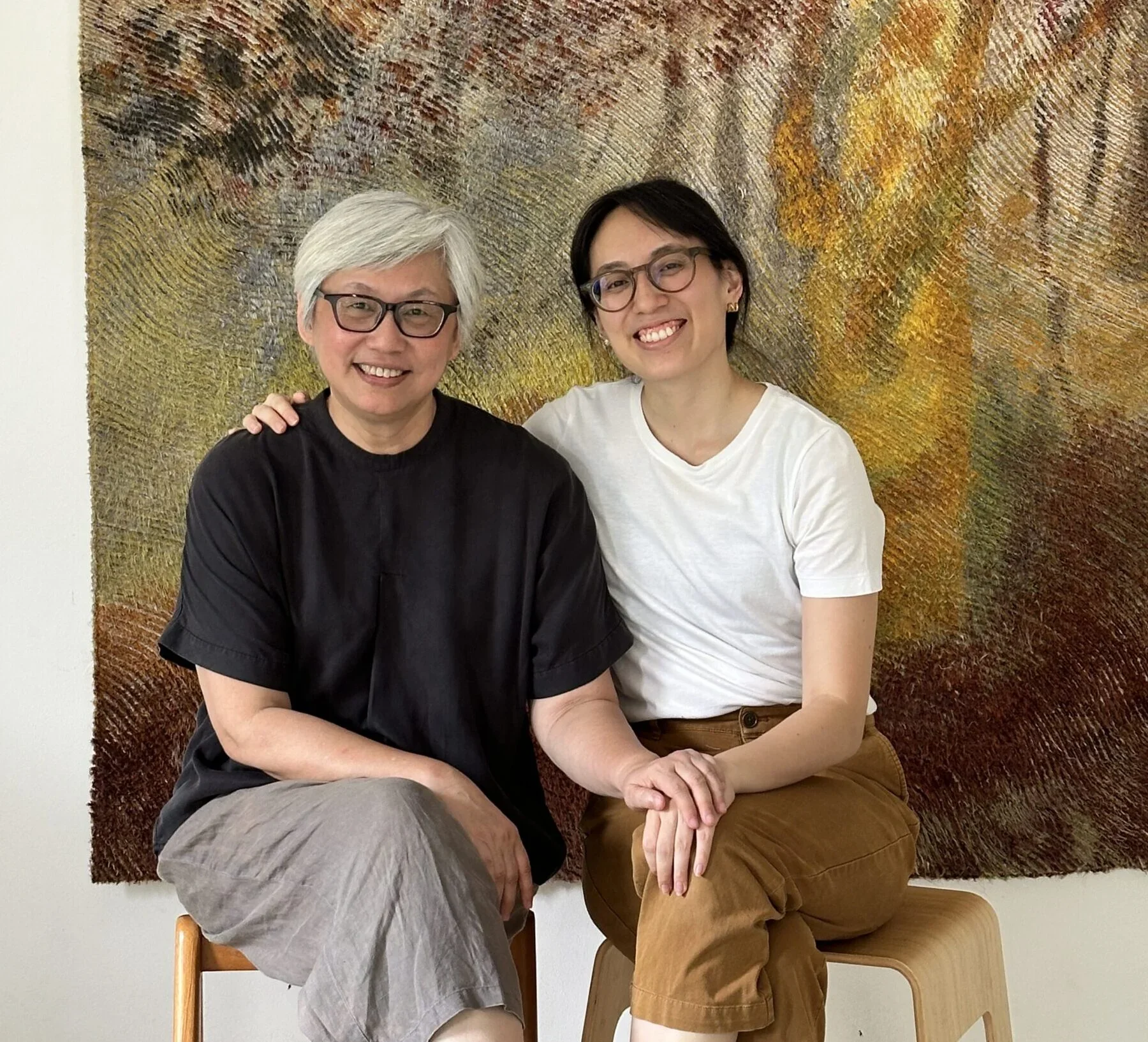
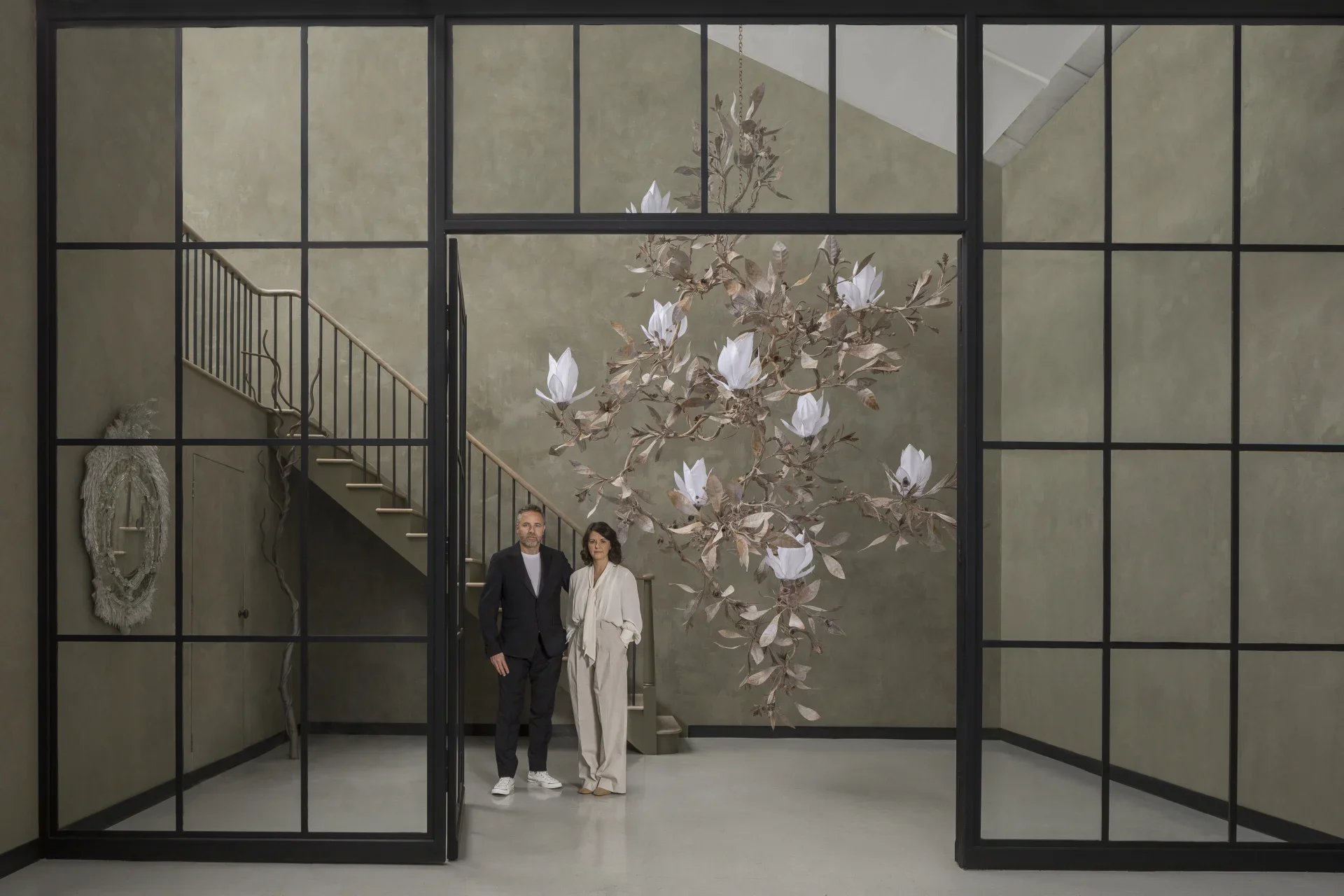
In the landscape of contemporary luxury design, Cox London stands as an emblem of sculptural integrity, timeless craftsmanship, and deeply considered artistry. Founded by husband-and-wife duo Christopher Cox and Nicola Cox, the London-based atelier is renowned for creating extraordinary lighting, furniture, and functional artworks rooted in nature and ancient manufacturing techniques—from lost-wax bronze casting to hand-forged iron and kiln-formed glass.
Both trained as fine art sculptors, Chris and Nicola met at art school before forging a path that bridges the gap between fine art and decorative utility. Drawing inspiration from antiquity, organic forms, and European craft heritage, their work embodies the principle of "Slow Design", an antidote to the fast-paced, mass-produced digital age. Beyond their London studio and Hampshire workshops, Cox London has established a dedicated Craft Apprenticeship Program to preserve rare traditional skills, while expanding their collaborative footprint globally, including establishing a specialized glassmaking workshop in Yogyakarta, Indonesia.
In this exclusive interview for Written , Nicola and Christopher Cox discuss their evolution from sculptors to atelier founders, the delicate art of translating organic forms into rigid metal, their approach to working with interior designers, and why nurturing the next generation of makers remains central to their ethos.
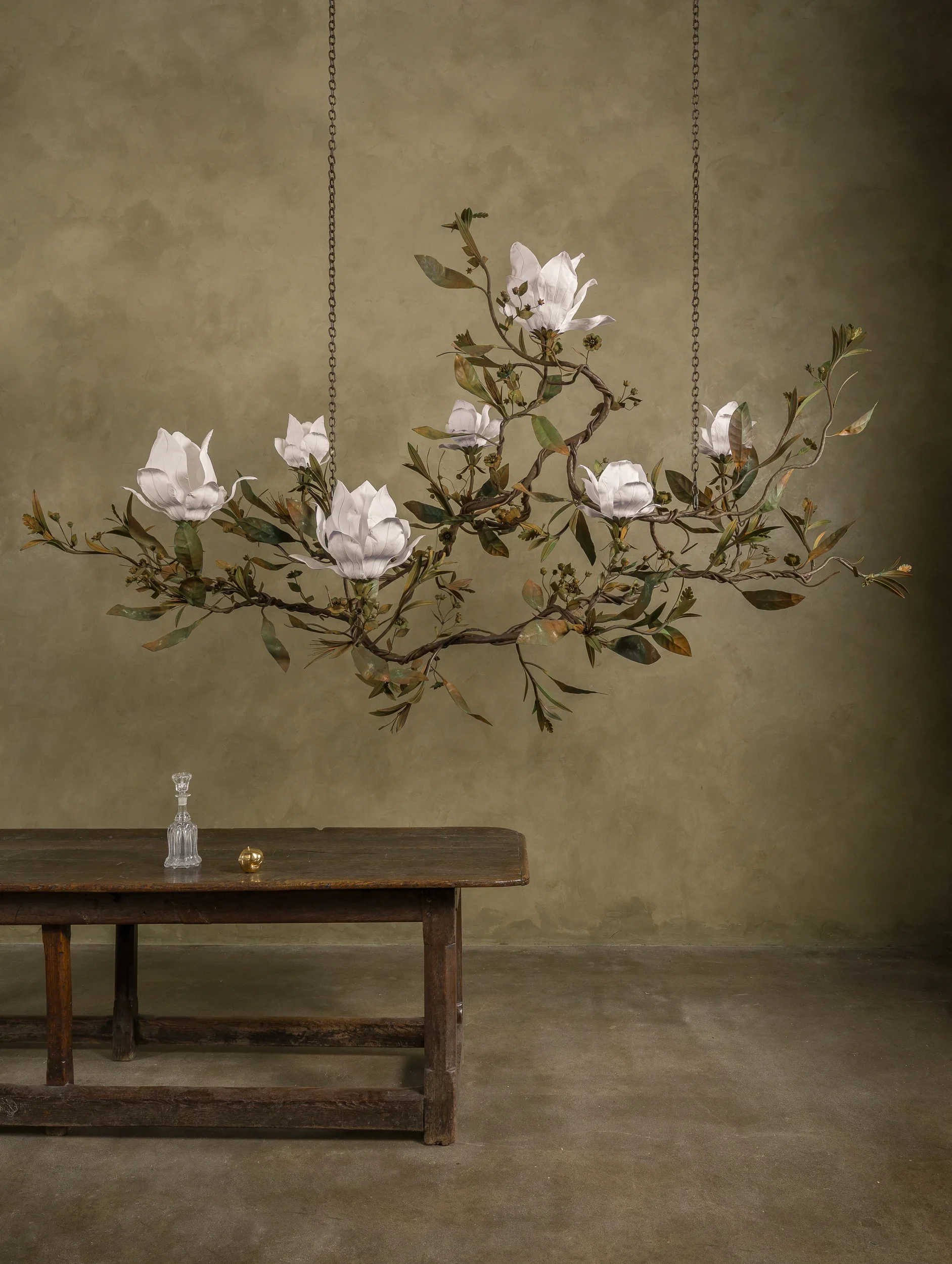
From Fine Art Sculptors to Studio Founders
Written: As people that studied fine art sculpture, ow did you know it was time to step away from traditional sculpture and begin shaping functional objects?
Christopher Cox (CC): We just, I guess, when we left art school, we both were lucky enough to find creative jobs. And for me, that was antique metalware. So immediately I was thrust into this world of applied arts and decoration and craft, well-crafted things. It really enriched it in a massive way. And I've never ever fallen out of love with all of those mechanisms.
I do come from an antique dealing family as well. So I come from three generations of family that have dealt in all sorts of antiques from stone and wood sculpture, furniture, to jewellery, to painting and artworks. So I was surrounded by a lot of different decorative and artistic endeavours. And we've never lost that passion. We both feel the same way. I think sculpture is our first, but everything that we make comes from an appreciation for well-crafted, well-designed objects.
Nicola Cox (NC): I mean, I think that furniture and lighting and the objects that we surround ourselves with in the home can have as much artistic integrity as a piece of fine art. So it's a natural progression. And as makers, it's obvious to us to build and create your own environment. So a lot of work sort of comes from that, through sort of living in a space and having a desire to sort of work with that space and create a feeling within that space that's your own, which I think obviously this is what interior designers and many of our clients are doing for their clients. So it's just a natural response, really.
CC: When you have a home, you think, as artists, you think, why do I buy a lamp? I can make a lamp. Or why buy a bench or even a bed? You know, we've made everything. We've made every corner of our house in the past. It's exciting for us.
Written: What is your design process like when you’re working for a new piece or collection?
NC: Well, it's a kind of organic journey. It will be sort of a walk in the woods or responding to something, often nature-inspired, but not exclusively. Also other objects, like pieces of antiquity, exhibitions and art galleries. And we're really fortunate, living and working in London, that has such a wealth of history and culture, to experience on a daily basis.
So all of those sort of things go into the pot and stir the mind. And they might come out in the form of a sketch or a little note. And then that becomes a small sort of maquette or playful object that has sort of no purpose at all. But then a couple of years later, that might become a large scale lighting installation.
CC: We're also really fortunate in that originally we made everything ourselves from beginning to end, which is a great journey. From design, draw, fabricate it, colour it, wire it, photograph it. There was just the two of us. And over time, we've built this amazing team. We have an incredibly technically proficient team.
So our ideas will go off into different departments and then come back to us. So I suppose the way we design has changed in that respect. We draw on every single corner of the business. You know, there are people in the foundry, people in the forge, people casting, people mould making, chasing and welding metal, colouring, wiring, and we can seek out their help and have several projects going at once as well.
We're not just working on one thing. It used to be one thing in the corner, we'd do our day job, and then we'd keep going back to the one thing ourselves. But now we've constantly got designs bubbling around the business and they come back to us in the studio and go back out again. So it's very collaborative, more collaborative than ever.
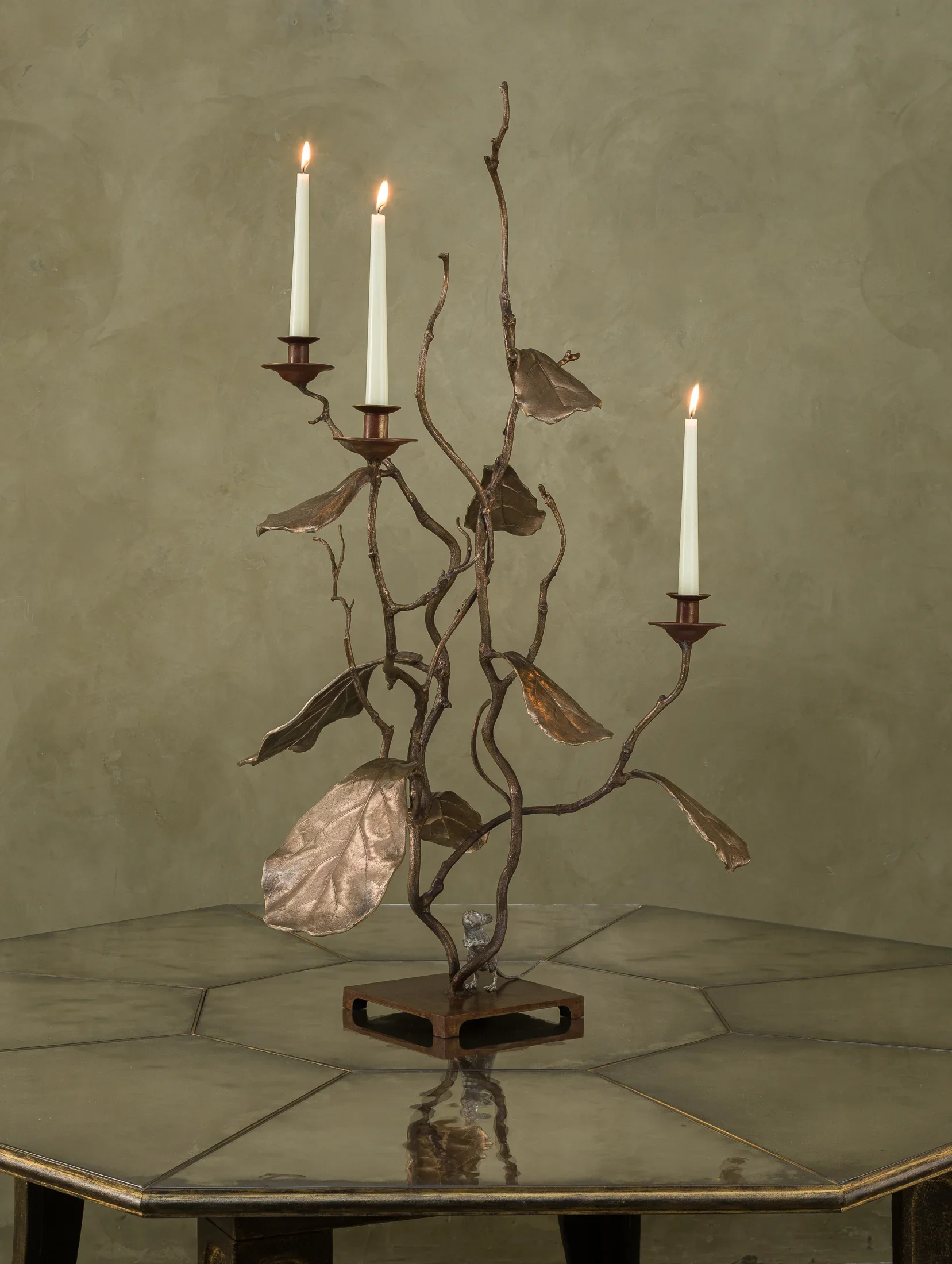
Written: What was the biggest mental shift required when moving from 'artists making pieces' to 'running a creative atelier'?
NC: Yes, I mean, it started very small, obviously, with one or two of the makers that we employed. But now we have a team of 60 or 70 makers in London and another team down in Hampshire, and then the wonderful team that we work with in Indonesia as well, which is also really exciting and quite a different way of working for us as well because of the remoteness.
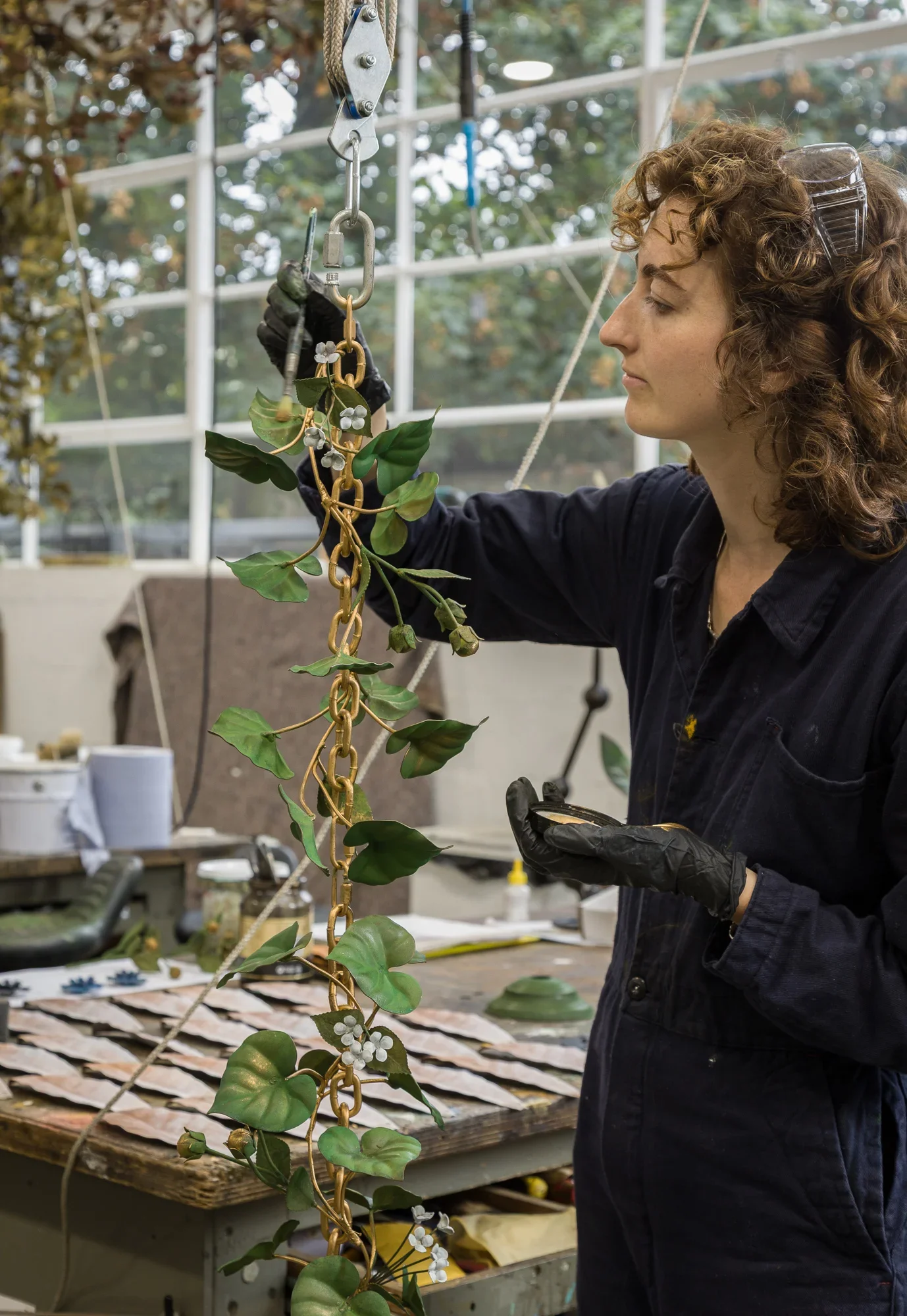
But the change of mindset was the nurturing element and being able to sort of allow their development and allowing them to sort of learn and teach each other and share their skills and knowledge. And we realised after the first few years that this was so vital to the sustainability of our craft, to teach and share.
And traditionally, and I don't know about Indonesia, but in the UK these sort of skills and processes have become a rarity. And therefore, it became rather sort of closed shop where people were inclined to kind of keep their trade secrets to themselves for fear of losing the small amount of trade that they are able to generate through their work. But for us, we sort of felt that the more we share and develop ourselves, and the more our team develops, the greater the opportunities that seem to come from that.
CC: It wasn't overnight. But it was also out of necessity as well, because we love doing so many different things that we didn't want to give anything up. So we were restoring things for clients and for ourselves, buying antique objects and restoring them or making them into something else. We were sculpting our own pieces. We were making artists, our friends work as well, sculpting and mould making. And all of these things seem really relevant to us. So we couldn't just keep doing it all on our own. More and more work kept coming our way.
So by virtue of being busy and needing to teach and train somebody else in what you do, and it happens very quickly in a workshop situation when you're working next to, but you can train very, very quickly. And then people get better than you at doing stuff as well. That's when things get really exciting, because then they become the teacher. And you watch them train another three or four people. And then you have this immense trust that they can do everything you can do and more. So it's a very positive thing to grow a team around a craft, I think.
Written: Cox London is rooted in a philosophy of 'Slow Design'. In an age driven by fast trends and rapid digital manufacturing, how do you define 'slow design'?
CC: For me, when I was restoring antiques, and it happened in the first week or two weeks, and I was there for five or six years, but I suddenly had this realisation that when you take apart a really good piece of metal work, antique metal work, be it a chandelier, a table, a light on the wall, a lantern, you realise how much thought has gone into every mechanism, how things are put together, how they're engineered, how they're created to look, how one bead is dull on its own, but a thousand beads wrapped around something suddenly become extraordinary and captivating.
All of these design mechanisms, all of these manufacturing processes, all of these engineering ideas, I think of as highly considered, and the reason antiques are antiques, the reason they're still with us, because of the craft, the quality of materials and the quality of the idea and the process and the build.
So to me, all of that is slow design. And for us, we said years ago, if we can make the antiques of the future, then we're doing something right, because the design idea still feels fresh or interesting or relevant 100 years from now. If that's so, how wonderful we've kind of hit on something considered rather than fast for fashion or to be the trend.
Translating Nature into Metal
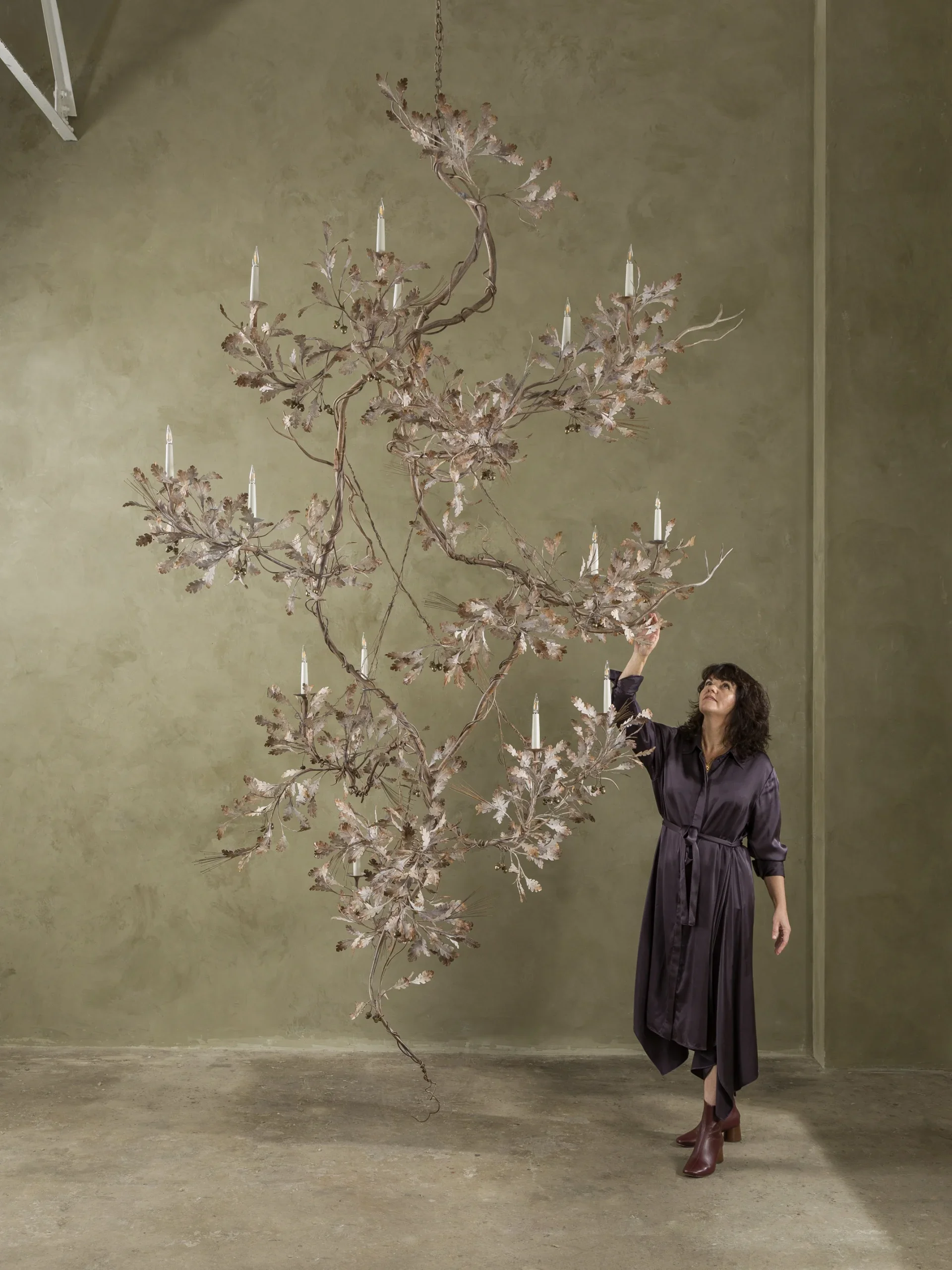
Written: Your studio works heavily with ancient techniques (lost-wax bronze casting, hand-forged iron, and kiln-formed glass). Could you walk us through how a natural sketch becomes a forged bronze chandelier like Mater Quercus?
CC: It's Latin for mother oak. So our concept was this, this oak was probably going to be female, it's probably going to be, we wanted it, we thought of it as life giving. And we thought of it as representing the circle of life, actually. So on there are tiny acorns, which we've never really put on an oak tree before, but we put these lovely golden bronze acorns amongst the branches.
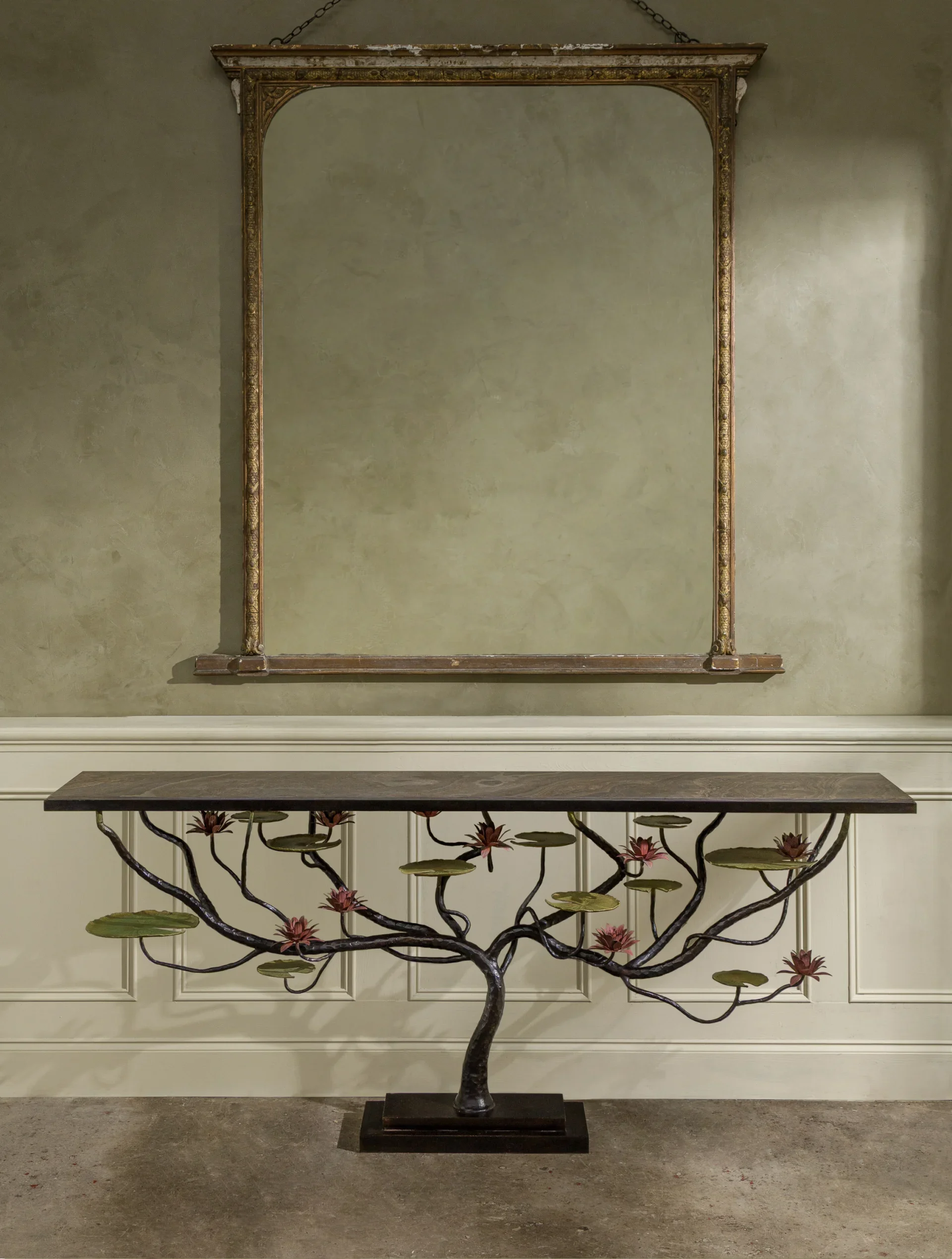
She looks quite large, but not too grand, I think humble and spreads across the space. And there's lots of open space in it, which we love. I think that's so important. The pockets of open space are as important as the space we fill. I think if a piece balances either on paper as a drawing, or as a metalwork sculpture, then there's a strength in that visually.
Obviously, we do a lot to make our pieces eccentric and go off left and right. And I wanted to push the boundaries of that with this piece. But essentially, when you draw a piece to balance, you have a line down the middle. And nobody needs to see that. But you come back to that line. And you think about where it's going to balance, as I'm constantly thinking about how it's going to be made, as well as how we want it to look.
And we're working with Victoria Davar, who's a friend of ours. She gave us a huge blank wall, and said, I'm not going to put an artwork on it, your chandelier is just going to be framed by this blank wall above the fireplace for an exhibition that we did. So we had complete free reign.
But of course, you can't help also having the sensibilities of the designer and the space, and her style and what's going on. So it was a collaboration, but it felt like the freest kind of collaboration. That's how the Mother Oak came about, over about four or five months.
Written: Were there new techniques involved in its creation?
NC: I think often the experimentation is in the making. And for that piece, there was a lot of experimentation around the finish and the patina. And that's a very, our process for finishing our work is very organic.
We're responding to not only the work, but also how we want light to sort of bounce off or be absorbed by the piece. So there was a lot of back and forward and conversation about how we wanted that patina to work. And lots of effort went into that sort of development of that finish. It's not a technological process by any means. It's very much about how we kept pushing to add more layers, bring more sheen into the surface of that metalwork, burnishing it.
CC: And the other thing we talked about for the show was that wouldn't it be great if the chandelier actually moved? You know, we sort of joked about this. Why don't we make it spin in the show? So we didn't do that in the show.
When we came back to the studio and we had a retrospective show for people, we set it up almost like a theatrical piece. And we had it moving very slowly on a motor with all of the real candles lit in it. So they were flickering as it went round.
And stage lighting, to give it a sort of really rich sort of Rembrandt lighting, really dark contrasted with light, playing the chiaroscuro. So that was fun. That was something, you know, we did have our lighting, our wiring expert, electrical expert, build the motor and knocked it down so it was at its slowest.
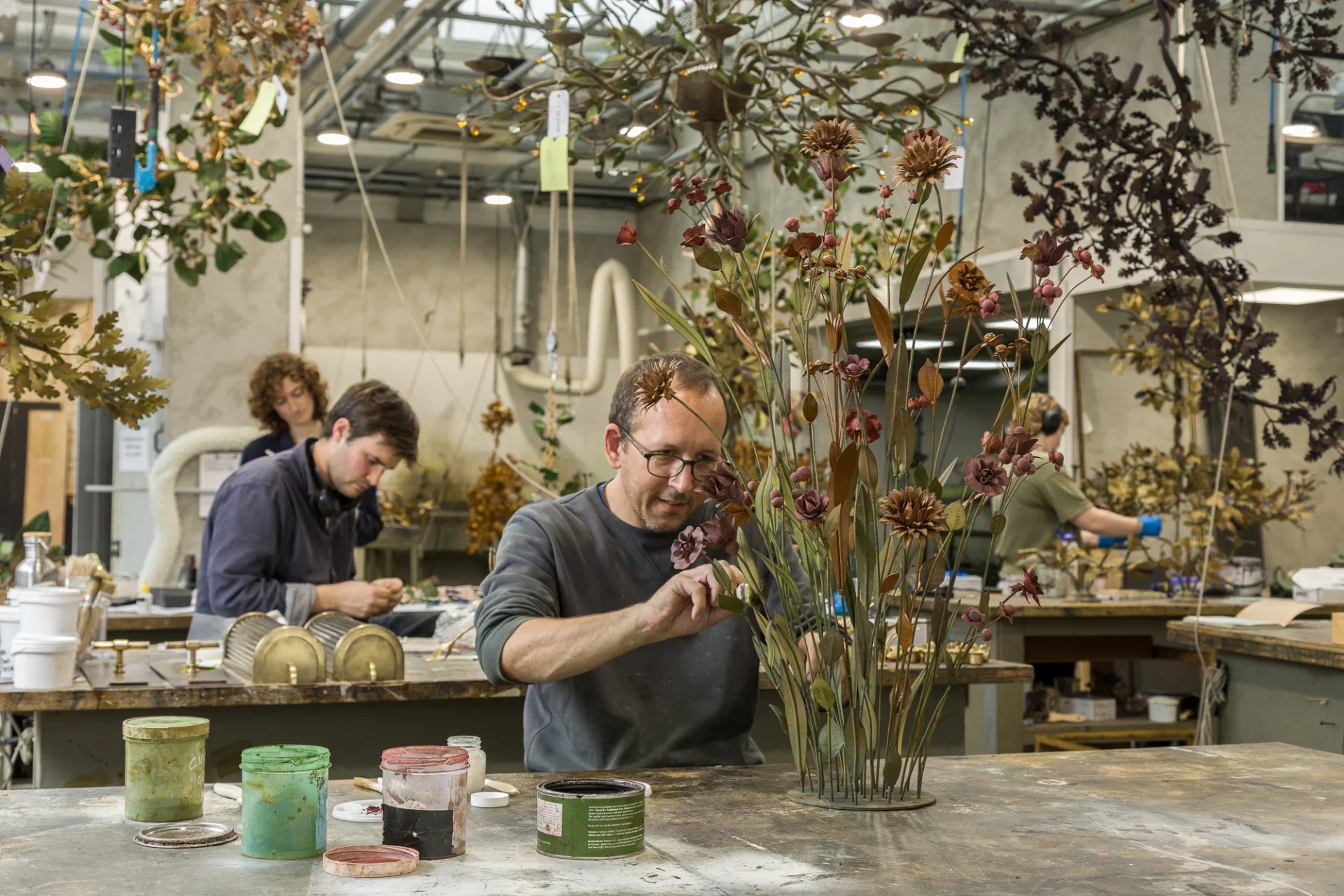
Written: Metal is inherently hard and rigid, yet your forms feel organic, botanical, and almost fluid. How do you create such warmth and lightness out of dense materials like iron and bronze?
CC: Its all about that drawn line. And I remember as a kid being taught that there's a fast line and a slow line and a line with energy. And, you know, you can contrive that. And I think all of our furniture and lighting is animated to a certain degree, whether it's through a really highly sprung leg that you draw on a chair, like the chair is ready to walk away or move or pounce, or whether it's a slower, more languid sort of groan line reaching out, you can contrive it. And you can also contrive it with surface, but an energy in the surface.
So the chair could be, for example, like, a chair could be very static and straight and structural or its legs could be sprung back, so it's animated, or they could be folded in and vulnerable, you know, there's so much you can do with the line. But also with the surface as well, the texture of the surface, you can bring energy, you can have a very static square table, but you can bring energy to every part of it. You can make the surface fizz with colour and texture, and how you treat the material. So I think we're always thinking about that. We never want to make anything static. And I think it's about the drawn line, the way we draw it.
Collaborating with Interior Designers
Written: What is your approach when collaborating with interior designers and architects?
NC: It's very much about listening, because they have a vision for an entire space, and understanding what that end goal is for them is really important, because then you really know what it is that they need from you creatively. If you don't have the full picture, it's quite hard to sort of grasp.
They know precisely what they want, they'll send you dimensions, and they choose the finish, because they know that finish that we've done before. And they know what's going to work in their space. And that's very decisive. And that's fine. That often comes out of having worked with someone for some time as well. So, they get to know your work and the style, but they doesn't really know what it is that they wants, but they wants to draw something out of us, because they loves the work that we do. So, with each conversation, and communication, we get closer to having a concept before you put pencil to paper. And that's really important.
Written: So, there are typically two distinct types of designers based on your experience?
NC: Yes, I mean, there's different, but then equally, the designer that knows precisely what they want for a particular room may also need to have that open dialogue with us for something else. And they're really interesting people to work with, they're so creative, they have so much in their mind. They've got this entire vision for a whole sort of experience of living for their clients, or if it's a public space, the experience that people have.
So, and I think it's incredible how they are able to sort of visualise like that. When we do our own properties, it takes us so long to get to that. I mean, it builds up over time, doesn't it, your home, you gather objects. And those sort of things sort of build up the layer of the kind of the story of your home, but the interior designers and the architects have to have this kind of full vision, which I'm in awe of how they do.
Written: Can you recall one of the most exciting or challenging projects you've done with an interior designer?
NC: I think every project is exciting, because it's fresh and new. There's certainly been moments where we've made pieces that have been super challenging. And when we say yes, there's an element of fear, because you think, this is really going to push the boundaries of our makers, and the scale of it.
We're doing a piece at the moment that's 10 metres by 10 metres. How we do that within our studios is, you know, these sort of challenges, having to bring a crane into the yard to hang this piece off, to make sure we have that point of balance right, because you're working it on the bench, you're making it in sections. But that's quite a healthy position to be in, because each time you do push the boundaries of what you've done before, you rise to the challenge, and that makes it exciting for us and the team.
Nurturing Craft and Apprenticeship
Written: Cox London has a three-year Craft Apprenticeship Program. Why is it vital for you to build a structured training program rather than just hiring experienced craftspeople?
NC: Yeah, it's about our future heritage, and the sustainability of what we do. And if we don't encourage young people into this world, then they may never know it exists. And I think probably what's happening in Indonesia now is something that happened in the UK 50, 60, 70 years ago. The same shift away from the smaller towns and villages, where craft was the way of life, into the cities. So it's quite interesting now that it feels like there's a return to that.
There's been a huge push on university qualification, degree qualification in Britain over the last sort of 15, 20 years. And now it's becoming apparent that this year's graduates are experiencing the worst level of opportunities for graduate students there has ever been, because so many young people have been encouraged to go down that route without really having an end goal in mind.
And I think now young people are starting to realise that, and we have a 15-year-old daughter, and her friends all talk about wanting to do apprenticeships. They don't want to go down the university route and come out with a 50 or 60,000 pound debt. And that they would like to earn and learn.
CC: It's a very easy thing to give. When you think about how we were nourished in workshops when we left art school, the opportunities we were given, and the information, the techniques that were taught, we were being nurtured by people then. And it gave us everything that means anything to us, our working life that we enjoy.
So, I guess we're always looking for students, young people with that spark. And you don't necessarily see it until you see them working, because some of them are straight out of school, haven't necessarily had their hands in clay or hit hot metal with a hammer or welded. But when you see that spark, you recognise it in yourself. And you think that's got to be worth nurturing and taking on.
But it's difficult, because we only take two people at the moment, we only take two people a year on our formal apprenticeship. We've been teaching people on the job for 25 years. But the formal apprenticeship that Nikki has worked on, she's been working on for five or six years, is now coming to fruition. And it's two people a year, and we're about to start our second year. But the idea is to capture people that will do three years. So, you must identify that spark of enthusiasm and interest, it's really important.
Written: What specific mindset or qualities do you look for in young makers joining your workshop?
NC: Curiosity is hugely important. You know, you need to see that in them. A desire to learn. Very, very important. It's good to see their willingness to experiment as well. So, in the interview process, where it's a three-stage process, and next week we are doing our final interviews for our shortlist for this year's cohort, then they will be doing a practical creative making, making an object for a few hours.
And we've been looking for that sort of attention to detail, wanting to sort of experiment. It's quite challenging to do that in a short space of time in a group of people that who are all applying for the same position. So, we've been looking for that sense of collaboration and their sort of curiosity and the way they might sort of investigate an experiment.
CC: You know it when you see it. There's a real hunger and a real zest. And Nasifa, who's just finished her first year in her trial, between everything that she did, she scribbled down notes endlessly. That really stood out to us, watching that going on. You've got to be really, really into it to want to write down everything.
Inspirations and Connecting with Indonesia
Written: What is one material or concept that is currently keeping you both curious in the workshop?
CC: Recently, I've been excited about accident and that kind of sort of a spill on a page or a found object leading into something else. And the Surrealists engaged in that a lot, particularly Max Ernst, whose work I've been looking at.
But I think as a whole, the Surrealists were trying to tap into the subconscious mind, you know, liberate the subconscious. And I thought, it's not a new way in for me, but I've never really thought, let's really hone in on that. So, I'm quite excited about spillages, accidents. It's how a lot of art comes about through mistakes and trial and error. And André Breton, he was the chief proponent in that, tapping into the subconscious. So, I'm finding all of that really fascinating. I've been thinking about that for about six or seven months.
NC: So, I've been sort of looking at Renaissance paintings, landscapes, and thinking about the sense of adversity as well, how sort of life kind of clings on in nature in really challenging environments. And if we think about, I mean (Indonesian) had such extraordinary and life-threatening earthquakes and all of the repercussions of that and how nature kind of recovers. It's much harder for us as humans because we build our world and then it can easily be shattered just through the power of nature. So, I think that idea of sort of, life clinging on is really poetic.
Written: What is one piece of advice you wish someone had given you when you were just starting out?
CC: Probably persistence. Ifyou find yourself feverishly working at midnight on something because you're so excited about it, you're probably in the right place. Definitely keep doing that. Don't stop if you're that excited. It's obvious that something interesting is going to come out of it. I think the idea that you just keep on, keep on and keep going, keep going.
NC: Recording your work as well, you know. I mean, gosh, if I think back having really, really good records of what you've done, how you did it, why you did it, because you never know that might be the core thread of your future body of work. So, having to sort of retrace your steps back and find that original sort of source of an idea or whatever is often, you're sort of scratching your head and saying, well, I can't quite remember how I got here.
Written: What made you choose Indonesia as your first workshop outside of the UK?
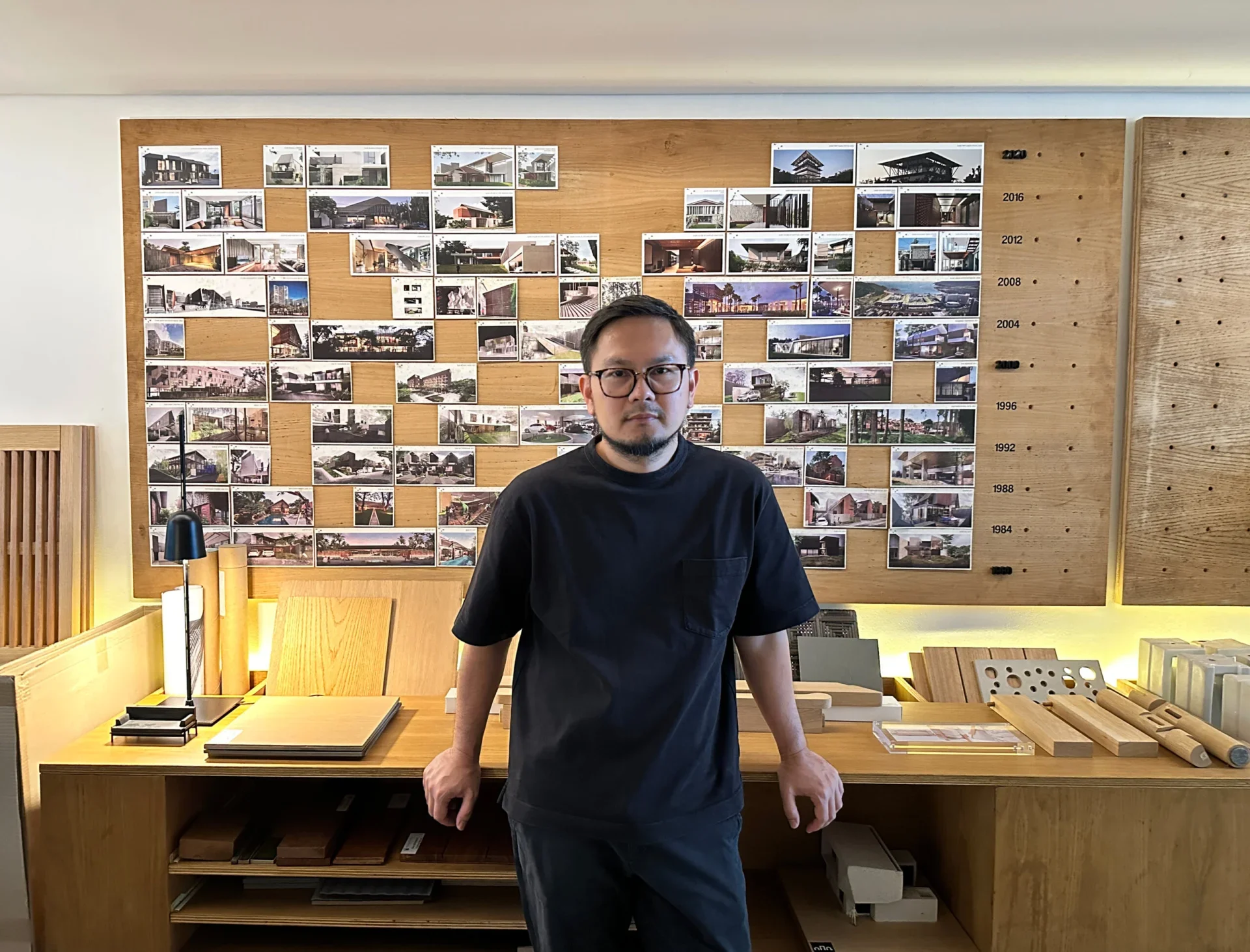
CC: Ah, this was an opportunity we hadn't thought about at all. But you may or may not know, Narinder, our Managing Director, worked in Indonesia for so long. But he ran Wedgwood and Royal Doulton. So, just by virtue of him working in Indonesia, creating such an extraordinary product to the highest level, tells you everything you need to know about the skills, the craft skills, the head, the heart and the hand in Indonesia. And at that time, we were struggling to find certain glass making facilities.
And Narinder said, I bet we can find a glass maker in Indonesia. And I said, is it known for glass? You know, I think about rattan, wood carving, furniture making, textiles. And he said, in his positive way, we'll find someone. And we did. Well, we found 10 people that worked in glass. But only one of them had the sort of technique that we were looking to harness.
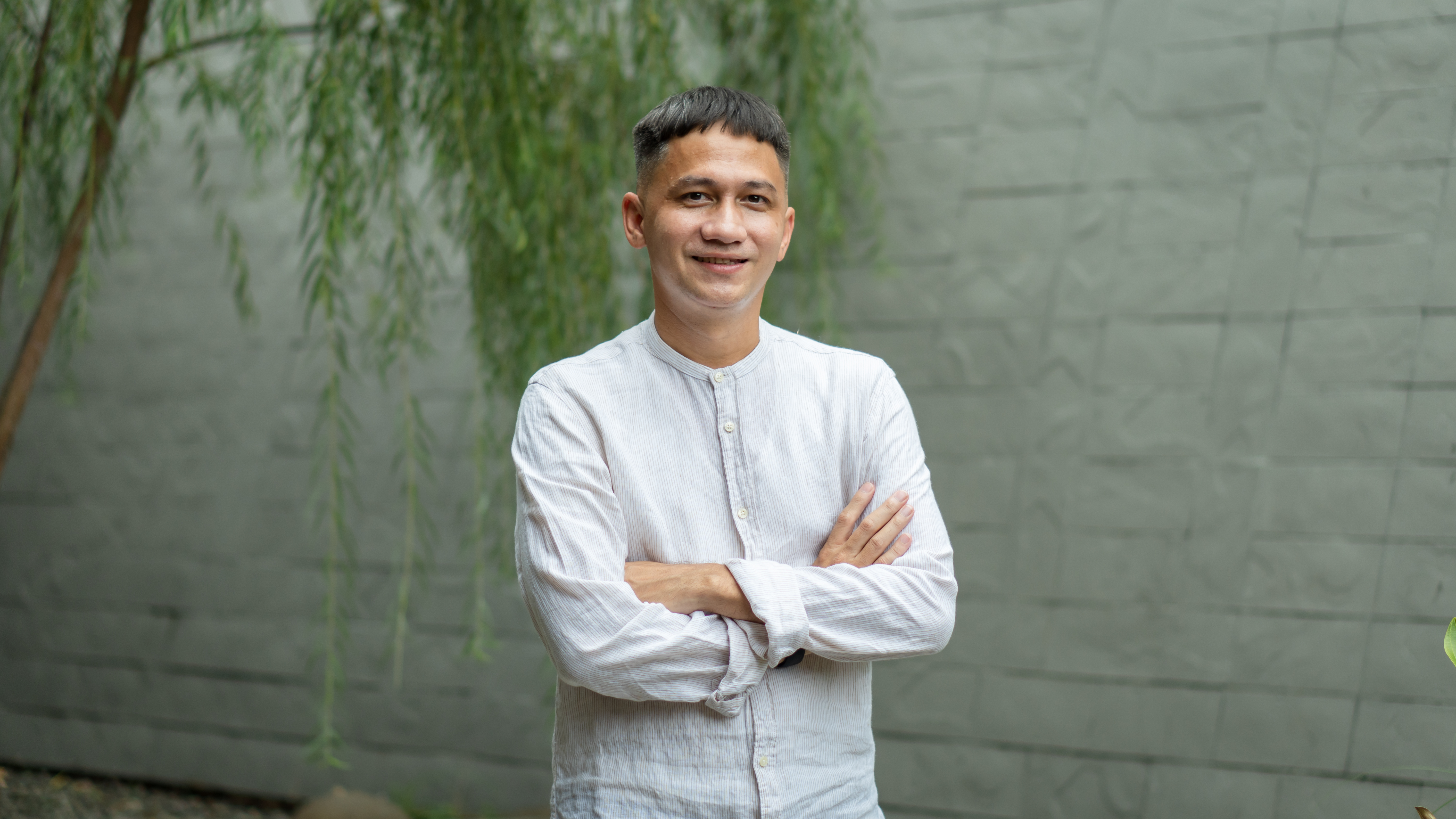
We found Sharif in Yogyakarta, who learned the complex techniques we needed and began teaching others. In a short space of time, we built our own workshop and team. Today, 18 months on, I send them drawings and they create new, exciting ideas every day.
On my first visit, Sharif told me his parents once said art wouldn't pay the bills, but he wanted to tell his son, "That's not true, you can do anything." That was the best thing I heard out there. It’s been an exciting, building journey.