Confused about where to start at Museum MACAN? Choose from 5 new exhibitions according to your mood, from Tromarama to Libby Heaney. Weekend recommendations running until April 4, 2027.
The first thing we felt upon stepping into Museum MACAN's new exhibition season was scale. From oversized sculptures, giant embroidered carpets hanging from the ceiling, to a dark room that made us feel small.
Museum MACAN's new exhibition season, running from November 14, 2026, to April 4, 2027, features five exhibitions. They are: Tromarama: Ketok Magic, Eko Nugroho: Scenic Disorder, Iwan Effendi: Pulse for Pulse, Libby Heaney: Qave Qonsciousness, and Mira Rizki: Mawas Wawas at the Children's Art Space.
These five exhibitions discuss the same theme from five different angles: how much of our choices and actions are truly our own? It sounds heavy, but relax. This article will be your companion as you tour the exhibitions, complete with a suggested route, things you shouldn't miss, and a bit of context so you won't be confused when viewing the artworks.
We Are Not Just Users, The Common Thread of the Five Exhibitions
We like to feel that all the decisions we make are entirely in our control. In reality, our actions are also shaped by the tools we use and the systems we follow. When algorithms play a role in determining what we see and think, the boundary between the one acting and the one being moved becomes blurred.
The museum refers to this as agency, our ability to act and influence our surroundings. This concept is connected to the Latin word anima, which means breath or soul and is the root word for animation. To animate means to make something appear capable of acting on its own, whether it's a puppet, moving images, or AI.
So the question is no longer just who is moving whom. The question is, how conscious are we when we move? These five artists answer this in very different ways.
Choose Your First Exhibition According to Your Mood
Here are our weekend recommendations curated to match your mood. The sequence below follows our suggested route, but you are free to start and end wherever you like.
Missing a Sense of Connection? Start with Iwan Effendi
Iwan Effendi, co-founder and Co-Artistic Director of Papermoon Puppet Theatre, is the perfect starting point. The Pulse for Pulse exhibition is closest to the entrance, his work feels light and familiar, and you are immediately welcomed by the Simpingan mural in the museum foyer.
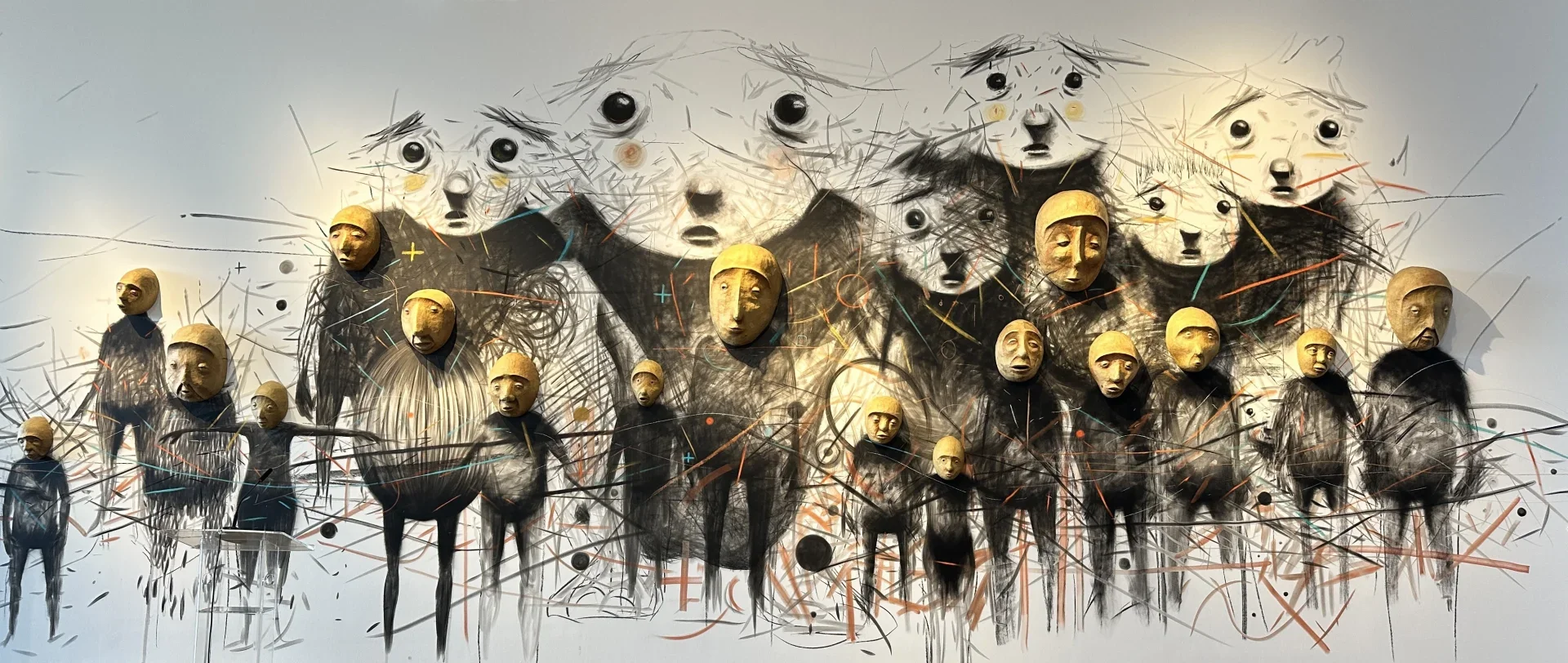
In wayang (shadow puppetry), simpingan is the row of characters on the left and right of the screen that serve as decoration, and are sometimes chosen by the dalang (puppeteer) to be played. Iwan's inspiration came from people waiting at a red light, all facing the same direction as if ready to cross. To him, they are characters waiting to be played. This mural is made of charcoal and soft pastel, with papier-mâché masks.
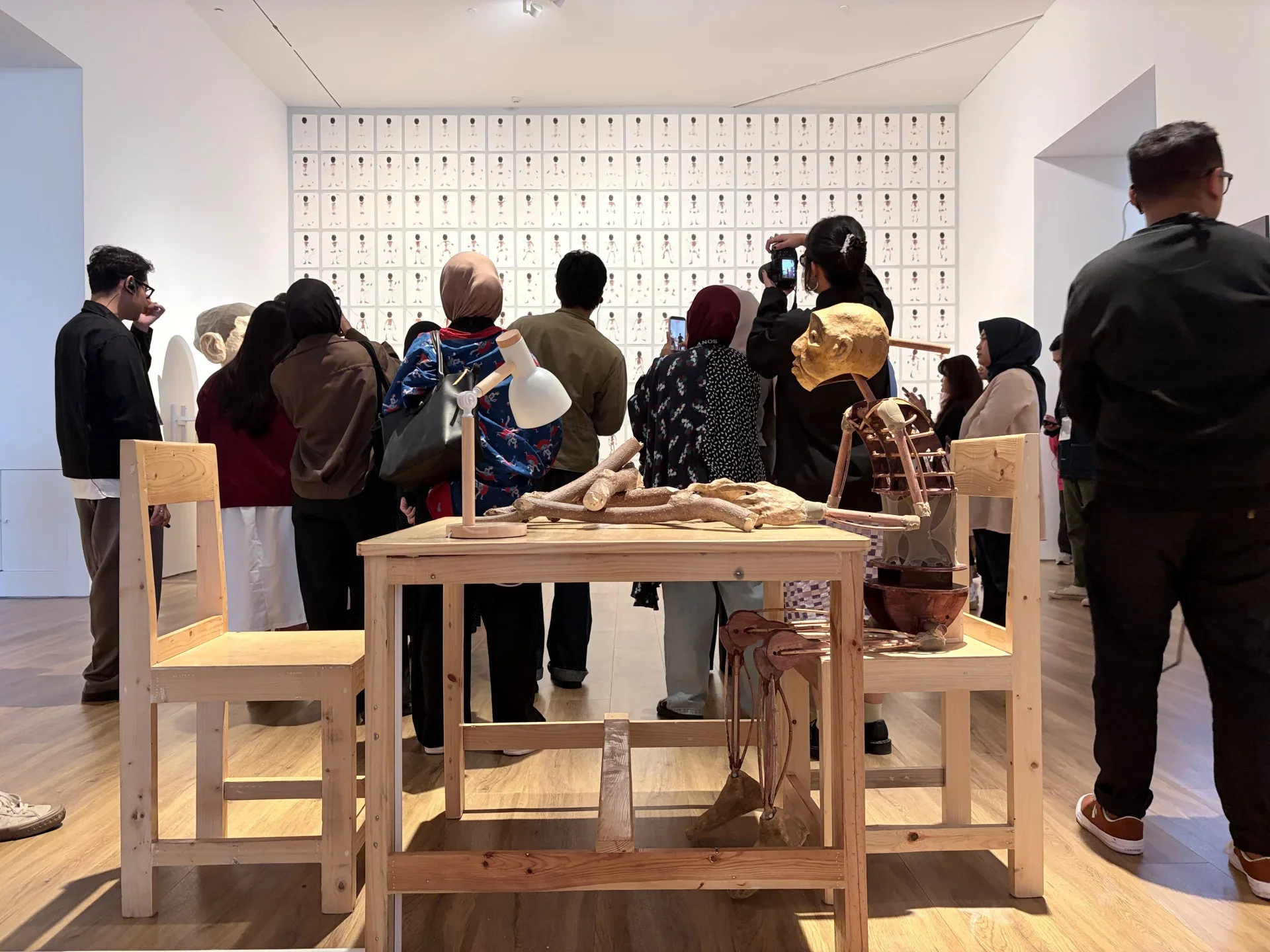
Then, inside the room, there is Mediator, a new work created specifically for Museum MACAN. Here, there is a chair to sit on facing a puppet. This work actually mimics the process in puppet theater: before being played, the puppet is observed and its background is imagined until it feels sufficiently alive. So sit down, and try to do the same.
Some other works you also need to look out for include Vantage Point. You can peek from behind a large mask, and your head seems to change into a puppet's head. You can see your reflection in the mirror in front of it.
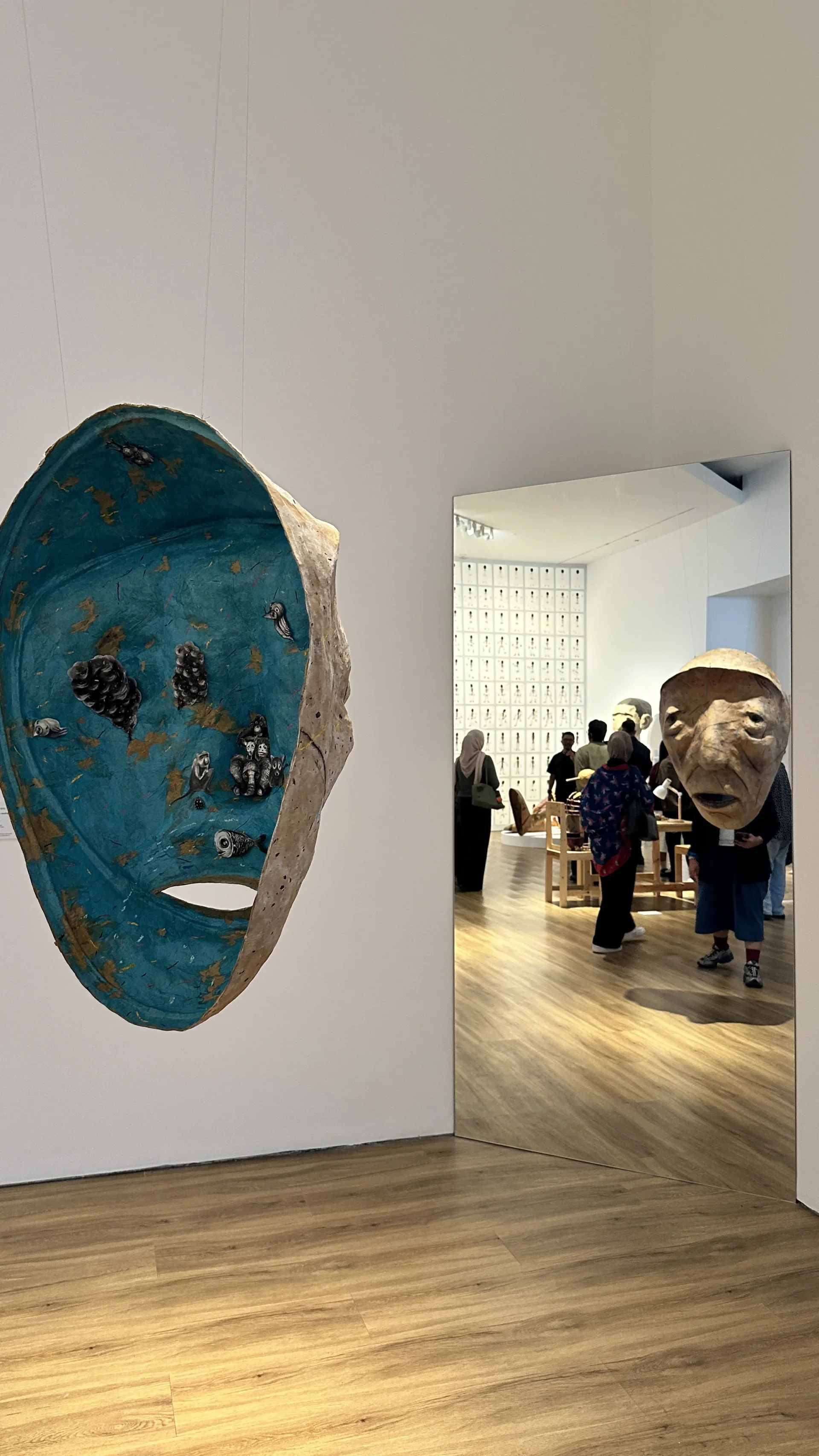
Through the work The Visitor, Iwan considers puppets as visitors from another universe telling stories about us. According to him, people find it easier to believe a puppet than another person, because there is no pretense.
The work Lembam, created last year during the Aceh Tamiang floods, is Iwan Effendi's expression of his surroundings. The lower part of the puppet appears dirtier, like a person who has just been submerged chest-deep.
"Lembam, which means sluggish or reluctant to move, is also one of the formulas I use to design puppets. So we don't make puppets that are alive, but we also shouldn't make puppets that look dead. They have to look sluggish so that we, as the puppeteer, have to help them," added Iwan.
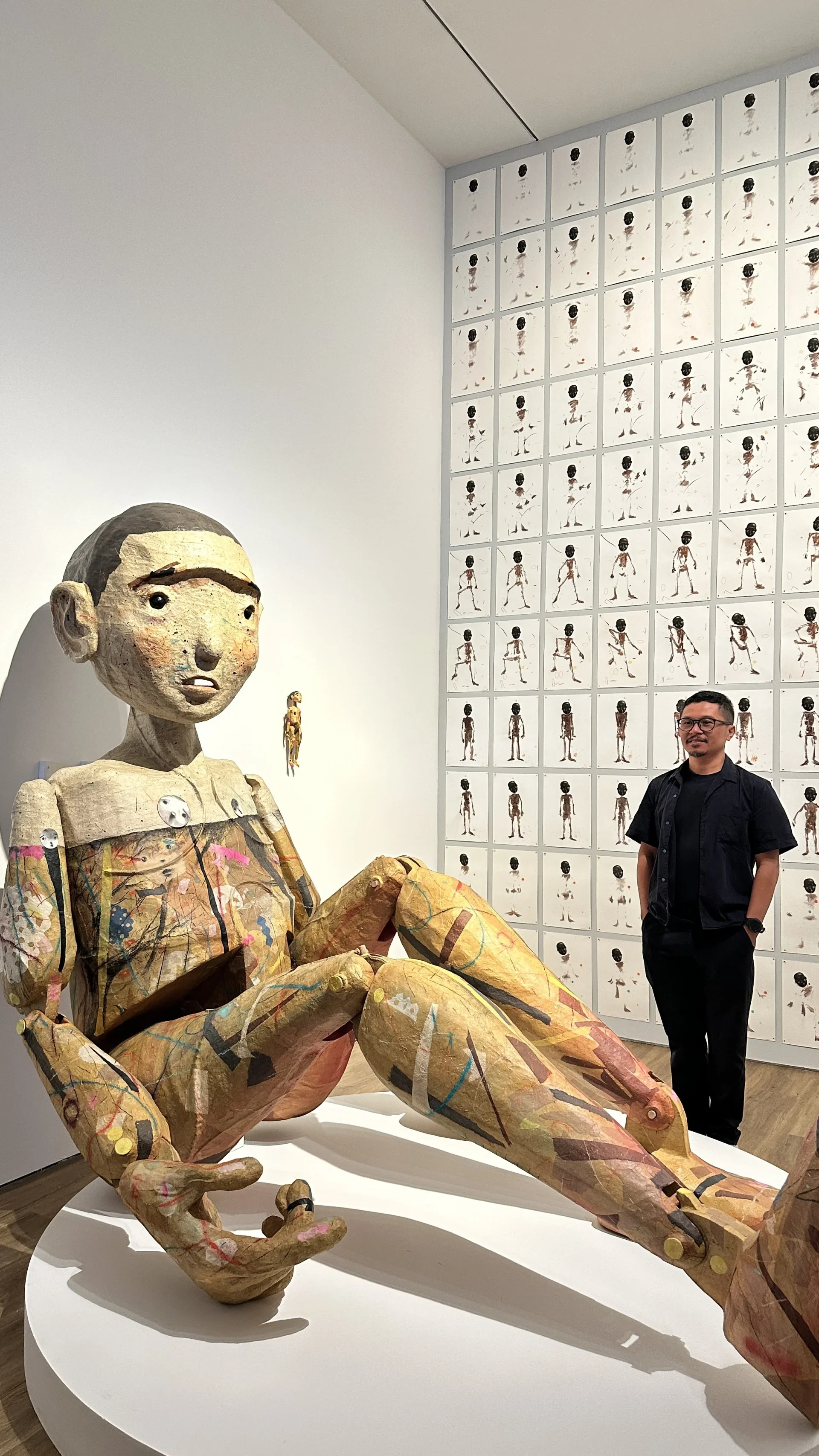
Iwan refers to the relationship between the puppeteer, the puppet, and the audience as a "triangle of trust." In the Pulse for Pulse exhibition space, the boundary between the one moving and the one being moved becomes blurred.
Frustrated with the Situation? Move on to Eko Nugroho
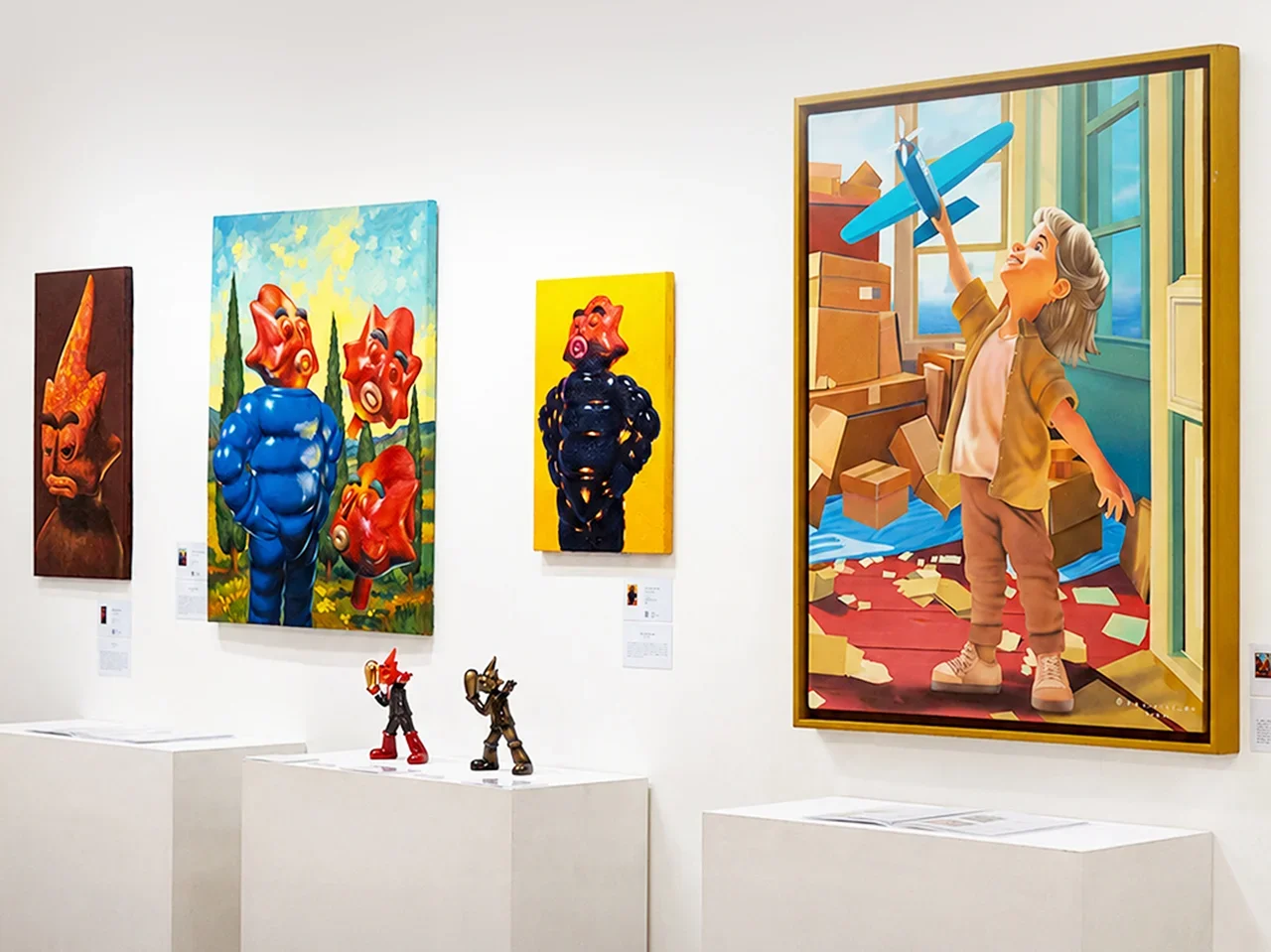
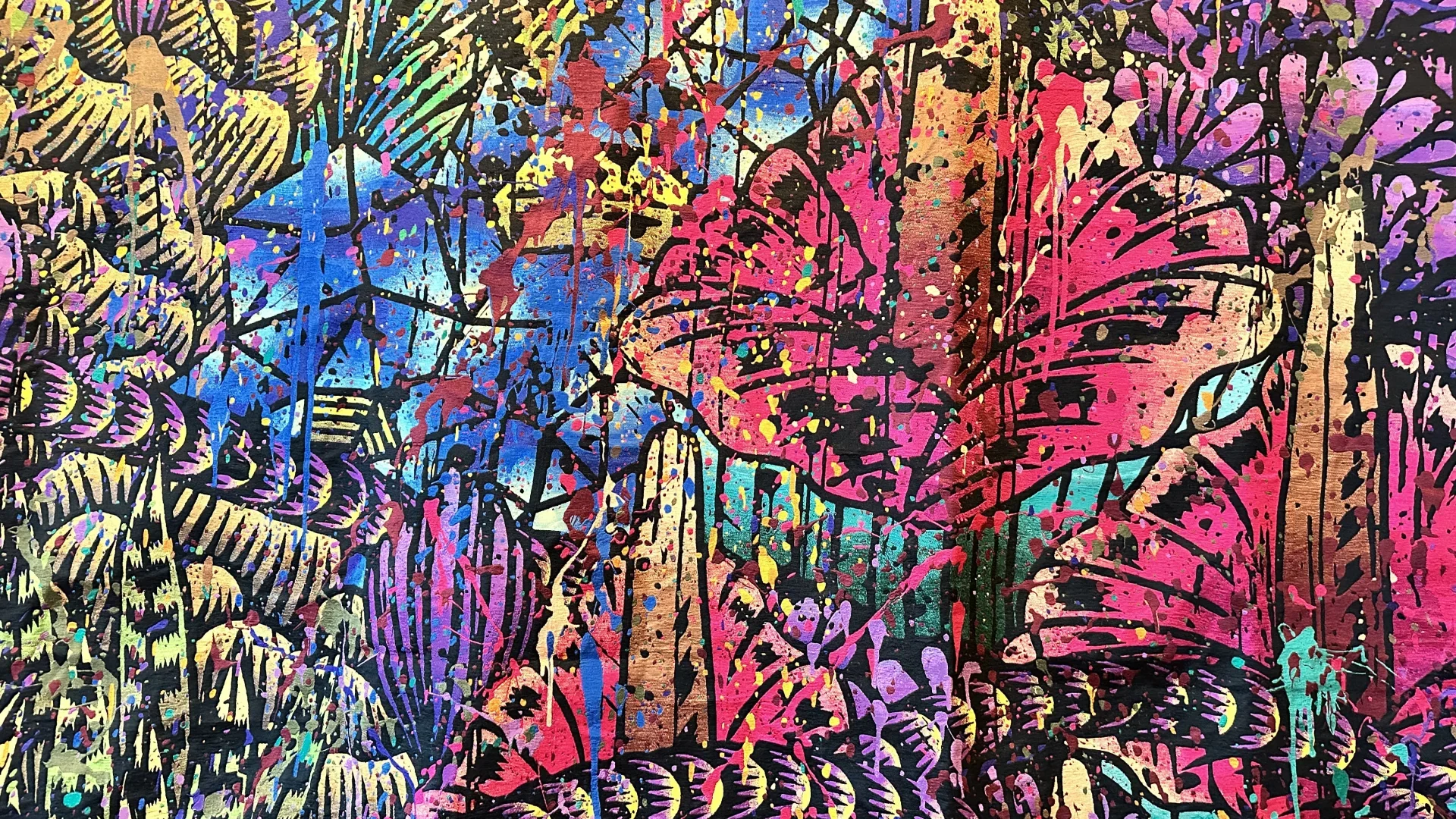
From Iwan, you can shift to Eko Nugroho's exhibition next door. For us, Scenic Disorder is a massive, colorful visual playground. The strongest impression for us was its scale. There are tall, large-scale sculptures, giant embroidered carpets hanging from the ceiling, and rows of small drawings and paintings installed so closely together they look like massive wallpaper. It all makes us feel how small we are.
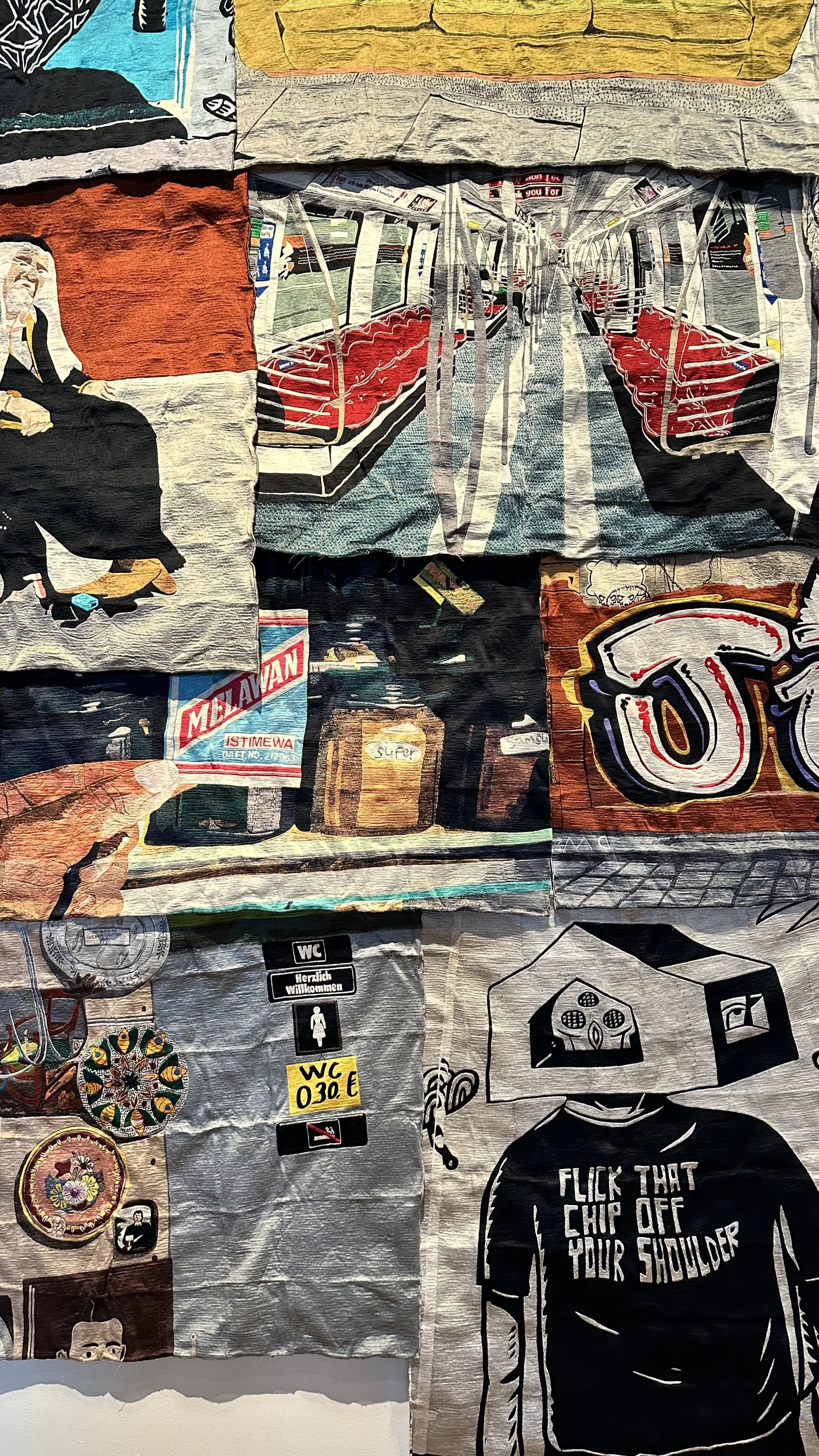
Our tip: look from afar first to grasp the scale, then approach each artwork to see them one by one in more detail. According to Eko, his created creatures began as aliens depicting alienation, then evolved into monsters. They are avatars of "us", a society still negotiating with the unfulfilled promises of democracy.
Eko started with comics and street art. In 2000, he initiated the independent comic anthology Daging Tumbuh (DGTMB). For him, every artwork is a "diary entry" responding to events around him, even up to the final moments before the exhibition.
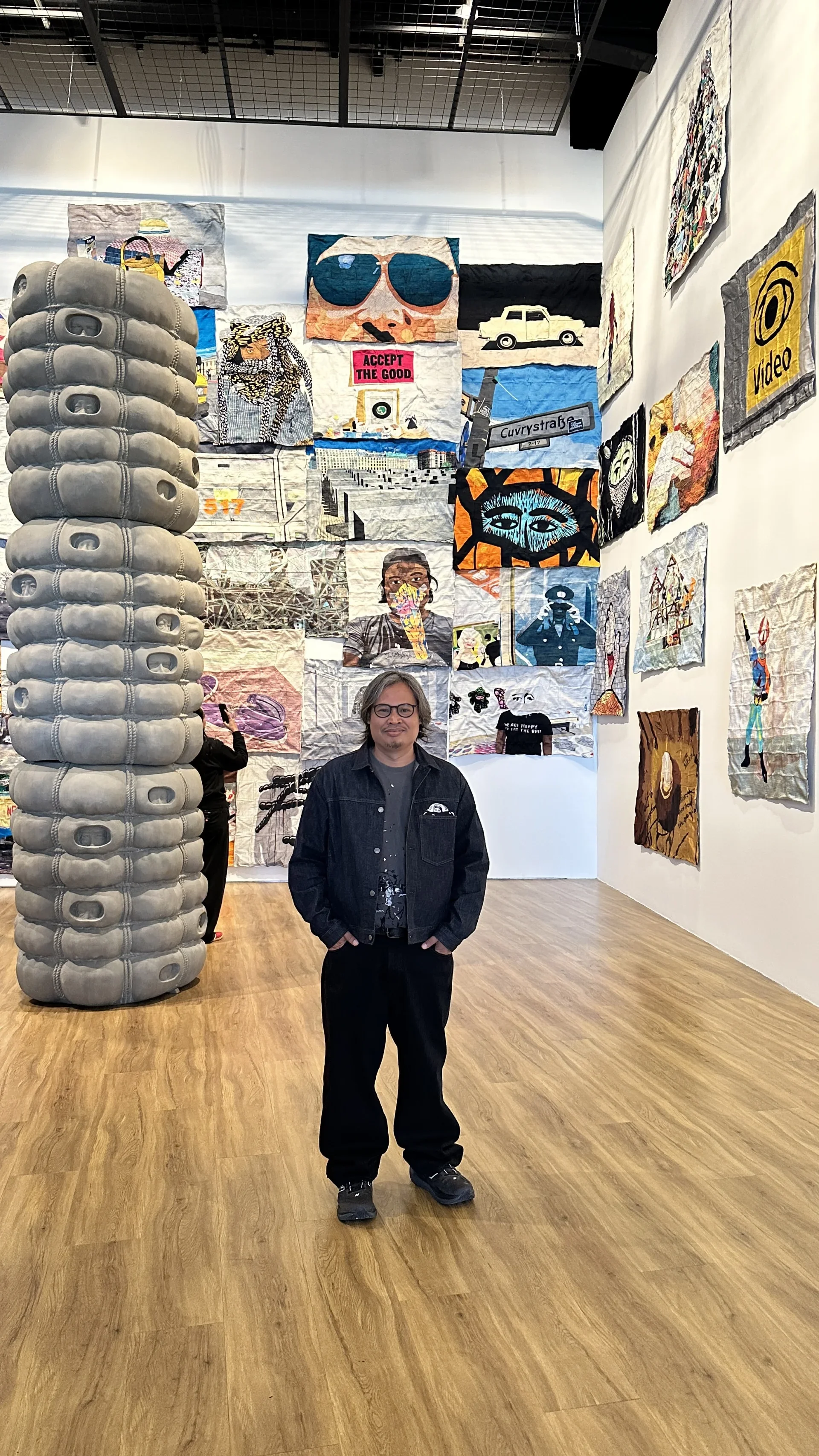
His new works, including Merayakan Kebohongan (Celebrating Lies) and Meratapi Hutan (Mourning the Forest) and the sculpture series Abandoned Monument (both 2026), respond to the recurring forest and land fires in Indonesia. So behind the colorfulness, there is a serious question: how much power do our voices actually generate?
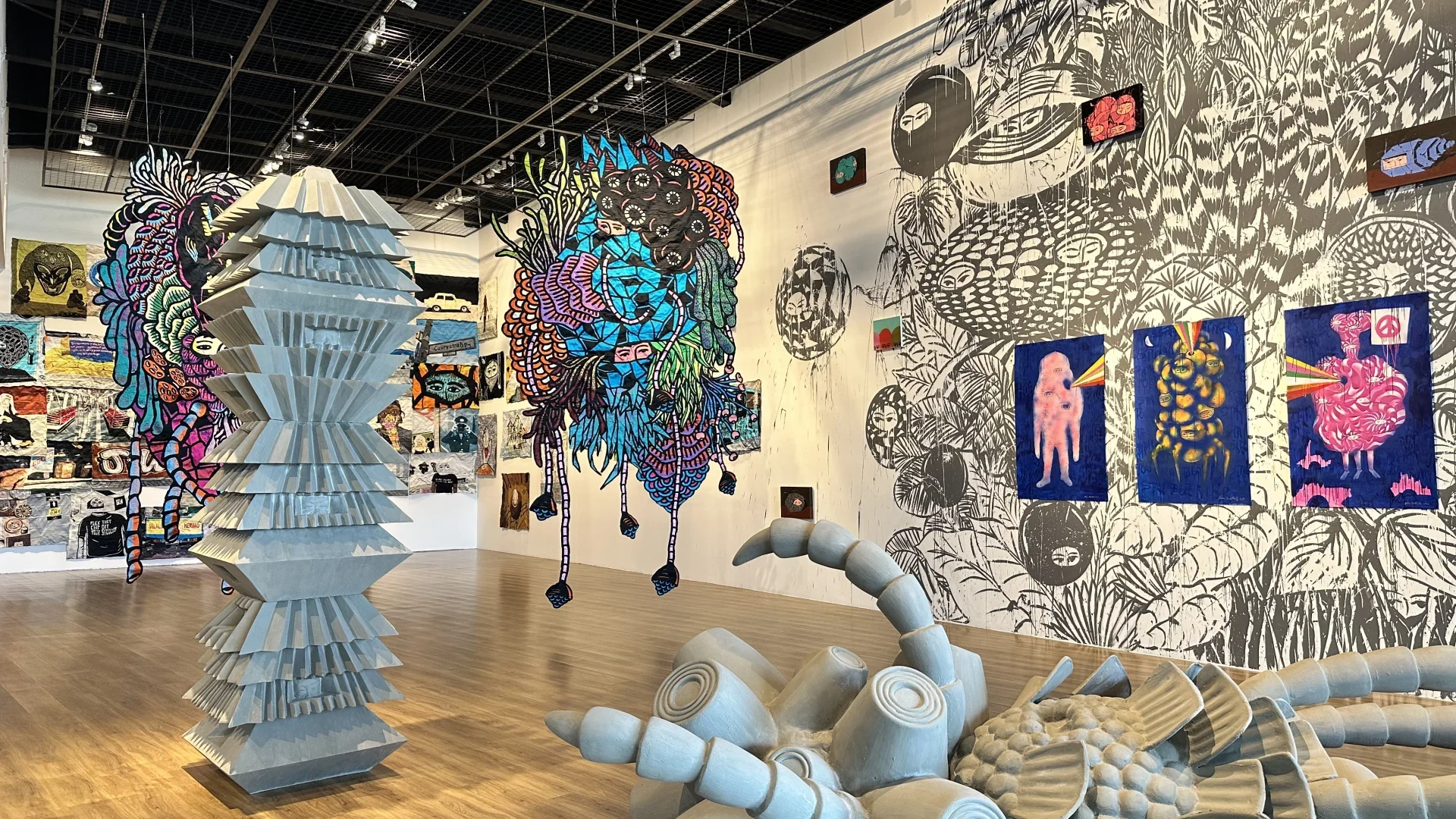
He explained the diversity of mediums in his exhibition as follows.
"So (my works) do not have a standard medium. For me, as long as it is something I research, something I delve into and like. So the mediums I use are not contrived; it is what is around (me), and I have mastered it," Eko explained.
Want Something Trippy and Thought-Provoking? Enter Libby Heaney's Cave
The entrance is extremely dark. It feels like entering the unknown. However, that darkness turns out to have a function, as your eyes are immediately drawn to the illuminated artworks. This room feels like entering an ancient cave, while simultaneously opening a window to something highly contemporary, even futuristic.
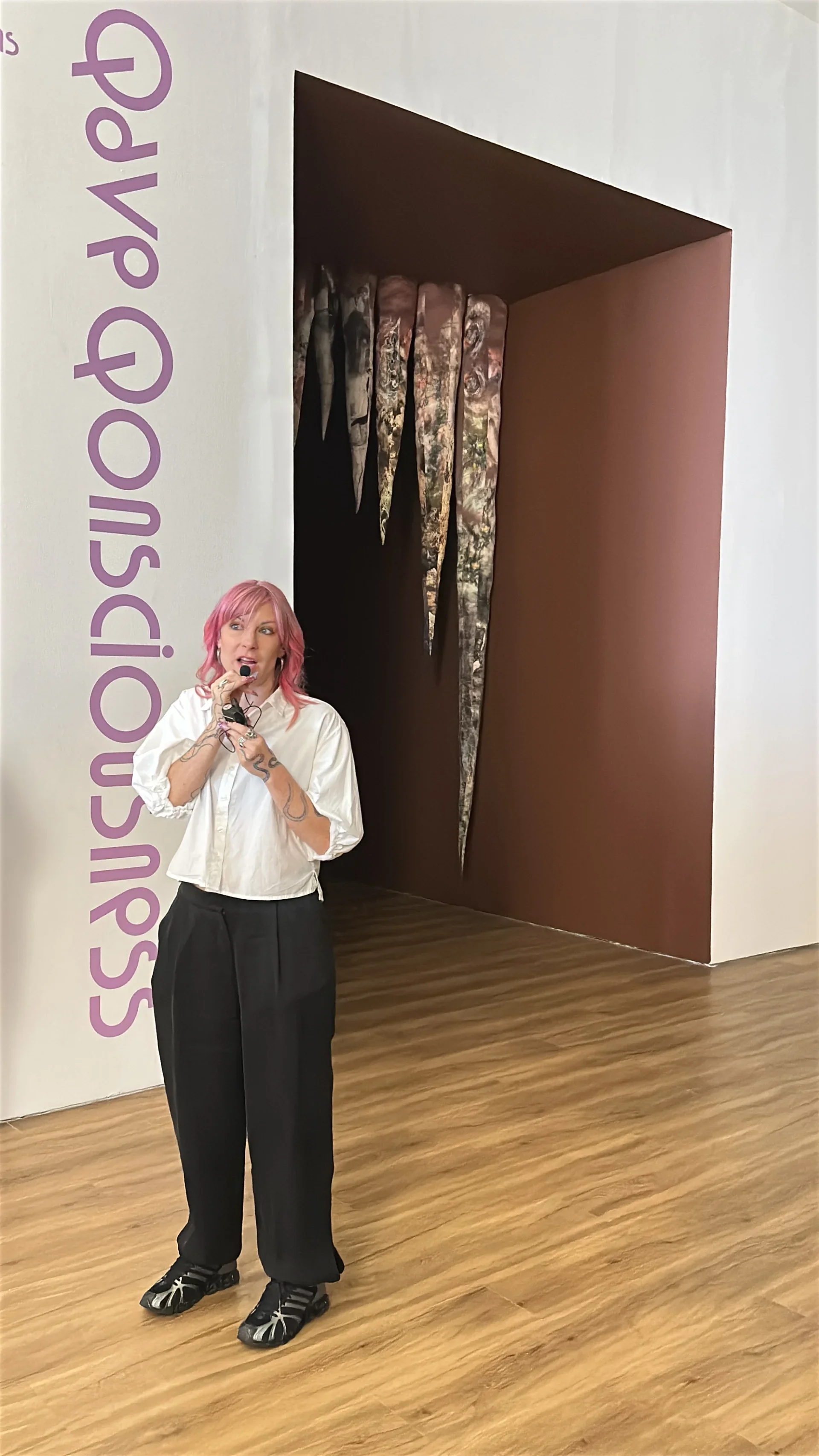
Give yourself a few seconds for your eyes to adjust, then walk slowly. Libby Heaney designed this room based on her experience in the karst caves of South Sulawesi, making it feel as if you are entering the mouth of another creature. Look closely at her paintings, and you will be able to see eyes and a tongue. Then there is a glass artwork that is usually still but comes 'alive' through sound and moving images, as well as a video created using quantum computing, featuring audio from a Kendari-based sound artist, Tesla.
Libby is a British artist with a PhD in quantum science, and this work was commissioned through Museum MACAN's partnership with the British Council. Her research stems from the Maros-Pangkep karst region in South Sulawesi, home to 51,200-year-old rock art in Leang Karampuang, one of the earliest examples of representational art.
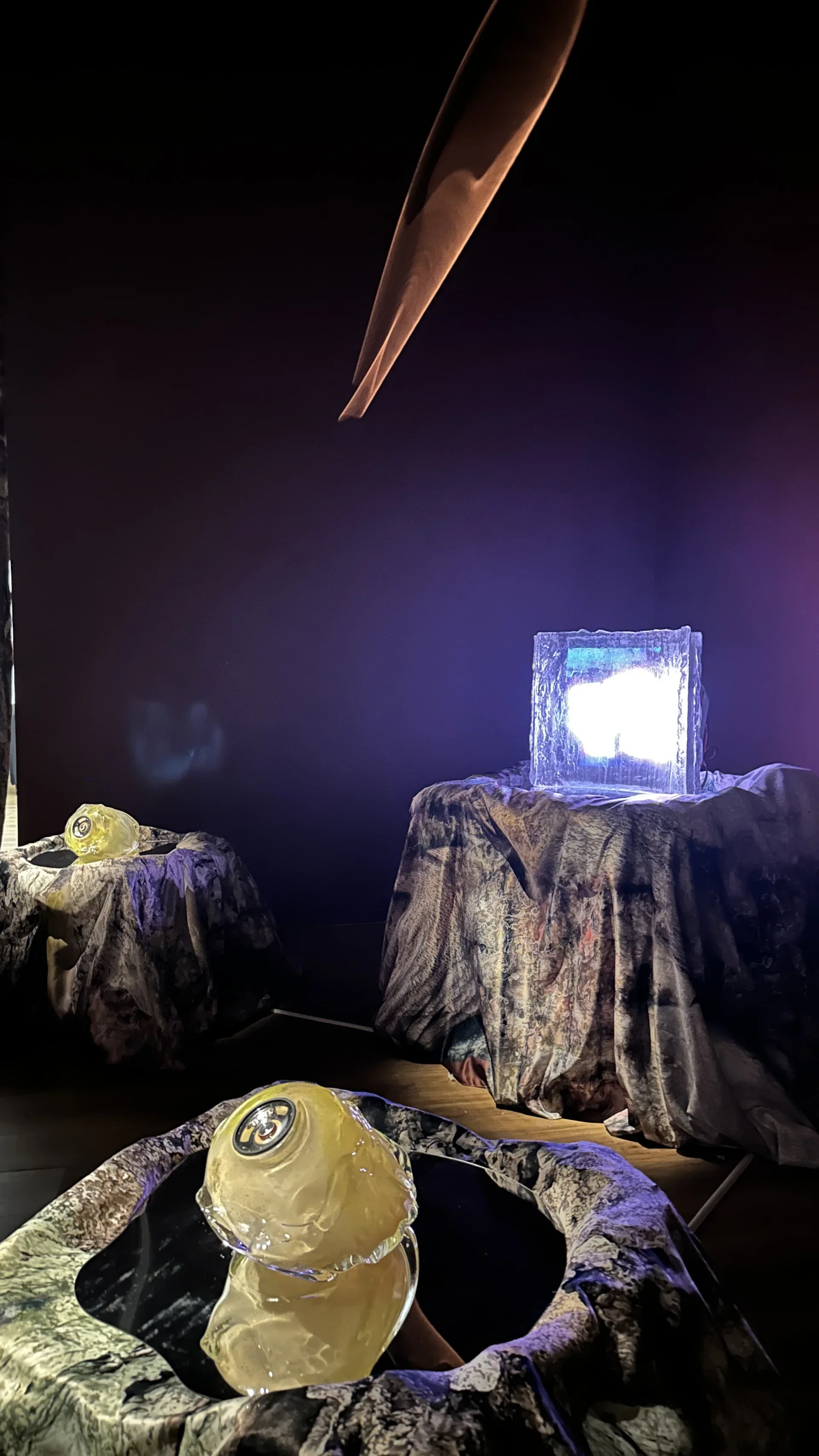
The idea is this. When humans began making images, our consciousness changed. Quantum computing cannot be depicted as ordinary imagery, so Libby asks how our consciousness will change once again. Don't worry, you don't need to understand quantum physics. Libby herself admitted that humans will never truly comprehend that world.
"We think AI is a black box, but quantum computer, when it's fully developed, will be even more so," Libby added
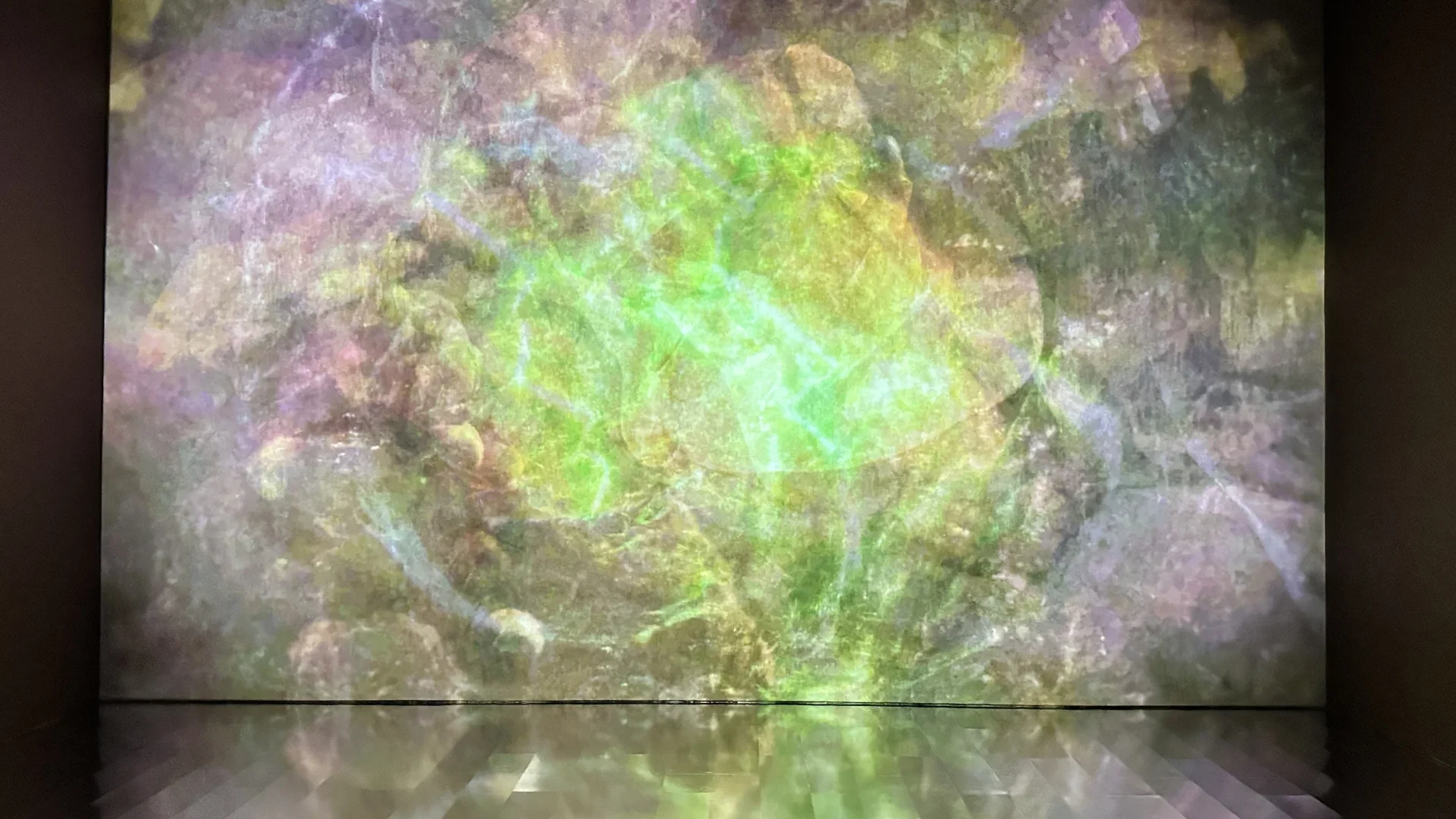
One more thing that left a lasting impression. The caves she researched are apparently still alive. They continue to grow about one millimeter every millenia. The stalactites and stalagmites that almost meet are to her like hands reaching out across thousands of years to grasp the life within.
Tired of Scrolling? It's Time for Tromarama and Ketok Magic
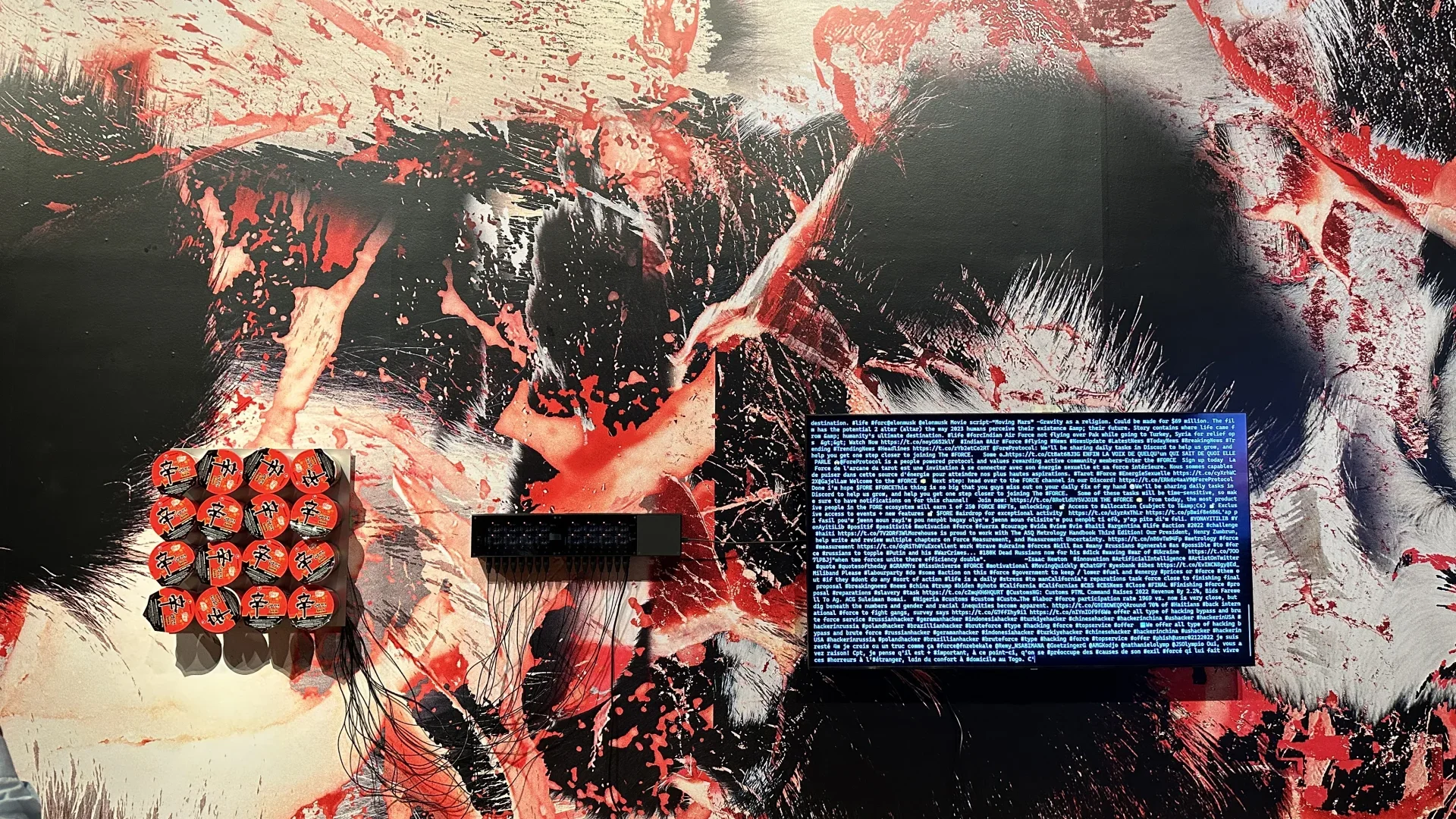
Ketok Magic is Tromarama's first museum exhibition in Indonesia, marking the two-decade journey of this collective comprising Febie Babyrose, Herbert Hans, and Ruddy Hatumena from Bandung. The title borrows from a car body repair method where the process is closed off, so we only see the smooth results as if by magic. For Tromarama, this is a metaphor for technology. We are good at finding workarounds, but the digital systems we use remain like black boxes.
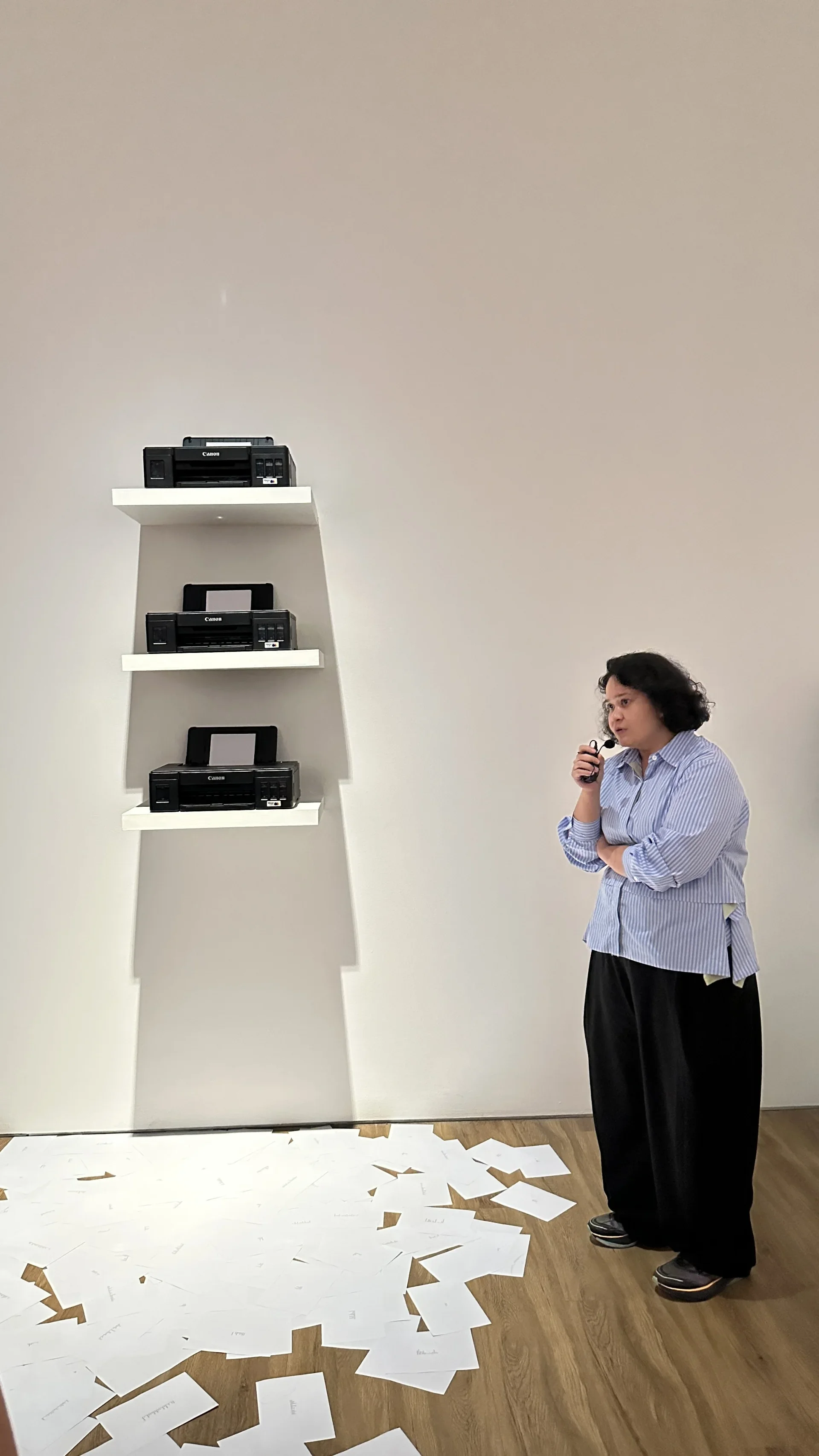
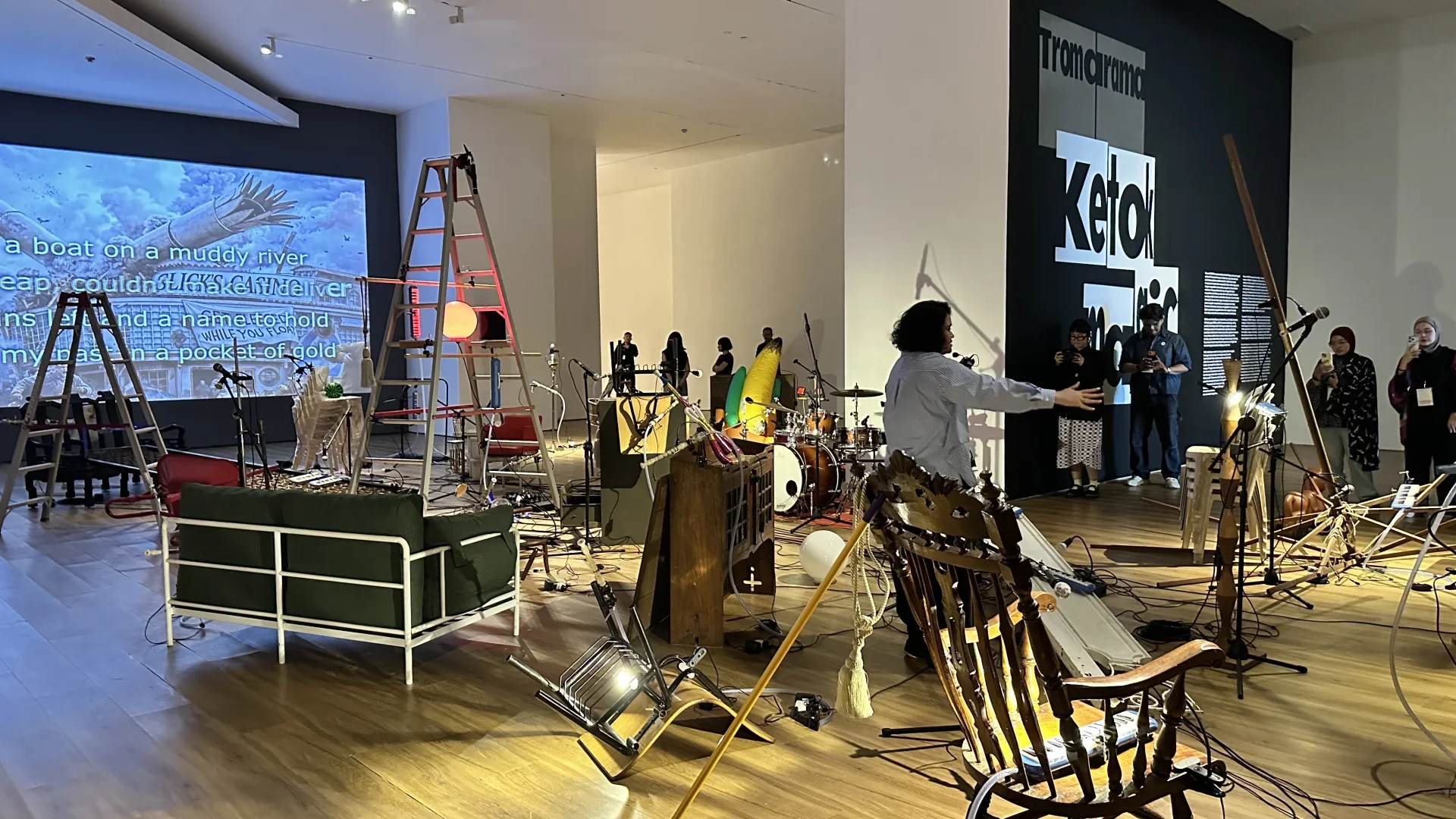
The number of artworks here is quite large, and you can easily spend about 30 minutes in this section. You will be welcomed by an installation titled Upon a Machine (2026). It features various secondhand goods, along with 16 pianicas and 16 secondhand flutes that play or stop following binary code—the number 1 to activate and 0 to turn off.
The items were collected from flea markets in Bandung and Jakarta. For Tromarama, secondhand items are like social media users. We don't know their history, but we feel close to them. On opening night, this work was activated by performers who sang following karaoke-style light cues, while improvising with the machine's instructions.
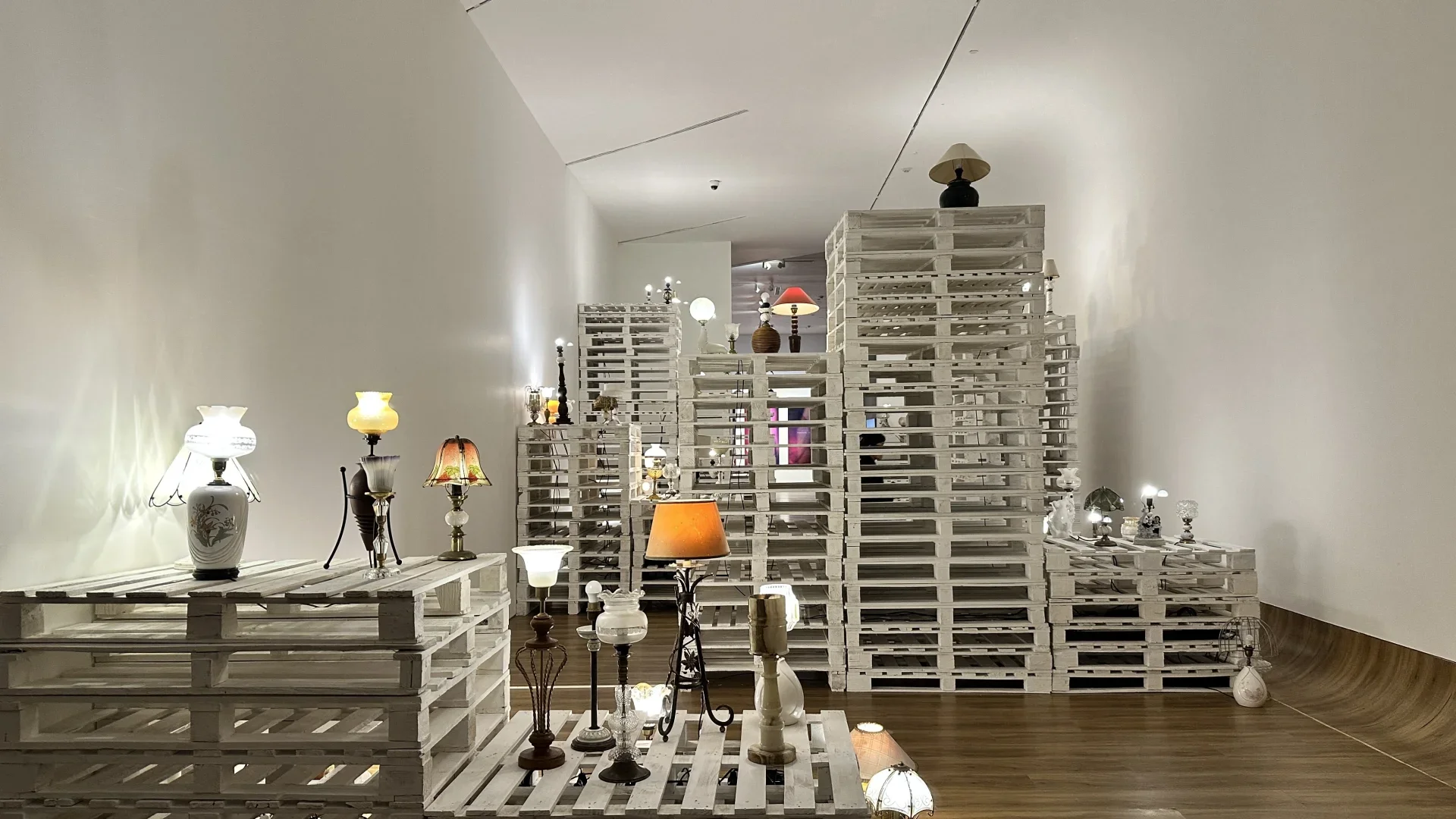
Next is the artwork Soliloquy. There are 96 lamps representing 96 binary codes. In its original 2018 version, these lamps lit up every time there was a tweet on Twitter with the hashtag #kinship. This was Tromarama's first work utilizing items from flea markets.
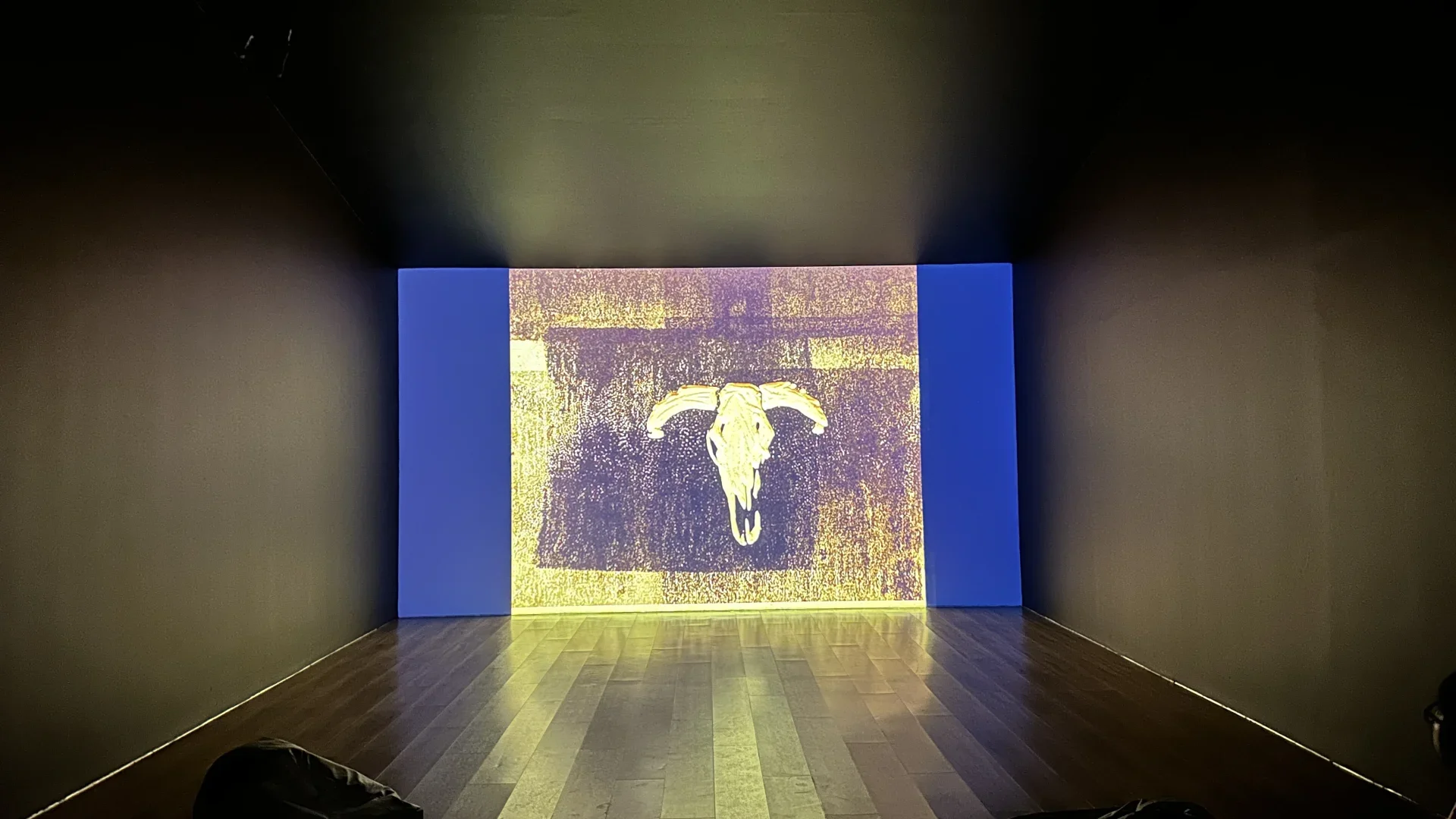
Take the time to drop by the screening room. Here, there are seven video compilations created by Tromarama, including one of the very first videos they ever made. A music video for the band Seringai in 2006 was initially processed using stop-motion animation techniques due to equipment limitations. That limitation actually became the catalyst for adapting this technique in their subsequent works.
Walking further into the exhibition space, your eyes will surely be drawn to the artwork Pat Gulipat (2022). It's an inverted bouncy castle surrounded by 16 yellow hard hats containing speakers playing sounds you'd hear in a factory. Playing is one of the essences of being human. However, when our 'playtime' is typically spent scrolling, it turns out we are actually working for digital companies through our data.
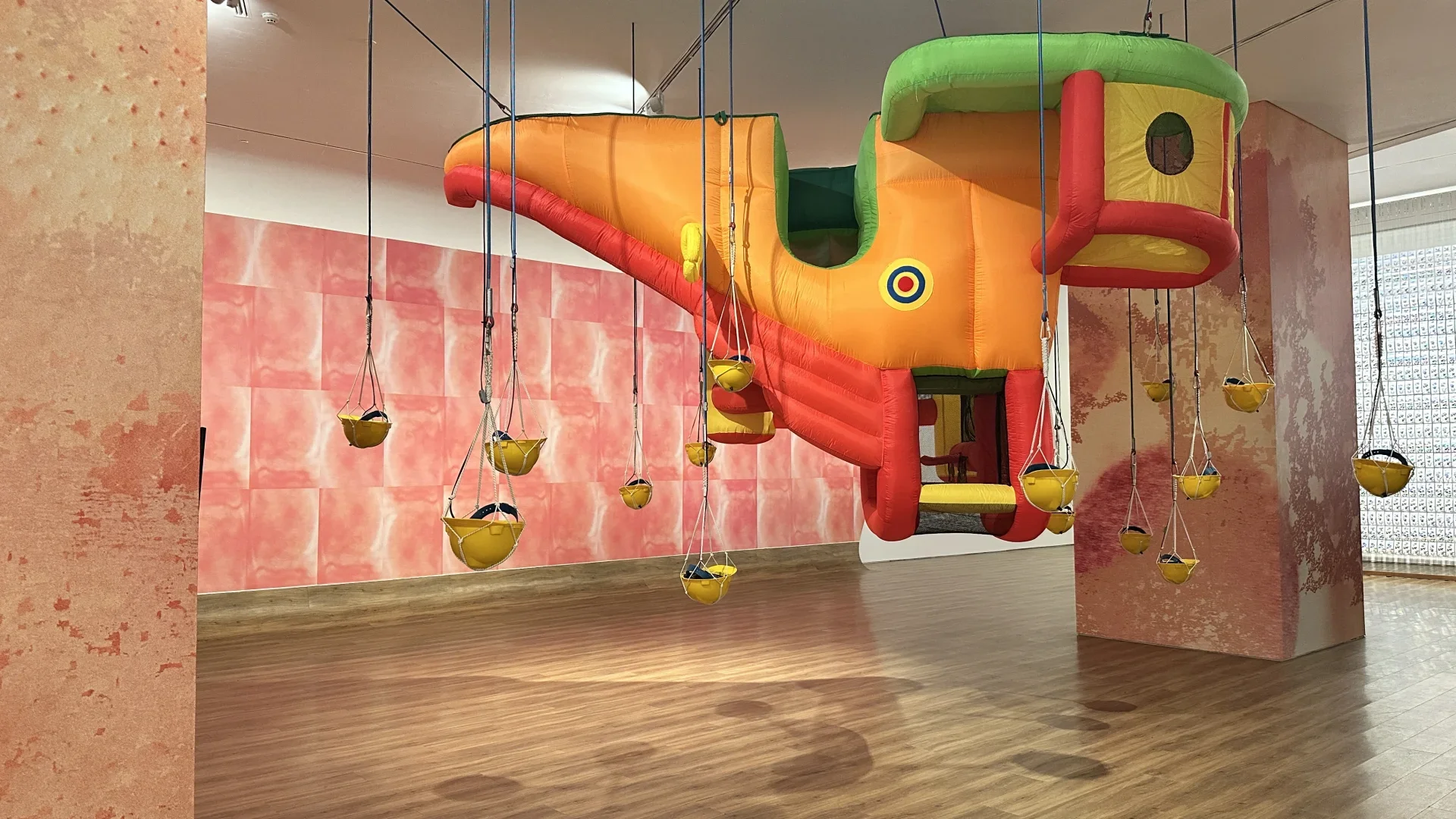
""For us, that is what ultimately becomes inverted. That's why here the bouncy castle loses its function and is turned upside down," said Febie Babyrose.
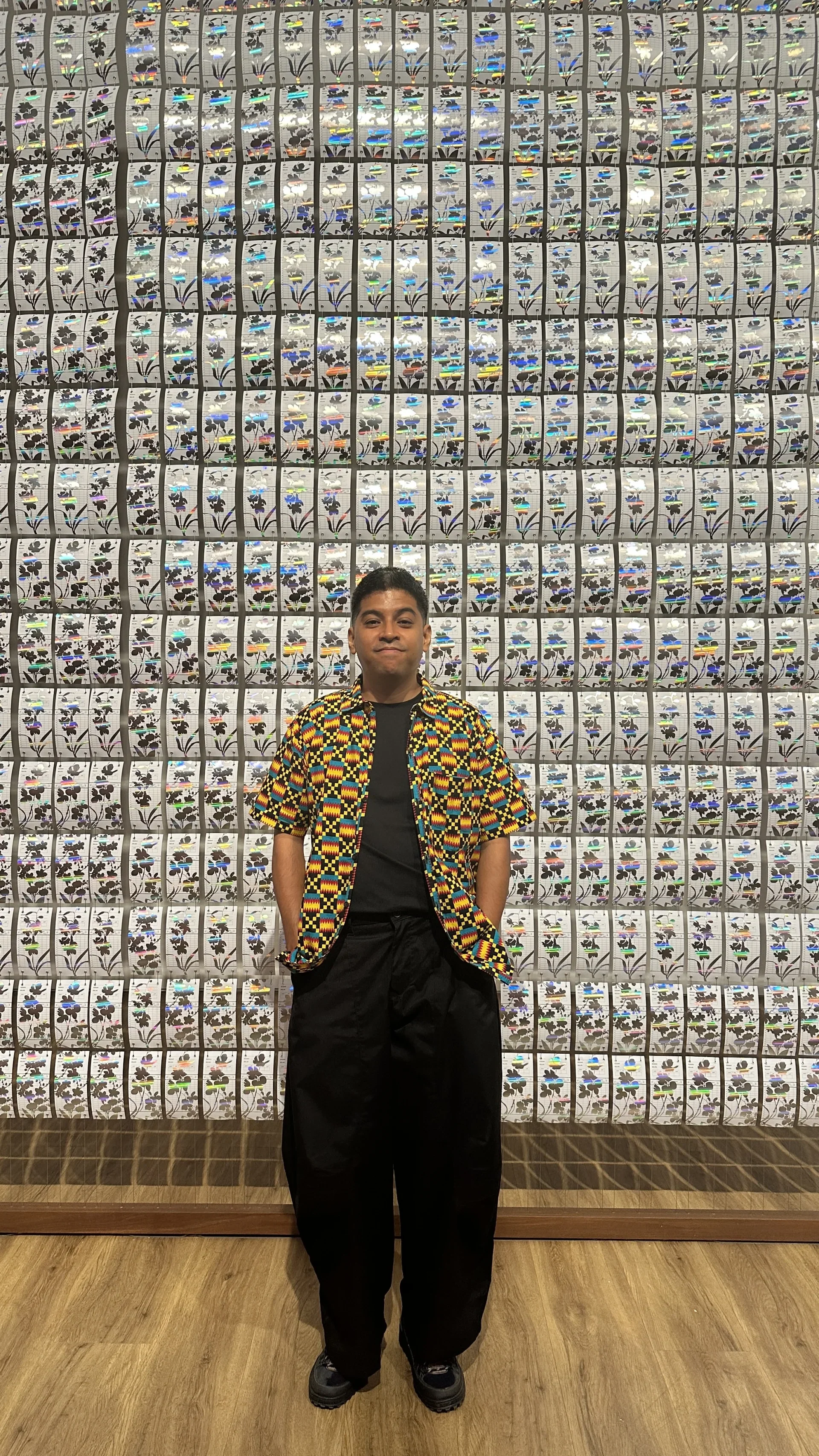
Dear O Dio Me. A punch card decorated with an orchid pattern, and the final artwork in this exhibition. Tromarama once saw a withered orchid in an office immediately replaced with a new one, much like an inactive social media user who can be quickly replaced. This work is intentionally placed at the end, like clocking out at the exit of the exhibition.
Need Grounding? Conclude at Mira Rizki's Children's Art Space
Surprise! The Children's Art Space this time is just as enjoyable for adults.
The first thing you do when you are about to enter Mawas Wawas by Mira Rizki is take off your shoes. Adults rarely take off their footwear in public spaces, unlike children who do it without worrying about dirt. "Come in, come in, don't be shy in my boarding house room," joked Mira.
It feels different with every step, from the carpeted floor to sand and then to a vibro-acoustic stage. Low-frequency speakers are embedded beneath the stage, making your own body the medium of propagation. You can stand, sit, or even lie down. You truly feel the sound vibrations in your body.
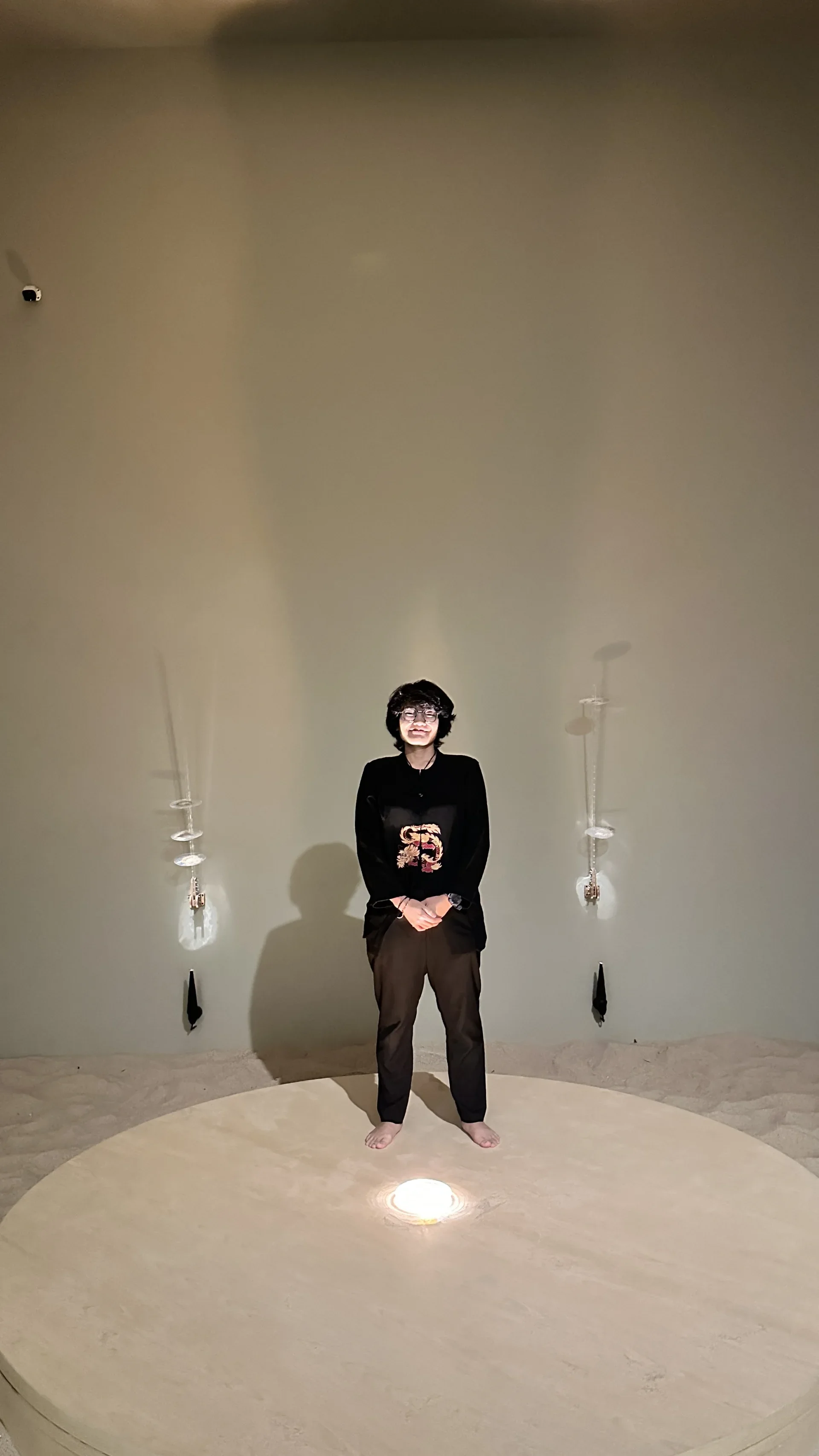
There is a sense of calmness in this room. You are fully present, all your senses are engaged in the room, while your adult brain is busy trying to comprehend what is happening. Our advice: just let it go and enjoy the moment.
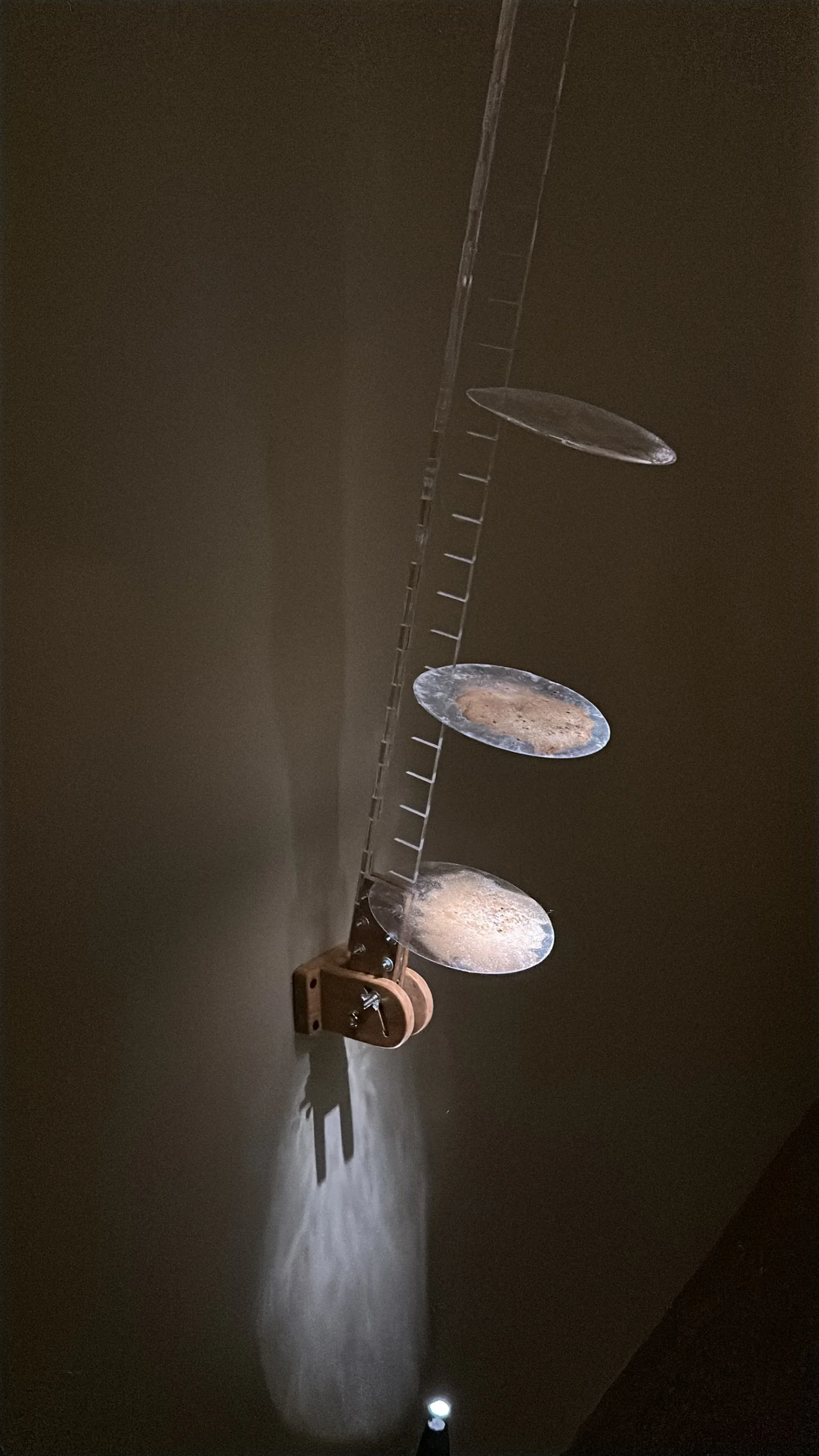
On the other side of the room, there is a vibration table. Here you can sit on the floor (lesehan) and sprinkle sand or soil onto a plate. When the vibration is turned on, the sand seems to dance and form patterns, similar to a middle school sound wave experiment. Some of the soil was taken by Mira from her backyard in Lembang, near Mount Tangkuban Perahu.
You can then seal that pattern into a "trace plate" and project it onto the ceiling using a device attached to the wall. This trace accumulates alongside the traces of other visitors in an artwork called Lampion Singgah. The most special part is that you can take home a lantern projecting a brief moment of togetherness with strangers in the same room.
Mira invites us to be more mindful (mawas) of ourselves first, before we can be sensitive to the presence of others.
"Actually, after experiencing this process, this work invites you to be present in the current moment. Because the moment only happens within a narrow window of time and doesn't last long, we need to be present there. When we are present, we also need to be aware (wawas) of what is happening around us," explained Mira, who is more familiarly called Miki.
Therefore, this room starts with the body and the senses. To us, it's like a next-level children's sensory playground.
After Five Exhibitions, Who Moves Whom?
We entered feeling small in front of giant artworks, and exited feeling fully present in the simplest of spaces. In between were screens, caves, puppets, and vibrating sand, all inviting us to ask the same question: how conscious are we when we move, and who else is doing the moving?
Museum MACAN does not provide the answer. Director Venus Lau stated that contemporary art does not always provide answers, but rather pushes us to re-evaluate things that have always felt normal and familiar.
So this weekend, pick your mood, take off your shoes if necessary, and let these artworks ask the questions back to you.
Written's Recommended Weekend Route at Museum MACAN
There is a term called museum fatigue, which is when our focus and comprehension decline after exploring a gallery or museum for too long. Research on museum visitor behavior has found that our attention drops sharply after about 30 to 45 minutes. Because of this, we have designed a route with breaks built in.
Start with Iwan Effendi. Closest to the entrance gate, there is the Simpingan mural in the foyer, evoking a sense of familiarity with his work. Don't miss Mediator, a chair to sit on facing a puppet, and Vantage Point to cosplay as a puppet.
Move on to Eko Nugroho. His works are large and colorful, like a visual playground. One of the perfect spots for a photoshoot for your content.
Enter Libby Heaney's cave. Go from light into darkness and enjoy works that feel foreign yet mysterious. These first three exhibitions can be enjoyed in about 30 to 40 minutes.
Take a break at the museum cafe. Give your brain a pause before continuing.
Return to Tromarama with renewed energy. They have many artworks in various formats, so set aside at least about 30 minutes here.
Finish at Mira Rizki's Children's Art Space. Pamper all your senses before heading home.
Frequently Asked Questions Regarding Visiting Museum MACAN
When is Museum MACAN's new exhibition season taking place?
This exhibition season runs from November 14, 2026, to April 4, 2027.
What time does Museum MACAN open?
Museum MACAN is open Tuesday to Sunday from 10:00 AM to 6:00 PM WIB, with last entry at 5:30 PM WIB. The museum is closed on Mondays.
Does one ticket cover all exhibitions?
Yes. One ticket covers all five exhibitions, including the Children's Art Space.
How much are Museum MACAN tickets?
On weekdays, adult tickets are Rp88,000; students, university students, and seniors 65+ are Rp77,000; and children aged 3 to 12 are Rp66,000. On weekends and public holidays, the price is Rp110,000 for adults; Rp100,000 for students, university students, and seniors 65+; and Rp90,000 for children.
What exhibitions are currently at Museum MACAN?
Tromarama: Ketok Magic, Eko Nugroho: Scenic Disorder, Iwan Effendi: Pulse for Pulse, Libby Heaney: Qave Qonsciousness, and Mira Rizki: Mawas Wawas at the Children's Art Space.
Which exhibition is best to start with?
We recommend starting with Iwan Effendi because it is closest to the entrance gate and the easiest to digest. After that, move on to Eko Nugroho, Libby Heaney, take a break at the cafe, return to Tromarama, and then conclude at the Children's Art Space.
How long does it take to tour?
About 1.5 to 2 hours. The Iwan Effendi, Eko Nugroho, and Libby Heaney exhibitions can be enjoyed in about 30 to 40 minutes. Tromarama requires at least about 30 minutes, and then there is the Children's Art Space as a finale. Also, leave some time for a break.
Is the Children's Art Space only for children?
No. Adults can enjoy it too. Prepare yourself to take off your shoes.